Acres U.S.A.® Magazine
  • Articles
    • News
    • Ecological farming
      • Climate
      • Environmental Issues
      • Farm management & planning
      • Human health
    • Livestock
    • Farm
    • Crop
      • Crop management practices
        • Ag technology
        • Cover crops
        • Crop nutrition
          • Crop protection
          • Diseases
        • Crops
        • Fruits
    • Soil
    • Opinion
  • Resources
    • Magazine
    • Online Learning
    • Newsletters
    • Free Articles
    • Blog
  • Magazine Issues
    • 2026
      • June 2026
      • May 2026
      • April 2026
      • March 2026
      • February 2026
      • January 2026
    • 2025
      • December 2025
      • November 2025
      • October 2025
      • September 2025
      • August 2025
      • July 2025
      • June 2025
      • May 2025
      • April 2025
      • March 2025
      • February 2025
      • January 2025
    • 2024
      • December 2024
      • November 2024
      • October 2024
      • September 2024
      • August 2024
      • July 2024
      • June 2024
      • May 2024
      • April 2024
      • March 2024
      • February 2024
      • January 2024
    • 2023
      • December 2023
      • November 2023
      • October 2023
      • August 2023
      • July 2023
      • June 2023
      • May 2023
      • April 2023
      • March 2023
      • February 2023
      • January 2023
    • 2022
      • December 2022
      • November 2022
      • October 2022
      • September 2022
      • August 2022
      • July 2022
      • June 2022
      • May 2022
      • April 2022
      • March 2022
      • February 2022
  • About Us
    • Our History
    • Our Staff
    • Contact Us
    • Community
      • Soil Health Primer Resources
  • Events
    • Eco-Ag Conference
    • Farm Weird Event
  • Subscribe
  • Login
  • Register
No Result
View All Result
  • Articles
    • News
    • Ecological farming
      • Climate
      • Environmental Issues
      • Farm management & planning
      • Human health
    • Livestock
    • Farm
    • Crop
      • Crop management practices
        • Ag technology
        • Cover crops
        • Crop nutrition
          • Crop protection
          • Diseases
        • Crops
        • Fruits
    • Soil
    • Opinion
  • Resources
    • Magazine
    • Online Learning
    • Newsletters
    • Free Articles
    • Blog
  • Magazine Issues
    • 2026
      • June 2026
      • May 2026
      • April 2026
      • March 2026
      • February 2026
      • January 2026
    • 2025
      • December 2025
      • November 2025
      • October 2025
      • September 2025
      • August 2025
      • July 2025
      • June 2025
      • May 2025
      • April 2025
      • March 2025
      • February 2025
      • January 2025
    • 2024
      • December 2024
      • November 2024
      • October 2024
      • September 2024
      • August 2024
      • July 2024
      • June 2024
      • May 2024
      • April 2024
      • March 2024
      • February 2024
      • January 2024
    • 2023
      • December 2023
      • November 2023
      • October 2023
      • August 2023
      • July 2023
      • June 2023
      • May 2023
      • April 2023
      • March 2023
      • February 2023
      • January 2023
    • 2022
      • December 2022
      • November 2022
      • October 2022
      • September 2022
      • August 2022
      • July 2022
      • June 2022
      • May 2022
      • April 2022
      • March 2022
      • February 2022
  • About Us
    • Our History
    • Our Staff
    • Contact Us
    • Community
      • Soil Health Primer Resources
  • Events
    • Eco-Ag Conference
    • Farm Weird Event
  • Subscribe
No Result
View All Result
Acres U.S.A.® Magazine
No Result
View All Result
Home Ecological farming

Widen the On-Ramp

Mollie Engelhart by Mollie Engelhart
October 1, 2025
1
Widen the On-Ramp

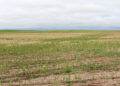
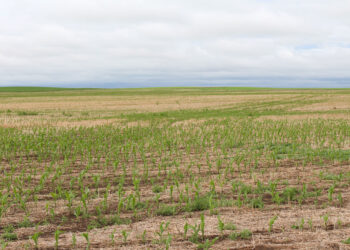
Deakin Farms is organic and works to be regenerative by implementing practices that minimize tillage and increase diversity. Deakin Farms has worked with NRCS and Pheasants Forever through EQIP and CSP to get technical and financial assistance. Deakin Farms, Pondera County, MT. June 2021

0
SHARES
814
VIEWS
Share on FacebookShare on Twitter

As a mother, in order to provide healthier food to our families, I believe we need to meet farmers where they’re at

Mollie Engelhart

As a mother, my deepest instinct is to nourish my children with the healthiest food possible. That’s why we live the way we do — on land, with our own dairy herd, our own beef, and our own vegetable garden. I want nothing to do with the chemicals that dominate our current food system. I don’t want them in our bodies or our water, and I understand why so many decision-makers and advocates are calling for regenerative organic to become the standard. In many ways, my heart agrees.

But my practical side, as a farmer and entrepreneur, sees something more complex.

The organic movement — despite decades of effort — has grown relatively slowly. Today, certified organic farmland still accounts for just 0.7 percent of all U.S. agricultural land. Compare that with the reach of regenerative leaders like Allen Williams and Gabe Brown, whose work has directly influenced practices on more than 50 million acres. That’s 10 to 15 times more land than what’s currently certified organic. Farmers are voting with their actions. They are willing to make incremental transitions when they’re supported, understood, and not forced to take on all the risk alone.

That’s why, if we want real, large-scale change in our agricultural system, we must meet farmers where they’re at.

Programs like Regenified do exactly that. From the very beginning, farmers receive a certification that reflects the direction they’re moving — not just where they’ve arrived. This gives consumers the opportunity to support that transition with their dollars. The liability and cost of change is no longer resting solely on the farmer. Instead, it’s shared between the producer and those of us who hold the ideals of regeneration, health and a cleaner food system. That shared commitment is what makes real change possible.

This isn’t greenwashing. Regenified includes real soil testing and mandates measurable progress every three years — less chemical input, more biodiversity, more microbiology. That’s what makes regeneration beautiful — like life, regeneration is about growth over time. We don’t build anything meaningful in a day. Farmers across the country, including in large-scale and conventional systems, are making these shifts. Let’s not lose the ground we’re gaining by insisting on a perfect ideal that’s simply unrealistic for most farmers right now.

And we also need to be honest. There are so many mothers like me who deeply desire organic produce for our children. But unless we make it feasible for American farmers to grow it, we’ll keep outsourcing those values to far-off places — countries with cheaper hourly labor and often weaker or inconsistent oversight. Just flip over many of the “organic” products in your grocery cart. Look at the back. How many ingredients are sourced from China? From Mexico? Can we truly trust those certification systems? Do we really know what we’re feeding our families?
The truth is, under USDA organic rules, farmers here must follow organic practices for three full years before they can even apply for full certification. That’s three years of doing the right thing — often at enormous financial cost — with no price premium and no recognition. Because of this, we keep buying imported “organic” food, while our own farmers can’t afford to make the transition. Wouldn’t it be better to know that a farmer here in the U.S. is in transition, headed in the right direction, even if they’re not all the way there yet? Wouldn’t we rather support a system that rewards progress — real, measurable, domestic progress — instead of a label that may just be comforting us with the illusion of purity?

And for the first time in government, it seems like there’s a genuine interest in getting chemicals out of our food. That is a powerful and important shift — and we must support it. But we also need those leading this movement to have a clear understanding of the boots on the ground — of what American farmers and their families are actually facing. If we want a new agricultural paradigm to take hold, it must be a coalition of consumers, policymakers, and the people who grow our food. Each has a role to play. None can do it alone.

Let the consumers support the farmers. Let the farmers make changes incrementally, but powerfully. No one should have to risk everything. What we need is a clear, supported pathway forward — one field, one season, one decision at a time.

It’s easy — and emotionally satisfying — to declare “no more Roundup,” “no more chemicals,” “no more compromise.” I understand that cry. I feel it deeply as a mother. And that’s how I choose to live and spend. But if we want a systemic shift, we need a wide enough on-ramp for more than just a handful of idealists and early adopters. We need to create a soft landing for conventional and large-scale farmers who want to do the right thing but cannot afford to gamble everything to get there.

Dogmatic thinking won’t get us to the future we all want. If we demand an all-or-nothing leap into regenerative organic certification, we risk alienating the very people whose participation is essential for change. The truth is: if we want real transformation, we need to cast a wider net.

So, let’s not squander this moment. For the first time in decades, it feels like there’s real momentum — real possibility — for change in how we grow food in America. But we have to be wise in how we proceed. Let’s create a path that invites farmers in, supports them during the transition, and rewards them for every step forward.

Just my two cents — from a mother, a homesteader, and a farmer.

Mollie Engelhart is the author of Debunked by Nature: How a Vegan-Chef-Turned-Regenerative-Farmer Discovered that Mother Nature is Conservative (debunkedbynature.com).

← Previous Crimp & Cover Next Endogenous Fertility →
Tags: Certification
Mollie Engelhart

Mollie Engelhart

Mollie Engelhart is an entrepreneur, chef, farmer and advocate for regenerative agriculture. Learn more about her at sovereigntyranch.com.

Next Post
National Organic Program Employees Furloughed

National Organic Program Employees Furloughed

Please login to join discussion
  • Trending
  • Comments
  • Latest
The Most Important Livestock in Our Fields

The Most Important Livestock in Our Fields

July 1, 2024
Glyphosate Does What It’s Designed to Do — Kill

Glyphosate Does What It’s Designed to Do — Kill

February 19, 2025
USDA organic seal over American farm land

Losing Organic Farms

January 27, 2026
The Take-Half, Leave-Half Fallacy

The Take-Half, Leave-Half Fallacy

July 1, 2025
We Don’t Need Another Bridge — We Need an Off-Ramp

We Don’t Need Another Bridge — We Need an Off-Ramp

3
Under One Roof

Under One Roof

3
A Rose By Any Other Name

A Rose By Any Other Name

2
Terra Preta’s Biological Advantage

Terra Preta’s Biological Advantage

2
ECO-MEETINGS

ECO-MEETINGS

August 3, 2026
Shifting Gears

Shifting Gears

August 3, 2026
Left: Poa pratensis inoculated with bacteria obtained from leaves of a nitrogen-fixing line of corn (C-4-6) from Mexico. Right: Poa pratensis grown from seeds that were surface-disinfected for 50 minutes. Notice the difference in number of root hairs.

Multiplying Microbes

August 3, 2026
Community Quorum Sensing

Community Quorum Sensing

August 3, 2026

Recent News

ECO-MEETINGS

ECO-MEETINGS

August 3, 2026
Shifting Gears

Shifting Gears

August 3, 2026
Left: Poa pratensis inoculated with bacteria obtained from leaves of a nitrogen-fixing line of corn (C-4-6) from Mexico. Right: Poa pratensis grown from seeds that were surface-disinfected for 50 minutes. Notice the difference in number of root hairs.

Multiplying Microbes

August 3, 2026
Community Quorum Sensing

Community Quorum Sensing

August 3, 2026

About ACRES USA

Acres U.S.A.® Magazine

Acres U.S.A.® is North America’s oldest publisher on production-scale organic and regenerative farming. For more than 50 years, our mission has been to help farmers, ranchers and market gardeners grow food profitably and sustainably, with nature in mind.

Visit Our Advertisers

Magazine Issues

  • News
  • 2025
    • June 2025
    • May 2025
    • April 2025
    • March 2025
    • February 2025
    • January 2025
  • 2024 Articles
    • December 2024
    • November 2024
    • October 2024
    • September 2024
    • August 2024
    • July 2024
    • June 2024
    • May 2024
    • April 2024
    • March 2024
    • February 2024
    • January 2024
  • December 2023
    • December 2023
    • November 2023
    • October 2023
    • August 2023
    • July 2023
    • June 2023
    • May 2023
    • April 2023
    • March 2023
    • February 2023
    • January 2023
  • December 2022
    • November 2022
    • October 2022
    • September 2022
    • August 2022
    • July 2022
    • June 2022
    • May 2022
    • April 2022
    • March 2022

Contact Acres U.S.A

  • Contact Us
  • About Us
  • Advertise With Acres U.S.A.
  • My Subscription

Learn

  • Resources
  • Events
  • Magazine
  • Newsletters
  • Free Articles
  • Webinars
  • Online Courses
  • Bookstore

Our All Socials

Follow With Us...

  • My account
  • News
  • Ecological farming
  • Refund and Returns Policy
  • Privacy & Policy

© 2024 Acers USA Magazine

Welcome Back!

Login to your account below

Forgotten Password? Sign Up

Create New Account!

Fill the forms below to register

All fields are required. Log In

Retrieve your password

Please enter your username or email address to reset your password.

Log In
No Result
View All Result
  • HOME
  • ARTICLES
    • News
    • Farm
    • Ecological farming
    • Livestock
    • Crop
      • Crop management practices
      • Cover crops
      • Crop nutrition
      • Crop protection
      • Crops
      • Ag technology
    • Soil
    • Opinion
  • RESOURCES
    • Magazine
    • Online Learning
    • Newsletters
    • Blog
    • Free Articles
  • MAGAZINE ISSUES
    • 2026
      • June 2026
      • May 2026
      • April 2026
      • March 2026
      • February 2026
      • January 2026
    • 2025
      • December 2025
      • November 2025
      • October 2025
      • September 2025
      • August 2025
      • July 2025
      • June 2025
      • May 2025
      • April 2025
      • March 2025
      • February 2025
      • January 2025
    • 2024
      • December 2024
      • November 2024
      • October 2024
      • September 2024
      • August 2024
      • July 2024
      • June 2024
      • May 2024
      • April 2024
      • March 2024
      • February 2024
      • January 2024
    • 2023
      • December 2023
      • November 2023
      • October 2023
      • August 2023
      • July 2023
      • June 2023
      • May 2023
      • April 2023
      • March 2023
      • February 2023
      • January 2023
  • ABOUT US
    • Our History
    • Our Staff
    • Contact Us
    • Community
      • Soil Health Primer Resources
  • EVENTS
    • Eco-Ag Conference
    • Farm Weird
  • SUBSCRIBE
  • Login
  • Sign Up
  • Cart

© 2024 Acers USA Magazine

Lost Password?

Welcome Back!

Log in to your account below.

Lost Password?