

The World’s Driest Desert Is Teeming with Hidden Life
New research reveals that life beneath the surface of one of the driest places on Earth is far more resilient and diverse than many scientists expected. An international team led by the University of Cologne studied tiny soil worms known as nematodes in Chile’s Atacama Desert. Often compared to polar deserts, the Atacama is considered one of the most arid regions in the world. With almost no rainfall, high salt levels in the soil, and dramatic temperature swings, it ranks among the planet’s most extreme environments.
Despite these punishing conditions, researchers found thriving communities of nematodes. Specialists in zoology, ecology and botany worked together to uncover how different species manage to survive there. Their findings, published in Nature Communications, provide new insight into how biodiversity patterns are shaped by environmental factors across a landscape.
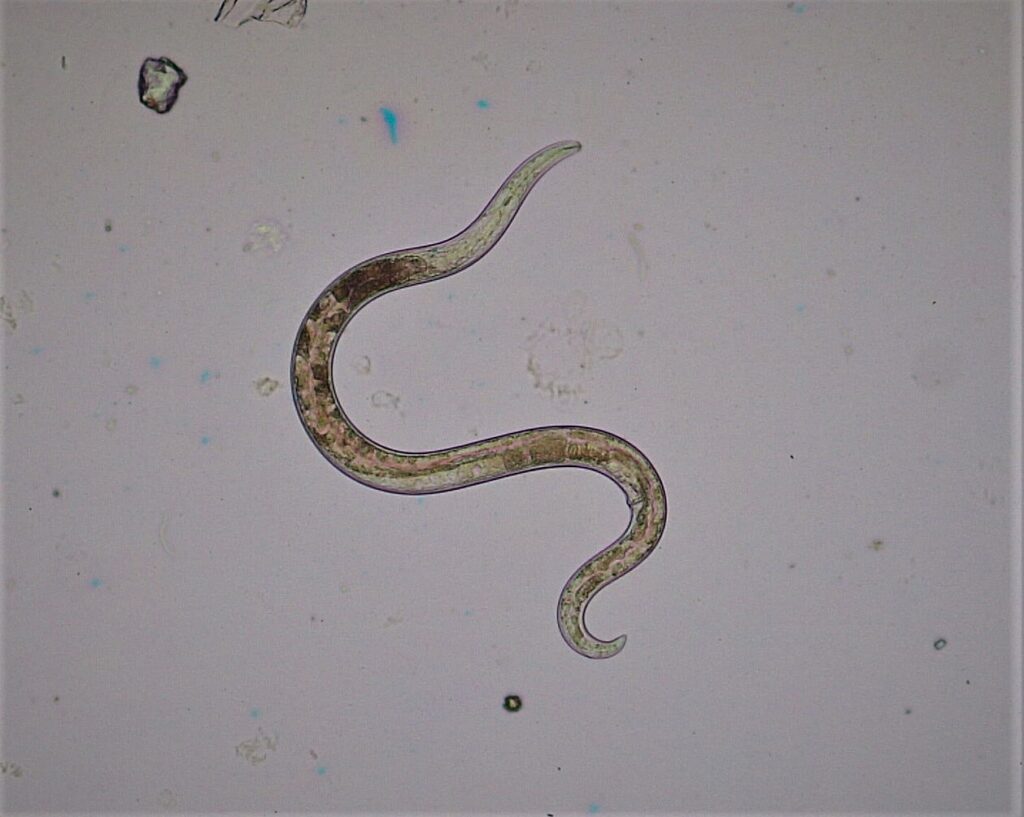
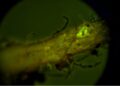
Nematodes thrive even in Chile’s Atacama Desert, where there is almost no rainfall, high salt levels in the soil, and dramatic temperature swings.
Nematodes are among the most widespread and numerous animals in soil ecosystems. With countless species worldwide, they play a vital role in maintaining ecological balance. These microscopic organisms help control bacterial populations, support nutrient cycling, and serve as indicators of soil health.
They are also remarkably adaptable. Nematodes can be found in deep ocean sediments, Arctic environments, and even highly saline soils. Their ability to endure such extremes makes them ideal organisms for studying how life persists under environmental stress.
For this project, scientists examined six distinct regions, each with different environmental conditions. These included higher-elevation areas with more moisture and vegetation, highly saline zones exposed to intense UV radiation, and fog-fed oases where plant life flourishes against the odds. Researchers collected soil samples from sand dunes, salt flats, riverbeds, and mountainous terrain. They analyzed biodiversity, reproductive strategies and population structures among the nematodes living in each environment.
Clear differences emerged across locations. At higher elevations, many nematode species reproduce asexually. This finding lends support to a long-standing but previously unconfirmed idea that asexual reproduction may offer advantages in extreme environments.
Biodiversity also followed moisture patterns. Areas that received more precipitation supported a greater variety of species. Temperature differences further influenced which nematode communities could survive in specific regions.
The results demonstrate that stable and resilient soil ecosystems can exist even in remote and severely dry landscapes. This suggests that other arid regions around the world may harbor more biodiversity than previously recognized.
At the same time, the research highlights potential risks. In some of the examined regions, simplified food webs indicate that these ecosystems are already damaged and may therefore be more susceptible to disruptions. Fragile systems with fewer ecological connections may struggle to withstand additional environmental stress.
The findings also show that broad ecological patterns, such as precipitation gradients and the influence of altitude, remain detectable even under extreme conditions and can be observed at the genetic level. Overall, the study marks an important step toward understanding how soil organisms respond to environmental change on a global scale.
Pesticides Significantly Affect Soil Life and Biodiversity
An international study published in Nature has provided the first comprehensive quantitative evidence of the prevalence and impact of agricultural pesticides in European soils. According to the study, 70 percent of European soils are contaminated with pesticides. “This contamination has a major impact on various beneficial soil organisms, such as mycorrhizal fungi and nematodes, impairing their biodiversity,” says researcher Marcel van der Heijden.
The researchers investigated the effects of 63 common chemicals on soils via 373 soil samples from fields, forests and meadows across 26 European countries. Fungicides were the most frequently found, accounting for 54 percent of all active ingredients detected. Herbicides followed with 35 percent, and finally insecticides with 11 percent. The most common active ingredient was the herbicide glyphosate. Most pesticides were found in agricultural fields, but the researchers also found pesticides in forests and meadows, where pesticides are not normally applied. This was likely due to spray drift.
Pesticides not only affect pests that damage crops; they damage beneficial soil organisms as well. The researchers examined the biodiversity of soil organisms, such as bacteria, fungi, nematodes and single-celled organisms, in soil samples. They found that pesticides drastically change living soil communities. “Mycorrhizal fungi, which are important for our crops, are particularly affected by pesticides,” said van der Heijden. Mycorrhizal fungi connect to the roots of crops and help them absorb water and nutrients. The fungicide bixafen, used to combat harmful fungi on cereals, is particularly noteworthy, as it also affects many of the soil organisms studied.
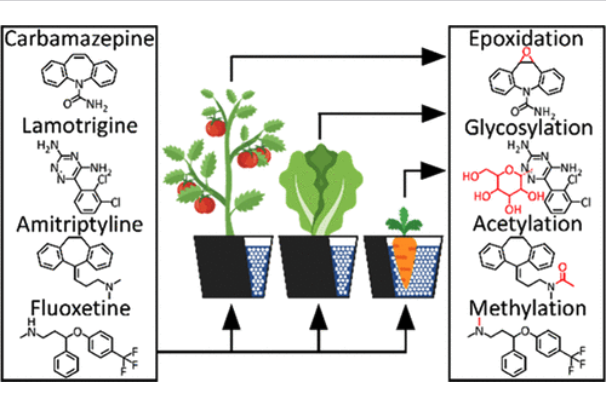
Certain crops tend to store psychoactive chemicals mainly in their leaves.
“Some soil organisms, especially various types of bacteria, benefit from the use of pesticides, probably because other organisms are reduced,” added researcher Julia Königer. The researchers were able to show that pesticide residues alter soil function. They demonstrated this by testing key genes for soil functions, such as the recovery and release of nutrients like phosphorus and nitrogen. “This suggests that the natural function of the affected soil is reduced, and additional fertilization is necessary to maintain yields,” said van der Heijden.
The harmful effects of various pesticides on birds, bees and other insects have long been known and documented. Since some pesticides are difficult to break down, they remain in the soil for years after application and have a major long-term impact on the soil ecosystem.
Crops Irrigated with Wastewater Store Drugs in Their Leaves
In regions where freshwater supplies are limited, farmers sometimes rely on treated wastewater to water their crops. While this practice helps conserve scarce water resources, it has raised concerns among regulators and consumers. Wastewater can contain trace amounts of various substances, including psychoactive medications commonly used to treat mental health conditions.
New research from Johns Hopkins University suggests that certain crops — tomatoes, carrots, and lettuce — tend to store these chemicals mainly in their leaves. This finding may be reassuring for people who eat tomatoes and carrots, since the parts we typically consume are the fruit and the roots rather than the leaves.
The study, published in Environmental Science and Technology, is part of a broader effort to understand the safety of irrigating crops with municipal wastewater. In most cases, this water has already been processed through treatment facilities before being reused.

The researchers examined four psychoactive pharmaceuticals frequently detected in treated wastewater: carbamazepine, lamotrigine, amitriptyline and fluoxetine. These medications are prescribed to treat conditions such as depression, bipolar disorder and seizures. To study how plants interact with these drugs, the researchers grew tomatoes, carrots and lettuce in a temperature-controlled chamber. The plants were supplied with a nutrient solution made of ultrapure water, salts, nutrients and one of the medications for as long as 45 days.
Scientists then collected samples from various parts of each plant. Using advanced chemical analysis, they investigated how the medications were taken up by the plants, what byproducts formed as the plants processed them, and where those substances ended up within the plant tissues.
The analysis showed that pharmaceuticals and their breakdown products largely accumulated in leaves. Tomato leaves contained more than 200 times the concentration of these compounds compared with the tomato fruits. In carrots, the leaves had roughly seven times the levels found in the edible roots.
The way water flows through plants likely helps explain the pattern. Water carries nutrients and other molecules throughout the plant, moving upward from the roots through the stem and into the leaves. Pharmaceutical compounds travel along with this flow. When water reaches the leaves, it evaporates through tiny openings known as stomata. As the water escapes, the remaining drug compounds are left behind in the leaf tissue.
Because plants cannot easily remove these substances, the compounds tend to remain inside their tissues. Some become embedded in the cell walls of leaves, while others are placed into structures called vacuoles, which act as storage compartments that hold unwanted materials inside cells. Over time, these pharmaceuticals and their byproducts can accumulate in the plant tissue since there is no efficient way for the plant to eliminate them.
The study also found that plants handle different drugs in different ways. For instance, the epilepsy medication lamotrigine and its byproducts appeared at relatively low levels across all plant tissues. Carbamazepine showed a different pattern. It accumulated in higher concentrations throughout the plant, including the edible carrot roots, tomato fruits, and lettuce leaves. If regulators eventually examine possible health risks, identifying which medications tend to build up in edible plant parts could help guide those assessments.
How a Potential Antibiotics Ban Could Affect Apple Growers
Antibiotic resistance in human and animal health is at the forefront of public debate, but it’s a less well-known issue in plant agriculture. However, antibiotics are important tools in fruit production, and their efficacy hinges on avoiding resistance in disease-causing bacteria.
The U.S. does not currently restrict the use in fruit orchards, but regulatory measures could occur in the future. A new study from the University of Illinois Urbana-Champaign examines how apple growers might respond to a potential ban on antibiotics and how those responses could affect management decisions and profitability.
“The majority of antibiotics in plant agriculture are used on fire blight in pear and apple orchards. Growers face a dilemma because they must treat their trees to protect them, but they run the risk of overusing the pesticides, so the disease develops resistance,” said lead author Khashi Ghorbani.
Fire blight is a devastating bacterial disease that causes flowers, leaves, and fruit to wilt and die, and it can severely damage affected orchards. Treatment options are limited, but spraying blossoms with an antibiotic such as streptomycin can protect against the disease. Controlling for fire blight is a significant expense; growers spent an average of $250 per acre on preventative sprays during a 2017-18 disease outbreak in Washington State, the country’s premier apple-producing state.
“The U.S. already has numerous federal and state restrictions on other pesticides and fungicides, so a ban on streptomycin is quite possible,” said co-author Shadi Atallah.
The researchers developed a dynamic model that evaluates growers’ management decisions regarding antibiotic use when there is uncertainty about whether a ban will be enforced. Their modelling scenario assumed two types of growers, representing opposite ends of a spectrum. The researchers note that these are extreme positions, and most grower strategies would fall somewhere in the middle.
At one end of the spectrum is the “business as usual” grower, who continues to apply antibiotics at the optimal levels based on a long time horizon, without planning for a future ban. At the other end of the spectrum is the proactive grower, who would adjust their spraying schedule according to the looming ban. They would increase their antibiotic use to ensure maximum efficiency before the product is no longer available.
Ghorbani and Atallah found that the proactive grower is going to benefit from this strategy if the government enforces the ban. However, if the ban does not happen, the business-as-usual grower will be better off.
“Imagine that 10 years from now, you have adjusted your application according to a potential ban, but it does not materialize. You will be in a situation where you still have access to the pesticide, but the efficacy is not there anymore because you have depleted the resource,” Ghorbani said.
They also looked at whether the value of the crop influences the outcome, as antibiotic efficacy can be considered a non-renewable resource that derives its value from the crop it protects, rather than having intrinsic value. They found that growers of lower-value apple varieties, such as Fuji and Gala, are more vulnerable to regulatory uncertainty and suffer the most damage from it, while those who grow higher-value varieties, such as Honeycrisp, are less affected.
“We found that the negative impact for proactive growers diminished as the crop value increased. It underscores that crop choices can have a long-term impact on the economics of the farm, and that higher value crops can help mitigate the uncertainty that comes from policy shifts,” Ghorbani said.
“As U.S. administrations come and go, regulatory priorities change, and there is considerable uncertainty regarding policies towards herbicides and pesticides,” Atallah said. “Our model is a planning tool that tells you what would happen under different circumstances.”
The study demonstrates to policymakers how uncertainty affects the decisions of farmers and what the economic and ecological consequences might be. The findings can also illustrate how growers of different apple varieties would need to be compensated for production losses, considering their management decisions and possible incentives for their actions.