Modern soil DNA testing reveals the rich microbiology of Amazonian Dark Earth
The story of terra preta — known scientifically as Amazonian Dark Earth (ADE) — lies at the intersection of history, archeology, geology and soil science. The mystery and potential of ADE is alive today as modern agribusiness struggles to maintain soil productivity. Understanding ADE — particularly, as discussed below, the microbiological diversity it helps create — could help regenerative agriculture create profound global impacts on the environment and society.
In Dirt: The Erosion of Civilizations, David Montgomery makes a compelling geology-based argument that the degradation of anthrosols (soils modified by human use) over the course of hundreds and thousands of years led to the downfall of many civilizations. Modern agriculture similarly tends to extract resources from the soil and does not follow the fundamental law of return — the necessity of the farmer to put back into the soil the organic matter that was removed via harvest.
While ADE may seem comparable to the soil created by modern organic cultivation practices, ADE’s unique chemistry and physical composition leads to a more dynamic and robust microbiome, which creates exceptional fertility and longevity.
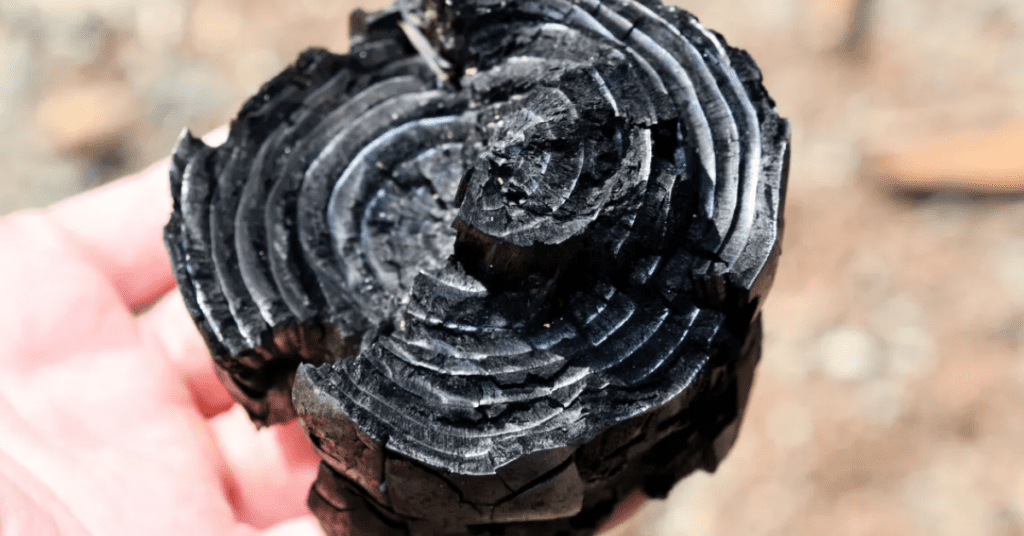
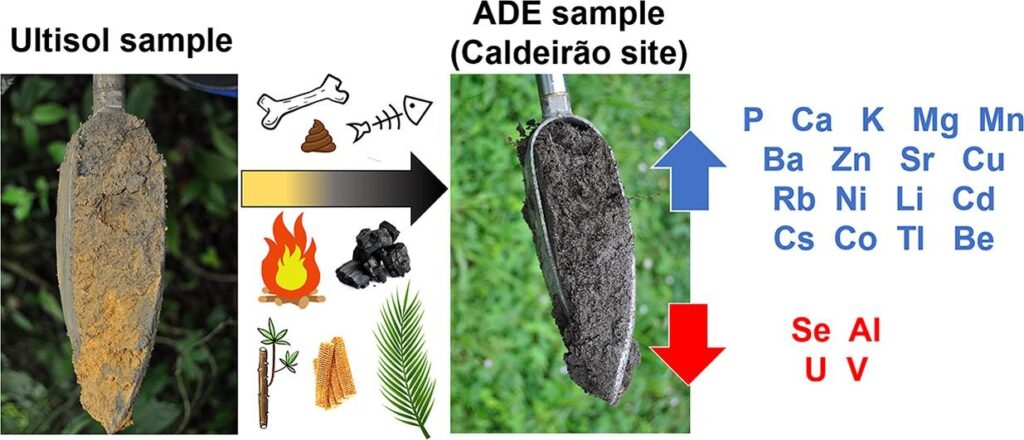
ADE is not an isolated phenomenon. Ancient, rich anthrosols developed for highly productive agricultural use have been also identified by archaeologists in Africa, Mexico and Germany. These farmers applied composted agricultural waste, charcoal, broken pottery and other organic waste products to the soil — a practice that increased elemental nutrients, improved water holding capacity, and aided in drainage. A study from 2019 analyzed 300 samples of ADE discovered elevated nutrient levels, including of P, Ca, K, Mg, Mn, Ba, Zn, Sr, Cu, Rb, Ni, Li, Cd, Cs, Co, Tl and Be. One of the most striking aspects of ADE — one that is currently being adopted by many organic producers — is that the fraction of biochar, or black carbon, is about 70 percent higher than adjacent jungle ultisols (soils in humid areas that are typically highly weathered).
This enhanced nutrition and tilth leads to more dynamic microbial populations in ADE. Methods for identifying microbial communities have advanced enormously in recent years, particularly with the development of DNA analysis that uses denaturing gradient gel electrophoresis to extract the DNA from microbes. This has allowed researchers to understand dynamic soil microbial communities in much greater detail.
Staggering differences in both fungal and bacterial communities have been observed and quantified in ADE compared to adjacent soil. The new techniques show that archaea communities (single-celled organisms similar to bacteria) in ADE and adjacent soils differ in their genetic banding patterns by over 90 percent. Remarkably, ADE microbial communities have similarities with the microbiomes of rice paddy soils, specifically in their being inhabited by Verrucomicrobia. Verrucomicrobia are a fascinating phylum of gram-negative bacteria that have been shown to be exceptionally beneficial in decomposition, nutrient cycling, carbon sequestration, plant growth promotion and soil stability; they even thrive in the human digestive tract. These robust bacteria have been shown to flourish in both aerobic and anaerobic environments (like rice paddies in the tropics). The presence of robust facultative bacteria like Verrucomicrobia is likely one of the keys to understanding the incredible generative nature of ADE.

Another revealing microbial study discovered an increase of Firmicutes from 2.3 percent in adjacent ultisols to 37.1 percent in ADE — a difference of more than 1,500 percent. Firmicutes are a phylum of bacteria that include a wide range of species with diverse functions, including decomposition, nutrient cycling, plant growth promotion, antibiotic production and bioremediation. Proteobacteria and Actinobacteria were also shown to have higher populations in ADE than in adjacent soils; these bacteria have similar functions to the Firmicutes and Verrucomicrobia.
Perhaps most exciting, two families of bacteria that are generally considered to be novel were found in ADE. These possibly new bacterial families fall into the α-Proteobacteria group, newly classified as Alphaproteobacteria. These potentially novel bacteria appear to have many beneficial functions in the soil, including nutrient cycling, decomposition, plant growth promotion and disease suppression.
Increased fungal activity was also observed in ADE compared to adjacent ultisols. Like the bacteria, differences in fungal communities in ADE are driven by elemental mineral levels, specifically increased P, Ca, Zn, Mg, B, Fe and carbon, all of which are a result of the addition of organic materials. Studies revealed that fungal communities in different samples of ADE were more similar to each other than to the typical jungle ultisols.
Ancient farmers incorporated charcoal or biochar into the soil, directly increasing the black-carbon content, which leads to a higher cation exchange capacity in the soil, thus reducing nutrient leaching, enabling nutrient retention capacity and enhancing crop yields. The benefits of black carbon and biochar are well documented; they create an optimal habitat for beneficial bacteria and fungi. Researchers studying the fungal communities from the black carbon fraction of ADE discovered significant levels of Acremonium Vitellinum (yellow mold). Acremonium Vitellinum are beneficial to plants, helping them decompose and forming mycorrhizal associations with plant roots. Interestingly, other fungal communities specifically identified in black carbon were found to have higher populations of entomopathogenic fungi like cordyceps. These fungi can infect insects as part of their natural life cycle and can help reduce pest pressure.
ADE was created by humans and microbes in tandem. Ancient Amazonian farmers modified the physical and chemical structure of the soil, increasing nutrients and raising the pH, which in turn improved the microbial community in terms of richness and multifunctionality, making it a more resilient soil. The microbes further improved the soil by cycling nutrients efficiently. This partnership — farmers and microbes working together — is a basic reflection of the synergy that happens in nature. The dynamic, fertile soil, in contrast to the adjacent ultisol, was able to sustain intensive agriculture and, therefore, a large indigenous population.
Ancient Amazonian farmers were masters of their craft. Few other cultures can claim they were true stewards of the land — improving it instead of degrading it. Learning from the past is essential for the future of agriculture.
Craig Hartsough is a master’s degree student in horticulture at Texas Tech University. As a dedicated farmer and plant scientist, his primary interests include abiotic environmental factors affecting crop physiology and regenerative agriculture.
| Studies used in this article: “Amazonian Dark Earths: Wim Sombroek’s Vision,” by William I. Woods et al. “Amazonian Dark Earths: Origin Properties Management,” by Johannes Lehmann et al. |