


Acres U.S.A.® Magazine
  • Articles
    • News
    • Ecological farming
      • Climate
      • Environmental Issues
      • Farm management & planning
      • Human health
    • Livestock
    • Farm
    • Crop
      • Crop management practices
        • Ag technology
        • Cover crops
        • Crop nutrition
          • Crop protection
          • Diseases
        • Crops
        • Fruits
    • Soil
    • Opinion
  • Resources
    • Magazine
    • Online Learning
    • Newsletters
    • Free Articles
    • Blog
  • Magazine Issues
    • 2026
      • March 2026
      • February 2026
      • January 2026
    • 2025
      • December 2025
      • November 2025
      • October 2025
      • September 2025
      • August 2025
      • July 2025
      • June 2025
      • May 2025
      • April 2025
      • March 2025
      • February 2025
      • January 2025
    • 2024
      • December 2024
      • November 2024
      • October 2024
      • September 2024
      • August 2024
      • July 2024
      • June 2024
      • May 2024
      • April 2024
      • March 2024
      • February 2024
      • January 2024
    • 2023
      • December 2023
      • November 2023
      • October 2023
      • August 2023
      • July 2023
      • June 2023
      • May 2023
      • April 2023
      • March 2023
      • February 2023
      • January 2023
    • 2022
      • December 2022
      • November 2022
      • October 2022
      • September 2022
      • August 2022
      • July 2022
      • June 2022
      • May 2022
      • April 2022
      • March 2022
      • February 2022
  • About Us
    • Our History
    • Our Staff
    • Contact Us
    • Community
      • Soil Health Primer Resources
  • Events
    • Eco-Ag Conference
    • Farm Weird Event
    • Viroqua On Farm Event
  • Subscribe
  • Login
  • Register
No Result
View All Result
  • Articles
    • News
    • Ecological farming
      • Climate
      • Environmental Issues
      • Farm management & planning
      • Human health
    • Livestock
    • Farm
    • Crop
      • Crop management practices
        • Ag technology
        • Cover crops
        • Crop nutrition
          • Crop protection
          • Diseases
        • Crops
        • Fruits
    • Soil
    • Opinion
  • Resources
    • Magazine
    • Online Learning
    • Newsletters
    • Free Articles
    • Blog
  • Magazine Issues
    • 2026
      • March 2026
      • February 2026
      • January 2026
    • 2025
      • December 2025
      • November 2025
      • October 2025
      • September 2025
      • August 2025
      • July 2025
      • June 2025
      • May 2025
      • April 2025
      • March 2025
      • February 2025
      • January 2025
    • 2024
      • December 2024
      • November 2024
      • October 2024
      • September 2024
      • August 2024
      • July 2024
      • June 2024
      • May 2024
      • April 2024
      • March 2024
      • February 2024
      • January 2024
    • 2023
      • December 2023
      • November 2023
      • October 2023
      • August 2023
      • July 2023
      • June 2023
      • May 2023
      • April 2023
      • March 2023
      • February 2023
      • January 2023
    • 2022
      • December 2022
      • November 2022
      • October 2022
      • September 2022
      • August 2022
      • July 2022
      • June 2022
      • May 2022
      • April 2022
      • March 2022
      • February 2022
  • About Us
    • Our History
    • Our Staff
    • Contact Us
    • Community
      • Soil Health Primer Resources
  • Events
    • Eco-Ag Conference
    • Farm Weird Event
    • Viroqua On Farm Event
  • Subscribe
No Result
View All Result
Acres U.S.A.® Magazine
No Result
View All Result
Home Magazine issues May 2026

View from the Country

Acres U.S.A. by Acres U.S.A.
May 1, 2026
in May 2026, View from the Country
0
View from the Country

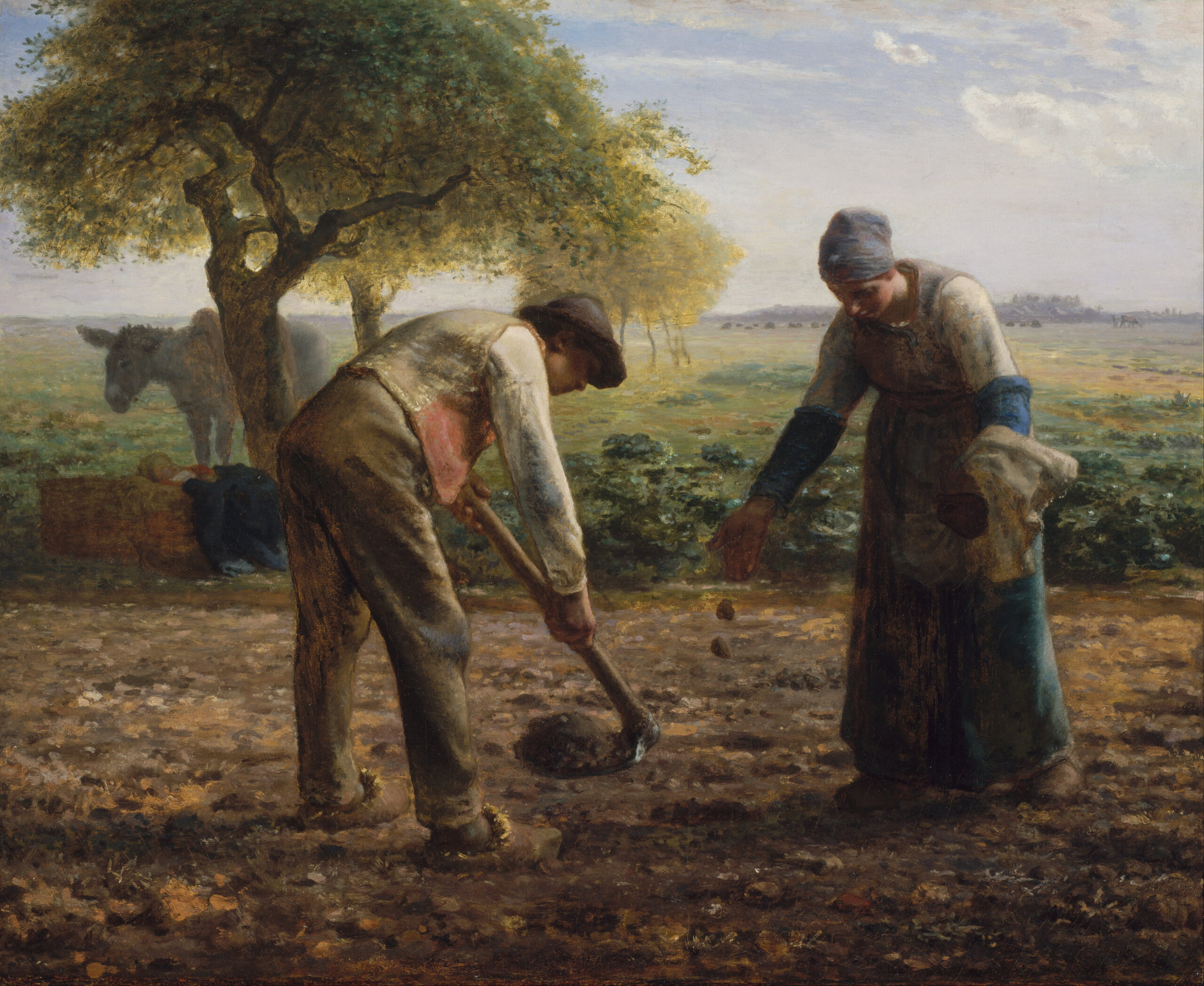
J.F. Millet - Potato Planters

0
SHARES
11
VIEWS
Share on FacebookShare on Twitter

I’ve been extremely frustrated in recent years by one of the frost-free hydrants that I need for my hoophouse and greenhouse. I’ve had to dig four feet down to fix it twice. Some of that is my own fault — leaving hoses attached during a freeze, but some is the original design and materials. Either way, it’s become one of those huge problems in my mind that I just want to go away.

I shouldn’t feel this way. A faucet is a complicated problem, but it isn’t a complex one.

There are important differences between complication and complexity. Complicated problems are those that follow logical rules and can be understood and solved by humans. Rockets, wrist watches and frost-free hydrants are complicated technologies, but they follow predictable patterns and can be fixed.

Complexity, on the other hand, is something that has order and logic but that is also unpredictable. We as humans cannot fully control complex systems. 

Complexity implies a thought-through design. Nature is complex. Not only do healthy soils contain a diversity of microorganisms; those bacteria, fungi, and algae — millions of different species and varieties — interact with each other and with plants in ways that we only understand in the most basic ways. The functions of the organelles within the single cell of any one type of bacteria are similarly complex. The molecules that make up the organelles are continually reacting with each other in almost infinitely different ways. The atoms that make up those molecules are made up of quarks, and maybe those are made of something else too, and we don’t understand the physics that make any of it work.


Complexity, then, is something to respect, to be in awe of, and to appreciate – not a problem to attempt to solve.

I realized recently that I was even confusing the complex with the complicated in my own relationships. I often err in thinking, “That’s too complicated”, and try to just make interpersonal problems go away. The better, more loving answer is to appreciate another person’s complexity. The person I wrongly judge as too complicated is actually concerned with many good things that I should likely be concerned with myself. 

We do something analogous in farming when we think of weeds and pests as complications. Just get rid of the problem with this simple chemical solution, we’re told. The better course of action, of course, is to embrace the complexity. Weeds and pests — along with all the other plants, insects and animals on our farms — are there for a reason. They exist within a complex ecosystem that we do need to disturb in order to grow crops, but the ecosystem is too complex to fully control as humans. It’s much better to try to manage the complexity by encouraging nature than to just eliminate unwanted complications.

Don’t treat complicated but solvable problems, like frost-free hydrants, as complex. More importantly, though, don’t treat complex systems like nature (and people!) as mere complications that we can control.

And that’s the view from the country.

← Previous May 2026 • Issue #659 Next Choosing Pesti-sides →
Tags: Complexity
Acres U.S.A.

Acres U.S.A.

North America’s oldest publisher on production-scale organic and regenerative farming. For more than 50 years, our mission has been to help farmers, ranchers and market gardeners grow food profitably, regeneratively, and with nature in mind.

Next Post
Yes, There Are Enough Organic Wastes

Yes, There Are Enough Organic Wastes

Please login to join discussion
  • Trending
  • Comments
  • Latest
The Most Important Livestock in Our Fields

The Most Important Livestock in Our Fields

July 1, 2024
Glyphosate Does What It’s Designed to Do — Kill

Glyphosate Does What It’s Designed to Do — Kill

February 19, 2025
USDA organic seal over American farm land

Losing Organic Farms

January 27, 2026
The Take-Half, Leave-Half Fallacy

The Take-Half, Leave-Half Fallacy

July 1, 2025
We Don’t Need Another Bridge — We Need an Off-Ramp

We Don’t Need Another Bridge — We Need an Off-Ramp

3
Under One Roof

Under One Roof

3
A Rose By Any Other Name

A Rose By Any Other Name

2
Terra Preta’s Biological Advantage

Terra Preta’s Biological Advantage

2
Yes, There Are Enough Organic Wastes

Yes, There Are Enough Organic Wastes

May 7, 2026
Apple blossoms infected with fire blight.

ECO-UPDATE

May 1, 2026
View from the Country

View from the Country

May 1, 2026
May 2026 • Issue #659

May 2026 • Issue #659

May 2, 2026

Recent News

Yes, There Are Enough Organic Wastes

Yes, There Are Enough Organic Wastes

May 7, 2026
Do GMO Crops Uptake Nutrients Differently?

Do GMO Crops Uptake Nutrients Differently?

May 2, 2026
ECO-MEETINGS

ECO-MEETINGS

May 2, 2026
The Solution Lies in Trees

The Solution Lies in Trees

May 2, 2026

About ACRES USA

Acres U.S.A.® Magazine

Acres U.S.A.® is North America’s oldest publisher on production-scale organic and regenerative farming. For more than 50 years, our mission has been to help farmers, ranchers and market gardeners grow food profitably and sustainably, with nature in mind.

Magazine Issues

  • News
  • 2025
    • June 2025
    • May 2025
    • April 2025
    • March 2025
    • February 2025
    • January 2025
  • 2024 Articles
    • December 2024
    • November 2024
    • October 2024
    • September 2024
    • August 2024
    • July 2024
    • June 2024
    • May 2024
    • April 2024
    • March 2024
    • February 2024
    • January 2024
  • December 2023
    • December 2023
    • November 2023
    • October 2023
    • August 2023
    • July 2023
    • June 2023
    • May 2023
    • April 2023
    • March 2023
    • February 2023
    • January 2023
  • December 2022
    • November 2022
    • October 2022
    • September 2022
    • August 2022
    • July 2022
    • June 2022
    • May 2022
    • April 2022
    • March 2022

Contact Acres U.S.A

  • Contact Us
  • About Us
  • Advertise With Acres U.S.A.
  • My Subscription

Learn

  • Resources
  • Events
  • Magazine
  • Newsletters
  • Free Articles
  • Webinars
  • Online Courses
  • Bookstore

Our All Socials

Follow With Us...

  • My account
  • News
  • Ecological farming
  • Refund and Returns Policy
  • Privacy & Policy

© 2024 Acers USA Magazine

Welcome Back!

Login to your account below

Forgotten Password? Sign Up

Create New Account!

Fill the forms below to register

All fields are required. Log In

Retrieve your password

Please enter your username or email address to reset your password.

Log In

Create a free account, or log in.

Gain access to read this article, plus limited free content.

Yes! I would like to receive new content and updates.

Upgrade your subscription

Support Acres USA and get full access to all content.
Upgrade Now
No Result
View All Result
  • HOME
  • ARTICLES
    • News
    • Farm
    • Ecological farming
    • Livestock
    • Crop
      • Crop management practices
      • Cover crops
      • Crop nutrition
      • Crop protection
      • Crops
      • Ag technology
    • Soil
    • Opinion
  • RESOURCES
    • Magazine
    • Online Learning
    • Newsletters
    • Blog
    • Free Articles
  • MAGAZINE ISSUES
    • 2025
      • June 2025
      • May 2025
      • April 2025
      • March 2025
      • February 2025
      • January 2025
    • 2024
      • December 2024
      • November 2024
      • October 2024
      • September 2024
      • August 2024
      • July 2024
      • June 2024
      • May 2024
      • April 2024
      • March 2024
      • February 2024
      • January 2024
    • 2023
      • December 2023
      • November 2023
      • October 2023
      • August 2023
      • July 2023
      • June 2023
      • May 2023
      • April 2023
      • March 2023
      • February 2023
      • January 2023
  • ABOUT US
    • Our History
    • Our Staff
    • Contact Us
    • Community
      • Soil Health Primer Resources
  • EVENTS
    • Eco-Ag Conference
    • On-Farm Viroqua Event
    • Farm Weird
  • SUBSCRIBE
  • Login
  • Sign Up
  • Cart

© 2024 Acers USA Magazine

Are you sure want to unlock this post?
Unlock left : 0
Are you sure want to cancel subscription?