Acres U.S.A.® Magazine
  • Articles
    • News
    • Ecological farming
      • Climate
      • Environmental Issues
      • Farm management & planning
      • Human health
    • Livestock
    • Farm
    • Crop
      • Crop management practices
        • Ag technology
        • Cover crops
        • Crop nutrition
          • Crop protection
          • Diseases
        • Crops
        • Fruits
    • Soil
    • Opinion
  • Resources
    • Magazine
    • Online Learning
    • Newsletters
    • Free Articles
    • Blog
  • Magazine Issues
    • 2025
      • October 2025
      • September 2025
      • August 2025
      • July 2025
      • June 2025
      • May 2025
      • April 2025
      • March 2025
      • February 2025
      • January 2025
    • 2024
      • December 2024
      • November 2024
      • October 2024
      • September 2024
      • August 2024
      • July 2024
      • June 2024
      • May 2024
      • April 2024
      • March 2024
      • February 2024
      • January 2024
    • 2023
      • December 2023
      • November 2023
      • October 2023
      • August 2023
      • July 2023
      • June 2023
      • May 2023
      • April 2023
      • March 2023
      • February 2023
      • January 2023
    • 2022
      • December 2022
      • November 2022
      • October 2022
      • September 2022
      • August 2022
      • July 2022
      • June 2022
      • May 2022
      • April 2022
      • March 2022
      • February 2022
  • About Us
    • Our History
    • Our Staff
    • Contact Us
    • Community
      • Soil Health Primer Resources
  • Events
    • Eco-Ag Conference
    • Farm Weird Event
    • Viroqua On Farm Event
  • Subscribe
  • Login
  • Register
No Result
View All Result
  • Articles
    • News
    • Ecological farming
      • Climate
      • Environmental Issues
      • Farm management & planning
      • Human health
    • Livestock
    • Farm
    • Crop
      • Crop management practices
        • Ag technology
        • Cover crops
        • Crop nutrition
          • Crop protection
          • Diseases
        • Crops
        • Fruits
    • Soil
    • Opinion
  • Resources
    • Magazine
    • Online Learning
    • Newsletters
    • Free Articles
    • Blog
  • Magazine Issues
    • 2025
      • October 2025
      • September 2025
      • August 2025
      • July 2025
      • June 2025
      • May 2025
      • April 2025
      • March 2025
      • February 2025
      • January 2025
    • 2024
      • December 2024
      • November 2024
      • October 2024
      • September 2024
      • August 2024
      • July 2024
      • June 2024
      • May 2024
      • April 2024
      • March 2024
      • February 2024
      • January 2024
    • 2023
      • December 2023
      • November 2023
      • October 2023
      • August 2023
      • July 2023
      • June 2023
      • May 2023
      • April 2023
      • March 2023
      • February 2023
      • January 2023
    • 2022
      • December 2022
      • November 2022
      • October 2022
      • September 2022
      • August 2022
      • July 2022
      • June 2022
      • May 2022
      • April 2022
      • March 2022
      • February 2022
  • About Us
    • Our History
    • Our Staff
    • Contact Us
    • Community
      • Soil Health Primer Resources
  • Events
    • Eco-Ag Conference
    • Farm Weird Event
    • Viroqua On Farm Event
  • Subscribe
No Result
View All Result
Acres U.S.A.® Magazine
No Result
View All Result
Home General

Crimp & Cover

Arianna Bozzolo by Arianna Bozzolo
October 1, 2025
in General
0
Crimp & Cover

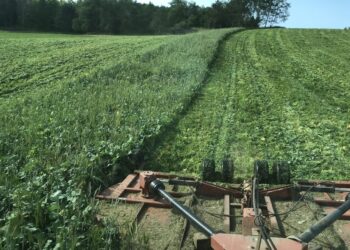
Cover crops were terminated at cereal rye anthesis using a 10-foot I&J roller-crimper; occultation followed to fully kill the cover crop.

0
SHARES
33
VIEWS
Share on FacebookShare on Twitter

High-residue cover crops improve soil health and vegetable yields in coastal California

By Arianna Bozzolo and Jacob Pecenka

Recent trials at the Rodale Institute California Organic Center evaluated a reduced-tillage, high-residue cover crop system for organic vegetable production. The system combined roller-crimped cereal rye and field pea cover crops with silage tarping (occultation) to suppress weeds and enhance soil health. 

Compared to standard organic beds managed with tillage, the high-residue system resulted in lower weed pressure, improved soil fertility indicators and significantly higher yields across three vegetable crops.
System Overview

Cover crops were seeded in February (2023 and 2024) using a broadcast method, then terminated at cereal rye anthesis using a 10-foot I&J roller-crimper. The crimper flattened the biomass without disturbing soil structure or damaging buried drip irrigation. Immediately after crimping, beds were covered with a black UV-treated silage tarp for two to three weeks to complete termination and suppress weed germination. Transplants were then established directly into the mulch layer without additional tillage or in-season fertility amendments. 

The system was implemented on raised beds spaced 36 inches center-to-center with approximately 30-inch bed tops. Drip irrigation lines were installed at the time of cover crop seeding and remained in place throughout the season. Despite operating directly over the beds, the roller-crimper did not damage the drip lines, as its smooth, blunt blades are designed to flatten biomass without cutting into the soil.

Results

  • Weed biomass was reduced by over 80 percent in the cover crop system compared to tilled bare soil.
  • Soil moisture was consistently 18-20 percent higher in high-residue beds.
  • Soil organic matter increased by up to 44 percent in cover cropped treatments over two seasons.
  • Crop yields improved substantially:
    • Zucchini: +82 percent
    • Peppers: +169 percent
    • Eggplants: +189 percent

Key Considerations

  • Termination timing is critical; cereal rye was crimped at anthesis for effective kill and residue persistence.
  • Roller-crimper compatibility depends on bed size and irrigation setup. In this trial, 36-inch raised beds with drip tape installed below the soil surface accommodated the crimper without damage.
  • Tarping (occultation) following crimping enhanced weed suppression and cover crop kill without chemical inputs.
  • Crop response was particularly strong in longer-season vegetables like peppers and eggplants, which benefited from sustained moisture and reduced weed competition.
  • Although cereal rye and field pea were effective, other options such as triticale, barley, hairy vetch or fava beans may offer complementary benefits depending on climate, soil type and fertility needs. Selecting species that reach maturity at the same time and produce sufficient biomass is essential for successful crimping and residue persistence.

These results suggest that reduced tillage systems using roller-crimped cover crops and tarping can offer a viable alternative to plastic mulch and repeated tillage in organic vegetable systems. In Mediterranean climates like coastal California, where year-round production often limits cover crop integration, this approach provides a promising strategy to improve soil health, reduce labor and maintain or increase yield.

Arianna Bozzolo is the research director at the Rodale Institute California Organic Center in Camarillo, California, and Jacob Pecenka is a post-doctoral research associate at the Center.


← Previous Coffee Cover Next Widen the On-Ramp →
Arianna Bozzolo

Arianna Bozzolo

Arianna Bozzolo is the research director at the Rodale Institute California Organic Center in Camarillo, California, and Jacob Pecenka is a post-doctoral research associate at the Center.

Next Post
National Organic Program Employees Furloughed

National Organic Program Employees Furloughed

  • Trending
  • Comments
  • Latest
The Most Important Livestock in Our Fields

The Most Important Livestock in Our Fields

July 1, 2024
Glyphosate Does What It’s Designed to Do — Kill

Glyphosate Does What It’s Designed to Do — Kill

February 19, 2025
The Take-Half, Leave-Half Fallacy

The Take-Half, Leave-Half Fallacy

July 1, 2025
White snakeroot

Toxic Forages?

September 1, 2025
We Don’t Need Another Bridge — We Need an Off-Ramp

We Don’t Need Another Bridge — We Need an Off-Ramp

3
Under One Roof

Under One Roof

3
A Rose By Any Other Name

A Rose By Any Other Name

2
Terra Preta’s Biological Advantage

Terra Preta’s Biological Advantage

2
Don’t You Dare Disparage Sugar!

Don’t You Dare Disparage Sugar!

February 3, 2026
February 2026 • Issue #656

February 2026 • Issue #656

February 1, 2026
Fungal Exchange Capacity

Fungal Exchange Capacity

February 1, 2026
ECO-MEETINGS

ECO-MEETINGS

February 1, 2026

Recent News

Don’t You Dare Disparage Sugar!

Don’t You Dare Disparage Sugar!

February 3, 2026
February 2026 • Issue #656

February 2026 • Issue #656

February 1, 2026
Fungal Exchange Capacity

Fungal Exchange Capacity

February 1, 2026
ECO-MEETINGS

ECO-MEETINGS

February 1, 2026

About ACRES USA

Acres U.S.A.® Magazine

Acres U.S.A.® is North America’s oldest publisher on production-scale organic and regenerative farming. For more than 50 years, our mission has been to help farmers, ranchers and market gardeners grow food profitably and sustainably, with nature in mind.

Visit Our Advertisers

Magazine Issues

  • News
  • 2025
    • June 2025
    • May 2025
    • April 2025
    • March 2025
    • February 2025
    • January 2025
  • 2024 Articles
    • December 2024
    • November 2024
    • October 2024
    • September 2024
    • August 2024
    • July 2024
    • June 2024
    • May 2024
    • April 2024
    • March 2024
    • February 2024
    • January 2024
  • December 2023
    • December 2023
    • November 2023
    • October 2023
    • August 2023
    • July 2023
    • June 2023
    • May 2023
    • April 2023
    • March 2023
    • February 2023
    • January 2023
  • December 2022
    • November 2022
    • October 2022
    • September 2022
    • August 2022
    • July 2022
    • June 2022
    • May 2022
    • April 2022
    • March 2022

Contact Acres U.S.A

  • Contact Us
  • About Us
  • Advertise With Acres U.S.A.
  • My Subscription

Learn

  • Resources
  • Events
  • Magazine
  • Newsletters
  • Free Articles
  • Webinars
  • Online Courses
  • Bookstore

Our All Socials

Follow With Us...

  • My account
  • News
  • Ecological farming
  • Refund and Returns Policy
  • Privacy & Policy

© 2024 Acers USA Magazine

Welcome Back!

Login to your account below

Forgotten Password? Sign Up

Create New Account!

Fill the forms below to register

All fields are required. Log In

Retrieve your password

Please enter your username or email address to reset your password.

Log In
No Result
View All Result
  • HOME
  • ARTICLES
    • News
    • Farm
    • Ecological farming
    • Livestock
    • Crop
      • Crop management practices
      • Cover crops
      • Crop nutrition
      • Crop protection
      • Crops
      • Ag technology
    • Soil
    • Opinion
  • RESOURCES
    • Magazine
    • Online Learning
    • Newsletters
    • Blog
    • Free Articles
  • MAGAZINE ISSUES
    • 2025
      • June 2025
      • May 2025
      • April 2025
      • March 2025
      • February 2025
      • January 2025
    • 2024
      • December 2024
      • November 2024
      • October 2024
      • September 2024
      • August 2024
      • July 2024
      • June 2024
      • May 2024
      • April 2024
      • March 2024
      • February 2024
      • January 2024
    • 2023
      • December 2023
      • November 2023
      • October 2023
      • August 2023
      • July 2023
      • June 2023
      • May 2023
      • April 2023
      • March 2023
      • February 2023
      • January 2023
  • ABOUT US
    • Our History
    • Our Staff
    • Contact Us
    • Community
      • Soil Health Primer Resources
  • EVENTS
    • Eco-Ag Conference
    • On-Farm Viroqua Event
    • Farm Weird
  • SUBSCRIBE
  • Login
  • Sign Up
  • Cart

© 2024 Acers USA Magazine

Are you sure want to unlock this post?
Unlock left : 0
Are you sure want to cancel subscription?