
Acres U.S.A.® Magazine
  • Articles
    • News
    • Ecological farming
      • Climate
      • Environmental Issues
      • Farm management & planning
      • Human health
    • Livestock
    • Farm
    • Crop
      • Crop management practices
        • Ag technology
        • Cover crops
        • Crop nutrition
          • Crop protection
          • Diseases
        • Crops
        • Fruits
    • Soil
    • Opinion
  • Resources
    • Magazine
    • Online Learning
    • Newsletters
    • Free Articles
    • Blog
  • Magazine Issues
    • 2026
      • February 2026
      • January 2026
    • 2025
      • December 2025
      • November 2025
      • October 2025
      • September 2025
      • August 2025
      • July 2025
      • June 2025
      • May 2025
      • April 2025
      • March 2025
      • February 2025
      • January 2025
    • 2024
      • December 2024
      • November 2024
      • October 2024
      • September 2024
      • August 2024
      • July 2024
      • June 2024
      • May 2024
      • April 2024
      • March 2024
      • February 2024
      • January 2024
    • 2023
      • December 2023
      • November 2023
      • October 2023
      • August 2023
      • July 2023
      • June 2023
      • May 2023
      • April 2023
      • March 2023
      • February 2023
      • January 2023
    • 2022
      • December 2022
      • November 2022
      • October 2022
      • September 2022
      • August 2022
      • July 2022
      • June 2022
      • May 2022
      • April 2022
      • March 2022
      • February 2022
  • About Us
    • Our History
    • Our Staff
    • Contact Us
    • Community
      • Soil Health Primer Resources
  • Events
    • Eco-Ag Conference
    • Farm Weird Event
    • Viroqua On Farm Event
  • Subscribe
  • Login
  • Register
No Result
View All Result
  • Articles
    • News
    • Ecological farming
      • Climate
      • Environmental Issues
      • Farm management & planning
      • Human health
    • Livestock
    • Farm
    • Crop
      • Crop management practices
        • Ag technology
        • Cover crops
        • Crop nutrition
          • Crop protection
          • Diseases
        • Crops
        • Fruits
    • Soil
    • Opinion
  • Resources
    • Magazine
    • Online Learning
    • Newsletters
    • Free Articles
    • Blog
  • Magazine Issues
    • 2026
      • February 2026
      • January 2026
    • 2025
      • December 2025
      • November 2025
      • October 2025
      • September 2025
      • August 2025
      • July 2025
      • June 2025
      • May 2025
      • April 2025
      • March 2025
      • February 2025
      • January 2025
    • 2024
      • December 2024
      • November 2024
      • October 2024
      • September 2024
      • August 2024
      • July 2024
      • June 2024
      • May 2024
      • April 2024
      • March 2024
      • February 2024
      • January 2024
    • 2023
      • December 2023
      • November 2023
      • October 2023
      • August 2023
      • July 2023
      • June 2023
      • May 2023
      • April 2023
      • March 2023
      • February 2023
      • January 2023
    • 2022
      • December 2022
      • November 2022
      • October 2022
      • September 2022
      • August 2022
      • July 2022
      • June 2022
      • May 2022
      • April 2022
      • March 2022
      • February 2022
  • About Us
    • Our History
    • Our Staff
    • Contact Us
    • Community
      • Soil Health Primer Resources
  • Events
    • Eco-Ag Conference
    • Farm Weird Event
    • Viroqua On Farm Event
  • Subscribe
No Result
View All Result
Acres U.S.A.® Magazine
No Result
View All Result
Home Crop management practices

Technologies We’re Watching

Acres U.S.A. by Acres U.S.A.
March 12, 2024
in Crop management practices, Crop protection, General, Weeds
0
Technologies We’re Watching
0
SHARES
5
VIEWS
Share on FacebookShare on Twitter

From planting to water treatment, weeding, and plant and soil monitoring, here are five new technologies we’re following

Each year brings many new technologies that promise to enable regenerative and ecological farming practices. Here are five we’re keeping an eye on.

Don’t Disk — Dibble
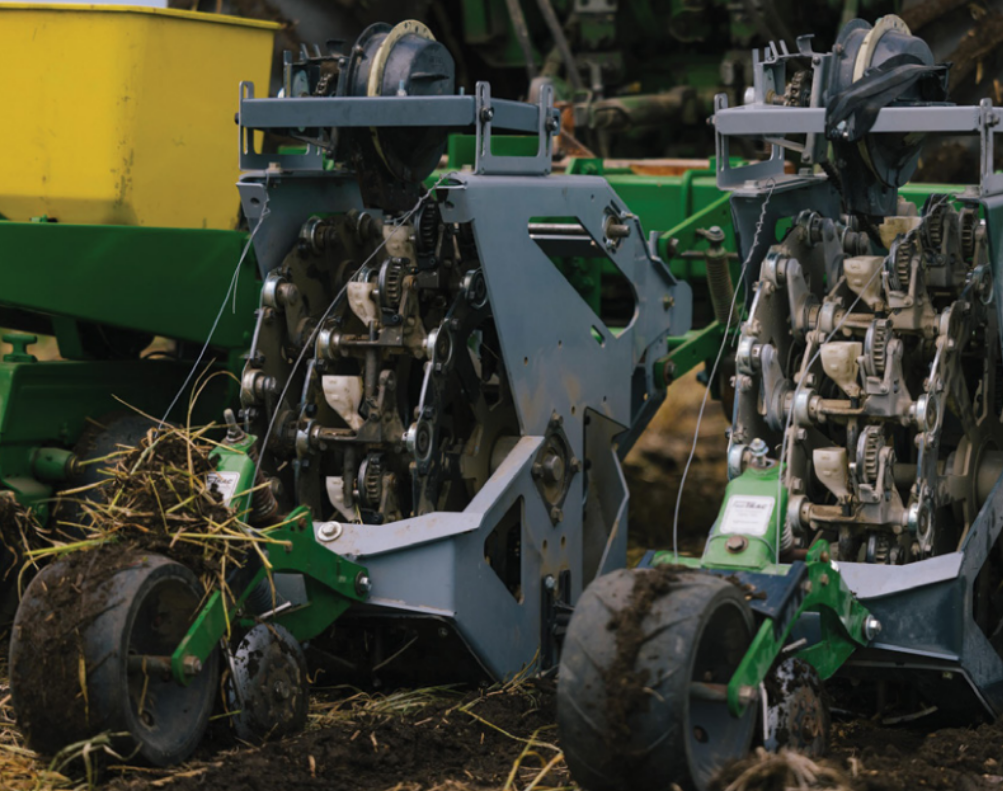
Iowa agtech startup ReEnvision Ag is seeking to replace traditional disk openers with cone-shaped dibble-style planters. A dibble is a precision tool that delicately creates a hole in the soil for exact seed placement. Unlike disks, dibbles ensure each seed is placed at an exact depth and spacing. 

Perhaps the greatest benefit of dibble-style planters is that they extend the planting window because they disturb the soil far less than a double disk. Farmers can plant earlier — ReEnvision claims to have demonstrated up to 5-7 days — in wet soil conditions.

Dibbles also minimize compaction compared to traditional disk openers. ReEnvision’s SeedSpike is designed to jump when it hits a rock and keep planting. It’s compatible with any commercially available down-pressure system, ensuring adaptability to various setups. And it requires only one sixth the soil contact of double disk openers.

On-Site Carbonic Acid Production for pH Control
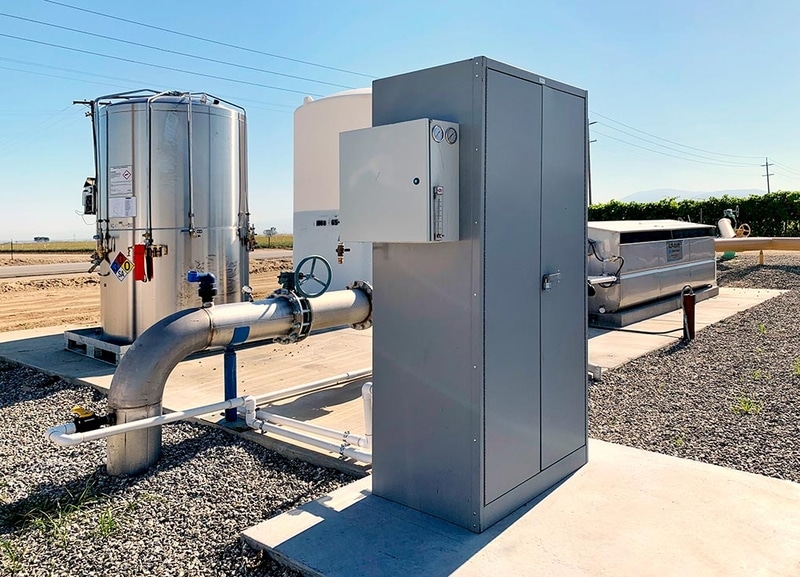
Eco2Mix (Courtesy of Eco2Mix) — The Eco2Mix water treatment system produces carbonic acid on site — instead of using toxic sulfuric acid or sulfur burners — to lower pH for irrigation water.

It is becoming more and more obvious that water quality is as important an ingredient in growing healthy crops as any amendment. High pH in irrigation water can significantly impair the ability of plants to take up and use nutrients — including the nutrients, biological inputs and fertilizers applied by growers.

Eco2Mix has developed a new system that uses carbonic acid — produced on site — to acidify water, in a process that mimics nature. Using carbonic acid means that the system does not rely on toxic and dangerous mineral acids like sulfuric acid or sulfur burners. Carbonic acid is innocuous — simply CO2 and water. The system is highly efficient and fully automated. Eco2Mix provides the technology and monitors and controls it remotely. 

Properly adjusted pH using carbonic acid increases nutrient availability, avoids buildup in pipes and emitters, and helps soil biology. 

Weed Electricide
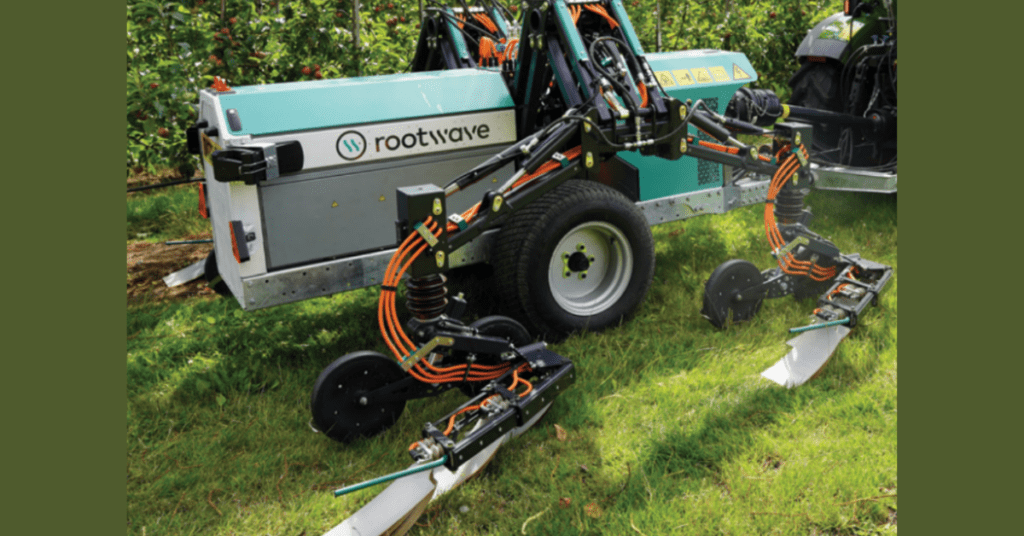
Weeds have been the scourge of farmers for millennia. One ecological technique that has shown promise for several decades is electrical weed zapping. The downsides of many tools that attempt this, though, are risk of fire and the safety of the operator. A UK startup called RootWave is attempting to prevent these dangers by using higher Hertz signals.

RootWave sends electrical currents that switch between positive and negative 18,000 times per second (18,000 Hertz). This generates natural resistance within the weed, heating it up and effectively “boiling” it from the root upward. Yet a person who accidently touched the tool would be able to walk away safely — the signal is 10,000 times less likely to cause cardiac arrest than a device working at 50 Hertz and 2,500 times less likely than direct current. RootWave’s orchard eWeeder can operate at up to 5 km/hr. and requires only a 75-horsepower tractor.

“Molecular Ultrasound” for Plant Health
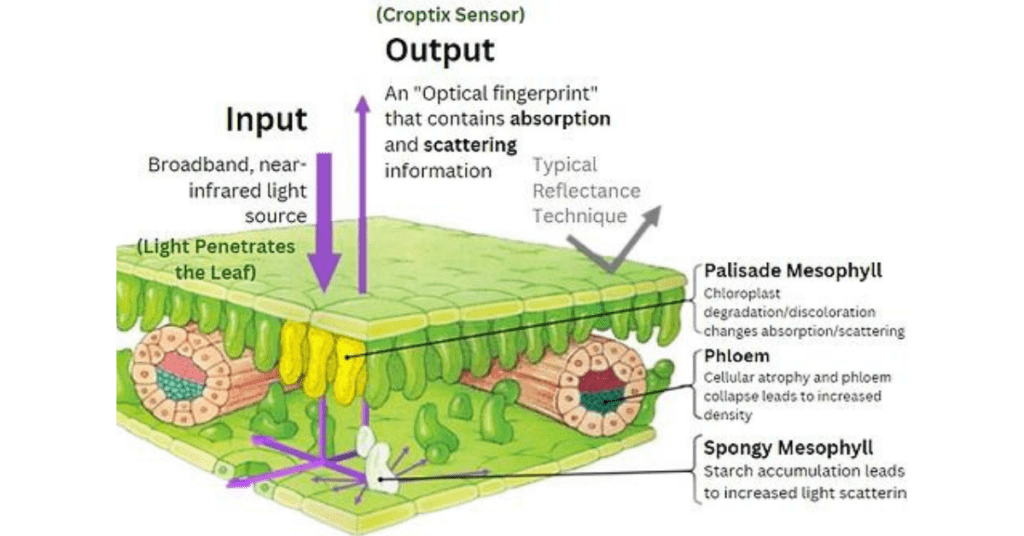
(Courtesy of Croptix) — Croptix uses broadband near-IR signals to detect plant nutrition and disease conditions

Leaf sap analysis has become the gold standard for plant nutritional analysis within the past decade. Being able to conduct such testing in the field is the next holy grail.

Croptix is an agtech company that has developed a device that is enabling real-time identification and measurement of both plant nutrition and pathogens. 

The company bills its technology as “molecular ultrasound” for plants. The miniature spectrophotometer sends a broad-spectrum near-infrared light into the plant and measures the absorption and reflectance. The information it receives is analyzed in real time by AI algorithms to determine nutrient levels, water stress and possible presence of pathogens. Unlike ultrasound, though, Croptix does not require a trained operator — any grower or agronomist can use it themselves out-of-the box.

Continuous Soil Carbon Monitoring
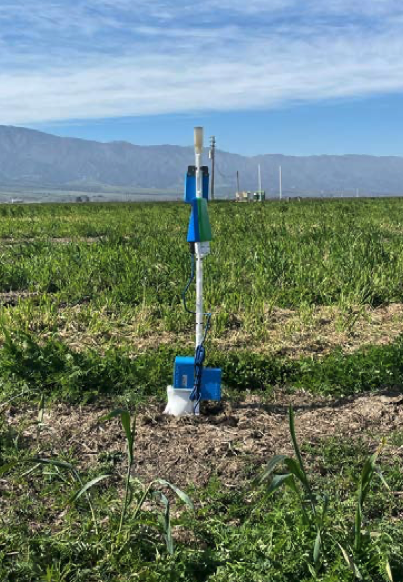
Arbiter (Courtesy of Agrology) — Agrology’s new Arbiter Carbon Monitoring System tracks soil conditions and atmospheric gases to help growers track the performance of their growing practices and to generate carbon credits.

If sending a sample to a lab is like going to the hospital to do blood work, and an in-field sensor is like being able to do a simple insulin test on your own, then a continuous in-field monitor is like wearing a patch that continually tests your blood, pipes the data into the cloud and sends analysis back to your smartphone.

Agrology’s new Arbiter Carbon Monitoring System tracks soil conditions and atmospheric gases to help growers track the performance of their growing practices and to potentially generate carbon credits. It delivers information on dozens of factors, from weather events to smoke and VOCs, irrigation, water, pests and disease.

The device consists of a soil chamber, which collects and samples the gases emitted from the soil over time, and a concentration gradient mast. Installation takes less than a minute, and data is analyzed and sent directly to the grower in real time.

← Previous Groundbreaking Ways to Break Less Ground Next On-Farm DNA Testing →
Tags: Agricultural TechnologiesEcological Farming PracticesRegenerative Farming
Acres U.S.A.

Acres U.S.A.

North America’s oldest publisher on production-scale organic and regenerative farming. For more than 50 years, our mission has been to help farmers, ranchers and market gardeners grow food profitably, regeneratively, and with nature in mind.

Next Post
On-Farm DNA Testing

On-Farm DNA Testing

  • Trending
  • Comments
  • Latest
The Most Important Livestock in Our Fields

The Most Important Livestock in Our Fields

July 1, 2024
Glyphosate Does What It’s Designed to Do — Kill

Glyphosate Does What It’s Designed to Do — Kill

February 19, 2025
The Take-Half, Leave-Half Fallacy

The Take-Half, Leave-Half Fallacy

July 1, 2025
USDA organic seal over American farm land

Losing Organic Farms

January 27, 2026
We Don’t Need Another Bridge — We Need an Off-Ramp

We Don’t Need Another Bridge — We Need an Off-Ramp

3
Under One Roof

Under One Roof

3
A Rose By Any Other Name

A Rose By Any Other Name

2
Terra Preta’s Biological Advantage

Terra Preta’s Biological Advantage

2
Roundup glyphosate herbicide referenced in debate over national security executive order

ROUNDUP PIE

March 5, 2026
What Does “Cutting Red Tape” Mean for Eco-Ag?

What Does “Cutting Red Tape” Mean for Eco-Ag?

March 4, 2026
March 2026 • Issue #657

March 2026 • Issue #657

March 1, 2026
Fungicides and Tillage and Bare Soil, Oh My!

Fungicides and Tillage and Bare Soil, Oh My!

March 1, 2026

Recent News

Roundup glyphosate herbicide referenced in debate over national security executive order

ROUNDUP PIE

March 5, 2026
What Does “Cutting Red Tape” Mean for Eco-Ag?

What Does “Cutting Red Tape” Mean for Eco-Ag?

March 4, 2026
March 2026 • Issue #657

March 2026 • Issue #657

March 1, 2026
Fungicides and Tillage and Bare Soil, Oh My!

Fungicides and Tillage and Bare Soil, Oh My!

March 1, 2026

About ACRES USA

Acres U.S.A.® Magazine

Acres U.S.A.® is North America’s oldest publisher on production-scale organic and regenerative farming. For more than 50 years, our mission has been to help farmers, ranchers and market gardeners grow food profitably and sustainably, with nature in mind.

Magazine Issues

  • News
  • 2025
    • June 2025
    • May 2025
    • April 2025
    • March 2025
    • February 2025
    • January 2025
  • 2024 Articles
    • December 2024
    • November 2024
    • October 2024
    • September 2024
    • August 2024
    • July 2024
    • June 2024
    • May 2024
    • April 2024
    • March 2024
    • February 2024
    • January 2024
  • December 2023
    • December 2023
    • November 2023
    • October 2023
    • August 2023
    • July 2023
    • June 2023
    • May 2023
    • April 2023
    • March 2023
    • February 2023
    • January 2023
  • December 2022
    • November 2022
    • October 2022
    • September 2022
    • August 2022
    • July 2022
    • June 2022
    • May 2022
    • April 2022
    • March 2022

Contact Acres U.S.A

  • Contact Us
  • About Us
  • Advertise With Acres U.S.A.
  • My Subscription

Learn

  • Resources
  • Events
  • Magazine
  • Newsletters
  • Free Articles
  • Webinars
  • Online Courses
  • Bookstore

Our All Socials

Follow With Us...

  • My account
  • News
  • Ecological farming
  • Refund and Returns Policy
  • Privacy & Policy

© 2024 Acers USA Magazine

Welcome Back!

Login to your account below

Forgotten Password? Sign Up

Create New Account!

Fill the forms below to register

All fields are required. Log In

Retrieve your password

Please enter your username or email address to reset your password.

Log In
No Result
View All Result
  • HOME
  • ARTICLES
    • News
    • Farm
    • Ecological farming
    • Livestock
    • Crop
      • Crop management practices
      • Cover crops
      • Crop nutrition
      • Crop protection
      • Crops
      • Ag technology
    • Soil
    • Opinion
  • RESOURCES
    • Magazine
    • Online Learning
    • Newsletters
    • Blog
    • Free Articles
  • MAGAZINE ISSUES
    • 2025
      • June 2025
      • May 2025
      • April 2025
      • March 2025
      • February 2025
      • January 2025
    • 2024
      • December 2024
      • November 2024
      • October 2024
      • September 2024
      • August 2024
      • July 2024
      • June 2024
      • May 2024
      • April 2024
      • March 2024
      • February 2024
      • January 2024
    • 2023
      • December 2023
      • November 2023
      • October 2023
      • August 2023
      • July 2023
      • June 2023
      • May 2023
      • April 2023
      • March 2023
      • February 2023
      • January 2023
  • ABOUT US
    • Our History
    • Our Staff
    • Contact Us
    • Community
      • Soil Health Primer Resources
  • EVENTS
    • Eco-Ag Conference
    • On-Farm Viroqua Event
    • Farm Weird
  • SUBSCRIBE
  • Login
  • Sign Up
  • Cart

© 2024 Acers USA Magazine

Are you sure want to unlock this post?
Unlock left : 0
Are you sure want to cancel subscription?