
Many innovative technologies for sustainable weed control are now available to farmers
IN THE EVER-EVOLVING LANDSCAPE OF AGRICULTURE, THE BATTLE AGAINST WEEDS HAS BEEN AN ONGOING CHALLENGE.
Weeds compete with crops for essential resources like nutrients, water and sunlight, leading to reduced yields and increased production costs. Modern weed control methods, often reliant on herbicides, come with environmental concerns and the potential for herbicide-resistant weed strains.
However, new technology is offering alternative solutions to this age-old problem. Here are 10 groundbreaking technologies that are transforming weed control in agriculture.
ROBOTS AND DRONES
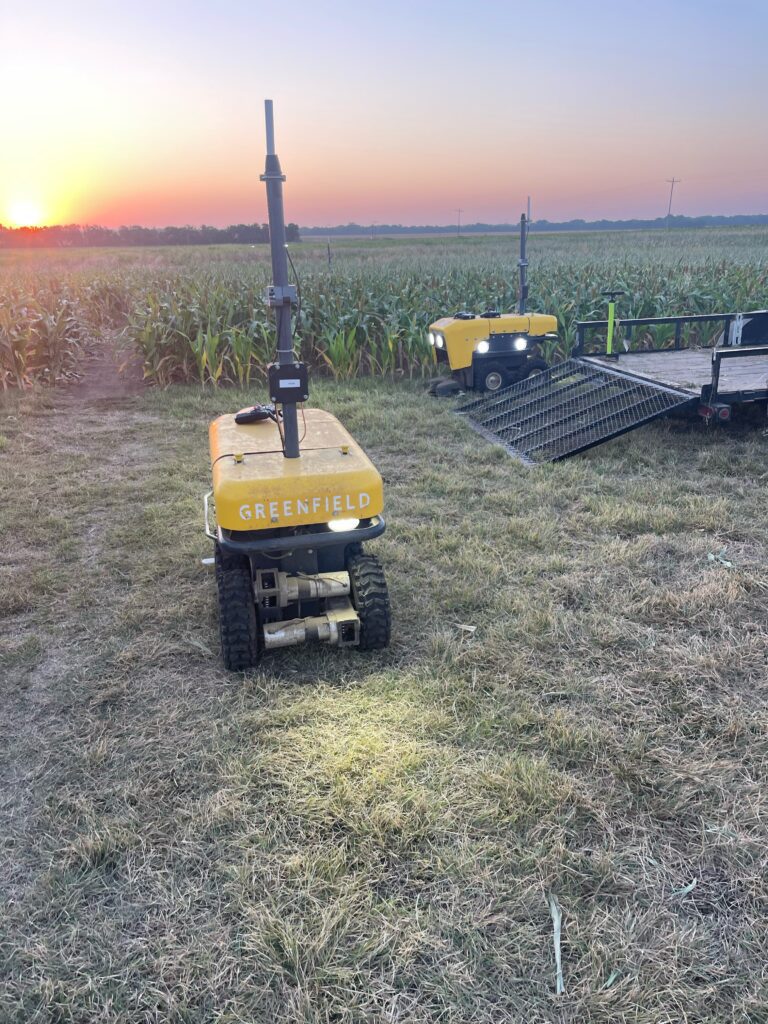
Imagine autonomous robots patrolling fields, tirelessly identifying and removing weeds. These robots, equipped with cameras and advanced AI algorithms, can distinguish between crops and weeds with precision. Additionally, drones equipped with high-resolution cameras and AI can conduct aerial surveys, capturing images of fields to detect weed-infested areas. The data gathered is then transmitted to farmers, allowing for targeted intervention. These technologies not only reduce the need for chemical herbicides but also minimize labor costs.
We no longer have to imagine such a future. Just this past summer, I was in the field several times with robots doing this very thing. Weeding about 100 acres a day with 10 single-row robots is scalable. What else can we do with such bots? Seeding, roller-crimping, and soil sampling are the tip of the spear.
PRECISION HERBICIDE APPLICATION
Precision is the name of the game when it comes to modern agriculture. See-and-spray herbicide application systems use GPS and imaging technology to pinpoint weed locations. They can then spray herbicides only on these specific areas, significantly reducing chemical usage while sparing the surrounding crops. This approach not only saves money for farmers but also reduces the environmental impact of herbicides.
Several companies are rushing products to market, and as that happens, the technology should become more affordable for farmers. As usual, the more farmers have access to new technologies, the more new and interesting uses they will find. Early on, the cameras saw ‘green on brown,’ which only allowed for spot spraying in broadacre, open-field applications. Now, as the technology improves, ‘green on green’ is possible. This means the cameras can differentiate between plants, only spraying certain plants (weeds) and not others (cash crops or cover crops). Other challenges include hills and night operations, but the companies seem to be handling them as they arise.
LASER WEEDING
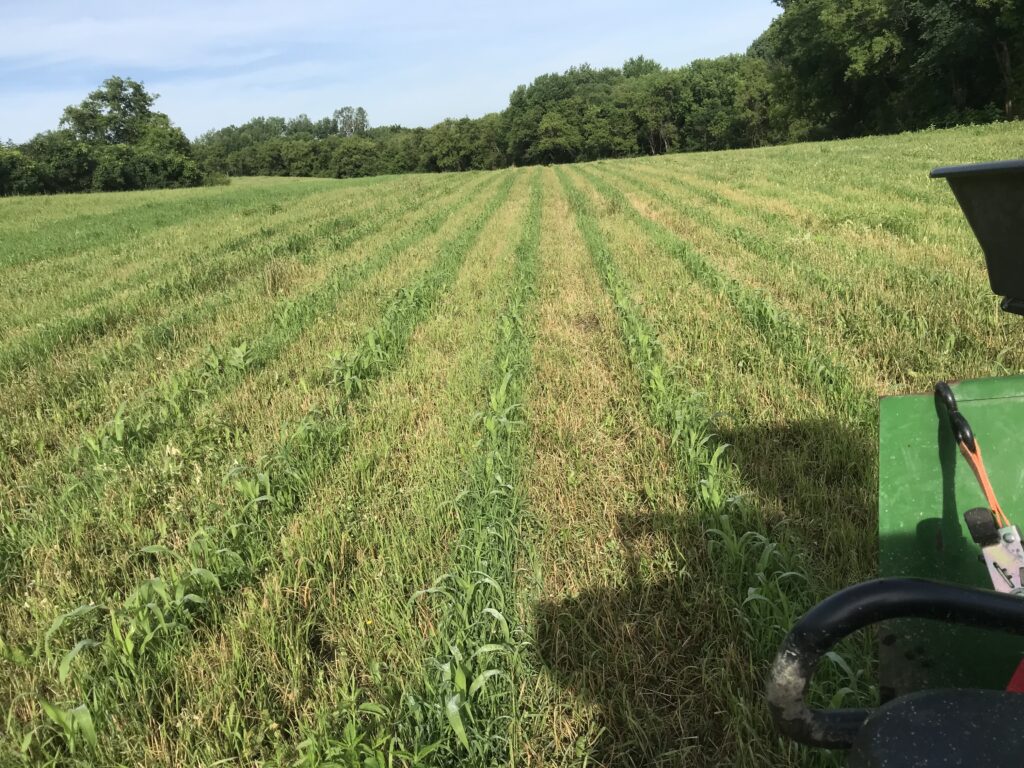
In a remarkable fusion of technology and agriculture, laser weeding has emerged as a promising weed-control method. Specialized laser systems, mounted on robotic platforms, are guided by GPS and imaging data to selectively target and burn weeds. This precise technique leaves crops unharmed and eliminates the need for chemicals altogether.
This is exciting, but it is in its infancy. When you start thinking about the number of times a laser would need to shoot into a thick stand of weeds, the sheer number of hits per acre is astounding. Yet there is great potential, and it should lead to many other tools in the future.
ELECTROTHERMAL WEED CONTROL
Electricity and heat can be harnessed to combat weeds at their roots — aka, weed zapping. Electrothermal devices generate the necessary energy to destroy weeds, providing an eco-friendly alternative to conventional herbicides. This method not only prevents weed growth but also reduces the risk of herbicide resistance.

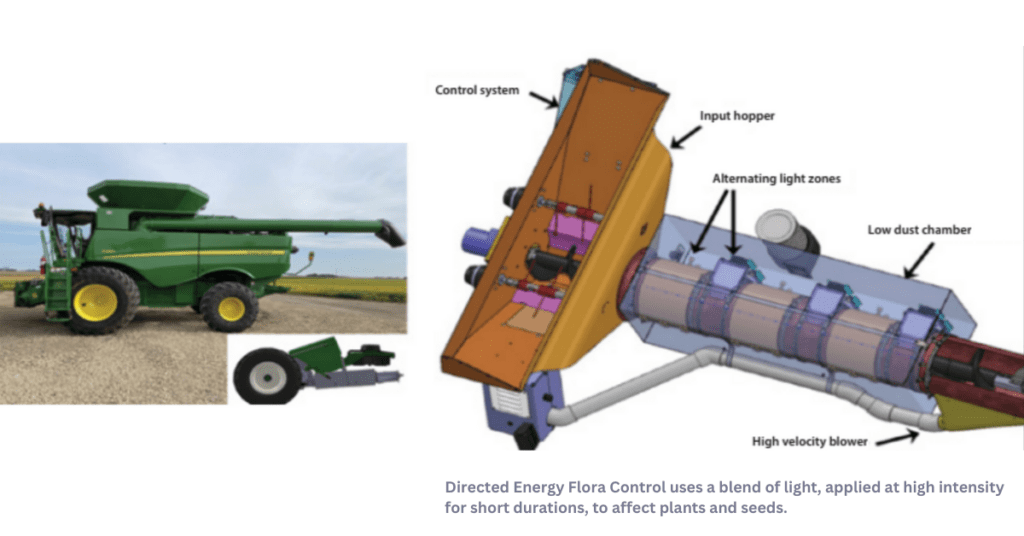
The aspect of this that I am most familiar with is Directed Energy Flora Control, which is the use of a blend of light, applied at high intensity for short durations, to affect plants and seeds. This application of non-laser light disrupts plant growth. This same technology is versatile and can be used to treat seeds, with a broad range of capabilities, from terminating to actually exciting the seed — “priming” it to improve germination rates. This helps establish early-season vigor, which, in turn, helps a plant outcompete weeds and improve resilience in stressful environments.
SOIL HEALTH SENSORS
Embedded sensors in the soil can monitor soil health and moisture levels, as well as weed growth. When these sensors detect excessive weed growth, automated weed control mechanisms can be triggered. This real-time monitoring optimizes weed management strategies and promotes overall soil health. On our farm, we are already using these sensors to learn and understand the moisture use cycles, which eventually will help us understand our cropping patterns and adjust them to use water better. In the past, we added more tile for drainage, but how much better if I can simply change my cropping to better use the moisture we are blessed to receive and capture? We have improved our water-holding capacity and reduced our evaporation rates to the point that we have extra moisture; learning how to use it is the next step. Relay/companion cropping is an integral part of our future.
BIOLOGICAL CONTROLS
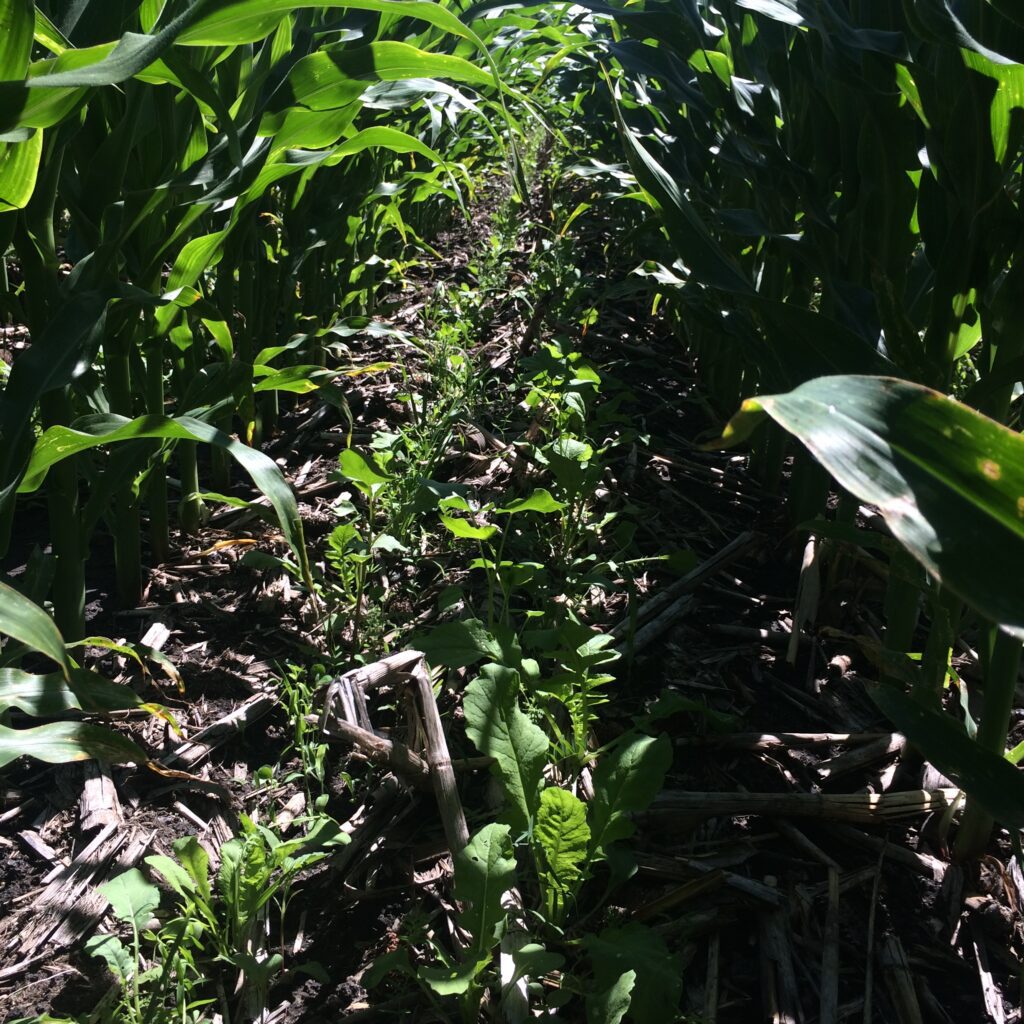
Mother Nature has her own solutions to weed problems. Beneficial insects or microbes, released into fields by automated systems, can naturally combat weed growth without harming crops. This environmentally friendly approach reduces the need for chemical herbicides and fosters a healthier ecosystem.
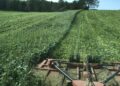
In my early days of testing the Row-Mow and Inrowl rolling tools, I tested some of these biological products. I saw a few that offered promise and will keep watching these. To me, it is about having a full toolbox and lots of options.
WEED-IDENTIFYING APPS
In the age of smartphones, mobile apps equipped with image recognition are empowering farmers. These apps allow users to capture images of weeds in their fields, instantly providing information on weed species and offering tailored management recommendations. This technology puts weed identification and control strategies at all farmers’ fingertips.

SATELLITE/DRONE IMAGING
Satellite/drone imagery, coupled with advanced AI algorithms, provides farmers with a birds-eye view of their fields. By analyzing these images, AI can pinpoint areas with weed infestations, enabling precise intervention. This technology revolutionizes weed management by optimizing resource allocation. We are constantly monitoring the images to see changes. This summer it was very interesting to watch the area where my combine harvester burned last fall. We lost a couple acres of residue. All summer the crop looked better, but as the drought started taking its toll, the overhead imagery began to show the tile lines and then the area that burned, falling off hard and fast. “Contrasted NDVI” seems to be the most telling in the weekly flights. I can see where the drain tile lines are, but more importantly, I can see the “excited-seed” plots I mentioned above, for which my preliminary analysis shows a decent yield response.
MECHANICAL WEEDERS
Advanced mechanical weeders, driven by computer vision and robotics, can navigate fields and physically remove weeds. Whether by plucking or cutting, these machines reduce the reliance on herbicides and lower labor costs. These are probably some of the most proven techniques; adapting older ideas with labor-saving technology is more critical than ever, given the current labor situation.
WEED-SUPPRESSING COVERS
Living plants inhibit weed growth while retaining moisture and promoting soil health. These covers offer an eco-friendly and sustainable method of weed control that folks often overlook. We started playing with interseeded covers in 2006, and the weed suppression was probably the first thing we noticed. It does take a mindset shift, which is why I saved this for last. With all the other technologies listed above, incorporating covers becomes easier than ever. Interseeding covers is what led to our relay/companion cropping mindset.
We’ve all heard that a weed is just filling a void … but why does it take us so long to realize the ramifications of such a simple concept? Put plants where we need them, and they will provide the services we desire — hopefully with the income to support all this exciting technology I’ve mentioned here.
AS AGRICULTURE EMBRACES THE DIGITAL AGE, innovative technologies are changing the landscape of weed control. These solutions not only reduce the environmental footprint of agriculture but also enhance crop yields and save farmers time and money. The future of weed control is inextricably tied to these cutting-edge advancements, promising a more sustainable and prosperous agricultural industry for generations to come. When folks ask me why I’m so willing to add new technology to our farm, the answer is simple: if it allows me to do something that I can’t do now, bring it on. As my dad always said, the best way to get the next generation involved is to stay on the forefront and to make farming fun.
Loran Steinlage is a lifelong farmer, systems thinker and fabricator. His farming practices have earned him environmental leadership awards and the 2020 No-Till Farmer Innovator award.