Acres U.S.A.® Magazine
  • Articles
    • News
    • Ecological farming
      • Climate
      • Environmental Issues
      • Farm management & planning
      • Human health
    • Livestock
    • Farm
    • Crop
      • Crop management practices
        • Ag technology
        • Cover crops
        • Crop nutrition
          • Crop protection
          • Diseases
        • Crops
        • Fruits
    • Soil
    • Opinion
  • Resources
    • Magazine
    • Online Learning
    • Newsletters
    • Free Articles
    • Blog
  • Magazine Issues
    • 2026
      • February 2026
      • January 2026
    • 2025
      • December 2025
      • November 2025
      • October 2025
      • September 2025
      • August 2025
      • July 2025
      • June 2025
      • May 2025
      • April 2025
      • March 2025
      • February 2025
      • January 2025
    • 2024
      • December 2024
      • November 2024
      • October 2024
      • September 2024
      • August 2024
      • July 2024
      • June 2024
      • May 2024
      • April 2024
      • March 2024
      • February 2024
      • January 2024
    • 2023
      • December 2023
      • November 2023
      • October 2023
      • August 2023
      • July 2023
      • June 2023
      • May 2023
      • April 2023
      • March 2023
      • February 2023
      • January 2023
    • 2022
      • December 2022
      • November 2022
      • October 2022
      • September 2022
      • August 2022
      • July 2022
      • June 2022
      • May 2022
      • April 2022
      • March 2022
      • February 2022
  • About Us
    • Our History
    • Our Staff
    • Contact Us
    • Community
      • Soil Health Primer Resources
  • Events
    • Eco-Ag Conference
    • Farm Weird Event
    • Viroqua On Farm Event
  • Subscribe
  • Login
  • Register
No Result
View All Result
  • Articles
    • News
    • Ecological farming
      • Climate
      • Environmental Issues
      • Farm management & planning
      • Human health
    • Livestock
    • Farm
    • Crop
      • Crop management practices
        • Ag technology
        • Cover crops
        • Crop nutrition
          • Crop protection
          • Diseases
        • Crops
        • Fruits
    • Soil
    • Opinion
  • Resources
    • Magazine
    • Online Learning
    • Newsletters
    • Free Articles
    • Blog
  • Magazine Issues
    • 2026
      • February 2026
      • January 2026
    • 2025
      • December 2025
      • November 2025
      • October 2025
      • September 2025
      • August 2025
      • July 2025
      • June 2025
      • May 2025
      • April 2025
      • March 2025
      • February 2025
      • January 2025
    • 2024
      • December 2024
      • November 2024
      • October 2024
      • September 2024
      • August 2024
      • July 2024
      • June 2024
      • May 2024
      • April 2024
      • March 2024
      • February 2024
      • January 2024
    • 2023
      • December 2023
      • November 2023
      • October 2023
      • August 2023
      • July 2023
      • June 2023
      • May 2023
      • April 2023
      • March 2023
      • February 2023
      • January 2023
    • 2022
      • December 2022
      • November 2022
      • October 2022
      • September 2022
      • August 2022
      • July 2022
      • June 2022
      • May 2022
      • April 2022
      • March 2022
      • February 2022
  • About Us
    • Our History
    • Our Staff
    • Contact Us
    • Community
      • Soil Health Primer Resources
  • Events
    • Eco-Ag Conference
    • Farm Weird Event
    • Viroqua On Farm Event
  • Subscribe
No Result
View All Result
Acres U.S.A.® Magazine
No Result
View All Result
Home Magazine issues May 2023

New Crop on an Old Farm

David Buehler by David Buehler
June 2, 2024
in May 2023
0
New Crop on an Old Farm

(Courtesy of Buehler Farms)

0
SHARES
7
VIEWS
Share on FacebookShare on Twitter

Keeping our family farm going by growing and selling a unique perennial crop: elderberry

David Buehler

In 1899, John and Lucy Buehler homesteaded what is now Buehler Farms. They started farming row crops and dairy cattle, and our family continued that tradition for over a hundred years. 

In 2011, though, my wife, Ann, and I — fourth-generation farmers on this land — realized that continuing row crop and dairy farming was not propelling us forward. We worried that our farm wouldn’t last another generation. Things had gone from bad to worse in 2007, when the recession hit and corn suddenly bottomed out. We made the decision to sell the dairy herd, but we didn’t want to end the life of farming we knew and loved. So, we began to research other crops and farming opportunities. 

Why Elderberry? 

I researched crops that are regenerative — that are good for the environment and for people. Both Ann and I are passionate about people and about the community we live in. Elderberry is an ancient crop — Hypocrites called it his “medicine cabinet.” It is native to the North American continent and is a hardy and prolific shrub. It has been used by both Europeans and Native Americans as a remedy for illness, due to its antiviral, anti-inflammatory and highly antioxidant properties. 
(Courtesy of Buehler Farms)

Elderberry was the crop we had been looking for — a crop that was sustainable, environmentally sound and regenerative, and that yielded a product that could be used for wellbeing. Sambucus canadensis (American elderberry) is a perennial deciduous shrub that is hardy and that can thrive under the worst of conditions. 

(Courtesy of Buehler Farms)

We decided to plant 10 acres of select varieties of elderberry. At that time, less than 800 acres of American elderberry were being grown, whereas Europe was growing over 30,000 acres. Europeans were centuries ahead of Americans in the elderberry game. They had research, production, marketing and products dialed in. Americans had been importing European elderberries for years. 

Fortunately for us, a University of Missouri agricultural research farm is literally in our backyard — only three miles away, to be exact. Andy Thomas and Patrick Byers had already been growing experimental plots and working to encourage the development of this crop in the Ozarks as a viable, sustainable farm commodity. They had data and information, but they did not have markets or places for farmers to go with the elderberries they grew. Terry Durham, a pioneer in elderberry knowledge, was also a huge source of information and helped me continue my journey of creating an elderberry farm. 

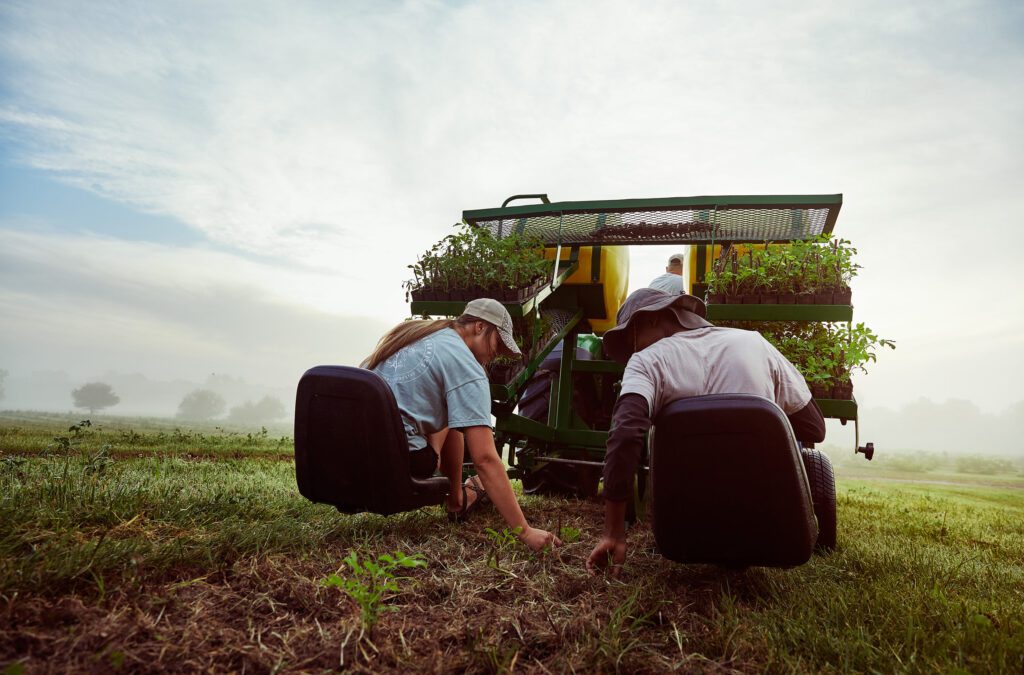
I experimented with potted plants and individual cuttings, along with mulch and other weed barrier controls. I found a useful way to repurpose equipment used for other crops, and I developed my own no-till planting method. 

Once we had plants in the ground, we had roughly two years to wait before the first harvest. I knew the data from the University of Missouri had projected the per-pound value of elderberries to be higher than my traditional row crops, but where or how would we sell that crop? 

Ann has a history of autoimmune disorders that have impacted her health in a negative way. During her journey to better health, she began taking pressed elderberry juice because of its high antioxidant properties. She wasn’t a fan of the taste, though, no matter how good it was for her. The natural boost that elderberry provided for her and her family’s immune system was what she had hoped for in a farm crop, but the delivery of the available products, she felt, needed some work. She started experimenting with jellies, jams and syrups that were more palatable to her than straight pressed juice. It took almost two years to develop, but eventually we came out with our Elder Farms product line. 

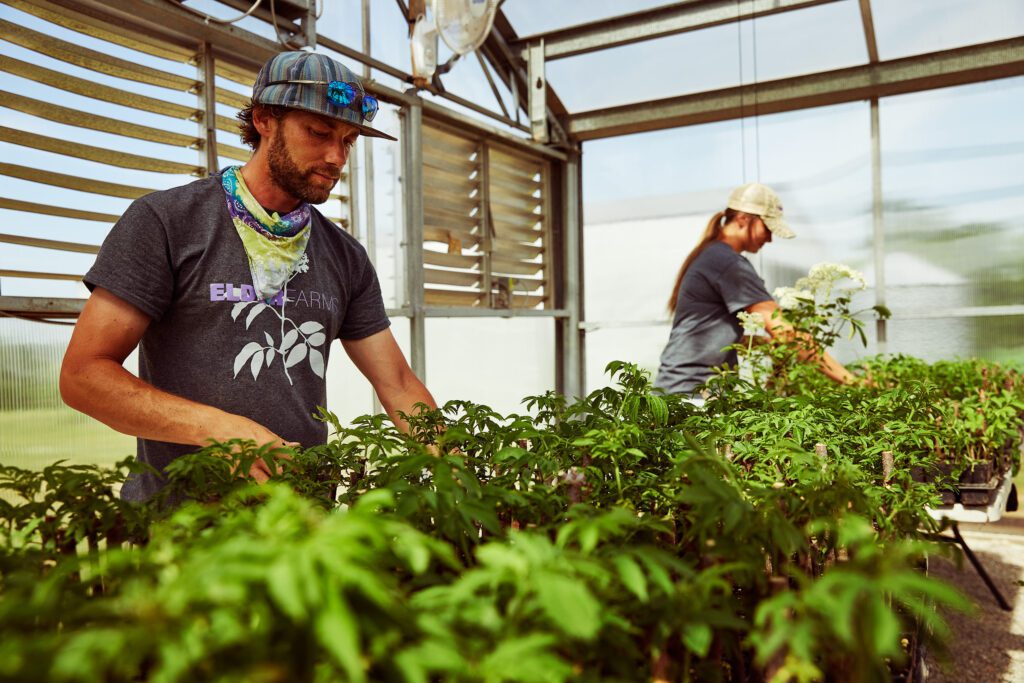
By this time, word had begun to circulate of our switch to elderberries and our ideas to create a product line. We took on local help to repurpose the milk barn into a Safe and Good manufacturing facility. We began to create Elder Farms Immune syrup and started attending local farmers markets. The product was authentic, local and organically grown, using organic ingredients, and was sweetened with raw honey instead of sugar. We had a purple bottle of gold. After receiving positive feedback, we decided to begin approaching local stores to become wholesalers. 
(Courtesy of Buehler Farms)

I’ve learned a lot since planting those first 10 acres. We’ve expanded by two acres each year and have added more varieties of elderberry. As the farm grew, I knew we weren’t going to be able to sustain our product line with just our own acreage; we needed other farmers to grow us them so we could continue to grow the business. Ann and I also hoped that this could be a blessing for others — an enterprise small farmers could start with under five acres, make a solid profit, and expand if they chose. It could be a lower risk investment, with high profits within five years. I started talking with and educating other farmers on how elderberry could be an alternative to traditional farming. 

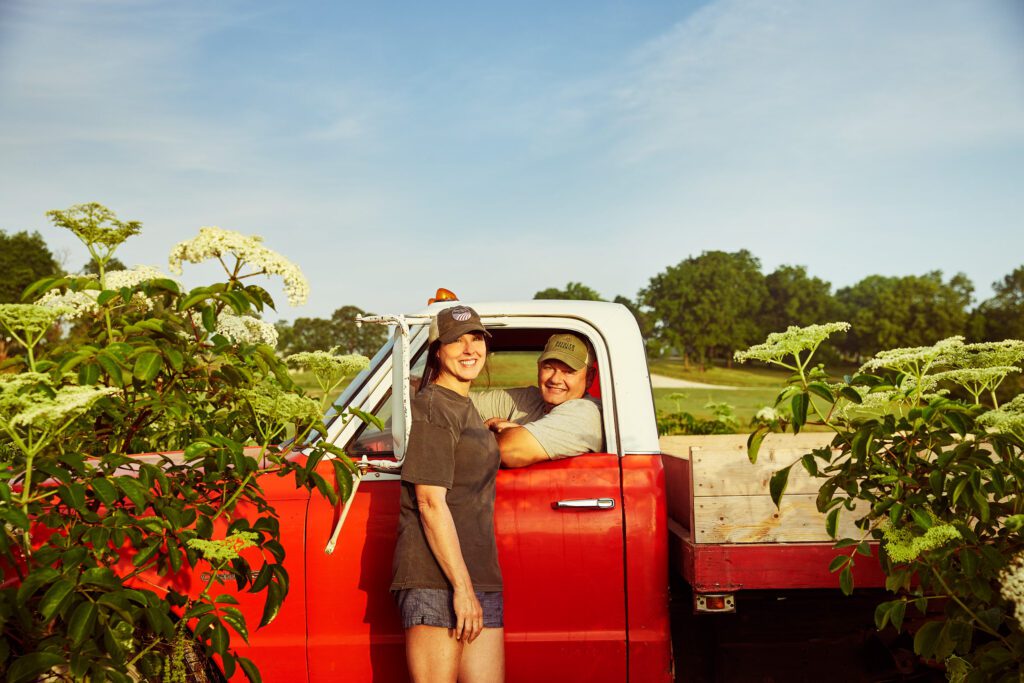
I’ve now planted almost 200 acres in elderberry across the four-state region that supplies the Elder Farms line. Buehler Farms has almost 55 acres with eight varieties of elderberry in production. This doesn’t include our cutting and plant sales, which we ship across the U.S. Buehler Farms is a certified-organic nursery and offers support, planting guides and a plant warranty. 

The Future of American Elderberry
(Courtesy of Buehler Farms)

We need more farmers to grow elderberries. American elderberry grown on American farms is a superior product. The University of Missouri has been awarded a $5 million research grant to propel the study of elderberry. This grant will cover all aspects of this new American agricultural opportunity, from health benefits to mechanization to plant breeding. European studies support so much of what we already know about this powerful berry. We believe that American varieties have a richer antioxidant profile. 

At the current rate of consumption, it would take 25,000 acres of commercially grown elderberries to meet the demands of American elderberry consumers. We are attempting to create a viable American elderberry community that can supply the manufacturing demands of a natural, centuries-old plant-medicine. But more importantly, we want to educate small farmers on a sustainable and regenerative crop that they can grow on less than ten acres and support their family farm. We want to educate and teach farmers methods that will benefit the health and wellbeing of the consumers who choose to be knowledgeable about what they consume, and how it is grown and processed. We want to educate, propel and find ways to support the small American family farm. 

We believe that farming in this post-pandemic era is more important than ever, and we want to be pioneers in helping other small farmers envision a new way of seeing their family farm. 

David Buehler is a fourth-generation farmer. Learn more at buehlerorganics.com.

← Previous The Business Case for Agroforestry Next Passion Laced with Science →
Tags: May 2023
David Buehler

David Buehler

David Buehler is a fourth-generation farmer. Learn more at buehlerorganics.com.

Next Post

What’s Inside? May 2023 • Issue #623

  • Trending
  • Comments
  • Latest
The Most Important Livestock in Our Fields

The Most Important Livestock in Our Fields

July 1, 2024
Glyphosate Does What It’s Designed to Do — Kill

Glyphosate Does What It’s Designed to Do — Kill

February 19, 2025
The Take-Half, Leave-Half Fallacy

The Take-Half, Leave-Half Fallacy

July 1, 2025
USDA organic seal over American farm land

Losing Organic Farms

January 27, 2026
We Don’t Need Another Bridge — We Need an Off-Ramp

We Don’t Need Another Bridge — We Need an Off-Ramp

3
Under One Roof

Under One Roof

3
A Rose By Any Other Name

A Rose By Any Other Name

2
Terra Preta’s Biological Advantage

Terra Preta’s Biological Advantage

2
Roundup glyphosate herbicide referenced in debate over national security executive order

ROUNDUP PIE

March 5, 2026
What Does “Cutting Red Tape” Mean for Eco-Ag?

What Does “Cutting Red Tape” Mean for Eco-Ag?

March 4, 2026
March 2026 • Issue #657

March 2026 • Issue #657

March 1, 2026
Fungicides and Tillage and Bare Soil, Oh My!

Fungicides and Tillage and Bare Soil, Oh My!

March 1, 2026

Recent News

Roundup glyphosate herbicide referenced in debate over national security executive order

ROUNDUP PIE

March 5, 2026
What Does “Cutting Red Tape” Mean for Eco-Ag?

What Does “Cutting Red Tape” Mean for Eco-Ag?

March 4, 2026
March 2026 • Issue #657

March 2026 • Issue #657

March 1, 2026
Fungicides and Tillage and Bare Soil, Oh My!

Fungicides and Tillage and Bare Soil, Oh My!

March 1, 2026

About ACRES USA

Acres U.S.A.® Magazine

Acres U.S.A.® is North America’s oldest publisher on production-scale organic and regenerative farming. For more than 50 years, our mission has been to help farmers, ranchers and market gardeners grow food profitably and sustainably, with nature in mind.

Magazine Issues

  • News
  • 2025
    • June 2025
    • May 2025
    • April 2025
    • March 2025
    • February 2025
    • January 2025
  • 2024 Articles
    • December 2024
    • November 2024
    • October 2024
    • September 2024
    • August 2024
    • July 2024
    • June 2024
    • May 2024
    • April 2024
    • March 2024
    • February 2024
    • January 2024
  • December 2023
    • December 2023
    • November 2023
    • October 2023
    • August 2023
    • July 2023
    • June 2023
    • May 2023
    • April 2023
    • March 2023
    • February 2023
    • January 2023
  • December 2022
    • November 2022
    • October 2022
    • September 2022
    • August 2022
    • July 2022
    • June 2022
    • May 2022
    • April 2022
    • March 2022

Contact Acres U.S.A

  • Contact Us
  • About Us
  • Advertise With Acres U.S.A.
  • My Subscription

Learn

  • Resources
  • Events
  • Magazine
  • Newsletters
  • Free Articles
  • Webinars
  • Online Courses
  • Bookstore

Our All Socials

Follow With Us...

  • My account
  • News
  • Ecological farming
  • Refund and Returns Policy
  • Privacy & Policy

© 2024 Acers USA Magazine

Welcome Back!

Login to your account below

Forgotten Password? Sign Up

Create New Account!

Fill the forms below to register

All fields are required. Log In

Retrieve your password

Please enter your username or email address to reset your password.

Log In
No Result
View All Result
  • HOME
  • ARTICLES
    • News
    • Farm
    • Ecological farming
    • Livestock
    • Crop
      • Crop management practices
      • Cover crops
      • Crop nutrition
      • Crop protection
      • Crops
      • Ag technology
    • Soil
    • Opinion
  • RESOURCES
    • Magazine
    • Online Learning
    • Newsletters
    • Blog
    • Free Articles
  • MAGAZINE ISSUES
    • 2025
      • June 2025
      • May 2025
      • April 2025
      • March 2025
      • February 2025
      • January 2025
    • 2024
      • December 2024
      • November 2024
      • October 2024
      • September 2024
      • August 2024
      • July 2024
      • June 2024
      • May 2024
      • April 2024
      • March 2024
      • February 2024
      • January 2024
    • 2023
      • December 2023
      • November 2023
      • October 2023
      • August 2023
      • July 2023
      • June 2023
      • May 2023
      • April 2023
      • March 2023
      • February 2023
      • January 2023
  • ABOUT US
    • Our History
    • Our Staff
    • Contact Us
    • Community
      • Soil Health Primer Resources
  • EVENTS
    • Eco-Ag Conference
    • On-Farm Viroqua Event
    • Farm Weird
  • SUBSCRIBE
  • Login
  • Sign Up
  • Cart

© 2024 Acers USA Magazine

Are you sure want to unlock this post?
Unlock left : 0
Are you sure want to cancel subscription?