
Acres U.S.A.® Magazine
  • Articles
    • News
    • Ecological farming
      • Climate
      • Environmental Issues
      • Farm management & planning
      • Human health
    • Livestock
    • Farm
    • Crop
      • Crop management practices
        • Ag technology
        • Cover crops
        • Crop nutrition
          • Crop protection
          • Diseases
        • Crops
        • Fruits
    • Soil
    • Opinion
  • Resources
    • Magazine
    • Online Learning
    • Newsletters
    • Free Articles
    • Blog
  • Magazine Issues
    • 2026
      • February 2026
      • January 2026
    • 2025
      • December 2025
      • November 2025
      • October 2025
      • September 2025
      • August 2025
      • July 2025
      • June 2025
      • May 2025
      • April 2025
      • March 2025
      • February 2025
      • January 2025
    • 2024
      • December 2024
      • November 2024
      • October 2024
      • September 2024
      • August 2024
      • July 2024
      • June 2024
      • May 2024
      • April 2024
      • March 2024
      • February 2024
      • January 2024
    • 2023
      • December 2023
      • November 2023
      • October 2023
      • August 2023
      • July 2023
      • June 2023
      • May 2023
      • April 2023
      • March 2023
      • February 2023
      • January 2023
    • 2022
      • December 2022
      • November 2022
      • October 2022
      • September 2022
      • August 2022
      • July 2022
      • June 2022
      • May 2022
      • April 2022
      • March 2022
      • February 2022
  • About Us
    • Our History
    • Our Staff
    • Contact Us
    • Community
      • Soil Health Primer Resources
  • Events
    • Eco-Ag Conference
    • Farm Weird Event
    • Viroqua On Farm Event
  • Subscribe
  • Login
  • Register
No Result
View All Result
  • Articles
    • News
    • Ecological farming
      • Climate
      • Environmental Issues
      • Farm management & planning
      • Human health
    • Livestock
    • Farm
    • Crop
      • Crop management practices
        • Ag technology
        • Cover crops
        • Crop nutrition
          • Crop protection
          • Diseases
        • Crops
        • Fruits
    • Soil
    • Opinion
  • Resources
    • Magazine
    • Online Learning
    • Newsletters
    • Free Articles
    • Blog
  • Magazine Issues
    • 2026
      • February 2026
      • January 2026
    • 2025
      • December 2025
      • November 2025
      • October 2025
      • September 2025
      • August 2025
      • July 2025
      • June 2025
      • May 2025
      • April 2025
      • March 2025
      • February 2025
      • January 2025
    • 2024
      • December 2024
      • November 2024
      • October 2024
      • September 2024
      • August 2024
      • July 2024
      • June 2024
      • May 2024
      • April 2024
      • March 2024
      • February 2024
      • January 2024
    • 2023
      • December 2023
      • November 2023
      • October 2023
      • August 2023
      • July 2023
      • June 2023
      • May 2023
      • April 2023
      • March 2023
      • February 2023
      • January 2023
    • 2022
      • December 2022
      • November 2022
      • October 2022
      • September 2022
      • August 2022
      • July 2022
      • June 2022
      • May 2022
      • April 2022
      • March 2022
      • February 2022
  • About Us
    • Our History
    • Our Staff
    • Contact Us
    • Community
      • Soil Health Primer Resources
  • Events
    • Eco-Ag Conference
    • Farm Weird Event
    • Viroqua On Farm Event
  • Subscribe
No Result
View All Result
Acres U.S.A.® Magazine
No Result
View All Result
Home Magazine issues May 2023

Passion Laced with Science

Herb Young by Herb Young
June 2, 2024
in May 2023
0
Passion Laced with Science
0
SHARES
6
VIEWS
Share on FacebookShare on Twitter

My journey from the pesticide industry to regenerative citrus

Herb Young

My journey to become a regenerative organic citrus grower has certainly not been a logical one. I’m the guy that made that seemingly impossible leap from the pesticide industry to the organic regenerative world. It doesn’t sound conceivable, but there was a transition. 
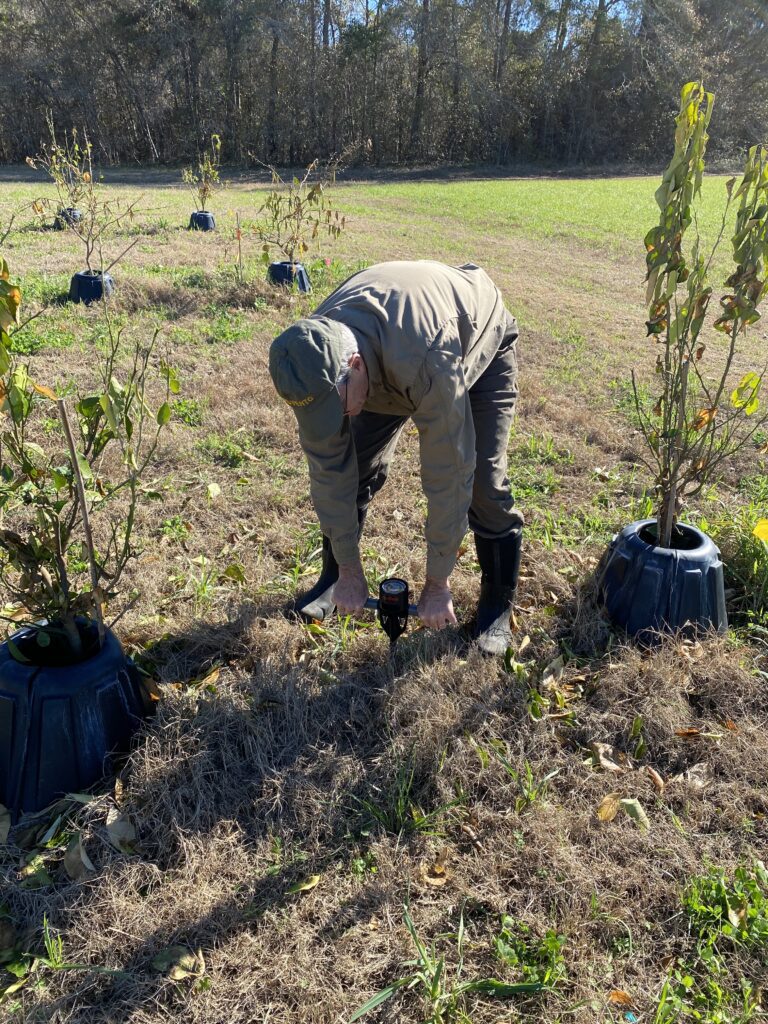
The final reward is to sink a penetrometer 24 inches into the porous soil all around the trees, when five feet away it will only penetrate 3 inches — all thanks to cover crops + microbes + tree roots.

I spent my entire 40-year career in the chemical industry with the best of intentions doing what I believed was the right thing: to help farmers control pests with pesticides. These were the same good intentions that most people in the chemical industry have. Unfortunately, I was completely unaware I was doing as much damage as good. This is the same misperception that has existed since the plow was invented and since French winemakers discovered in 1882 that they could mix copper sulfate and lime together to control downy mildew and call it Bordeaux mixture. Sadly, this started the conversion of nature’s perfect system into one that is more convenient for us.

As an ambitious biology major in college, I discovered the potential of ecology to address hunger in the world. So, I transferred from Vanderbilt University to the University of Georgia because they had a newly founded Institute of Ecology alongside their School of Agriculture. Agronomy (crops + soils) professors criticized my attempts to integrate environmental practices and told me, “Traditional agriculture has always been following ecological practices.” I fell into the mainstream current and was swept away in the fast-flowing tide of the rapidly expanding pesticide industry. 

Upon graduation, I secured a year-long (and high-paying) internship sponsored by a chemical company; the company also lined me up with an assistantship to grad school. I was hooked! I climbed the ladder quickly. Within 10 years, I had a position at corporate headquarters in France as an International Product Development Manager. 

Back in the U.S., I had a knack for finding every benefit of a new chemistry and communicating that to growers. I eventually oversaw launching several very successful new fungicides and a nematicide. Never once in those 40 years do I recall any research, or even discussion, that our revolutionary new pesticides might also be doing harm. I had taken soil microbiology in college, but the class never once addressed the interactivity of the amazing soil ecosystem and the plant world that it supported and communicated with.
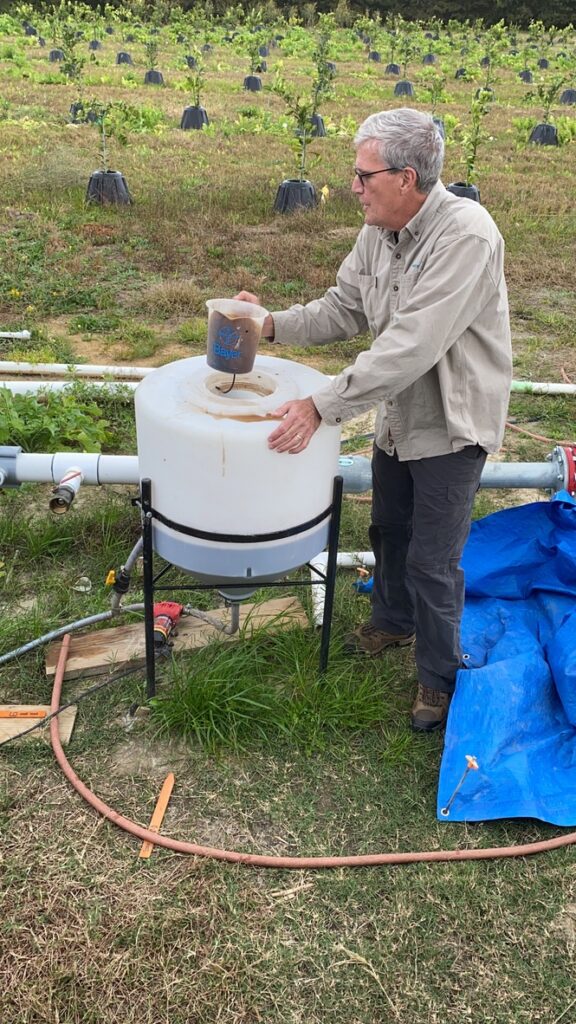
 Since every citrus tree has a microjet irrigation emitter, injection into the irrigation water is extremely efficient for supplying organic nutrition and feeding the microbes in the soil.

Only after retiring and deciding to farm for myself did I realize that the soil microbial ecology could be the foundation of a regenerative type of agriculture. For me, it was a revolutionary thought. The discovery of the tremendous body of research proving that the microbial ecosystem in the soil is the strongest symbiotic relationship on our planet hit me like a ton of bricks. 

As I learned more about the incredible way the soil takes care of itself, I become more and more frustrated. Why does this research never cross between the two worlds of conventional and organic agriculture? Why are these two methods of farming so antagonistic to each other? The organic camp blames industrial agriculture for pillaging the planet while conventional agriculture accuses organic practitioners of being naïve and having no basis in science. 

Having spent 40 years in conventional agriculture, and now decidedly on the organic side, I can confidently say that the reality couldn’t be further from the truth in either of those arguments. There was no plot in industrial agriculture to destroy ecosystems. On the other side, regenerative research in the last 10 years has validated beyond any doubt that natural ecosystems can be restored and can function to nurture crops. 

Ignorance is a strong word, but it essentially means to be unaware of a perspective outside of your own. I propose that both sides of the regenerative issue are living in ignorance — just as I was during a 40-year career aggressively developing pesticides. I was ignorant of the harm they could be doing, just as the organic industry is “ignorant” of the good intentions of industrialized agriculture. 

So, how have I rectified to myself these two things, which are completely antagonistic towards each other? I do it through what I know how to do: I run tests! My commercial citrus grove that has been regenerative from the moment of transplant is full of replicated trials. Each time I find a production practice that has yet to have its regenerative mechanism validated, I put out a trial. 
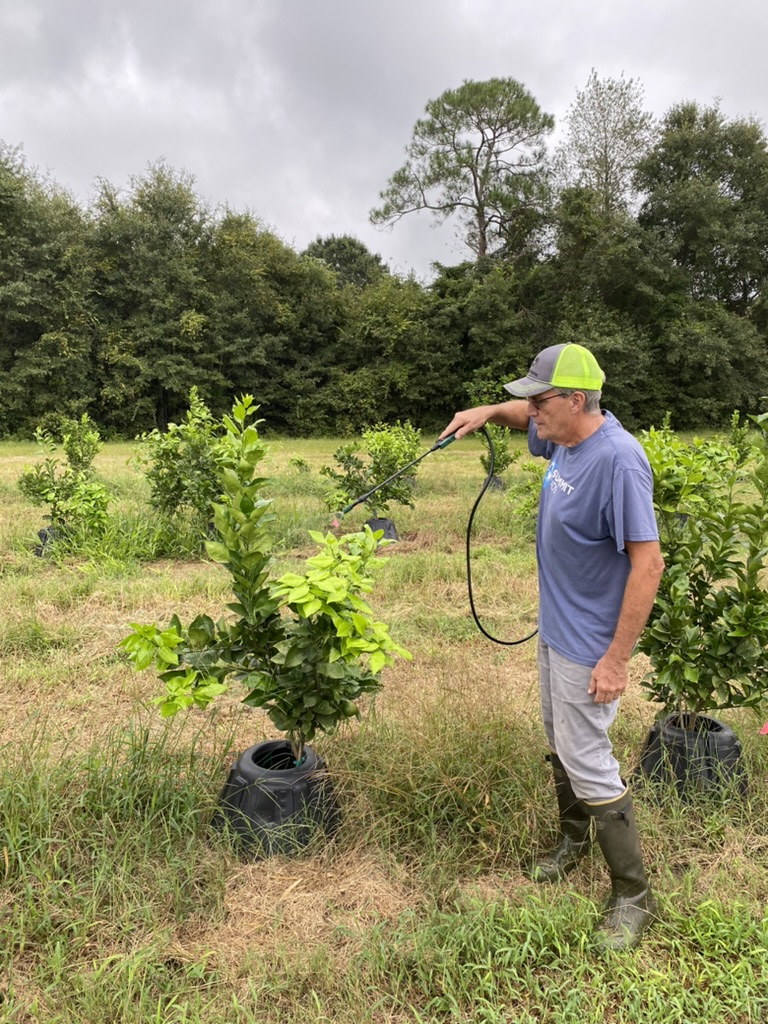
Applying an algae treatment to determine the difference in soil vs. foliar applications to stimulate microbial growth.

I hear retirement is supposed to involve some relaxing somewhere, but this is much more fun. Attempting to join together the two worlds of conventional and organic agriculture has instilled energy in me that has gone way beyond passion and could be considered a calling. The same mantra that is used to drive industrial agriculture — “feed the world” — is still my mantra, but now it is to “feed them well.” 
Along with regenerative production practices, the knowledge that nutrient-dense food could defeat the degradation of human health is the ultimate motivation. My passion is quickly evolving into a belief that I can grow citrus fruit with new levels of phytoalexins, flavonoids, phytosteroids and vitamins. Are we getting a glimpse that these nutrients could revolutionize the treatment for a cancer patient, a child suffering from ADHD or the epidemic of diabetes? Can we impact some of the medical dilemmas for which our brilliant medical doctors seem to have no explanation? No one knows, at least not yet. But I sure hope so.

Does farming regeneratively mean that in just a few years I’ve been able to grow trees immune to pests, unaffected by freezes, growing naturally without the help of fertilizer? No, not at all. Several old sages warned me when I set out on this regenerative journey, “Be patient — it doesn’t happen overnight.” Unfortunately, patience isn’t one of my virtues. But I can watch it slowly take place. It is obviously a process. 

My soil is coming to life. I can now push a soil penetrometer 18 inches deep instead of 3 inches. The DNA analysis of my soil shows that the ancient species are waking up and coming to life. I see a beneficial tree growth pattern of short internodes and enormous waxy leaves and explosive growth. It makes my trees almost unrecognizable from other growers’. 

It is happening, and it’s very exciting, but it’s happening slowly. Mysteriously, it’s under the ground. I can’t see it immediately like I used to be able to see the application of nitrogen on field crops. 

I’m trying to tackle the things for which I don’t see ready answers:

  • Does growing cover crops trunk-to-trunk support or drain the trees?
  • Will mycorrhizal fungi one day link trees together to share nutrients?
  • Could nutrient density of leaves and fruit become the antifreeze that would protect trees from freezing temperatures?
  • Will the world soon appreciate nutrient-dense fruit and acknowledge its role in human health?

Bringing the claims from the world of regenerative podcasts to real-world practicable results has been a challenge and a reality check. Claims of quick fixes have not materialized. But through the maze of differing opinions, I see the evolution of a very strong science. It is still a little murky, but it is there and emerging, growing stronger at a startling speed. 
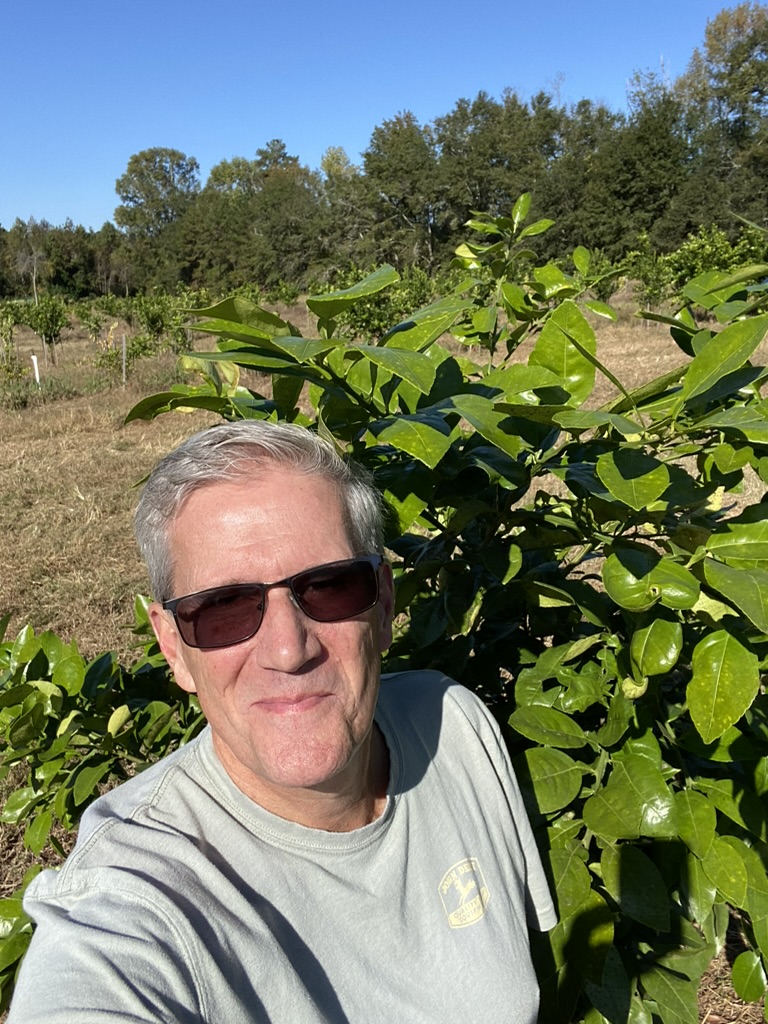
Once nutrition (foliar and irrigation) and compost tea jump-started the entire system, young trees exploded in growth with flushes expanding the canopy by as much as 50% multiple times a year.  The huge leaves are a measure of success.

The question is, will it ever break the surface into the world of conventional agriculture? That surface is a thick elastic barrier held together with a stubborn pride and tradition. The knife with the ability to penetrate will be SCIENCE — hard science with uncontestable, verifiable data. It will always stand the test of time, and I see it coming fast!

The most incredible part about this journey is the overwhelming friendships I’ve made with people on the same path. We all seem to know that we do not have all the answers, and the willingness to share ideas is exhilarating. 

Where will this journey of mine take me? I’ve realized that the list of questions rattling around in my brain may never end, but I’m sure having fun exploring as many as I can.

If regenerative agriculture voices are satisfied to just speak among themselves, they will not be heard outside a small circle, and regenerative will never become mainstream. Be bold, speak up and proclaim truth with passion, laced with science.

Herb Young operates Squeeze Citrus, LLC, in Thomasville, Georgia.

← Previous New Crop on an Old Farm Next Perennial Turnings  →
Tags: May 2023
Herb Young

Herb Young

Herb Young operates Squeeze Citrus, LLC, in Thomasville, Georgia.

Next Post

What’s Inside? May 2023 • Issue #623

  • Trending
  • Comments
  • Latest
The Most Important Livestock in Our Fields

The Most Important Livestock in Our Fields

July 1, 2024
Glyphosate Does What It’s Designed to Do — Kill

Glyphosate Does What It’s Designed to Do — Kill

February 19, 2025
The Take-Half, Leave-Half Fallacy

The Take-Half, Leave-Half Fallacy

July 1, 2025
USDA organic seal over American farm land

Losing Organic Farms

January 27, 2026
We Don’t Need Another Bridge — We Need an Off-Ramp

We Don’t Need Another Bridge — We Need an Off-Ramp

3
Under One Roof

Under One Roof

3
A Rose By Any Other Name

A Rose By Any Other Name

2
Terra Preta’s Biological Advantage

Terra Preta’s Biological Advantage

2
Destroying Farmland for AI

Destroying Farmland for AI

March 12, 2026
Roundup glyphosate herbicide referenced in debate over national security executive order

ROUNDUP PIE

March 5, 2026
What Does “Cutting Red Tape” Mean for Eco-Ag?

What Does “Cutting Red Tape” Mean for Eco-Ag?

March 4, 2026
March 2026 • Issue #657

March 2026 • Issue #657

March 1, 2026

Recent News

Destroying Farmland for AI

Destroying Farmland for AI

March 12, 2026
Roundup glyphosate herbicide referenced in debate over national security executive order

ROUNDUP PIE

March 5, 2026
What Does “Cutting Red Tape” Mean for Eco-Ag?

What Does “Cutting Red Tape” Mean for Eco-Ag?

March 4, 2026
March 2026 • Issue #657

March 2026 • Issue #657

March 1, 2026

About ACRES USA

Acres U.S.A.® Magazine

Acres U.S.A.® is North America’s oldest publisher on production-scale organic and regenerative farming. For more than 50 years, our mission has been to help farmers, ranchers and market gardeners grow food profitably and sustainably, with nature in mind.

Magazine Issues

  • News
  • 2025
    • June 2025
    • May 2025
    • April 2025
    • March 2025
    • February 2025
    • January 2025
  • 2024 Articles
    • December 2024
    • November 2024
    • October 2024
    • September 2024
    • August 2024
    • July 2024
    • June 2024
    • May 2024
    • April 2024
    • March 2024
    • February 2024
    • January 2024
  • December 2023
    • December 2023
    • November 2023
    • October 2023
    • August 2023
    • July 2023
    • June 2023
    • May 2023
    • April 2023
    • March 2023
    • February 2023
    • January 2023
  • December 2022
    • November 2022
    • October 2022
    • September 2022
    • August 2022
    • July 2022
    • June 2022
    • May 2022
    • April 2022
    • March 2022

Contact Acres U.S.A

  • Contact Us
  • About Us
  • Advertise With Acres U.S.A.
  • My Subscription

Learn

  • Resources
  • Events
  • Magazine
  • Newsletters
  • Free Articles
  • Webinars
  • Online Courses
  • Bookstore

Our All Socials

Follow With Us...

  • My account
  • News
  • Ecological farming
  • Refund and Returns Policy
  • Privacy & Policy

© 2024 Acers USA Magazine

Welcome Back!

Login to your account below

Forgotten Password? Sign Up

Create New Account!

Fill the forms below to register

All fields are required. Log In

Retrieve your password

Please enter your username or email address to reset your password.

Log In
No Result
View All Result
  • HOME
  • ARTICLES
    • News
    • Farm
    • Ecological farming
    • Livestock
    • Crop
      • Crop management practices
      • Cover crops
      • Crop nutrition
      • Crop protection
      • Crops
      • Ag technology
    • Soil
    • Opinion
  • RESOURCES
    • Magazine
    • Online Learning
    • Newsletters
    • Blog
    • Free Articles
  • MAGAZINE ISSUES
    • 2025
      • June 2025
      • May 2025
      • April 2025
      • March 2025
      • February 2025
      • January 2025
    • 2024
      • December 2024
      • November 2024
      • October 2024
      • September 2024
      • August 2024
      • July 2024
      • June 2024
      • May 2024
      • April 2024
      • March 2024
      • February 2024
      • January 2024
    • 2023
      • December 2023
      • November 2023
      • October 2023
      • August 2023
      • July 2023
      • June 2023
      • May 2023
      • April 2023
      • March 2023
      • February 2023
      • January 2023
  • ABOUT US
    • Our History
    • Our Staff
    • Contact Us
    • Community
      • Soil Health Primer Resources
  • EVENTS
    • Eco-Ag Conference
    • On-Farm Viroqua Event
    • Farm Weird
  • SUBSCRIBE
  • Login
  • Sign Up
  • Cart

© 2024 Acers USA Magazine

Are you sure want to unlock this post?
Unlock left : 0
Are you sure want to cancel subscription?