

A while back I had to call a guy out to fix a leak near our well. He did a great job at a fair price, and we had a nice chat. Unrelated to anything having to do with his manner or character, though, I was struck by his physique: he was one of those rare people these days who is in his early sixties and yet still thin — probably nearly as svelte as he was when he was as a teenager, I’d guess.
I don’t know anything about his diet or his genes, but I did observe that he was obviously a smoker. And I believe this, at least in part, helps explain his figure. Though there are of course many factors that affect weight gain (we hate monocausality!), there is a verified biological link between nicotine use and lower body weight.
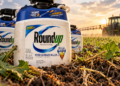
I bring this up merely as an illustration of the principle of tradeoffs. This was the subject of this column in our August issue, and we received several thoughtful responses. The letters expressed mild shock that Acres U.S.A. was being soft on glyphosate use, so I want to reassure you, dear readers, that this is not the case — my argument was merely different from “is glyphosate good or bad.”
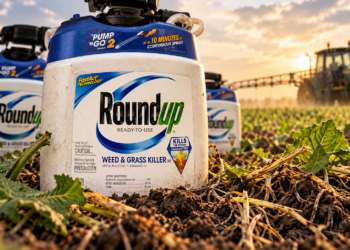
To recap, the August “View” was an application to agriculture of Thomas Sowell’s dictum that there are no solutions — there are only tradeoffs. The consternation among some readers was that I tried to apply this to glyphosate use. I argued, a la Sowell, that there is no true solution to glyphosate — a nationwide, or even worldwide, ban would likely lead some farmers to use more toxic herbicides. I would note, in my defense, that I didn’t say that this is a reason we shouldn’t ban glyphosate — only that there are tradeoffs to doing so.
Let’s return to the smoker’s dilemma, which I think is a simpler and more dramatic example. My well guy should stop smoking, full stop. Smoking will likely (although not assuredly) lead to his premature death. As another example, I live in my current house because the previous owner died of lung cancer, and he was a lifelong smoker.

But there is a tradeoff to my well guy quitting: he would almost certainly start to gain weight. Still, this is a very good tradeoff, and he should take it.
The point is that both courses of action are painful and require discipline and work. Quitting smoking is extraordinarily difficult, but it could save his life. If he quits, he’ll have to work incredibly hard to not gain weight and incur all the negative consequences that entails. But almost everyone would agree that this is a good tradeoff.
Likewise, we should ban glyphosate, full stop. There’s no end to the bad things it’s done to American agriculture. The letters we received outline this, and I think we’ve done a great job explaining it in Acres U.S.A. over the past fifty years, and even in the last couple months (see, for example, our interview with Don Huber in December 2024, John Kempf’s opinion piece in April 2025 on how herbicides cause just as much disruption as tillage, and the interview with Benny McClean in May 2025). Also read our interview with Rick Clark in this month’s issue — he doesn’t use the word “tradeoff,” but he argues that he gains a metaphorical “8” from using cover crops but loses “4” for shallowly tilling them in. On balance, he reckons, that’s still a gain of “4.” The balance — the tradeoff — is still positive.
The point of the August View was simply that both courses of action — keeping glyphosate or banning it (or, as was also discussed in the column, both tilling and not tilling) — would be hard. I do apologize that the column could have come over as saying we should sit back and relax about glyphosate. I promise that banning glyphosate would be an easy tradeoff for me to make — and, I imagine, for most of you, if any of us were monarch for a day. In Rick Clark’s parlance, banning glyphosate would be a “10,” and the return to other herbicides, the reductions in yield, and any other problems we can’t even imagine (which always exist) are maybe a “1” — a gain of “9”! I’m just saying that we have to keep in mind that there would be knock-on problems — much better problems, but never a “0”.
And that’s the view from the country.