Acres U.S.A.® Magazine
  • Articles
    • News
    • Ecological farming
      • Climate
      • Environmental Issues
      • Farm management & planning
      • Human health
    • Livestock
    • Farm
    • Crop
      • Crop management practices
        • Ag technology
        • Cover crops
        • Crop nutrition
          • Crop protection
          • Diseases
        • Crops
        • Fruits
    • Soil
    • Opinion
  • Resources
    • Magazine
    • Online Learning
    • Newsletters
    • Free Articles
    • Blog
  • Magazine Issues
    • 2025
      • October 2025
      • September 2025
      • August 2025
      • July 2025
      • June 2025
      • May 2025
      • April 2025
      • March 2025
      • February 2025
      • January 2025
    • 2024
      • December 2024
      • November 2024
      • October 2024
      • September 2024
      • August 2024
      • July 2024
      • June 2024
      • May 2024
      • April 2024
      • March 2024
      • February 2024
      • January 2024
    • 2023
      • December 2023
      • November 2023
      • October 2023
      • August 2023
      • July 2023
      • June 2023
      • May 2023
      • April 2023
      • March 2023
      • February 2023
      • January 2023
    • 2022
      • December 2022
      • November 2022
      • October 2022
      • September 2022
      • August 2022
      • July 2022
      • June 2022
      • May 2022
      • April 2022
      • March 2022
      • February 2022
  • About Us
    • Our History
    • Our Staff
    • Contact Us
    • Community
      • Soil Health Primer Resources
  • Events
    • Eco-Ag Conference
    • Farm Weird Event
    • Viroqua On Farm Event
  • Subscribe
  • Login
  • Register
No Result
View All Result
  • Articles
    • News
    • Ecological farming
      • Climate
      • Environmental Issues
      • Farm management & planning
      • Human health
    • Livestock
    • Farm
    • Crop
      • Crop management practices
        • Ag technology
        • Cover crops
        • Crop nutrition
          • Crop protection
          • Diseases
        • Crops
        • Fruits
    • Soil
    • Opinion
  • Resources
    • Magazine
    • Online Learning
    • Newsletters
    • Free Articles
    • Blog
  • Magazine Issues
    • 2025
      • October 2025
      • September 2025
      • August 2025
      • July 2025
      • June 2025
      • May 2025
      • April 2025
      • March 2025
      • February 2025
      • January 2025
    • 2024
      • December 2024
      • November 2024
      • October 2024
      • September 2024
      • August 2024
      • July 2024
      • June 2024
      • May 2024
      • April 2024
      • March 2024
      • February 2024
      • January 2024
    • 2023
      • December 2023
      • November 2023
      • October 2023
      • August 2023
      • July 2023
      • June 2023
      • May 2023
      • April 2023
      • March 2023
      • February 2023
      • January 2023
    • 2022
      • December 2022
      • November 2022
      • October 2022
      • September 2022
      • August 2022
      • July 2022
      • June 2022
      • May 2022
      • April 2022
      • March 2022
      • February 2022
  • About Us
    • Our History
    • Our Staff
    • Contact Us
    • Community
      • Soil Health Primer Resources
  • Events
    • Eco-Ag Conference
    • Farm Weird Event
    • Viroqua On Farm Event
  • Subscribe
No Result
View All Result
Acres U.S.A.® Magazine
No Result
View All Result
Home Magazine issues December 2024

Tips for Pick-Your-Own

Megan Neubauer by Megan Neubauer
December 1, 2024
in December 2024, Marketing
0
Tips for Pick-Your-Own
0
SHARES
290
VIEWS
Share on FacebookShare on Twitter

Five essential components of a pick-your-own farm

Megan Neubauer

Pick-your-own farming is a production model in which consumers go directly to farms to pick and purchase fruits and vegetables. This very profitable agritourism model has enabled us at Pure Land Farm to produce much more volume than we would be able to move through traditional market gardening avenues of sale, like the farmers market or local restaurants, without significant investments in labor and equipment. The time we save by eliminating the harvest, prep and marketing labor is repurposed to scale up the number of plants we grow, resulting in a fatter top line at no additional expense. 

This model is not new; agritourism pioneer Dr. Booker T. Whatley preached about the value of pick-your-own more than 40 years ago. While we too are evangelists for the model, it’s understandably not going to be the best fit for every farm. There are five components of our operation that we’ve identified as key contributors to our success.

  1. Access to land near a metropolitan or tourist area relative in size to your farm’s scale
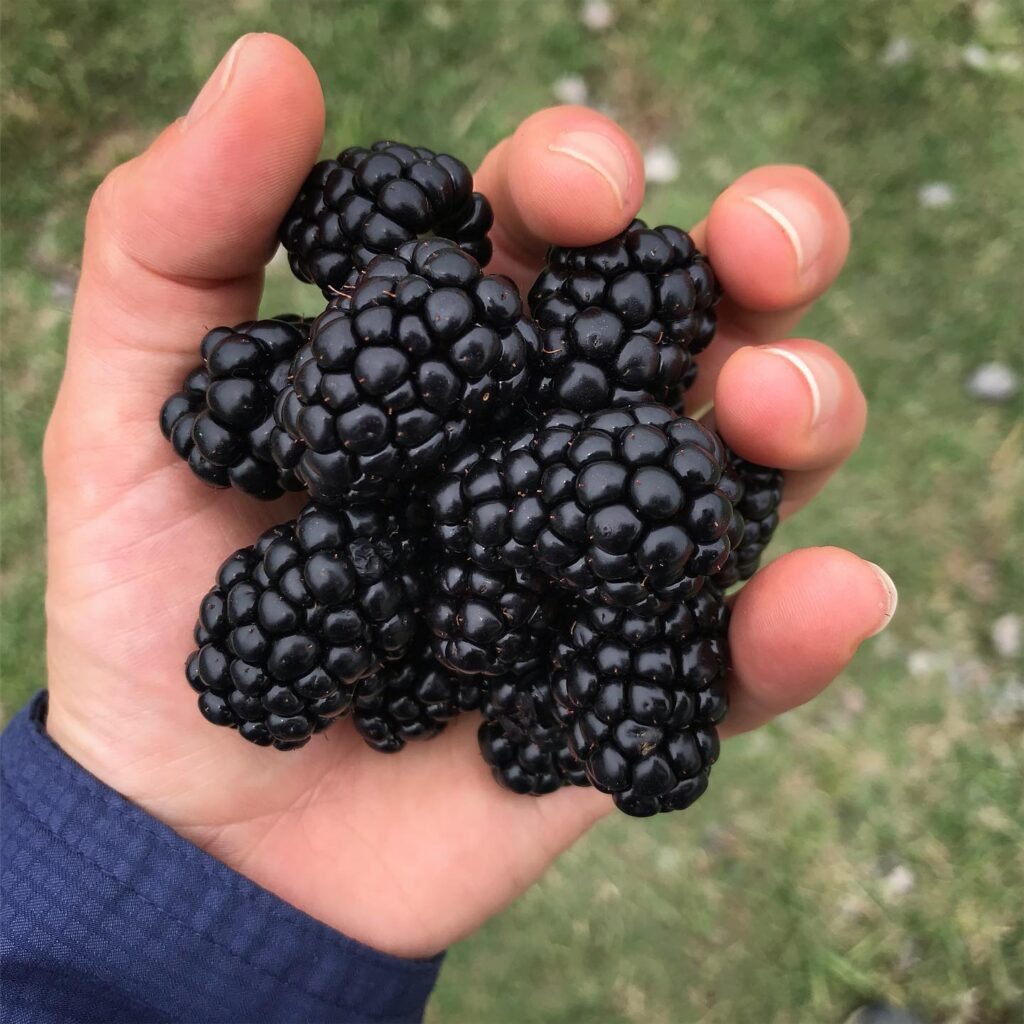
Berries (Courtesy of Megan Neubauer)

There’s no way around it — if you want people to come to your farm, you need to be near the people. A survey of about 350 of our customers in 2022 found that just over half travel 30 miles or fewer to visit us. Most of the remaining respondents travel fewer than 10 miles. 

Of course, it’s all relative; if you’re planning a half-acre you-pick farm, you probably don’t need a huge pool of available customers because it won’t take many people to pick clean. But if you’re trying to produce on a large scale, being close to a major population center will dramatically increase your accessibility for potential customers.

  1. Startup capital for a robust, resilient farming operation 

We earn revenue from only two products at Pure Land: produce and admission. It is critical to grow as much as food as we can, because it’s the only way to increase both. The revenue from produce obviously increases with a bigger harvest, but revenue from admission increases commensurately because it takes more people to pick everything. 

To grow at scale successfully, you must be able to afford the materials and equipment to do so. Everybody’s context is different, and there are so many different ways to farm; I’m not going to say you must have a tractor or a fancy seeder or six employees — that’s up to you. Our priority is to grow everything by ourselves without additional labor, though. In our context, that requires a tractor, mulch layer and transplanter, along with a few other simple implements. 

But those are just the big things; the small things add up, too. An example I use is frost cloth — if there are frequent late frosts in your area that can damage crops, you must have frost cloth ready to go, whether you end up needing it or not. And don’t forget the things you need to create a hospitable destination for visitors, too, or you risk diminishing the quality of the experience for them. Don’t leave the nice people out in the sun because you can’t afford a tent. 

  1. A hospitable climate during your production season

Here in North Texas, we can grow an appealing variety of about a dozen crops that are ready to harvest from mid-May through mid-July, after which the intense heat makes growing things and hosting visitors impossible. When is this harvest period where you are? Can you grow enough variety in that time period to be broadly appealing, and is the weather hospitable for visitors? 

It can be tempting to monocrop, especially with those crops that are in high demand for you-pick, like strawberries. But monocropping comes with a lot of risk. Diversity has been key to our appeal and is a valuable safeguard against crop failure.

  1. The ability or deep desire to learn how to grow high-quality produce
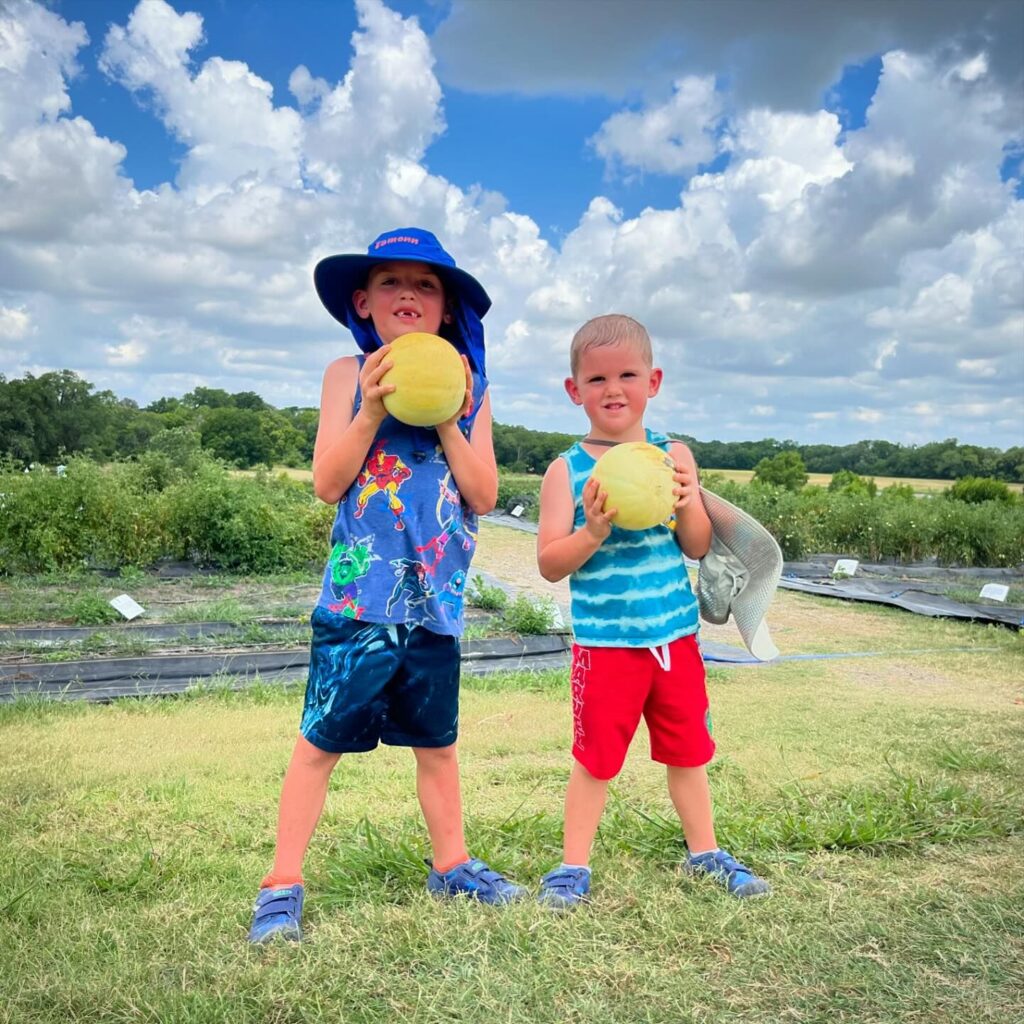
Cullen and Eamonn (Courtesy of Megan Neubauer)

Another data point from the survey referenced earlier is that our customers really appreciate how our produce is of high quality and has been grown organically. Knowing this has made prioritizing the items on our to-do lists quite easy: nothing comes before taking care of the plants. Your plants must be attractive and abundant, with low pest, disease and weed pressure. I wish this were as easy to do as typing that sentence! 

Fortunately, we have excellent resources in books, podcasts and periodicals like this one from successful farmers willing to share their knowledge. You can pull very little of the typical grower’s sleight of hand on a pick-your-own farm; there is no culling in the field before the product reaches customers, no sorting out the seconds. 

I think of a farm in nearby Austin that sells sweet corn with the first inch cut off, to remove the earworm. Their farmers market customer never even knew it was there, but this would never fly on a pick-your-own. The customer would peek into the silk, see the worm, and stop right there — or pick it without looking, take it home, and complain about the quality later. 

  1. Patience and affection for other people

If you dread talking to customers at the farmers market, you’re probably not going to like running a pick-your-own. But if chatting with the shoppers is your favorite part, this is the model for you! 

More than 85 percent of our customers reported that supporting local agriculture and forming a personal relationship with a farmer as their biggest motivation for coming to see us. A huge part of the experience for the customer (and we are selling an experience) is talking to you. Yes, it can be exhausting to be “on” for a couple hundred people a day, but it’s also so fulfilling. 

One morning I looked up from the busy checkout to see Dad with two little kids wrapped around his legs — brothers who have been coming every weekend with their parents for the past four years. It’s hard not to smile at that.

Megan Neubauer runs Pure Land Farm near Dallas, Texas. She is the author of Pick-Your-Own Farming: Free Yourself from Farmers Markets and Join the Agritourism Revolution, published by Acres U.S.A. She will be a speaker at this year’s Acres U.S.A. Eco-Ag Conference: conference.eco-ag.com.

← Previous The Soil Electric Next Disturbance, Regrowth, Recovery  →
Tags: Pick-your-own
Megan Neubauer

Megan Neubauer

Megan Neubauer runs Pure Land Farm near Dallas, Texas. She is the author of Pick-Your-Own Farming: Free Yourself from Farmers Markets and Join the Agritourism Revolution, published by Acres U.S.A. She will be a speaker at this year’s Acres U.S.A. Eco-Ag Conference: conference.eco-ag.com.

Next Post
January 2025 • Issue #643

January 2025 • Issue #643

  • Trending
  • Comments
  • Latest
The Most Important Livestock in Our Fields

The Most Important Livestock in Our Fields

July 1, 2024
Glyphosate Does What It’s Designed to Do — Kill

Glyphosate Does What It’s Designed to Do — Kill

February 19, 2025
The Take-Half, Leave-Half Fallacy

The Take-Half, Leave-Half Fallacy

July 1, 2025
White snakeroot

Toxic Forages?

September 1, 2025
We Don’t Need Another Bridge — We Need an Off-Ramp

We Don’t Need Another Bridge — We Need an Off-Ramp

3
Under One Roof

Under One Roof

3
A Rose By Any Other Name

A Rose By Any Other Name

2
Terra Preta’s Biological Advantage

Terra Preta’s Biological Advantage

2
Don’t You Dare Disparage Sugar!

Don’t You Dare Disparage Sugar!

February 3, 2026
February 2026 • Issue #656

February 2026 • Issue #656

February 1, 2026
Fungal Exchange Capacity

Fungal Exchange Capacity

February 1, 2026
ECO-MEETINGS

ECO-MEETINGS

February 1, 2026

Recent News

Don’t You Dare Disparage Sugar!

Don’t You Dare Disparage Sugar!

February 3, 2026
February 2026 • Issue #656

February 2026 • Issue #656

February 1, 2026
Fungal Exchange Capacity

Fungal Exchange Capacity

February 1, 2026
ECO-MEETINGS

ECO-MEETINGS

February 1, 2026

About ACRES USA

Acres U.S.A.® Magazine

Acres U.S.A.® is North America’s oldest publisher on production-scale organic and regenerative farming. For more than 50 years, our mission has been to help farmers, ranchers and market gardeners grow food profitably and sustainably, with nature in mind.

Visit Our Advertisers

Magazine Issues

  • News
  • 2025
    • June 2025
    • May 2025
    • April 2025
    • March 2025
    • February 2025
    • January 2025
  • 2024 Articles
    • December 2024
    • November 2024
    • October 2024
    • September 2024
    • August 2024
    • July 2024
    • June 2024
    • May 2024
    • April 2024
    • March 2024
    • February 2024
    • January 2024
  • December 2023
    • December 2023
    • November 2023
    • October 2023
    • August 2023
    • July 2023
    • June 2023
    • May 2023
    • April 2023
    • March 2023
    • February 2023
    • January 2023
  • December 2022
    • November 2022
    • October 2022
    • September 2022
    • August 2022
    • July 2022
    • June 2022
    • May 2022
    • April 2022
    • March 2022

Contact Acres U.S.A

  • Contact Us
  • About Us
  • Advertise With Acres U.S.A.
  • My Subscription

Learn

  • Resources
  • Events
  • Magazine
  • Newsletters
  • Free Articles
  • Webinars
  • Online Courses
  • Bookstore

Our All Socials

Follow With Us...

  • My account
  • News
  • Ecological farming
  • Refund and Returns Policy
  • Privacy & Policy

© 2024 Acers USA Magazine

Welcome Back!

Login to your account below

Forgotten Password? Sign Up

Create New Account!

Fill the forms below to register

All fields are required. Log In

Retrieve your password

Please enter your username or email address to reset your password.

Log In
No Result
View All Result
  • HOME
  • ARTICLES
    • News
    • Farm
    • Ecological farming
    • Livestock
    • Crop
      • Crop management practices
      • Cover crops
      • Crop nutrition
      • Crop protection
      • Crops
      • Ag technology
    • Soil
    • Opinion
  • RESOURCES
    • Magazine
    • Online Learning
    • Newsletters
    • Blog
    • Free Articles
  • MAGAZINE ISSUES
    • 2025
      • June 2025
      • May 2025
      • April 2025
      • March 2025
      • February 2025
      • January 2025
    • 2024
      • December 2024
      • November 2024
      • October 2024
      • September 2024
      • August 2024
      • July 2024
      • June 2024
      • May 2024
      • April 2024
      • March 2024
      • February 2024
      • January 2024
    • 2023
      • December 2023
      • November 2023
      • October 2023
      • August 2023
      • July 2023
      • June 2023
      • May 2023
      • April 2023
      • March 2023
      • February 2023
      • January 2023
  • ABOUT US
    • Our History
    • Our Staff
    • Contact Us
    • Community
      • Soil Health Primer Resources
  • EVENTS
    • Eco-Ag Conference
    • On-Farm Viroqua Event
    • Farm Weird
  • SUBSCRIBE
  • Login
  • Sign Up
  • Cart

© 2024 Acers USA Magazine

Are you sure want to unlock this post?
Unlock left : 0
Are you sure want to cancel subscription?