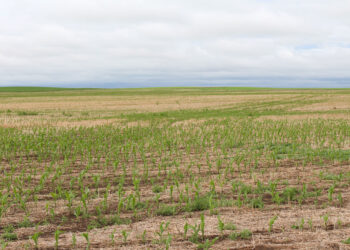


A short interview with Seedtime cofounders Paul and Edwin Dysinger about how crop planning software can significantly improve efficiency on the farm or garden
Acres U.S.A. Can you explain the genesis of Seedtime and why you created it? Why do farmers and gardeners need something like this?
Edwin Dysinger. Sure. We worked with my brother for about 10 years doing a CSA and farmers markets just south of Nashville, Tennessee. Paul was in high school when we started, and he worked with us in the summers.
Paul Dysinger. It was a pretty typical small-scale, organic family farm. We were cultivating close to four acres — 50 to 70 varieties of vegetables, herbs and berries, and going year-round. We specialized in a winter CSA because that was the off season that everyone else wasn’t growing in.
And after working with the family business for many years, I just didn’t feel like it was my calling to go in the direction of commercial farming. So, I ended up blending the experience with the farm with some experience I had with web development. I took that skillset from the farm and started teaching people online how to grow their own food. It was more geared toward the home gardener and homesteader. Dad was a part of that from the very beginning and has been through the whole thing. We had an online membership; I built out a gardening course that people could walk through.
I don’t know exactly when the first idea or the first concept was of creating a planner, but I know that from the very beginning, when we were farming, it was one of the most complex parts of the operation — trying to figure out what to do and when to do it. Especially when it came to crop rotations — it just becomes this labyrinth of options.
Edwin. Particularly growing through the winter — your days to maturity are a moving target all the way through. How do you do that for a CSA, where you’ve got to have a pipeline of stuff ready — multiple things ready every week to put in the box? It was pretty challenging.
Paul. And we found that in the home gardener and homesteader world — just on smaller scales — a lot of people were confused and struggled with figuring out what to do and when to do it. We were trying to teach people how to plant and harvest something every single week/month of the year, and that gardening can become part of your lifestyle instead of just an event. A lot of people just plant everything in the spring, they have a summer harvest, and then it’s done.
But we were trying to teach people about succession planting and fall and winter gardening. And the more you do that, the more complex it gets with figuring out what to do and when to do it and making sure you have things seeded early enough so that they’re going to replace what is being harvested out of your garden.
So, it all started when my dad and I made a promise to our gardening students. We told them we’d give them a checklist. This was a bonus — jump into the membership and buy the course, and as a bonus, we’ll give you a weekly checklist of what you should do in your garden every single week for the year, based on your location. The funny thing is that I had the background to know that that was just a mammoth task — because every location is different. We promised it without fully having a game plan of how we were going to deliver — which probably isn’t a good idea most of the time!
However, it funneled us, and we had to deliver on this promise. I ended up spending hours and hours researching, trying to find any kind of tool that we could use to do this. At the same time, my dad began building out spreadsheets based on average frost dates.
So, we built out these massive spreadsheets with a set number of common crops and suggested succession spacings for each location based on their frost dates. I found a third-party calendar tool, and we built out these click-and-drop gardening calendars based on the spreadsheet. It was very basic and very uncustomizable. You couldn’t move anything around. You couldn’t change days to maturity. It was all based on averages.
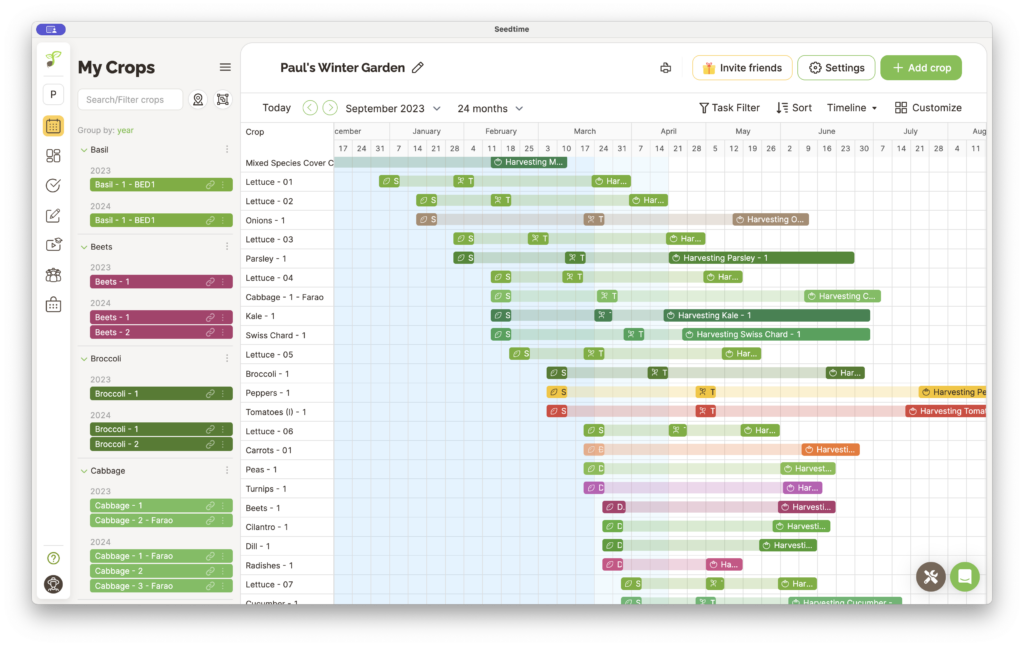
But the first time we released that to our students, it just blew up. People were so excited about it.
Acres U.S.A. Turns out this is what people really needed.
Paul. It was. I think everybody wanted it, and they didn’t even know that they wanted it — it was that kind of scenario.
So, that was what spawned the idea that we really had to turn that into something bigger and make it customizable. That was what Seedtime was built off of.
Acres U.S.A. I’m definitely one of those people who’s gardened somewhat successfully with spreadsheets, but when I started using Seedtime for this growing season, it’s just been so much easier. We had been doing exactly what you said — we had everything planted out by early June, and then that was it. We harvest off of that and forgot about, or just never got around to, succession plantings and fall crops.
Edwin. Especially for fall and winter. It’s really counterintuitive — you’ve got to be thinking about that in the dead heat of summer.

Acres U.S.A. The reminders to weed are critical too. You know you need to go do it, but when you have a checklist, that checklist motivates people like me.
Then you did a Kickstarter campaign, right?
Paul. We did, yeah. That’s what really launched it.
Edwin. We would usually do a promotion for the online classes every spring, and we had a lot going on the spring of 2020 and were thinking about maybe not doing the promotion. This was back before Seedtime, when we just had the click-and-drop calendars. But then somebody suggested, with Covid coming, and it looked like people were going to be home more, that we might want to think about doing it. So we decided to do it.
Paul. We did a webinar to promote it, and we opened up registration for the webinar and it just blew up. We had 8,000 people register for the webinar. We had never seen interest like that before. People had just been to the store, and the shelves were empty,
We ended up doing six consecutive weeks of webinars, and we were giving away garden training for a donation. We had opportunities for people to join the membership, but we didn’t want to take advantage of the pandemic, so we were trying to help people out at the same time. People’s donations gave us the funds to create the first version of Seedtime. And that next year, 2021, we launched the Kickstarter, and it took off.
Acres U.S.A. Can you talk about some of your future upgrades?
Paul. Yeah, we’re pretty excited about the future releases of Seedtime. We just launched a companion mobile app. And we’re going to be working on building out custom tasks, and that’s going to change the whole workflow. You could say, “I want to add a fertilization reminder seven days after transplanting, and I want to repeat every 14 days until harvest,” or something like that. You’ll have that flexibility to create your own custom workflows and remove tasks you don’t want.
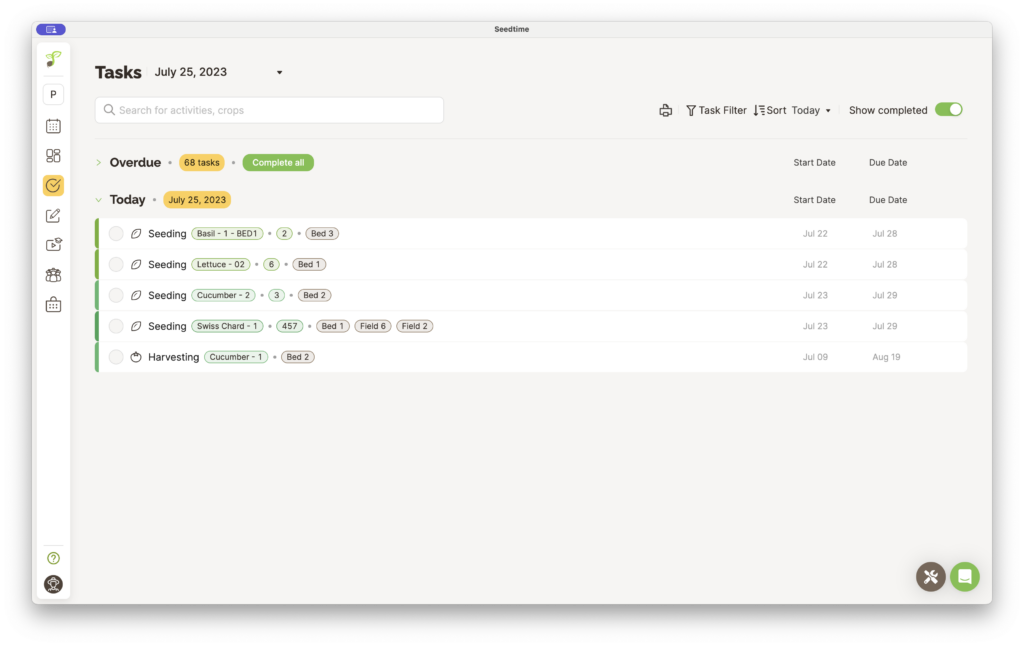
Acres U.S.A. Like adding a flame weeding reminder right before carrots come up.
Paul. Right. And then we’re going to have weather integration. You could set custom weather alerts based on whatever parameters you want, but then you’ll also be able to see historical weather and forecasts directly in the calendar.
Another big ask from the Seedtime community has been inventory planning — being able to track seed and fertilizer inventory. People get frustrated with having a bunch of seed packets and not knowing what they have and what they don’t have and what they need to purchase. There’s a lot of powerful stuff that we could do in that direction.
We also want to do records and analytics so that you can easily keep track of things in your garden or farm. Say you harvested tomatoes — you can put how many there were, and Seedtime will track the bed location, the date, the variety. It will be able to log records automatically.
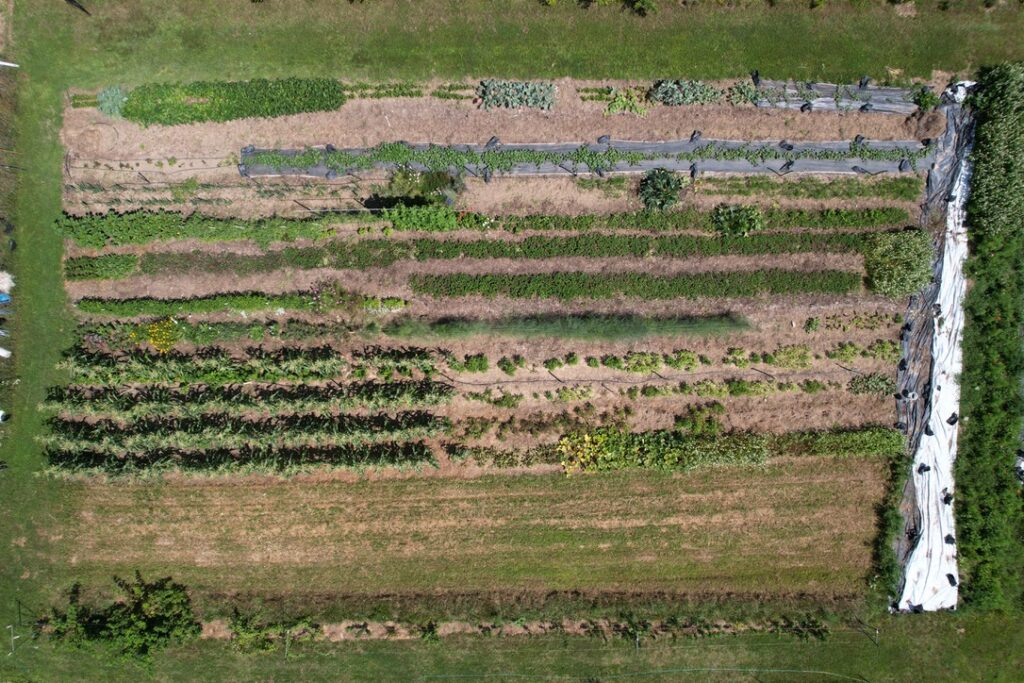
We have a lot of farmers that are using Seedtime. About 11 percent of our users are small-scale farmers, and folks just getting into farming find it very exciting to be able to organize their life better. We have conceptual ideas of building out an entire CSA management that ties back to your layout so that you can plan your CSA boxes over a year, plus customer management, wash-pack lists, timekeeping, multi-user access with permission levels, etc.
Our mission is to make gardening and farming easier for people, and we would love to see more and more people growing their own food. I think one of the biggest challenges small farmers have is that it’s a lot of hard work, and profitability — for the amount of time you’re putting in — is challenging. We’d love to see more tools like this that can free up farmers’ time and make it easier for them to spend more time out in the field or even at farmers markets. Anything that can help reduce that overhead work and actually put people’s hands out in the soil — I would love to see that be the future of farming.
Acres U.S.A. How much interest has continued from 2020 — from the beginning of Covid?
Paul. There was definitely the spike, and then the next year there was a drop. I don’t know that it’s going back to pre-Covid levels, though. There’s still a high interest in gardening. Seedtime has had a very consistent growth curve since that time. The Kickstarter campaign was a big jump, and then the next year we went up to about 50,000 users, and then at the end of last year it was about 150,000, and then this year it’s around 285,000.
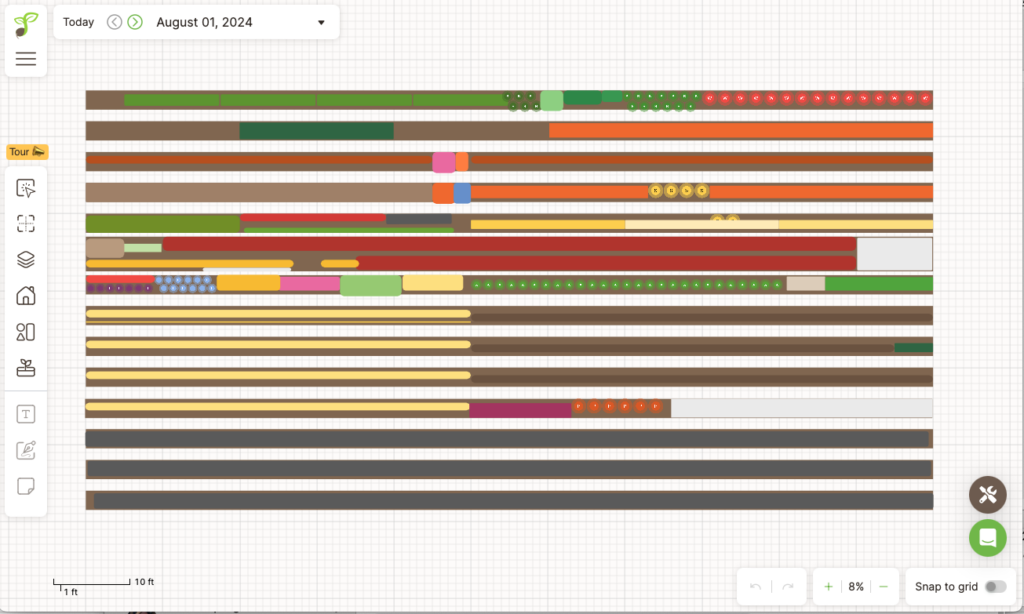
I think the unique thing about Seedtime is that it provides a solution to so many types of farmers or gardeners — from anyone who’s never gardened before all the way up to the market farmer. This year we’ve had a big influx of homesteaders, and I think that that interest will continue. I think that should be an encouragement to anyone in the industry — that there is a consistent trend of people who are tuning into where their food comes from. And they want it to be healthier. Most aren’t growing all of their own food, so they still want to go to a farmers market to pick up the food they don’t grow.