

Five new technologies we’re looking forward to in 2025 and the near future
Here are five new technologies that should help farmers be more profitable and stay more connected to the land.
Removing an Impediment to In-Furrow Spraying
How many farmers have given up on spraying because of the annoyance of clogged spray nozzles? While producers are continuing to work on biological and nutritional combinations that are less sludgy and require less careful tank mixing, new spraying solutions are helping solve this problem as well.
SureFire Ag Systems has developed one of the simplest solutions imaginable: instead of changing the type of pump, make the liquid flow through a long but (relatively) wide tube. In this system, a 0.030-inch orifice can be replaced with an eight-foot-long metering tube that has an inner diameter of 0.096 inches. Due to flow dynamics, these metering tubes provide from 10 to 75 percent more flow at the same pressure compared to an orifice. This also enables the use of a strainer with 20 mesh instead of 80 or 100 — 385 percent more passageway. Based on the desired application rate and the viscosity of the product, growers can choose from 10 different tube inner diameters, from 0.047 to 0.187 inches.
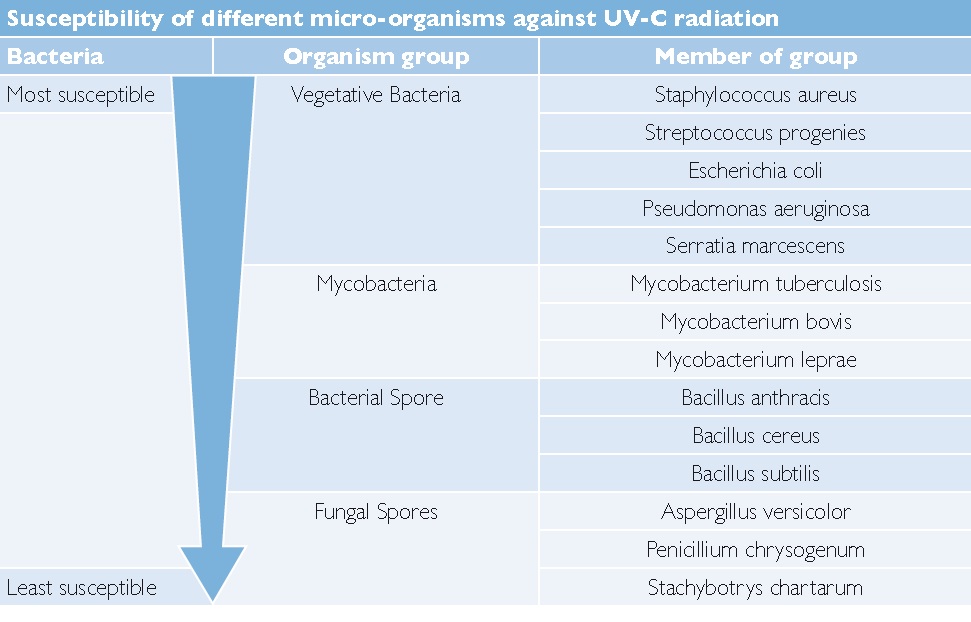
SureFire’s systems incorporate two separate metering tubes — one with a larger inner diameter and one with a smaller one — for each spray location, with a meter that controls each, allowing three different spray rates.


Now U(V)-C Powdery Mildew … Now You Don’t
Ecologically minded farmers are always on the look for non-toxic ways to deal with diseases on plants. While the optimal approach is building soil health in the long term and treating nutrient deficiencies and excesses in the short term, high-value crops do sometimes need assistance in order for the farm to make it to the long term.
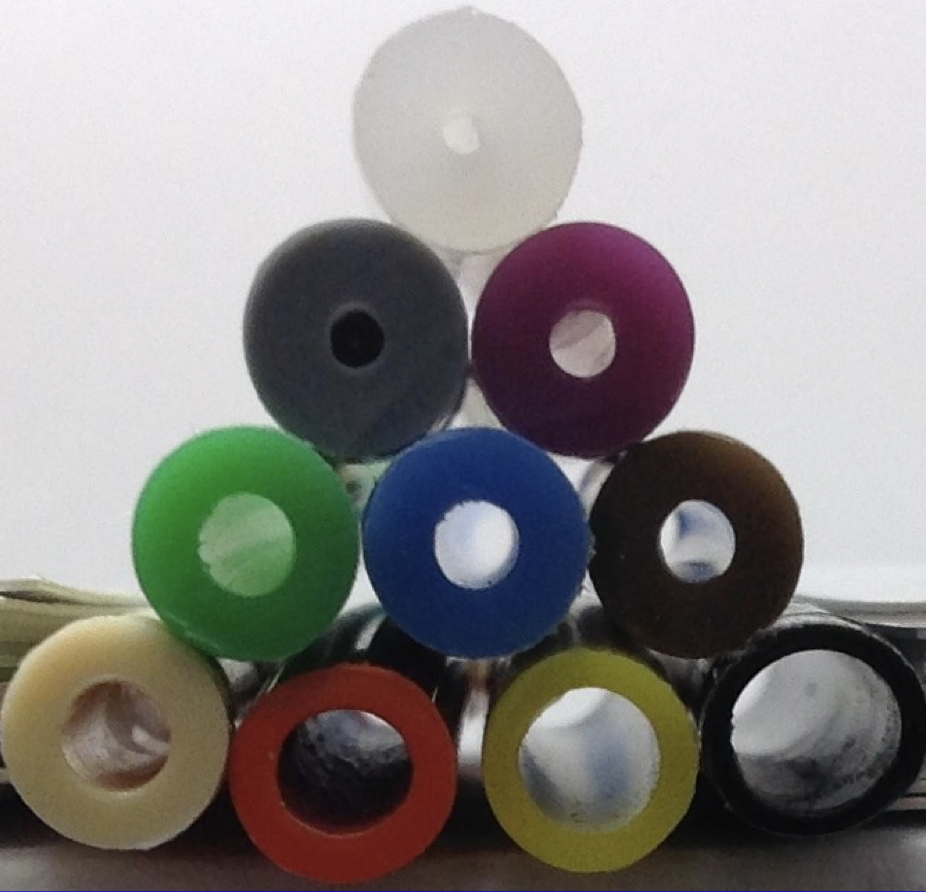
A new approach being adopted by greenhouse growers in particular — but expanding to the field — is treating plant disease with UV-C light.
UV light consists of the 100- to 400-nanometer range of wavelengths (shorter than visible light, which spans from about 400 to 700 nanometers). UV-C light in particular goes from 100 to 280 nanometers. Most UV-C light from the sun is intercepted by the ozone, but scientists have known since the 1930s that it was capable of destroying fungi, bacteria and viruses. Municipalities have used UV-C light to disinfect water for many decades.
In recent years, though, greenhouse growers in the Netherlands started using low doses of UV-C light to destroy the DNA of disease-causing organisms on plants — particularly botrytis and powdery mildew. The Dutch company CleanLight sells handheld units that can be used on individual plants or on seedlings. Larger-scale units for field treatment of crops may be available in the coming years.
Adaptive Selective Tillage

More and more regenerative and ecological farmers take the side of prudent tillage in the herbicide vs. tillage debate. And new technology is making it easier to be even more judicious in the use of tillage.
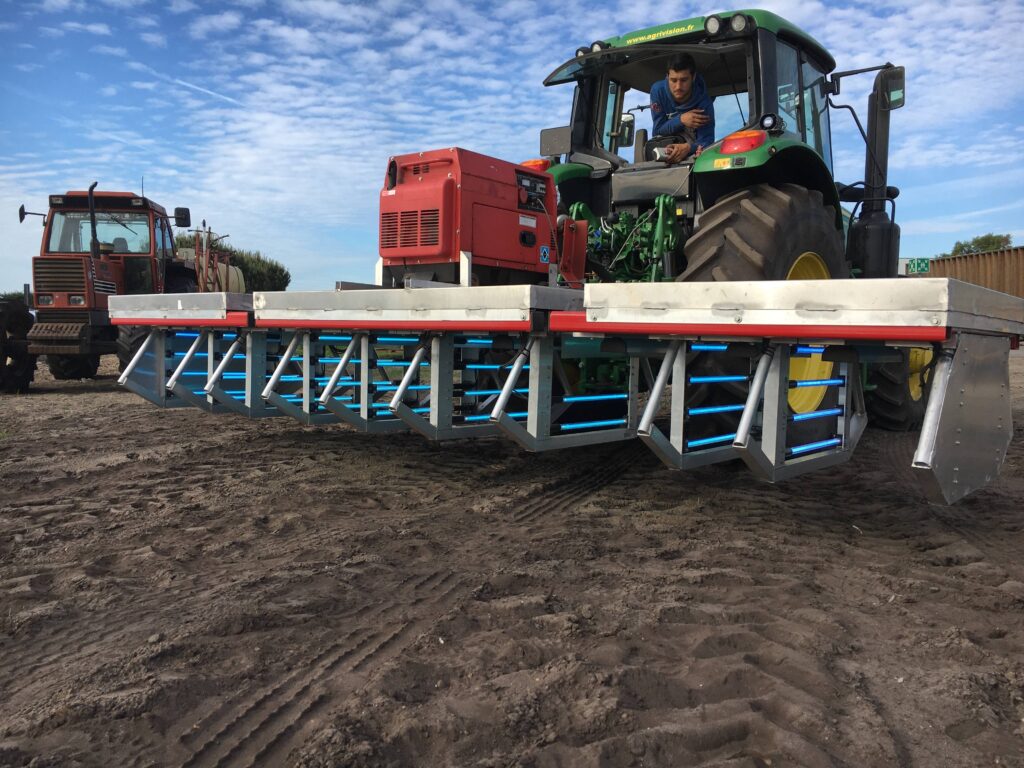
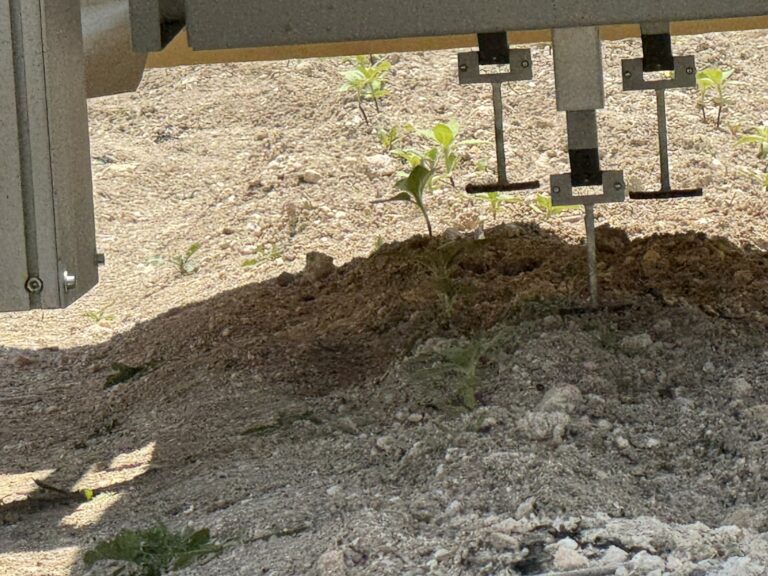
AgriPass will combine AI-powered sensing with hundreds of independent tine weeders to identify weeds and scratch them out of the soil while leaving the cash crop in place. It essentially mimics human hand-labor. While similar technologies seek to identify weeds to spray them with herbicide, AgriPass’s solution to the problem eliminates harmful chemicals completely — not adding to the prospect of herbicide-resistant weeds.
While not yet available, precise and fast mechanical elimination of weeds is one of the most promising technologies on the horizon for agriculture.
An Ag Drone That Starts to Make Sense Financially

Unmanned aerial vehicles are one of those glamourous technologies that everyone gets excited about. Some of these types of inventions flop, but drones are starting to prove themselves as a real player in agriculture.
This is primarily because the technology is improving while costs continue to drop. An XAG P100 Pro agricultural drone, for example, can now be had for about $30,000. This is a lot of money, but commercial spray rigs are often much more than this. And the P100 can carry up to 110 pounds or 13 gallons of liquid and can cover up to 70 acres per hour. It can spray, seed or map fields at speeds of over 30 miles per hour.
Assuming what’s in the tank is adding life instead of destroying it, ag drones can help make agriculture both more ecological and economical.
Eliminating Noise and Enhancing Maneuverability for Two-Wheel Tractors


The two-wheel tractor is an excellent example of scale-appropriate technology that helps farmers and homesteaders steward the land. There are few downsides to a modern BCS or Grillo, although operators do sometimes complain about their machines being loud and sometimes being difficult to maneuver. Austrian company Organic Tools is hoping to fix these issues with their soon-to-be-released electric two-wheel tractor, the TrakTrak.
The TrakTrak isn’t actually two-wheeled — it’s powered by electric motors that control the two main wheels, with two others that rotate freely and serve only to balance the machine. This innovation is what enables easy movement, though; instead of aiming where to drive your BCS — sometimes at great effort — the TrakTrak is controlled by a joystick. Plus the wheels are permanently spread out in order to be able to straddle a standard 30-inch bed. Many standard two-wheel tractor implements should be compatible with the TrakTrak, and it may enable others, such as a prone weeder/picker.
Organic Tools also produces an electric-powered fruit picker for gathering windfall apples and pears for cider making.