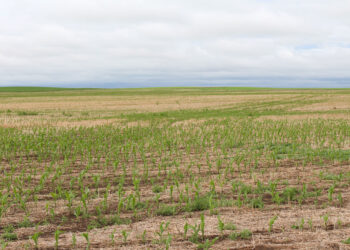


The days of supporting a family on 40 acres and three cows are gone, but stability and profitability can return by developing diversified market streams
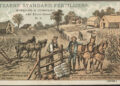
Our story began like many farms do. Nearly 200 years ago, a brave couple moved west with their kids with the hope of making a better life for the family. Azariel and Mary Smith settled in what was to become Addison, Michigan, and began subsistence farming.
Over the years, the farm morphed into a couple of cows and 40 acres to grow oats and corn for feed. In the 1950s and 60s, my great-grandfather spotted an opportunity as neighbors shifted away from dairy. He purchased their smaller parcels and cows, expanding operations while teaching my grandfather the business.

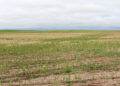
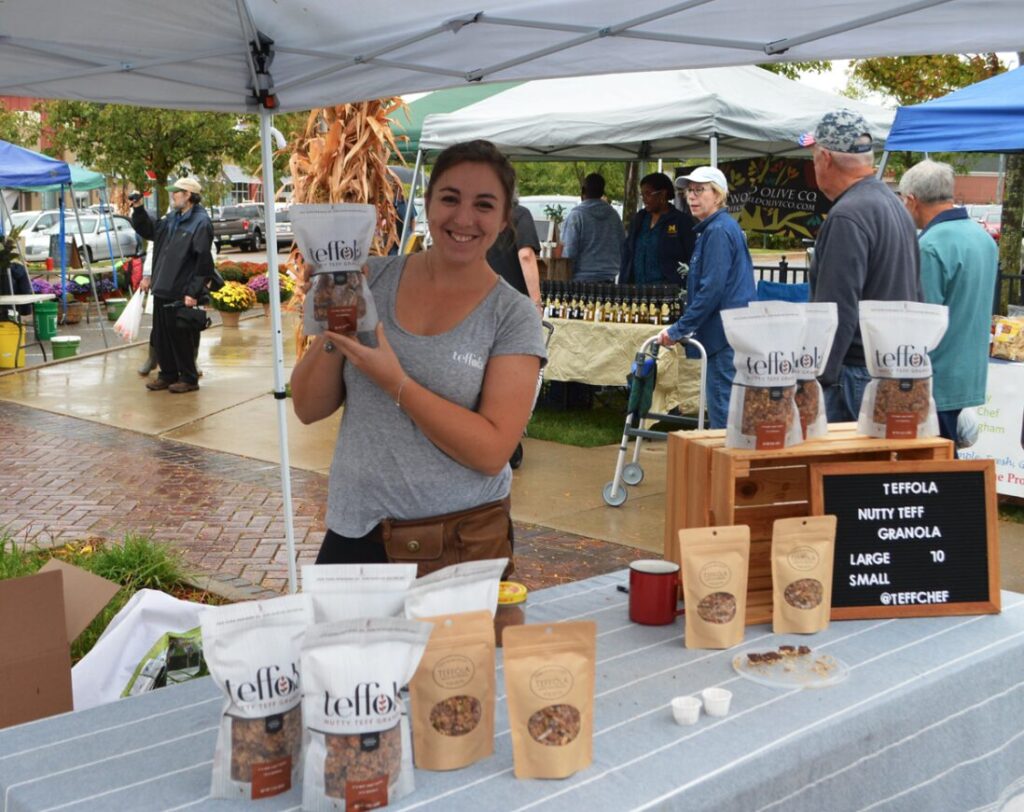
The dairy herd hit its peak with around 150 cow-calf pairs. By the time my dad, Brad Smith, took over the farm in 2012, the cows were gone but the farm had grown to 2,300 no-till acres. A couple years later, with low corn prices prodding deeper discussion, he decided to try raising teff grain on the recommendation of a friend. Acres U.S.A. profiled our farm and our first attempts at commercializing it in an article in 2018. I wanted to be involved in this new venture and developed a granola using the whole teff grain. I began selling Teffola to local stores and farmers markets in 2017.
The Process of Processing
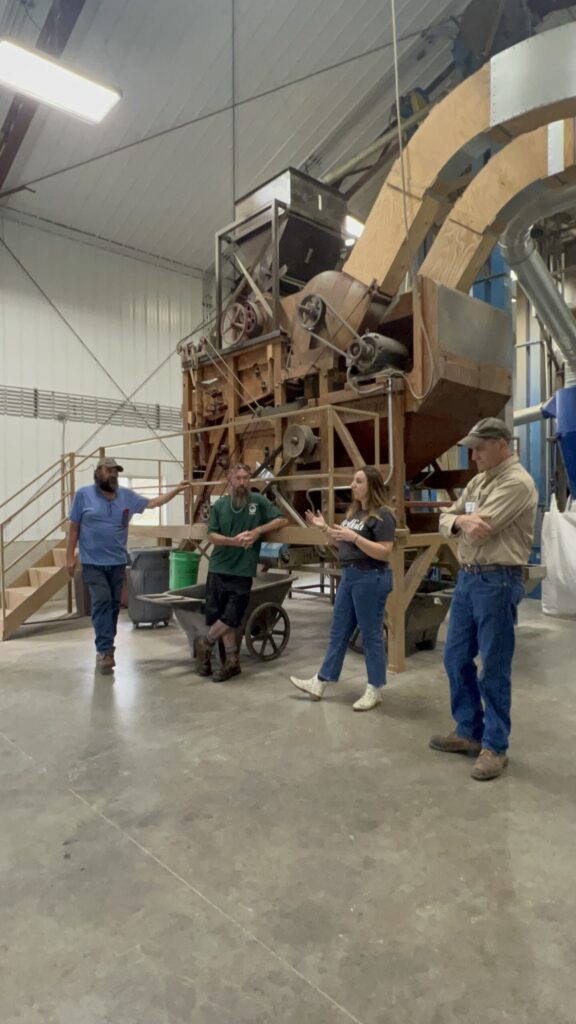
To support this new teff venture, my dad started perusing the auction sites for cleaning equipment. Suddenly I was learning how a bump mill worked and staring at a beautiful wooden Clipper fan mill from the 1960s. He and our brilliant farm manager engineered and tweaked a process to produce clean grain.
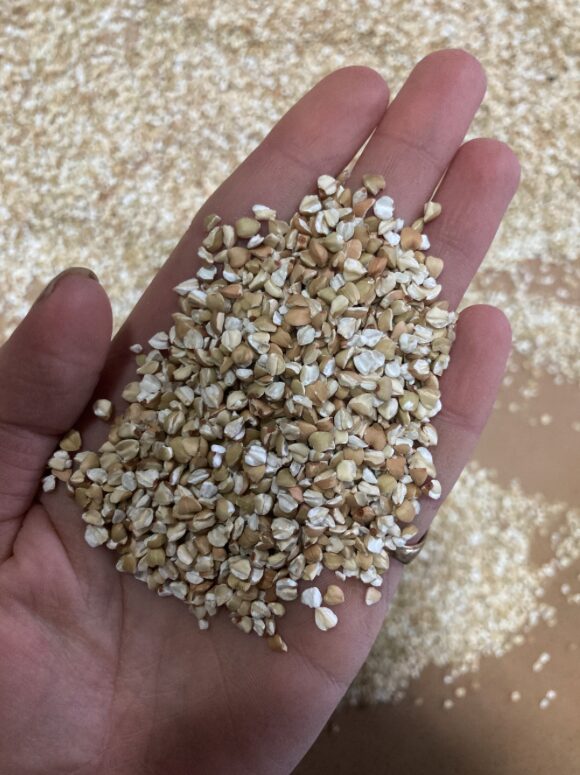
At the time, I was using whole buckwheat groats in Teffola. Yet when I checked the sourcing, I learned they were coming from China. Buckwheat is known as the “poor man’s crop” in our area because it grows in suboptimal soil, so I pitched my dad on growing and dehulling buckwheat on the farm. He saw the opportunity and built a gluten-free cleaning and processing facility with more advanced equipment to increase capacity, including a color sorter. By spring of 2022, I was using teff and buckwheat that were grown, cleaned and processed on our farm.
Soon after that, a local company came along looking for dehulling services, and we were off to the races. With a steady customer, the team has learned a lot — from the nuances of grain specifications to dealing with bugs in the summer heat. Now the farm has one full-time team member dedicated to dehulling and cleaning.
With a bit of experience under my belt and a desire to expand beyond a consumer-goods company, I began to work with other farmers looking to bring stability to their farms. A retailer reached out to ask that I complete their organic certification, and a processor wanted to test out e-commerce for one of their products. Teffola is shifting to become a marketing tool for Tenera Grains Consulting, and Tenera’s mission is to simplify the supply chain so that farmers can add value to their grains and thus take home a larger margin.
Simplifying the Supply Chain
Farm revenue diversification isn’t new, but today’s economic pressures are pushing more operations to embrace it out of necessity rather than choice. Between volatile commodity pricing, supply chain disruptions and shifting trade policies, farmers are facing uncertainty that traditional risk management hasn’t prepared them for.
A strategic way to manage the unknowns is to spread the risk across the farm so that the outcome of one revenue stream isn’t wholly dependent on another. Vertical integration is ideal, but there has to be a backup plan if something goes awry. Creating multiple streams of income isn’t a wildly new concept with farmers. Most are already dabbling in diversification — perhaps with an alfalfa crop or some custom work on the side.
But the changes we’re seeing now are deeper. These are fundamental shifts in how the farm operates. Our farm went from predominantly corn and soy with some wheat and an alfalfa field to trying a range of cereal grains and new cover crop species, in addition to the cleaning and processing facility. And we’re not alone — across the Midwest, forward-thinking farmers are fundamentally reimagining how their operations generate revenue.
Closer to my home in southeastern Michigan is the Goetz family. They’ve been selling veggies at farmers markets for 45 years. Their dad is slowing down, and the sons are stepping in with some new ideas. Adding organic grain farming and bringing cleaning capabilities to the farm has led to a partnership with popular local bakeries like Zingerman’s and B-Cubed. 2023 was a trial year for them, with a couple acres dedicated to grain. The following year they had 26 acres of organic grain, and this year, based on how the rotation worked out, 20 acres. Because they are well established with the community through their extensive farmers market presence, selling directly to the consumer was an easy choice.
Joe Goetz, one of the sons, gives a great reason for this diversification. “These crops are lower labor and allow us to sell products in the off season. [Labor and seasonality] are our bottlenecks for growth, so being able to clean and mill grain through the winter and press sunflower oil in the spring, when there aren’t vegetables, has given us more stability.” Additionally, Joe says he’s working to improve the soil health for the land growing the veggies. Not only is he adding cover crops after the final harvest, but he’s taking out some of his corn and soy and rotating in oats, sunflower and wheat. “I’m hopeful amidst a lot of uncertainty.”
If the prospect of learning new crops isn’t resonating, consider different types of processing. The Glazik family, who manage Cow Creek Farm in Paxton, Illinois, are working on 800 organic acres. As Will Glazik says, “We’ve been farming this way since forever. Grandpa didn’t have a name for it, but we do — organic.”
And while you can generally bet on organic grain prices being twice that of conventional, the Glaziks are finding opportunity in distilling their cereal grains for their liquor brand, Silver Tree Spirits. It started when Will and his siblings wanted to be involved on the farm, but the acreage was only enough to support their parents. They decided to start a brewery to use some of the grains from the farm, and a mentor taught them the ins and outs of distilling and sold them a used still. Their distillery is entering its eighth year now, and the whiskey is just starting to come out of the barrels.
“We wanted something that could make enough money to vertically integrate the markets to sustain the farm,” Will said. “Plus this gives the next generation more opportunities to find a place on the farm if they’d like.” About half of the bushels they produce are being sold at a value-added price, so profits for the farm are up while the distillery is about breakeven.
Another grain grower improving his profits through value adding is Jason Federer, who already had a wildly diverse organic farm in Wolcott, Indiana. The core of his 4,100-acre operations is focused on popcorn, soy, sunflower and pumpkin, while rotating in cereal grains. “We’ve got a good foundation, and now we’re trying to capture the extra premium that value-add can bring,” said Federer.
The goal with this shift is to steer away from commodities as much as he can, despite being in the Corn Belt. One opportunity he’s pursuing involves sunflower seeds rejected for not meeting size standards. They’re still perfectly good — just undervalued. In December 2024, Federer’s team started installing an oil press, and they had their first order six months later. While other farms have decided to sell directly to the consumer market, Federer had volume to move, so his strategy became working with distributors who cater to the food service industry, where one kitchen can move 200 pounds of sunflower oil in a week.
Federer’s vision is to sell value-added ingredients directly to food manufacturers and to explore private labeling. “Even though the system is set up to reward corn and soy farmers generally, I’m still diversifying what I’m putting in the ground,” he said. “When I look at the farm through the long-term lens, the diversification is both necessary agronomically as well as economically. It just takes a lot of work to find those new markets.”
Starting to Diversify
These farmers are looking at their operations with a more strategic eye. The days of supporting a family on 40 acres and three cows are gone, but stability and profitability can return with intentional assessment and discovery.
In my experience with farmers across the upper Midwest and prairie states, the way to begin is by looking at what you already have. Is there a young person looking to carve out a corner of the farm to call their own? (This is also an extremely useful exercise if there are multiple generations on the farm.) Are you leaving money on the table with valuable byproducts? Is there an existing small revenue stream that excites you that could scale up?
Then assess what the market needs. The key is thinking beyond traditional buyers and getting creative. Your market could be rabbit owners needing high-quality hay, fellow farmers looking for biochar, or the community colleges and universities looking to source local produce. I’ve even heard of a farmer pitching deer bait companies on buckwheat that was in transition to organic!
This initial assessment and the search for overlap might result in changes you wouldn’t expect. A farmer’s daughter in Adrian, Michigan, wanted to come back to the farm full time, so the family leaned into their greenhouse and agritourism revenue streams. Rather than stretching their labor thin, they cut their acreage nearly in half and saw more profitability with the commercial greenhouse than with row crops. They are finding the sweet spot between profitable operations and minimal labor on less land.
Diversification doesn’t mean you’re overhauling all the operations of the farm. If something is working, keep doing it. But if your numbers show a thriving farm operation slipping further from reach, change is inevitable. The question isn’t whether change will come, but whether you’ll be the one steering it.
Claire Smith is the founder and CEO of Tenera Grains. Learn more at eatteffola.com.