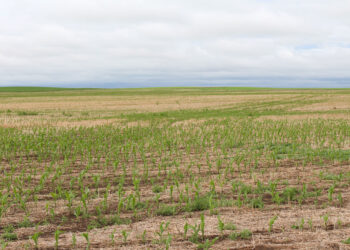


Most farmers bear the financial and environmental risks while brands and consumers remain disconnected from the land — regenerative supply chains seek to change that
For decades now, conventional agriculture has been locked in an unfortunate cycle that prioritizes short-term yields to the detriment of a farm’s long-term soil health, environmental resilience and, ultimately, profitability. Cotton, one of the world’s most chemically intensive crops, has been a poster child for this system — draining soils, depleting water resources and burdening farmers with rising input costs. But farmers can break free from this cycle. There are both short- and long-term solutions that help mitigate the experience of J-curve economics in the transition to regenerative practices.

As regenerative agriculture is finally beginning to enjoy its moment in the sun and has become the new buzzword in town, the downstream effects of how agriculture is actually being done are becoming more important to the consumer as well as to corporations and brands within the supply chain looking to self-diagnose their contribution to things like climate change, carbon and sustainability. Forward-thinking companies have begun to ask, “How do we measure and verify all this?” And just as quickly as that question was posed, the answer came in the form of organizations developing regenerative standards and certification.
For years, I had been fielding calls asking whether AEA had plans to get involved in certification. While there are certainly some prestigious organizations doing great work in this space, we felt like there was a role for AEA to play. As we began to discuss it more, one thing became clear: if we were to develop a certification standard, its purpose would be to drive the conversation along and push the movement forward.
Emphasizing Outcomes
It was around this time that our customer service team received a call from an intern working at Citizens of Humanity, a premium denim company based in California. One of their cotton mill partners had been inspired by the documentary Kiss the Ground and had encouraged Citizens of Humanity to better understand how regenerative agriculture could be part of their manufacturing process.
As we began to kick ideas around and build a potential certification framework, it became clear we needed to focus on a model that emphasized actual outcomes as opposed to solely monitoring the process. We didn’t just want to make a list of “do this” and “don’t do that.”
Building a program like this created a few important opportunities for us. First was the opportunity to speak to more key stakeholders in the supply chain as word spread about this different approach to farming. Companies looking to find ways to improve sustainability were primarily making changes to their logistical carbon footprint, to try to offset what was happening on farms, unaware that farming didn’t have to be degenerative or detrimental to the environment in the first place. Secondly, as a data-driven company directly connected to cotton growers themselves, we were in a strong position to advise farmers on how to make improvements during the season, not just to verify that their practices were in line with the standards we developed.
This is where Citizens of Humanity really shined. Not only were they looking to substantiate their claims — they were deeply invested in what was going to make a difference to the farmer. They spent the time getting to know our growers, visiting them on their farms, and, most importantly, listening. This really sticks out to me even today, and I believe it also struck a chord with the growers. They could have easily approached the growers in a number of different ways, including a “here’s what we’re doing, and this is how much we’re paying” kind of way. But they didn’t. They wanted to get input not just from us as the program creator but also from the farmer, to see if this was going to be valuable and actually make a difference to them. And it did.

Flipping the Model
Year over year in much of U.S. agriculture, farmers are working on extremely tight margins. Cotton is no exception. Traditional agricultural supply chains often leave farmers at the mercy of volatile markets, where commodity prices rarely reflect the true cost of sustainable production. Cotton growers in particular face intense pressure to maximize yields using chemical fertilizers and pesticides, which degrade soil health and increase costs over time. The result is a system where farmers bear the financial and environmental risks while brands and consumers remain disconnected from the land.
Regenerative supply chains flip this model on its head. By fostering direct partnerships between farmers and brands, these supply chains create a feedback loop where growers are rewarded for adopting practices that improve soil health and reduce environmental impact. Our Integrity Grown program, which launched in 2024, is a prime example of this approach, and its partnership with Citizens of Humanity demonstrates how regenerative agriculture can move from niche to mainstream.
Farmers verified by Integrity Grown are paid above market price; the premium they receive is based on how they score on their outcomes and practices. The program now also extends to growers in Turkey, another key cotton-producing and -manufacturing country. Almost all growers in the program have been able to greatly reduce their synthetic fertilizer applications, some of which are known to have a suppressive effect on soil biology. Others, as quickly as in year one, were able to eliminate all pesticide and plant growth regulator (PGR) applications. Add to these cost savings the benefit of being paid an above-market premium and it becomes easy to see why these supply chain relationships make sense. After all, if business relationships remain extractive and it’s only the soil being regenerated, aren’t we still missing the mark of what’s possible and failing to fully grasp what our relationship to the soil is trying to teach us?
Working closely with Citizens of Humanity, we were able to demonstrate that, in many cases, rewarding growers with premium above-market prices was not as out-of-reach as previously thought. The program has inspired other companies to follow suit, including premium brands like Aritzia. With many brands concerned about accountability and substantiating their claims, and wary of being accused of greenwashing, there’s a need for robust verification programs supported by solid data.
The opportunities for regenerative supply chains are boundless, extending far beyond textiles. One exciting possibility lies in verifying the nutrient density of food crops. With new technologies as well as a continued growth in diet-related health issues, perhaps we are not too far away from having that conversation about food as medicine.
The centerpiece of regenerative agriculture is a holistic focus: nurturing every piece of the farm ecosystem. But that holistic focus must extend beyond farming processes to include all parts of the supply chain: manufacturers, distributors, retailers and consumers. To truly be regenerative, there must be cohesion and trust between every piece. That’s a central reason why we chose the word “integrity.”
Kish Johnson is the director of strategic partnerships and international business for Advancing Eco Agriculture and the co-creator of Integrity Grown.