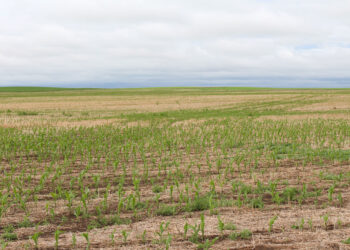


Stockpiling creates fungal pathways, which lead to long-lived soil carbon
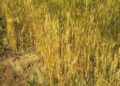
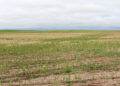
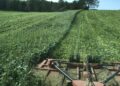
Many graziers have noticed something curious about paddocks that are rested for long periods. When stockpiled grass — six months old or more — is finally grazed off, the soil underneath feels different. It holds together better, water soaks in more deeply, and the regrowth that follows is often dark green, vigorous, and full of life.
These observations point toward a deeper story happening underground about how grasslands create long-lived soil carbon. The key characters in this story are roots, fungi, and microbial necromass, not just raw plant litter.
Long-Lived Carbon Is Microbial
Over the past 10–15 years, soil scientists have come to realize that the most persistent soil carbon doesn’t come directly from undecomposed plant material but rather from the dead bodies of soil microbes. As microbes eat root exudates and decaying plant matter, they grow, die, and leave behind cell wall fragments, chitin, melanin, and proteins. Some of these residues bind tightly to clay minerals or become physically protected inside soil aggregates. This protected microbial residue, called MAOM — mineral-associated organic matter — can last for decades to centuries.
The question thus becomes: which management systems generate the most microbial necromass — and protect it best? It turns out that stockpiling grass is the major driver of MAOM.
During the rapid green flush of the growing season, roots exude large amounts of simple sugars. These are rocket fuel for fast-cycling bacteria. But as grasses mature — especially when they are stockpiled for six months or more — two key things change underground: total exudation slows, and the composition of root-derived carbon shifts. Instead of mostly sugary, bacterial-favored exudates, the rhizosphere begins to receive more amino acids, nitrogen-bearing compounds, membrane fragments, lipids and fatty-acid-rich substances, and sloughed root cells. These are slower, more complex foods that are ideal for fungi.
Stockpiling — letting grass rest, ungrazed, for at least six months — thus shifts the soil toward a slower, fungal-leaning metabolism.
Why Fungi Matter
Fungi — especially arbuscular mycorrhizal fungi (AMF) — thrive in perennial root systems, undisturbed soil, covered soil surfaces, and soils with moderate fertility that have had longer rest periods. I.e., they live in a healthy pasture.
Fungi differ from bacteria in three important ways. First, they build long-lived compounds. Fungal cell walls contain chitin, melanin, complex lipids, and glycoproteins, all of which are resistant to decay. Second, they build structure. Mycorrhizal fungi exude glomalin-related soil proteins — sticky, hydrophobic compounds that glue soil particles into stable aggregates. These compounds both store carbon and protect microbial necromass from oxygen and enzymes. Perennial pastures — especially rested pastures — are rich in glomalin. And third, fungi recycle carbon efficiently. As microbial biomass is repeatedly eaten by microbes, fungi increasingly dominate the final stages. Their residues persist, their hyphae stabilize soil, and their “biological glue” holds the whole structure together.

A regenerative sequence thus leads from stockpile to a fungal-leaning food web, to microbial necromass, to aggregation and mineral binding, and finally to persistent carbon.
This does not mean that fungi are important and bacteria aren’t. Bacteria produce peptidoglycan-rich cell walls that bind extremely well to minerals. Their necromass forms the backbone of MAOM. But fungi produce the architecture — aggregates, glues, and protective coatings — that help preserve both fungal and bacterial residues. Bacterial necromass is the bricks, and fungal residues and glomalin are the mortar. Together, they build soil carbon that lasts.
Stockpiling is what tilts the system toward fungi — without which everything falls apart. Stockpiling creates conditions that favor fungal-dominant pathways. It promotes steady but slower carbon inputs, higher root density, undisturbed hyphal networks, lower mineral nitrogen pulses, perpetual soil cover, and reduced oxygen and temperature shock.
Research repeatedly finds that such systems have higher fungal: bacterial ratios, higher mycorrhizal colonization, more amino-sugar biomarkers from microbial necromass, higher levels of glomalin-related proteins, greater aggregate stability, and greater carbon protection inside microaggregates. This is why observant graziers who incorporate longer rest periods report darker soil, better structure, deeper infiltration, and stronger regrowth.
Grazing and Managing the Stockpile
Heavy grazing of dormant forage does not destroy the fungal network the way tillage does. Mycorrhizae stay partnered with roots, and hyphae remain largely intact.
What does matter is that the ground stays covered and that cattle are moved before plants are scalped. The stockpile is not wasted; it has already done its underground job. If your goal is to build deep, resilient, carbon-rich soil, the time-tested formula is perennial roots + planned rest + fungal pathways = long-term carbon.
Pastures that are allowed to function ecologically — with time, rest, and living roots — move from a bacterial “short-term sugar economy” to a fungal “long-term savings account.” Stockpiling is one of the simplest, most powerful tools we have to encourage that transition.
As many farmers have discovered, when you work with the fungal economy of grassland soil, the land remembers — and it repays the favor for a very long time.
| Further Resources on This Topic Conant, R. T., et al. “Grassland Management Impacts on Soil Carbon Stocks,” Ecological Applications, 2017. Six, J., et al. “Stabilization Mechanisms of Soil Organic Matter,” Plant and Soil, 2002. Bardgett, R. D., et al. Aboveground–Belowground Linkages, Oxford University Press, 2010. Teague, W. R., and Barnes, M. “Grazing Management that Regenerates Ecosystem Function and Grazingland Livelihoods,” African Journal of Range & Forage Science, 2017. |