
Acres U.S.A.® Magazine
  • Articles
    • News
    • Ecological farming
      • Climate
      • Environmental Issues
      • Farm management & planning
      • Human health
    • Livestock
    • Farm
    • Crop
      • Crop management practices
        • Ag technology
        • Cover crops
        • Crop nutrition
          • Crop protection
          • Diseases
        • Crops
        • Fruits
    • Soil
    • Opinion
  • Resources
    • Magazine
    • Online Learning
    • Newsletters
    • Free Articles
    • Blog
  • Magazine Issues
    • 2026
      • June 2026
      • May 2026
      • April 2026
      • March 2026
      • February 2026
      • January 2026
    • 2025
      • December 2025
      • November 2025
      • October 2025
      • September 2025
      • August 2025
      • July 2025
      • June 2025
      • May 2025
      • April 2025
      • March 2025
      • February 2025
      • January 2025
    • 2024
      • December 2024
      • November 2024
      • October 2024
      • September 2024
      • August 2024
      • July 2024
      • June 2024
      • May 2024
      • April 2024
      • March 2024
      • February 2024
      • January 2024
    • 2023
      • December 2023
      • November 2023
      • October 2023
      • August 2023
      • July 2023
      • June 2023
      • May 2023
      • April 2023
      • March 2023
      • February 2023
      • January 2023
    • 2022
      • December 2022
      • November 2022
      • October 2022
      • September 2022
      • August 2022
      • July 2022
      • June 2022
      • May 2022
      • April 2022
      • March 2022
      • February 2022
  • About Us
    • Our History
    • Our Staff
    • Contact Us
    • Community
      • Soil Health Primer Resources
  • Events
    • Eco-Ag Conference
    • Farm Weird Event
  • Subscribe
  • Login
  • Register
No Result
View All Result
  • Articles
    • News
    • Ecological farming
      • Climate
      • Environmental Issues
      • Farm management & planning
      • Human health
    • Livestock
    • Farm
    • Crop
      • Crop management practices
        • Ag technology
        • Cover crops
        • Crop nutrition
          • Crop protection
          • Diseases
        • Crops
        • Fruits
    • Soil
    • Opinion
  • Resources
    • Magazine
    • Online Learning
    • Newsletters
    • Free Articles
    • Blog
  • Magazine Issues
    • 2026
      • June 2026
      • May 2026
      • April 2026
      • March 2026
      • February 2026
      • January 2026
    • 2025
      • December 2025
      • November 2025
      • October 2025
      • September 2025
      • August 2025
      • July 2025
      • June 2025
      • May 2025
      • April 2025
      • March 2025
      • February 2025
      • January 2025
    • 2024
      • December 2024
      • November 2024
      • October 2024
      • September 2024
      • August 2024
      • July 2024
      • June 2024
      • May 2024
      • April 2024
      • March 2024
      • February 2024
      • January 2024
    • 2023
      • December 2023
      • November 2023
      • October 2023
      • August 2023
      • July 2023
      • June 2023
      • May 2023
      • April 2023
      • March 2023
      • February 2023
      • January 2023
    • 2022
      • December 2022
      • November 2022
      • October 2022
      • September 2022
      • August 2022
      • July 2022
      • June 2022
      • May 2022
      • April 2022
      • March 2022
      • February 2022
  • About Us
    • Our History
    • Our Staff
    • Contact Us
    • Community
      • Soil Health Primer Resources
  • Events
    • Eco-Ag Conference
    • Farm Weird Event
  • Subscribe
No Result
View All Result
Acres U.S.A.® Magazine
No Result
View All Result
Home Magazine issues July 2026

Why Not Compost?

Gary Zimmer by Gary Zimmer
July 1, 2026
0
Why Not Compost?

Spreading amended compost on forages.

1
SHARES
870
VIEWS
Share on FacebookShare on Twitter

Composting helps stabilize manure and minerals so nutrients are more available to crops — even on the commercial scale

Gary Zimmer

It’s long been known that a plant’s ability to use minerals depends on how the minerals are delivered. There are different sources, all with different nutrient use efficiency. The sulfates, for example, do better than the oxides, while chelated minerals do better yet; it’s not just a numbers game.
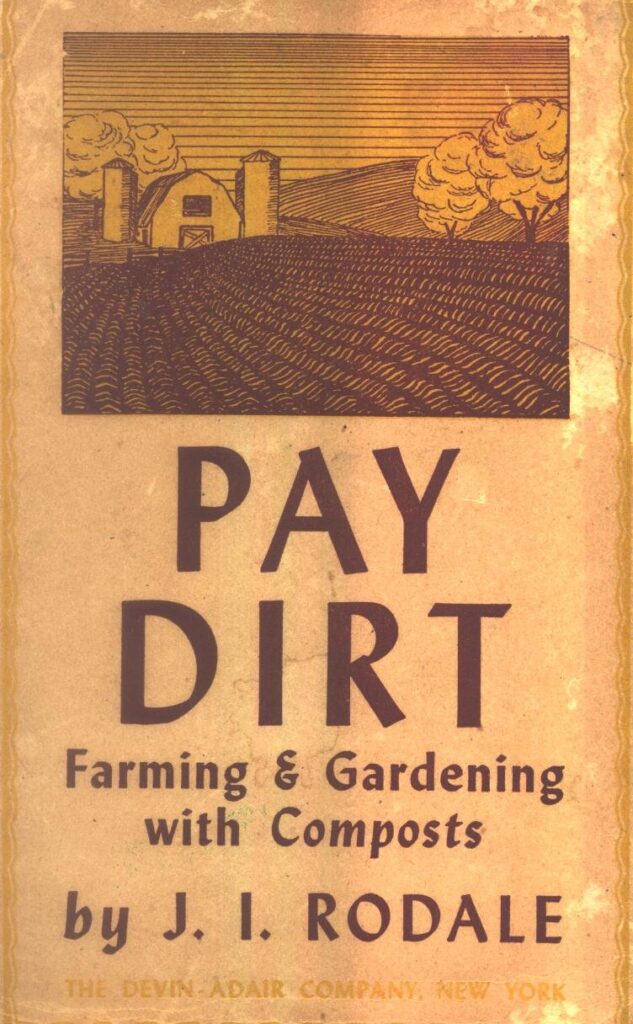
Pay Dirt — J. I. Rodale noted that the biological value of compost was superior to the (significant) mineral value.

Regenerative agriculture is all about getting better nutrient use efficiency. The goal is to tap into all the minerals that exist in the soil, plus what has been purchased. How? Biology is the path, with cover crops, using humates with fertilizers, and compost, along with adding certain types of organisms to the soil. These steps take us in the right direction.

I always say that the dumbest idea we humans ever had was putting all the minerals in solution, applying them early in the growing season, and expecting them to be plant-available whenever the plant needs them. They leach, they tie up, and they erode, and then we think we know how many units of NPK are needed to grow the crop. 

Another dumb idea is spreading raw manure on hayfields. Cattle don’t eat around manure piles, so coating the whole field with stuff they don’t like makes no sense. Instead, add compost that has added minerals — it’s a no-brainer! 

Taxing N?

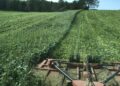
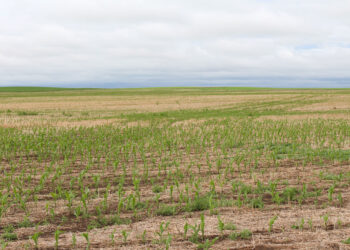
Gary Zimmer’s farm. The dark green is clover, soon to be corn; the light green is rye planted after corn last fall, with clover frost-seeded this spring, in anticipation of becoming corn next year. The only input besides seed was 1 ton of compost with sulfur and boron on the clover last fall.

As a dairy nutritionist, I got started in soils to create better feeds for livestock. California’s Chico State University did trials recently using compost and gypsum. Their results showed higher yield, greater nutritional value, and increased digestibility. You certainly can’t make a cow more efficient without changing her forage.

Nitrogen is the hardest nutrient to manage because the losses are great, while excess nitrogen causes issues with plant health, burns up carbon, and leaches out available calcium, just to mention a few. Splitting N applications and adding carbon to it with humates (molasses, etc.) will help, but nitrogen is also the only nutrient you can grow yourself. All the rest you have to extract or buy. 

I know my statement about nitrogen has never been popular with conventional farmers, but to really change agriculture, we would need to limit its use by taxing it. This isn’t a bad plan, in my opinion. We could use the tax dollars to subsidize the use of cover crops and compost. 1.1 pounds of N per bushel of corn is still recommended, but I work with farmers who are down to using only half a pound of N applied and still get a good crop.

But NPK is not the whole picture. What about the other minerals plants need? We know it takes at least 20. What about soil health? And soil biology? The life found in the soil needs an ideal home, and it needs to be fed.

Farming has changed. We now have large concentrations of animals confined in small spaces and a lot of liquid manure, which is not only costly to spread but can run off hilly and poorly structured soils, causing major issues. 

What about Compost?

A compost windrow

So, what about compost? Years ago, when we started Midwestern BioAg, we made compost for farmers. It was hard to do, so we adapted and moved on to making fertilizers that were balanced, not completely soluble, and made from preferred sources. Next came adding humates to calcium, rock phosphate, trace elements, and overall homogenized blends. Then we created fertilizers using byproducts from anaerobic digestors — mostly a fiber source with many of the minerals that are fed to cows plus lots of bug bodies (the short-lived bugs in the cows’ rumen that actually do the work of digesting feed) with minerals added. The rumen is an anaerobic fermentation vat with byproducts of organic acids (acetic, propionic, and butyric) and dead bodies of bugs. The anaerobic digester has different organisms with byproducts of methane and bugs’ bodies. Those dead bugs, I believe, have many benefits for plants and soils, including chelated minerals, hormones, enzymes, and plant stimulants.

Another biological digestive process is aerobic — composting. Anaerobic digestion has problems with compounds given off during the process; the organisms produce methane and leave lots of undigested fibers. Take this and other waste, though, along with poultry manure, add some calcium and other mineral sources, and you can make a great fertilizer. I now make these designer compost mixes with plans to pelletize fertilizer blends in a compost base. The aerobic bugs clean up manures, making complete proteins and reducing pesticides and pathogenic organisms. Compost done right heats up enough to kill weed seeds, while releasing all the nutrients that come from manure and providing lots of biological benefits. Besides, compared to manure, you have a reduced pile — less than half the amount to haul.

I recently acquired a copy of J. I. Rodale’s book Pay Dirt, written in 1945. I enjoy reading old farm books — they have some great ideas and show that lots of what we are talking about in the 21st century isn’t new at all. The book has a lot about composting and other ideas from more than 75 years ago. One comment I like is “it’s not about what’s in compost, but what it does.” Rodale also notes that the value of the biological part of compost is five times more valuable than the minerals — the manure-stabilized nutrients that are more available, the nitrogen-producing organisms, the biological stimulants, the value of the digested carbon along with enzymes and hormones from the bugs.

Compost is also the cheapest way to provide the minerals. We make a blend with dairy and poultry manure and add gypsum. This organic blend has mineral prices comparable to conventional, and the value is twice what you would pay for just the mineral.

Manure on Hay Fields? Or Compost?

Is it wise to put manure on hay fields? Compost is ideal. Harvests are taking off minerals and carbon, so 1-2 tons of a good compost with minerals added will improve your forage quality and yield.

Compost Tea and Compost Extract

Minerals have been added to this pile

There are many companies selling tea products, from hopefully well-made finished compost. A tea-type bag with the compost in it is added to a large water tank, then sugar is usually added and air pumped in. Many other things can be added as well, like humates, biochar, kelp, earthworm compost, montmorillonite clays, or extra organisms for specific functions. Putting that down the furrow when planting, along with other nutrients, is a good way to start your plants off right. Many farmers will then come back and do a foliar. This also works great for hay fields and pastures.

Compost extract is taking a batch of well-made compost, putting it in a tank, adding a liquid to let it soak, then filtering and extracting the soluble nutrients. Other things can be added to the compost, like calcium, sulfur, biochar, kelp, humates, more organisms, different soluble trace element products, plant stimulants, etc. Mixing an extract with tea may also be a good idea. The liquid you soak the compost in can be more than water. The humates can help chelate minerals. You can use a lower-pH product to extract more, such as apple cider vinegar. We are going to experiment with sauerkraut juice, and I’m sure there are many more ways to make a liquid product that will fit many farms. 

A Recipe for Better Soils

It may take a few years to completely regenerate the land, but each year it gets better if you cut unnecessary costs like using too much fertilizer, pesticides, and herbicides. Resilience greatly improves, and the cost of production drops. It’s not a new system of farming, but it is the future. We do know how to fix soils by making just a few changes on most farms. Here are a couple of other tips:

  1. Grow cover crops. Something green should be growing on all acres all the time.
  2. Until the soil is fixed, run a deep ripper if needed and shallow incorporate to improve water infiltration and eliminate soil crust.
  3. Deliver most of the minerals with the compost. Soils always need calcium, sulfur, and boron, which can be added to the compost.
  4. Add carbon to your nitrogen, and eventually you have more soil carbon and biology to grow your own N through legumes.

Teach the “why,” and the farmer will figure out the “how.” 

← Previous ECO-UPDATE Next Stockpiling It On →
Tags: compostRegen Agronomy
Gary Zimmer

Gary Zimmer

Gary Zimmer is a longtime Wisconsin farmer, founder of Midwestern BioAg, and author of The Biological Farmer and Advancing Biological Farming, published by Acres U.S.A.

Next Post
No More Roundup Lawsuits

No More Roundup Lawsuits

  • Trending
  • Comments
  • Latest
The Most Important Livestock in Our Fields

The Most Important Livestock in Our Fields

July 1, 2024
Glyphosate Does What It’s Designed to Do — Kill

Glyphosate Does What It’s Designed to Do — Kill

February 19, 2025
USDA organic seal over American farm land

Losing Organic Farms

January 27, 2026
The Take-Half, Leave-Half Fallacy

The Take-Half, Leave-Half Fallacy

July 1, 2025
We Don’t Need Another Bridge — We Need an Off-Ramp

We Don’t Need Another Bridge — We Need an Off-Ramp

3
Under One Roof

Under One Roof

3
A Rose By Any Other Name

A Rose By Any Other Name

2
Terra Preta’s Biological Advantage

Terra Preta’s Biological Advantage

2
When a Steer Produces Milk, Farmers Should Pay Attention

When a Steer Produces Milk, Farmers Should Pay Attention

August 10, 2026
Groundbreaking Education

Groundbreaking Education

August 6, 2026
ECO-MEETINGS

ECO-MEETINGS

August 3, 2026
Shifting Gears

Shifting Gears

August 3, 2026

Recent News

When a Steer Produces Milk, Farmers Should Pay Attention

When a Steer Produces Milk, Farmers Should Pay Attention

August 10, 2026
Groundbreaking Education

Groundbreaking Education

August 6, 2026
ECO-MEETINGS

ECO-MEETINGS

August 3, 2026
Shifting Gears

Shifting Gears

August 3, 2026

About ACRES USA

Acres U.S.A.® Magazine

Acres U.S.A.® is North America’s oldest publisher on production-scale organic and regenerative farming. For more than 50 years, our mission has been to help farmers, ranchers and market gardeners grow food profitably and sustainably, with nature in mind.

Visit Our Advertisers

Magazine Issues

  • News
  • 2025
    • June 2025
    • May 2025
    • April 2025
    • March 2025
    • February 2025
    • January 2025
  • 2024 Articles
    • December 2024
    • November 2024
    • October 2024
    • September 2024
    • August 2024
    • July 2024
    • June 2024
    • May 2024
    • April 2024
    • March 2024
    • February 2024
    • January 2024
  • December 2023
    • December 2023
    • November 2023
    • October 2023
    • August 2023
    • July 2023
    • June 2023
    • May 2023
    • April 2023
    • March 2023
    • February 2023
    • January 2023
  • December 2022
    • November 2022
    • October 2022
    • September 2022
    • August 2022
    • July 2022
    • June 2022
    • May 2022
    • April 2022
    • March 2022

Contact Acres U.S.A

  • Contact Us
  • About Us
  • Advertise With Acres U.S.A.
  • My Subscription

Learn

  • Resources
  • Events
  • Magazine
  • Newsletters
  • Free Articles
  • Webinars
  • Online Courses
  • Bookstore

Our All Socials

Follow With Us...

  • My account
  • News
  • Ecological farming
  • Refund and Returns Policy
  • Privacy & Policy

© 2024 Acers USA Magazine

Welcome Back!

Login to your account below

Forgotten Password? Sign Up

Create New Account!

Fill the forms below to register

All fields are required. Log In

Retrieve your password

Please enter your username or email address to reset your password.

Log In
No Result
View All Result
  • HOME
  • ARTICLES
    • News
    • Farm
    • Ecological farming
    • Livestock
    • Crop
      • Crop management practices
      • Cover crops
      • Crop nutrition
      • Crop protection
      • Crops
      • Ag technology
    • Soil
    • Opinion
  • RESOURCES
    • Magazine
    • Online Learning
    • Newsletters
    • Blog
    • Free Articles
  • MAGAZINE ISSUES
    • 2026
      • June 2026
      • May 2026
      • April 2026
      • March 2026
      • February 2026
      • January 2026
    • 2025
      • December 2025
      • November 2025
      • October 2025
      • September 2025
      • August 2025
      • July 2025
      • June 2025
      • May 2025
      • April 2025
      • March 2025
      • February 2025
      • January 2025
    • 2024
      • December 2024
      • November 2024
      • October 2024
      • September 2024
      • August 2024
      • July 2024
      • June 2024
      • May 2024
      • April 2024
      • March 2024
      • February 2024
      • January 2024
    • 2023
      • December 2023
      • November 2023
      • October 2023
      • August 2023
      • July 2023
      • June 2023
      • May 2023
      • April 2023
      • March 2023
      • February 2023
      • January 2023
  • ABOUT US
    • Our History
    • Our Staff
    • Contact Us
    • Community
      • Soil Health Primer Resources
  • EVENTS
    • Eco-Ag Conference
    • Farm Weird
  • SUBSCRIBE
  • Login
  • Sign Up
  • Cart

© 2024 Acers USA Magazine

Lost Password?

Welcome Back!

Log in to your account below.

Lost Password?