
Long-Term Swine Study Shows the Benefits of Natural Compounds
In the search to replace antibiotic growth promoters with effective alternatives in modern swine production, plant-based essential oils are showing potential to provide lasting benefits.
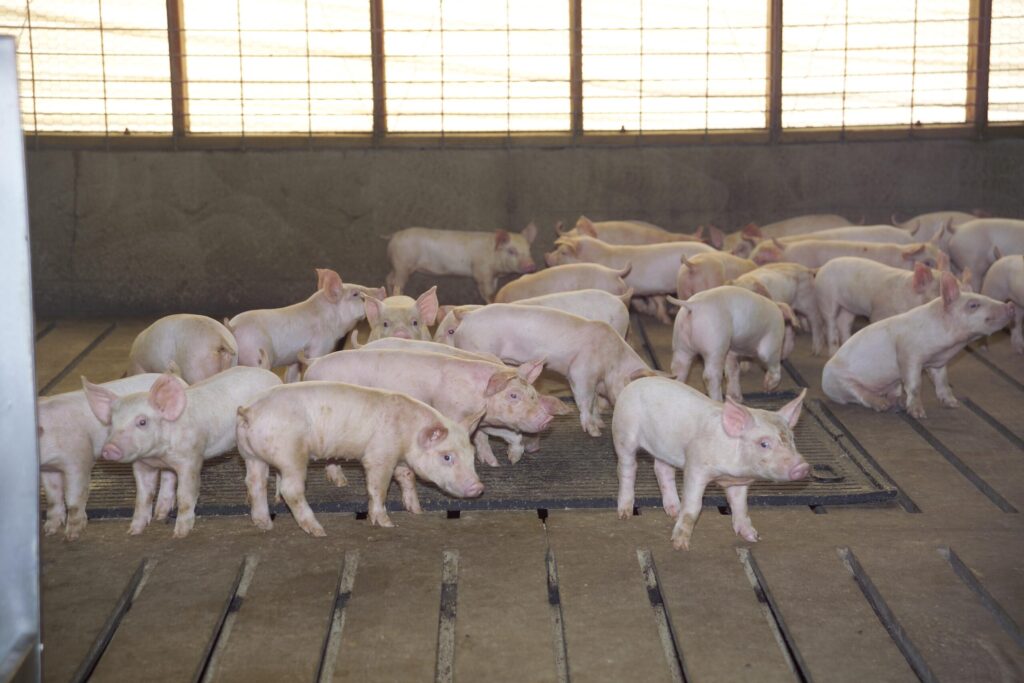
In a rare long-term public study that compared the effects of phytochemicals from rosemary and oregano with antibiotic growth promoters, animal scientists with the Arkansas Agricultural Experiment Station found that the natural agents given to weaned pigs supported favorable gut health and growth performance later in their lives by preserving microbial diversity to improve nutrient utilization. The study was published in the journal Animal Research and One Health. Analysis of the pig’s microbiome in the study was conducted in collaboration with the University of Arkansas for Medical Sciences.
While antibiotic medications have their time and place in veterinary medicine, extensive use has accelerated the emergence of antimicrobial resistance and has led to bans or restrictions in many countries. Besides antibiotics, high levels of dietary zinc have also been frequently incorporated into swine diets to mitigate postweaning diarrhea. However, there are also environmental concerns associated with excessive zinc excretion, including heavy metal accumulation in the environment. Pig waste is commonly used as a fertilizer, which can lead to levels of zinc that are toxic to plants.manure
Essential oils from plants like rosemary and oregano have been shown in many studies to have beneficial effects on animal health, including poultry, fish, and swine. However, most of the studies have focused on short-term responses, often limited to the nursery phase.
The early post-weaning phase is one of the most physiologically and immunologically challenging periods in swine production. During this transition, abrupt dietary and environmental changes, coupled with maternal separation, disrupt gut development and destabilize the microbial ecosystem. Gut health during this stage has long-term consequences on feed efficiency, growth trajectory and overall production outcomes.
The researchers randomly assigned 192 piglets to four groups after weaning: a negative control in which the pigs were given no antibiotic or phytochemical treatments; a positive control with the antibiotic growth promoter carbadox and high dietary zinc; and two phytochemical-supplemented diets containing extracts from oregano and rosemary plants.
In the phytochemical groups, one group of pigs received oregano extract at 300 grams per ton of feed, and another received a mixture with oregano extract and rosemary extract with sodium humates at 900 grams per ton of feed. Sodium humate is a water-soluble salt derived from a soft sedimentary rock and acts as an anti-diarrheal, antiviral, and anti-inflammatory agent.
Mimicking typical management practices in commercial swine operations, antibiotic and high-zinc supplementation were restricted to the immediate post-weaning period. This practice reflected their conventional short-term use during the critical early stage of piglet development. Phytochemicals, however, were administered continuously to the separate groups, enabling the researchers to assess their long-term potential as antibiotic alternatives.
Growth performance was monitored throughout the nursery, growing, and finishing phases with seven phases in all — three nursery phases, two growing phases, and two finishing phases. Piglets that received antibiotics showed faster growth and higher body weights compared with other groups, but the advantage didn’t persist. Once the researchers removed the antibiotics and zinc from the pigs’ diet, the pigs did not maintain their performance edge.
By day 155, pigs in the phytochemical group with oregano, rosemary, and sodium humate achieved the highest final body weight among all groups and had the best gain-to-feed ratio. Pigs fed with phytochemicals also appeared to be less aggressive toward each other.
Microbial analyses reinforced the growth performance findings on phytochemicals, which enhanced long-term productivity and contributed to restoring a healthier gut microbial profile. The phytochemicals did not appear to have the same adverse effects on microbial composition shifts induced by early-life antibiotic and high zinc exposure, the study noted.
In the group that received antibiotics and high dietary zinc after weaning, microbiota profiling revealed reduced diversity and an increased enrichment of potential pathogens. Conversely, bacteria associated with beneficial gut colonization and serotonin-mediated host development significantly increased in the oregano-only phytochemical group relative to the antibiotic and high-zinc group.
Cow Manure Digesters Really Cut Methane — Unless They Leak

A new study shows that systems designed to capture methane from cow manure, called dairy digesters, are highly effective. But on the rare occasions they fail, the leaks are large enough to offset their climate benefits.
The findings, published in Environmental Research Letters, draw on eight years of satellite and airborne observations of 98 dairies across California. By tracking emissions before, during, and after digester installation, Valdez and her research team were able to see how these systems perform over time and at scale.
Digesters are widely seen as a key climate solution. By sealing manure ponds and capturing the gas they produce, these systems convert methane into usable fuel instead of allowing it to escape into the atmosphere, where it has a tremendous effect on the climate. Methane is shorter lived than carbon dioxide, but it is 80 times more powerful at trapping heat in the atmosphere, making even small releases significant.

A well-managed digester can cut methane emissions by as much as 80 percent. Across the dairies studied, the number of strong methane plumes declined after digesters were installed, suggesting the systems are effective overall. However, the researchers also detected occasional leaks that were far more intense than emissions from traditional manure storage.
In some cases, the team observed methane escaping at rates around 1,000 kilograms per hour. By comparison, typical emissions from open manure lagoons ranged from 20 to 100 kilograms per hour. The contrast highlights a central challenge: digesters concentrate methane in one place, making it easier to capture, but they also increase the risk of powerful releases if something goes wrong.
Those large releases are not limited to system failures. The study also captured spikes in emissions during digester construction and installation, a phase that is rarely measured but can produce substantial short-term increases.
To capture these patterns, the researchers relied on satellite and aircraft data. Satellite images allowed them to track changes across dozens of dairies over long periods, which is not possible with traditional ground-based monitoring. Aircraft measurements were then used to identify concentrated methane plumes over specific infrastructure locations, making the approach especially useful for spotting leaks.
However, this method does not capture all emissions. It cannot measure more diffuse methane releases from sources such as lagoons or fields. For that reason, the researchers say satellite and airborne observations are most effective when combined with on-the-ground measurements, which provide a fuller picture.
This need for comprehensive monitoring comes as California continues to invest in digesters as part of its strategy to reduce emissions of heat-trapping gases. Hundreds of these systems are already operating or in development across the state.
In some cases, methane releases are not accidental. Operators may vent gas when it cannot be flared due to air quality regulations or when systems require maintenance. These process-related emissions add another layer of complexity to managing digester performance.
Genetic Markers Fast-Track Breeding of Seedless Muscadine Grapes
Using new genetic markers, fruit breeders can now tell whether grapes will be seedless and self-pollinating years before vines bear fruit. The approach will save time and resources in the pursuit of creating flavorful new grape varieties, including the major challenge of developing seedless muscadines on self-pollinating vines.
The researchers made their predictions using a genotyping platform that tests muscadine plant DNA for genetic markers — like signposts in the DNA pointing to specific traits. The same genetic markers, which are publicly available, can also be used by wine and table grape breeders.
Scientists discovered and published the genetic mutations causing seedlessness and male sterility in grapes a few years ago. In this new study, low-cost diagnostic markers targeting those mutations were developed and validated in more than 900 Vitis-Muscadinia hybrid grapes from the Arkansas Fruit Breeding Program and about 200 cultivated and wild grapes. The research was published in the Journal of the American Society for Horticultural Sciences.
KASP, short for Kompetitive allele-specific PCR, is a proprietary but common and cost-effective genotyping platform used to detect specific genetic traits. The researchers collected leaf samples from the plants, conducted the DNA testing, and then compared the predictions from the DNA testing with what was directly observed on the plants. The team correctly predicted flower sex and seedlessness with 100 percent and 99.7 percent accuracy, respectively.
Over the past 100 years, fruit breeders have sought to create fertile crosses of muscadines — a native North American grape — with Vitis vinifera, the species behind most commercial table and wine grapes. Muscadines are prized for their disease resistance, adaptability to the southeastern United States, and distinctive flavors. Vitis vinifera offers superior fruit quality, consumer appeal, and seedlessness. Muscadines are not widely consumed outside of the U.S. South, but seedlessness is key to expanding their appeal.
Combining the two species has proven difficult. Chromosomal differences and compatibility barriers often prevent viable, fertile hybrids. Like horses and donkeys producing sterile mules, crosses between these grapes often result in infertile offspring.
Despite the challenges in developing fertile, seedless muscadines, extensive traditional breeding efforts have paid off. In 2017, Jeff Bloodworth of Gardens Alive! developed the seedless RazzMatazz® muscadine hybrid grape. That was followed in 2022 by Oh My!®, another seedless muscadine variety that is also resistant to powdery mildew.
Beyond seedlessness, the researchers also seek “perfect-flowered” vines for growers to allow for self-pollination and more consistent fruit production. Wild grape species, including muscadines, are typically dioecious, meaning individual vines produce either male or female flowers. Female flowers require pollen from a nearby male plant to produce fruit. In muscadines, the discovery of two perfect-flowered selections by chance in the mid-20th century provided the foundation for all perfect-flowered cultivars of muscadines grown today.