Acres U.S.A.® Magazine
  • Articles
    • News
    • Ecological farming
      • Climate
      • Environmental Issues
      • Farm management & planning
      • Human health
    • Livestock
    • Farm
    • Crop
      • Crop management practices
        • Ag technology
        • Cover crops
        • Crop nutrition
          • Crop protection
          • Diseases
        • Crops
        • Fruits
    • Soil
    • Opinion
  • Resources
    • Magazine
    • Online Learning
    • Newsletters
    • Free Articles
    • Blog
  • Magazine Issues
    • 2026
      • February 2026
      • January 2026
    • 2025
      • December 2025
      • November 2025
      • October 2025
      • September 2025
      • August 2025
      • July 2025
      • June 2025
      • May 2025
      • April 2025
      • March 2025
      • February 2025
      • January 2025
    • 2024
      • December 2024
      • November 2024
      • October 2024
      • September 2024
      • August 2024
      • July 2024
      • June 2024
      • May 2024
      • April 2024
      • March 2024
      • February 2024
      • January 2024
    • 2023
      • December 2023
      • November 2023
      • October 2023
      • August 2023
      • July 2023
      • June 2023
      • May 2023
      • April 2023
      • March 2023
      • February 2023
      • January 2023
    • 2022
      • December 2022
      • November 2022
      • October 2022
      • September 2022
      • August 2022
      • July 2022
      • June 2022
      • May 2022
      • April 2022
      • March 2022
      • February 2022
  • About Us
    • Our History
    • Our Staff
    • Contact Us
    • Community
      • Soil Health Primer Resources
  • Events
    • Eco-Ag Conference
    • Farm Weird Event
    • Viroqua On Farm Event
  • Subscribe
  • Login
  • Register
No Result
View All Result
  • Articles
    • News
    • Ecological farming
      • Climate
      • Environmental Issues
      • Farm management & planning
      • Human health
    • Livestock
    • Farm
    • Crop
      • Crop management practices
        • Ag technology
        • Cover crops
        • Crop nutrition
          • Crop protection
          • Diseases
        • Crops
        • Fruits
    • Soil
    • Opinion
  • Resources
    • Magazine
    • Online Learning
    • Newsletters
    • Free Articles
    • Blog
  • Magazine Issues
    • 2026
      • February 2026
      • January 2026
    • 2025
      • December 2025
      • November 2025
      • October 2025
      • September 2025
      • August 2025
      • July 2025
      • June 2025
      • May 2025
      • April 2025
      • March 2025
      • February 2025
      • January 2025
    • 2024
      • December 2024
      • November 2024
      • October 2024
      • September 2024
      • August 2024
      • July 2024
      • June 2024
      • May 2024
      • April 2024
      • March 2024
      • February 2024
      • January 2024
    • 2023
      • December 2023
      • November 2023
      • October 2023
      • August 2023
      • July 2023
      • June 2023
      • May 2023
      • April 2023
      • March 2023
      • February 2023
      • January 2023
    • 2022
      • December 2022
      • November 2022
      • October 2022
      • September 2022
      • August 2022
      • July 2022
      • June 2022
      • May 2022
      • April 2022
      • March 2022
      • February 2022
  • About Us
    • Our History
    • Our Staff
    • Contact Us
    • Community
      • Soil Health Primer Resources
  • Events
    • Eco-Ag Conference
    • Farm Weird Event
    • Viroqua On Farm Event
  • Subscribe
No Result
View All Result
Acres U.S.A.® Magazine
No Result
View All Result
Home Livestock

Soil Biodiversity and Thriving Livestock

Weston by Weston
March 24, 2025
in Livestock
0
0
SHARES
498
VIEWS
Share on FacebookShare on Twitter

By Ensoil Algae

The more life in your soil, the better your crops, forage and livestock will thrive. Soil biodiversity is the key to improving nutrient cycling, plant and livestock fertility saving on inputs and increasing profits.

The use of biostimulants in agriculture has gained significant traction due to their potential to enhance yield, improve soil health and reduce dependency on chemical fertilizers. Published research has shown that live green algae, uniquely Chlorella vulgaris, to be a particularly effective biostimulant having a significant impact on soil microbial activity, plant growth and overall farm ROI.
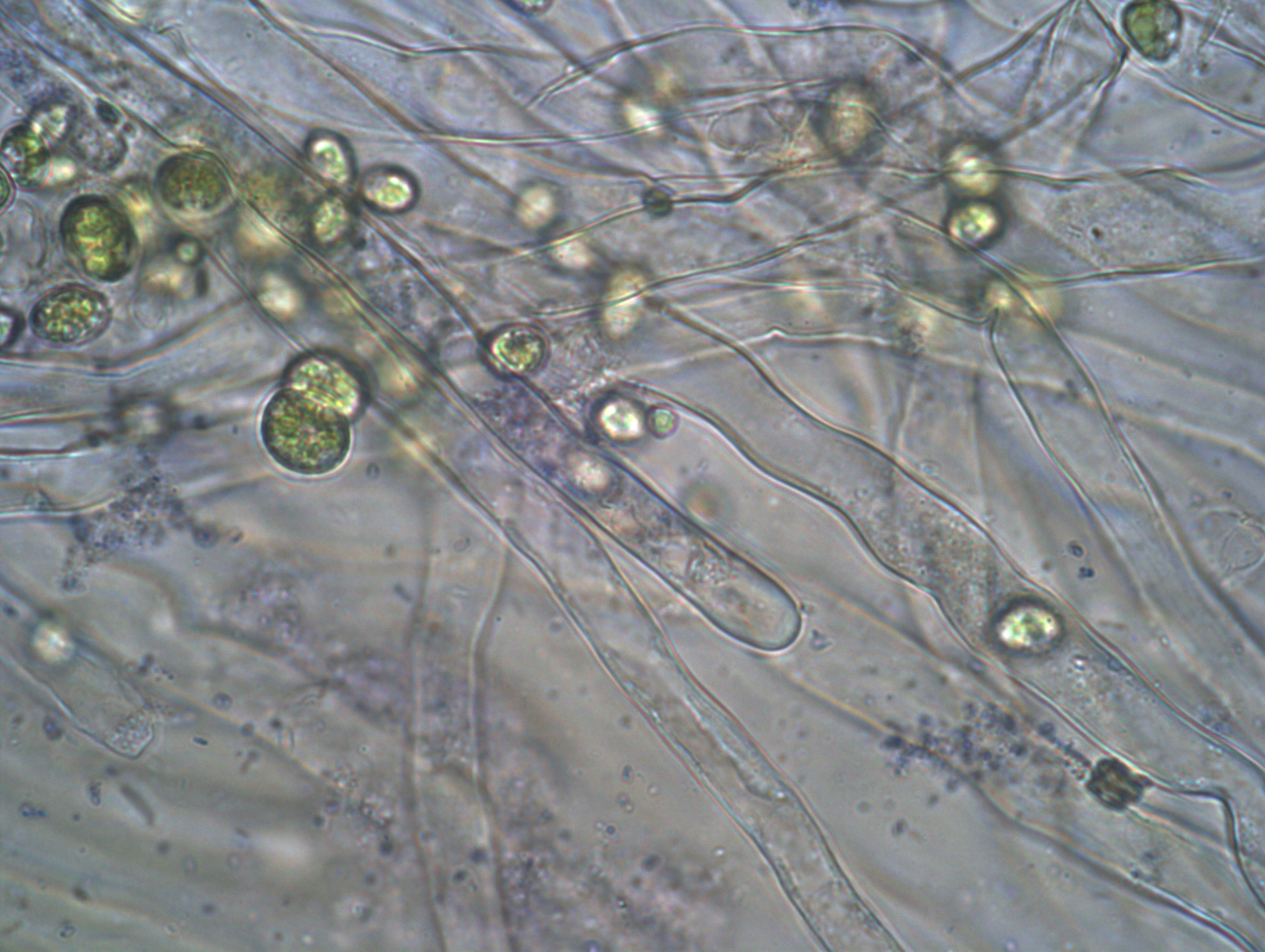
Microscopic view of a cell

Description automatically generated with medium confidence

Chlorella vulgaris are living green algae microscopic, freshwater organisms capable of surviving in soil. Living biology is what sets this form of biostimulant apart from all others because it stimulates the biology that is already in the soil. Extensive research and field trials have proven that this is of paramount importance in the potency and efficacy of biologicals for significant boosting of soil organic matter and microbial biomass, enabling every know benefit attributable to biostimulants to be realized.

• Enhanced plant growth and yield across various crops

• Reduced dependence on chemical fertilizers (NPK)

• Improved soil fertility, organic matter and microbial mass

• Increased leaf chlorophyll content, which translates into increased photosynthetic capacity

• Enhanced plant resistance to abiotic stresses such as drought and salinity

• Potential increased resistance to plant pathogens due to improved plant vigor

REDUCING THE NEED FOR SYNTHETIC FERTILIZER

One of the most important benefits of living green algae is that it can be used to lower synthetic nitrogen inputs. “Where will the nitrogen come from you ask?” The answer is that living green algae amplifies nature’s process of extracting nitrogen from the air and converting it into ammonium compounds in the soil. One gram of healthy soil contains some 10 billion bacteria, fungi and other organisms that work together to make this conversion — and live green algae accelerate this process known as nitrogen fixation.

In addition, rhizospheric bacteria produce weak acids that solubilize soil-bound phosphorus, making it available to roots.

This especially happens when these bacteria are stimulated by Chlorella vulgaris. Soil testing after the first application has even demonstrated excess nitrogen after grazing and harvesting — nitrogen that is available for the next season. This means ranchers can reduce their use of synthetic NPK fertilizers to produce quality, grass, hay and alfalfa. And because it is applied at much lower rates and at a much lower cost than synthetic fertilizer, ranchers can reduce their input costs while improving the health of their soil and the nutritional content of their forage. EnSoil Algae™ treated pasture fields have been proven to increase cattle conception rates and decrease the need for mineral supplements.
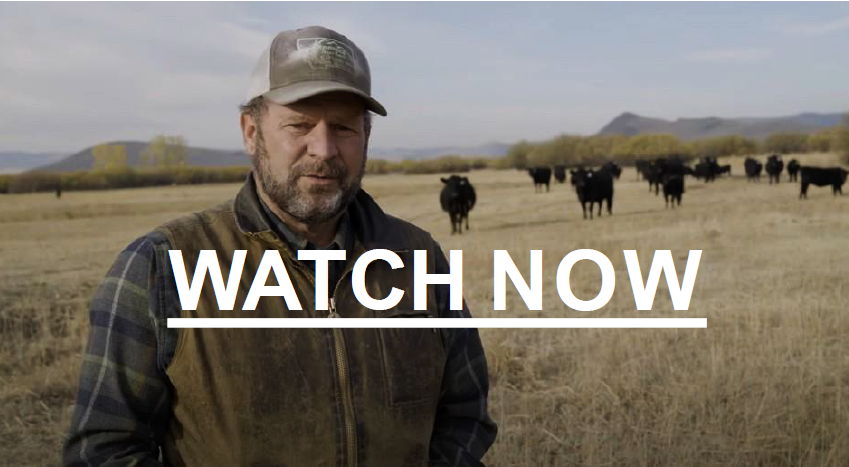
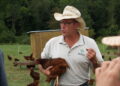
A person standing in a field with cows in the background

Description automatically generated

Bryan Mussard, Reminisce Angus Ranch

A BREAKTHROUGH IN LIVING BIOSTIMULANT TECHNOLOGY

Historically, the challenge of maintaining live algae viability during storage and transport has hindered their widespread use. Green algae, like most plants, are usually dependent on photosynthesis to maintain life; they die when placed in dark storage.

Living organisms feed themselves in one of two ways: either by producing their own food via photosynthesis — like green plants and algae — or by finding it outside of themselves, like animals and bacteria. Those that photosynthesize are called autotrophs (auto = self, troph = feeding), while those that scavenge or hunt for food are called heterotrophs (hetero = other). And there is a third category known as mixotrophic, an organism which can switch between autotrophic and heterotrophic metabolism.

Scientists with EnSoil Algae™ have now introduced mixotrophic Chlorella vulgaris which can photosynthesize in light and consume organic material in darkness, allowing them to remain viable during transport and for over a year in dark storage. This patent-pending technology doesn’t use any commercial or laboratory gene-altering techniques — i.e., it doesn’t rely on genetic modification as the heterotrophic pathway is already present in green algae. EnSoil Algae™ technology activates that pathway to produce mixotrophic chlorella.

Biostimulants like Cholera vulgaris make sense because they can lead to significant agronomic and economic outcomes that deliver a better return on investment than synthetic fertilizer. To learn more, watch what some Montana ranchers have experienced. EnSoil Algae™ is a product of Enlightened Soil Corp, a South Carolina public benefit corporation. ensoilalgae.com.

← Previous Boron for Insect Control — With Adequate Calcium Next March 2025 • Issue #645 →
Tags: Farm management
Weston

Weston

Next Post
Compost and Community

Compost and Community

  • Trending
  • Comments
  • Latest
The Most Important Livestock in Our Fields

The Most Important Livestock in Our Fields

July 1, 2024
Glyphosate Does What It’s Designed to Do — Kill

Glyphosate Does What It’s Designed to Do — Kill

February 19, 2025
The Take-Half, Leave-Half Fallacy

The Take-Half, Leave-Half Fallacy

July 1, 2025
USDA organic seal over American farm land

Losing Organic Farms

January 27, 2026
We Don’t Need Another Bridge — We Need an Off-Ramp

We Don’t Need Another Bridge — We Need an Off-Ramp

3
Under One Roof

Under One Roof

3
A Rose By Any Other Name

A Rose By Any Other Name

2
Terra Preta’s Biological Advantage

Terra Preta’s Biological Advantage

2
Destroying Farmland for AI

Destroying Farmland for AI

March 12, 2026
Roundup glyphosate herbicide referenced in debate over national security executive order

ROUNDUP PIE

March 5, 2026
What Does “Cutting Red Tape” Mean for Eco-Ag?

What Does “Cutting Red Tape” Mean for Eco-Ag?

March 4, 2026
March 2026 • Issue #657

March 2026 • Issue #657

March 1, 2026

Recent News

Destroying Farmland for AI

Destroying Farmland for AI

March 12, 2026
Roundup glyphosate herbicide referenced in debate over national security executive order

ROUNDUP PIE

March 5, 2026
What Does “Cutting Red Tape” Mean for Eco-Ag?

What Does “Cutting Red Tape” Mean for Eco-Ag?

March 4, 2026
March 2026 • Issue #657

March 2026 • Issue #657

March 1, 2026

About ACRES USA

Acres U.S.A.® Magazine

Acres U.S.A.® is North America’s oldest publisher on production-scale organic and regenerative farming. For more than 50 years, our mission has been to help farmers, ranchers and market gardeners grow food profitably and sustainably, with nature in mind.

Magazine Issues

  • News
  • 2025
    • June 2025
    • May 2025
    • April 2025
    • March 2025
    • February 2025
    • January 2025
  • 2024 Articles
    • December 2024
    • November 2024
    • October 2024
    • September 2024
    • August 2024
    • July 2024
    • June 2024
    • May 2024
    • April 2024
    • March 2024
    • February 2024
    • January 2024
  • December 2023
    • December 2023
    • November 2023
    • October 2023
    • August 2023
    • July 2023
    • June 2023
    • May 2023
    • April 2023
    • March 2023
    • February 2023
    • January 2023
  • December 2022
    • November 2022
    • October 2022
    • September 2022
    • August 2022
    • July 2022
    • June 2022
    • May 2022
    • April 2022
    • March 2022

Contact Acres U.S.A

  • Contact Us
  • About Us
  • Advertise With Acres U.S.A.
  • My Subscription

Learn

  • Resources
  • Events
  • Magazine
  • Newsletters
  • Free Articles
  • Webinars
  • Online Courses
  • Bookstore

Our All Socials

Follow With Us...

  • My account
  • News
  • Ecological farming
  • Refund and Returns Policy
  • Privacy & Policy

© 2024 Acers USA Magazine

Welcome Back!

Login to your account below

Forgotten Password? Sign Up

Create New Account!

Fill the forms below to register

All fields are required. Log In

Retrieve your password

Please enter your username or email address to reset your password.

Log In
No Result
View All Result
  • HOME
  • ARTICLES
    • News
    • Farm
    • Ecological farming
    • Livestock
    • Crop
      • Crop management practices
      • Cover crops
      • Crop nutrition
      • Crop protection
      • Crops
      • Ag technology
    • Soil
    • Opinion
  • RESOURCES
    • Magazine
    • Online Learning
    • Newsletters
    • Blog
    • Free Articles
  • MAGAZINE ISSUES
    • 2025
      • June 2025
      • May 2025
      • April 2025
      • March 2025
      • February 2025
      • January 2025
    • 2024
      • December 2024
      • November 2024
      • October 2024
      • September 2024
      • August 2024
      • July 2024
      • June 2024
      • May 2024
      • April 2024
      • March 2024
      • February 2024
      • January 2024
    • 2023
      • December 2023
      • November 2023
      • October 2023
      • August 2023
      • July 2023
      • June 2023
      • May 2023
      • April 2023
      • March 2023
      • February 2023
      • January 2023
  • ABOUT US
    • Our History
    • Our Staff
    • Contact Us
    • Community
      • Soil Health Primer Resources
  • EVENTS
    • Eco-Ag Conference
    • On-Farm Viroqua Event
    • Farm Weird
  • SUBSCRIBE
  • Login
  • Sign Up
  • Cart

© 2024 Acers USA Magazine

Are you sure want to unlock this post?
Unlock left : 0
Are you sure want to cancel subscription?