
Threefold Farm in New York may be the oldest continuously operating biodynamic farm in the country
Just thirty miles from New York City, near Spring Valley, New York, lies what might be the oldest continuously operating biodynamic farm in the United States. Surrounded by miles of winding streets in tree-shaded suburbs, Threefold Community Farm is one of only five remaining working farms in Rockland County, New York. Urban schoolchildren love touring the farm’s vegetable plots and feeding the small herd of dairy cattle. “It’s nice to visit a real farm, one that’s not all rides and food!” one kid told a farm worker last summer.
Threefold Community Farm is part of a unique complex that is one of the main American centers for anthroposophy — a “spiritual science” that follows the teachings of the Austrian philosopher Rudolf Steiner. In addition to the farm, this complex includes the Threefold Educational Foundation, the Pfeiffer Center, a Waldorf school, a school for special needs children, the Hungry Hollow food co-op, the Threefold Café, and an elder care village called the Fellowship Community.
Threefold’s proximity to the nation’s largest metropolis is no accident. Its history dates back to 1926, when a group of anthroposophists operating Threefold Vegetarian Restaurant in New York City wanted to find a good source of fresh, local vegetables. They purchased a thirty-acre parcel of land just outside of Spring Valley, New York, to be a farm and conference center.
Originally called Threefold Farm, this property holds the distinction of being the first farm in the United States to use the biodynamic farming methods first outlined by Rudolf Steiner. And it’s still a center for biodynamic farming today — thanks to Mac Mead.
Learning from the Elders
Mention Mac Mead to anyone at Threefold today and their eyes light up. He’s known as an expert in biodynamic farming, and for good reason.
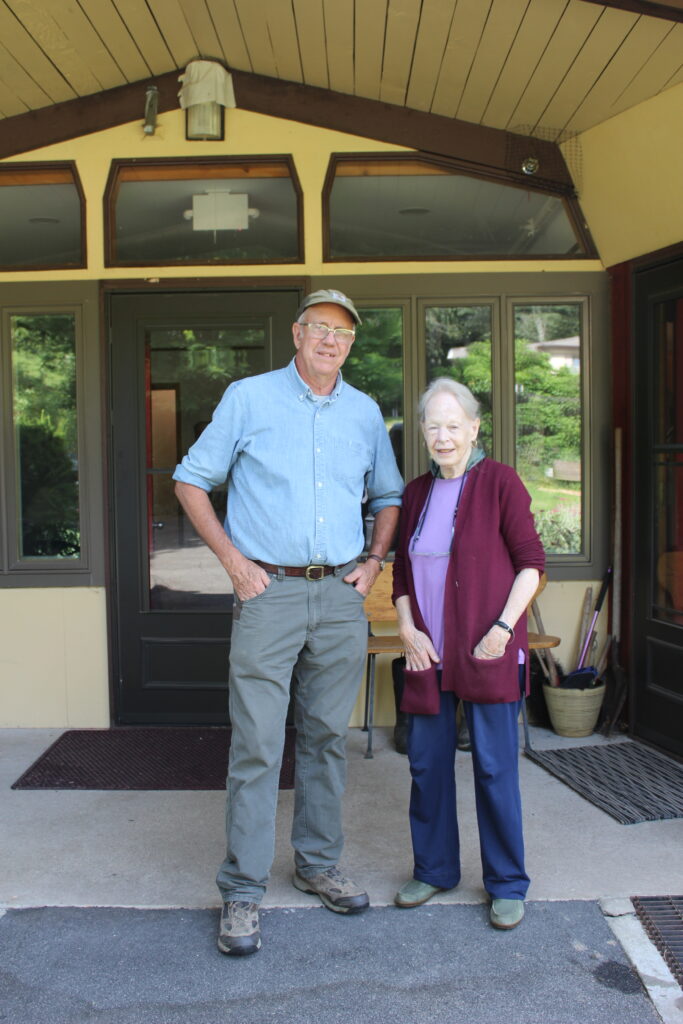
Mac first came to Spring Valley in 1975 to work at the Fellowship Community, an anthroposophic elder care community. As a conscientious objector near the end of the Vietnam War, he was allowed to find alternate service working for a nonprofit organization. He chose to work in a Camphill Village in upstate New York, which was a community that cared for special needs adults following the teachings of Rudolf Steiner.
While he was at Camphill, one of the villagers told Mac, “They do a kind of farming here where the soil gets better every year.” Being familiar only with conventional, chemical-based agriculture, Mac was intrigued to learn more. He found that the name of this farming system that made the soil better every year was “biodynamic farming,” based on a series of lectures that Steiner had given in 1924.
In 1975, Mac moved from Camphill to the Fellowship Community. Soon he discovered that many of founders of biodynamic farming in the United States had retired to Fellowship. Ehrenfried Pfeiffer, one of Steiner’s disciples who wrote the seminal book Bio-Dynamic Farming and Gardening, had come to the United States in 1939 and operated a laboratory at Threefold from 1950 until his death in 1961. Mac learned biodynamic techniques from residents of Fellowship who had learned directly from Pfeiffer.
The “heart of biodynamics,” Mac learned, “is what has been called the agricultural individuality of a farm. Every farm is unique. It’s the locale that it’s in, the people who developed it. It should be looked at as an organic whole. Almost like how each human being is a whole organism.”
At Threefold, this organic whole encompasses the soil, crops, cows, compost and human community that lives on the same land where their food is grown. Residents of Fellowship Community are encouraged to take ownership of a small plot of ground, be it a raised bed in the vegetable garden or a bright burst of flowers outside a door.
An important part of this concept of the farm as an organic whole is mixed farming — raising crops and animals together in a cycle of integrated fertility. This cycle existed at Threefold for many years, but after the state of New York banned the sale of raw milk in 1972, the farm’s original dairy herd had been dispersed. It was up to Mac and his wife, Ellen, to bring cows back to the farm and connect the cycle once again.
Closing the Circle
“Fertility, especially in organic agriculture, is going to come from organic materials — cover crops, compost materials, or whatever supplements you want to bring,” Mac teaches. “But I say the heart of real fertility is manure from animals. The perspective in biodynamics is that the animals — especially the cow, but pretty much any of the domestic animals — have the genius to transform what they are eating from a given location and give in their manure just what’s needed for right there at that location.”
When Mac first arrived at Fellowship, the community had about three-quarters of an acre of vegetable gardens, but no animals. “We had to take a dump truck and go to dairy farms an hour away to get cow manure, bring it back, and compost it,” he recalls.
By 1997, Fellowship was growing, and they purchased an adjacent farm, Duryea Farm, and expanded production to about 10 acres of vegetables and 12 acres of apples. They had some chickens and sheep, but they were still missing one of the keystones of biodynamic farming: cows.
Courtesy of Anneliese Abbott
Mac and Ellen took their 4-H group on a visit to a biodynamic dairy farm in Kimberton, Pennsylvania — Seven Stars Farm — and “begged” them to sell them a calf. A couple months later they were able to go pick up a pretty little Jersey, who became “the only bovine animal in the whole county.” When he let her out of the truck into a grassy field with all the kids watching, they were surprised to see that the first thing the calf did was eat dirt.
“What I realized later was, this animal was taking our soil into her biology,” Mac explained. “She was getting ready to help, from that point on, help transform whatever it is on our farm to her biology … to bring manure to the best and highest quality for our location.” Mac had been making biodynamic compost for years, taught by the best in the field. But the first time he made a compost heap from their own cow’s manure, he was surprised at the difference.
“This was near where we grew leeks, onions, early chard, and beets and carrots,” he recalled. “I’d grown them there before over 25 years. But the quality that came of those vegetables from that home-sourced manure was the biggest single difference I had ever seen in the enhancement of quality.” Finally, for the first time in over twenty years, he had been able to close the cycle of fertility at Threefold.
Biodynamic Compost
Rockland County is aptly named. The soil is very rocky, and the woods at Threefold are filled with old stone walls surrounding former fields, now overgrown with second-growth trees. But the remaining cleared fields are still productive under biodynamic management. Mac explains that the area is “a melting pot of ecoregions,” which makes it “an amazing spot agriculturally,” with an “incredible mix of climate, birds, nature, all kinds of plants.”
Compost is essential for keeping the rocky soil fertile, and Mac makes it using the biodynamic preparations originally specified by Rudolf Steiner. “The idea is that there’s certain forces involved with plant growth that you don’t just see, you can’t quite measure — forces that are just a part of nature, and how do you enhance those?” Mac asked. “That’s what biodynamics is all about. It’s the enhancement of organic agriculture.”
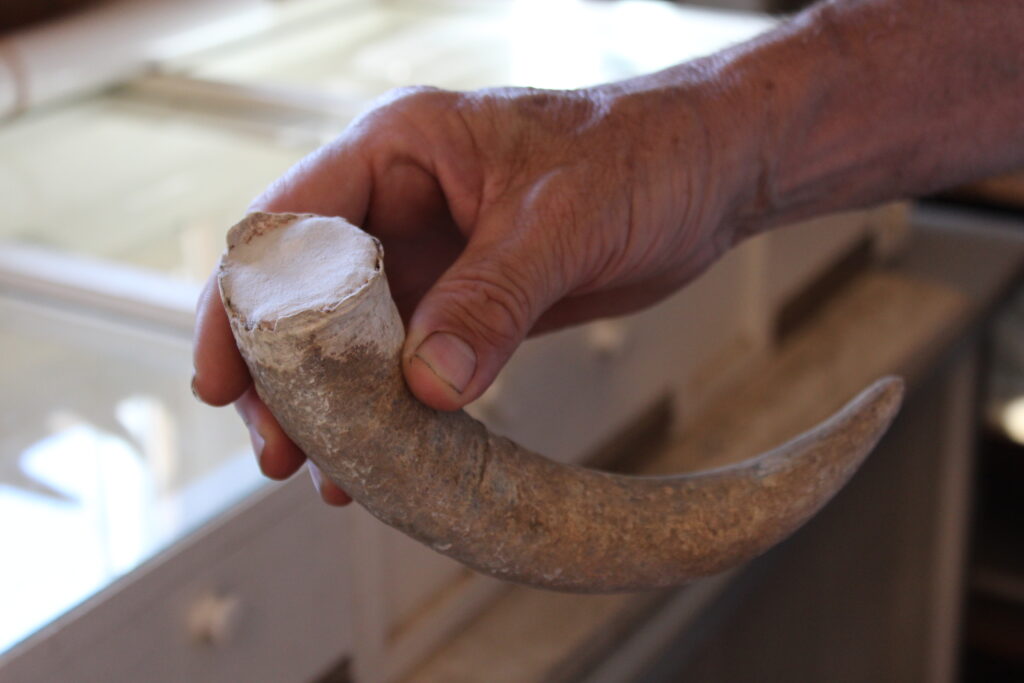
Part of that enhancement involves the use of biodynamic preparations, which are made using specific herbs and animal organs, often buried for several months to decompose in the soil. Two of these preparations — horn manure and horn silica — are used as field sprays. The others are used as compost inoculants, adding beneficial decomposing organisms to a compost pile.
Courtesy of Anneliese Abbott
Mac and his team make all their own preparations and teach classes on the process. The horn manure, for example, is made by putting fresh cow manure into a cow horn and burying it over the winter. The finished preparation is a rich, dark brown compost, full of beneficial microorganisms. A small amount of this horn manure is added to a bucket of water and stirred to create a vortex in alternating directions for about an hour to dynamize it, then sprayed over a field.
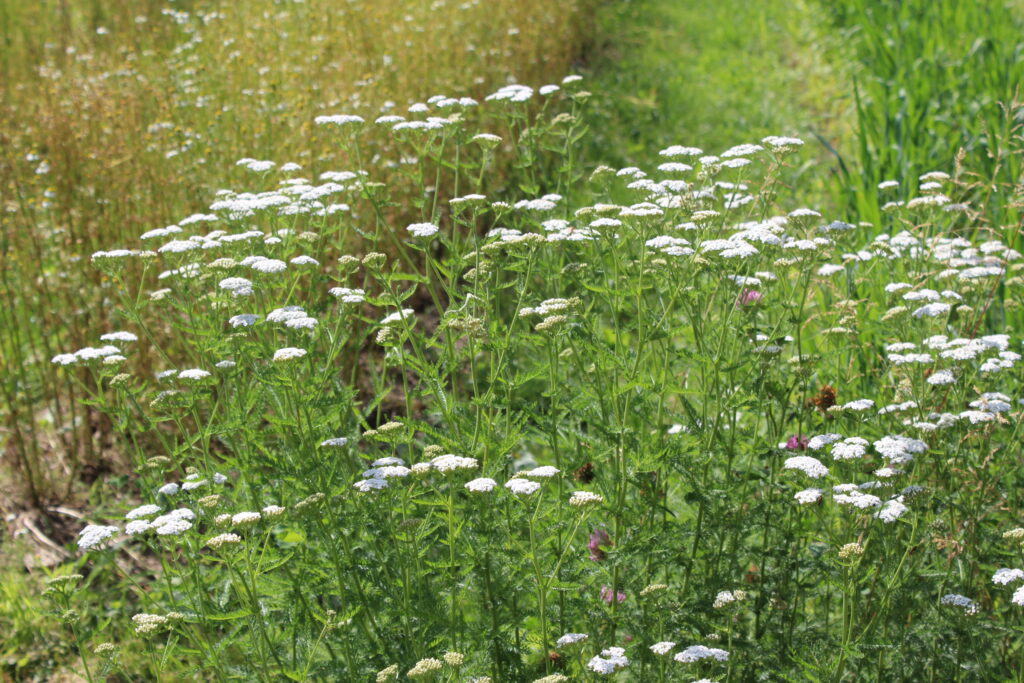
The compost inoculant preparations use herbs like yarrow, chamomile and valerian, all of which are grown right on the farm at Threefold. Like the vegetable fields, the herb garden is surrounded by an eight-foot fence to keep out deer. The bottom three feet are also encased in half-inch hardware cloth, which extends underground a foot and then bends outward another foot to keep groundhogs from tunneling in.
Courtesy of Anneliese Abbott
The finished biodynamic compost, made from the manure of the farm’s own cows, is rich, brown and fertile. Mac applies it to the fields every fall, and for some crops — like cucurbits — he plants the seeds directly into a two-inch line of compost in the middle of the bed to give them a jump-start when they germinate.
It’s deeply satisfying to Mac that Threefold Farm is now truly a self-contained organism, with fertility supplied by composted manure from the farm’s own cows. And true to the founding principles of biodynamics, the local community is part of that organic whole as well.
Giving Back to the Community
Threefold Community Farm is shaped roughly like a triangle, with the land owned by the Threefold Foundation and Fellowship Community on one side and Duryea Farm on another. The triangular patch of woods in between the two farms is owned by the village but will always remain undeveloped because it’s too swampy to build houses on.
Threefold’s fields are interspersed throughout the forest. The majority of the vegetable fields and cow pastures are located on Duryea Farm, while a few hayfields and another vegetable plot are located on the other side of the triangle, near a historic red barn where the farm’s two Haflinger draft horses live.
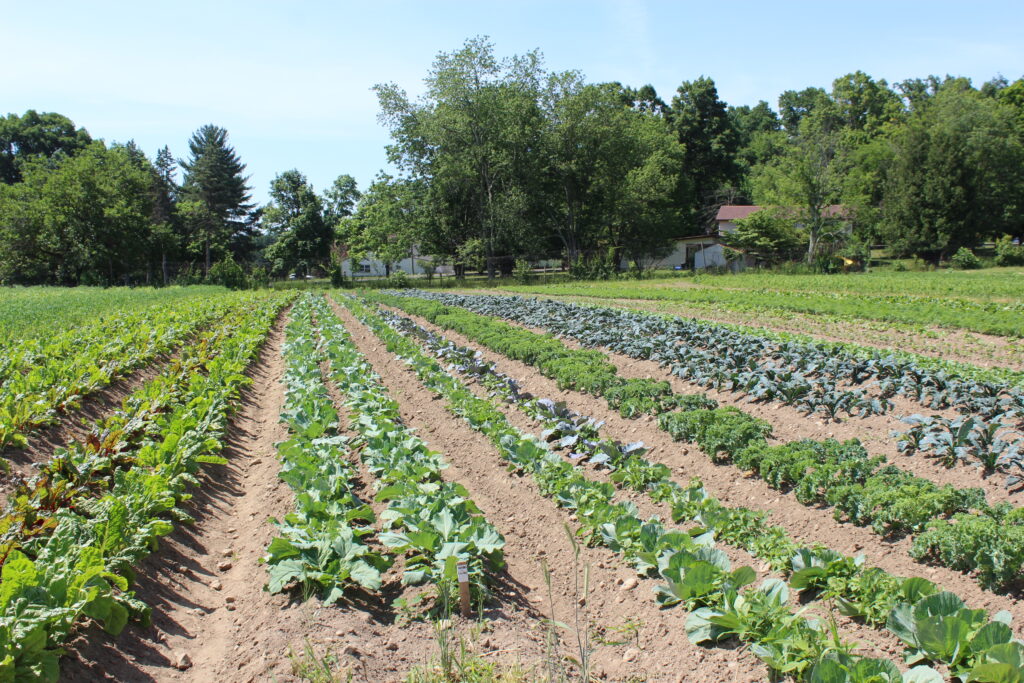
Since most of the vegetable plots are small, Mac has designed small implements for tillage and cultivation that can be pulled either by the draft horses or a small tractor. The vegetable fields are planted in five-foot-wide swaths — the width of one bed and one path — and all the implements are custom-made to fit that gauge. The harness for the horses is designed so that they can walk in the two paths on either side of a bed.
Mac uses a disc plow to break up the soil in the spring, then a succession of harrows to make a seedbed and several different cultivators to remove the weeds. He’s handy with welding and metalwork and has refurbished some older equipment and made what he couldn’t buy.
The farm only had four dairy cattle in 2024. They graze on pasture in the summer and eat hay in the winter. They have a small milking machine that uses portable stainless-steel containers, which they pour into the bulk tank by hand. “You have to follow the same dairy laws with one cow as you have to with a hundred cows,” Mac explained. They sell raw milk and yogurt at their self-serve farm store.
The farm grows a wide variety of vegetables, including lettuce, sweet corn, cucumbers, Swiss chard, kale, cabbage, spinach, parsnips and tomatoes. They supply many of the vegetables for Fellowship Community and also sell them to the Threefold Café, the Hungry Hollow Co-op, and a 40-share CSA.
“We are so local, we barely sell anything more than a mile way,” Mac said. “We don’t need to be certified for people to value, to trust us. They see our name, Threefold Community Farm, or the Pfeiffer Center or Fellowship, and that’s good enough.”
The Threefold complex provides the local community not only with food, but with a place for outdoor recreation. “We are an oasis here,” Mac said. “We’re surrounded by suburbs.” The farm’s lanes and wooded paths are open to the public, and especially during the COVID-19 pandemic, people from the surrounding area came to the farm to get outside and walk on the trails through the woods.
“For me, biodynamics actually is the most efficient, in terms of growing quality food, creating quality soil, being the best,” Mac explained. “I think we’re going to need the best healthful things for the future. It’s hard not to imagine that food production is going to be the most critical thing in the decades to come.”
Mac emphasizes the need for collaboration between organic farmers, biodynamic farmers, permaculturists, and farmers in general. “I’d like to go on record as being a big supporter of any farm,” he explains. “Conventional or organic or biodynamic, whatever, anyone being a farmer these days is a hero.”