Acres U.S.A.® Magazine
  • Articles
    • News
    • Ecological farming
      • Climate
      • Environmental Issues
      • Farm management & planning
      • Human health
    • Livestock
    • Farm
    • Crop
      • Crop management practices
        • Ag technology
        • Cover crops
        • Crop nutrition
          • Crop protection
          • Diseases
        • Crops
        • Fruits
    • Soil
    • Opinion
  • Resources
    • Magazine
    • Online Learning
    • Newsletters
    • Free Articles
    • Blog
  • Magazine Issues
    • 2026
      • February 2026
      • January 2026
    • 2025
      • December 2025
      • November 2025
      • October 2025
      • September 2025
      • August 2025
      • July 2025
      • June 2025
      • May 2025
      • April 2025
      • March 2025
      • February 2025
      • January 2025
    • 2024
      • December 2024
      • November 2024
      • October 2024
      • September 2024
      • August 2024
      • July 2024
      • June 2024
      • May 2024
      • April 2024
      • March 2024
      • February 2024
      • January 2024
    • 2023
      • December 2023
      • November 2023
      • October 2023
      • August 2023
      • July 2023
      • June 2023
      • May 2023
      • April 2023
      • March 2023
      • February 2023
      • January 2023
    • 2022
      • December 2022
      • November 2022
      • October 2022
      • September 2022
      • August 2022
      • July 2022
      • June 2022
      • May 2022
      • April 2022
      • March 2022
      • February 2022
  • About Us
    • Our History
    • Our Staff
    • Contact Us
    • Community
      • Soil Health Primer Resources
  • Events
    • Eco-Ag Conference
    • Farm Weird Event
    • Viroqua On Farm Event
  • Subscribe
  • Login
  • Register
No Result
View All Result
  • Articles
    • News
    • Ecological farming
      • Climate
      • Environmental Issues
      • Farm management & planning
      • Human health
    • Livestock
    • Farm
    • Crop
      • Crop management practices
        • Ag technology
        • Cover crops
        • Crop nutrition
          • Crop protection
          • Diseases
        • Crops
        • Fruits
    • Soil
    • Opinion
  • Resources
    • Magazine
    • Online Learning
    • Newsletters
    • Free Articles
    • Blog
  • Magazine Issues
    • 2026
      • February 2026
      • January 2026
    • 2025
      • December 2025
      • November 2025
      • October 2025
      • September 2025
      • August 2025
      • July 2025
      • June 2025
      • May 2025
      • April 2025
      • March 2025
      • February 2025
      • January 2025
    • 2024
      • December 2024
      • November 2024
      • October 2024
      • September 2024
      • August 2024
      • July 2024
      • June 2024
      • May 2024
      • April 2024
      • March 2024
      • February 2024
      • January 2024
    • 2023
      • December 2023
      • November 2023
      • October 2023
      • August 2023
      • July 2023
      • June 2023
      • May 2023
      • April 2023
      • March 2023
      • February 2023
      • January 2023
    • 2022
      • December 2022
      • November 2022
      • October 2022
      • September 2022
      • August 2022
      • July 2022
      • June 2022
      • May 2022
      • April 2022
      • March 2022
      • February 2022
  • About Us
    • Our History
    • Our Staff
    • Contact Us
    • Community
      • Soil Health Primer Resources
  • Events
    • Eco-Ag Conference
    • Farm Weird Event
    • Viroqua On Farm Event
  • Subscribe
No Result
View All Result
Acres U.S.A.® Magazine
No Result
View All Result
Home Ecological farming

Photosynthesis and Plant Geometry

Mark Shepard by Mark Shepard
July 2, 2024
in Ecological farming, July 2024, Soil & plant health
0
Photosynthesis and Plant Geometry

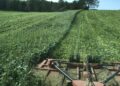
Alley-cropping (Restoration Agriculture) — Agroforestry practices enhance the total area capable of photosynthesizing, increasing possible per-acre yield.

0
SHARES
231
VIEWS
Share on FacebookShare on Twitter

As farmers and ranchers, we are essentially in the photosynthesis business, and the shape of our crops can increase how much they photosynthesize

Mark Shepard

In ecological terminology, productivity is the accumulation of energy and matter in the form of biomass: living plants and animals. As we all know, the first step in this process (primary productivity) happens mostly within green plants. Green plants, algae and certain cyanobacteria are capable of converting the radiant energy of sunlight into carbon compounds. The elements within these carbon compounds are “glued” together by light energy and become chemical energy. 

The process by which this happens is, of course, photosynthesis: the synthesizing of carbon compounds from air and water using the energy from the sun. The fact that this happens never ceases to amaze me. A little water, a little sunshine, and plants can make sugars, enzymes, acids, bases, starches, proteins, oils, resins, waxes, wood, flowers and a host of other things, all out of thin air!

The fundamental process of photosynthesis, whereby energy and matter combine, is described in the basic photosynthesis equation (leaving several things out to simplify matters):

6CO2 + 6H20 + energy ???????? C6H12O6 + 6O2

C6H12O6 is glucose, a basic sugar. Some of the energy stored in the carbon bonds of glucose is used by the plant itself to keep its cells alive, to build its own body and to create all of the secondary materials that we all depend on for food. 

Corn, beans, pumpkins, grapes, bananas, etc., are all manufactured by the plant using the energy released during respiration, which is essentially photosynthesis running right to left instead of left to right, as written above. The matter and energy accumulated during photosynthesis is termed the gross primary productivity, which can be measured at the individual plant, the population, community or ecosystem level. The remaining energy and matter of gross primary productivity after the plant uses what it needs to grow and reproduce (respiration) is called the net primary productivity. 

Water, sunlight and carbon dioxide are the fundamental necessities that our plants need, and we should have at least a basic understanding of this as ecological farmers. Yet notice that none of the basic elements necessary for photosynthesis and respiration need to come from the soil. The leaves and stems of plants have openings (stomata, lenticels, etc.) to allow gases and liquids to pass into and out of the plant without the intermediary of soil. This is one of the reasons feeding plants nutrients foliarly actually works. 

Secondary productivity is when organisms consume the primary photosynthates and convert them into other forms. Folks who grow and sell vegetables, grains, fruits, etc., are farming the net primary productivity of the site. Those who raise animals (from cattle to earthworms) or mushrooms, are farming the secondary productivity. The more primary productivity on your site, the greater the secondary yields can be. 

Chlorophyll, the green in our green plants, is found mostly within the leaves of plants, but also in their stems, flowers and even internal cells. Firewood cutters have all seen green wood in small-diameter stems, and that green is chlorophyll. Not much radiant energy penetrates three years deep into wood, but some does — leafless, woody stems actually photosynthesize. 

As farmers and ranchers, we are essentially in the photosynthesis business. One of our aims is to have as much photosynthesis happening on each acre as practically possible. The more net primary productivity happening on our properties, the more harvestable yields we can have. 

If sunlight, water and the atmosphere are the essential ingredients for photosynthesis, it is in our best interests to strive to maximize the capture of sunlight, air and water — and since I’ve already mentioned that photosynthesis can happen without soil, let’s just focus on the aerial portions of our crops. 

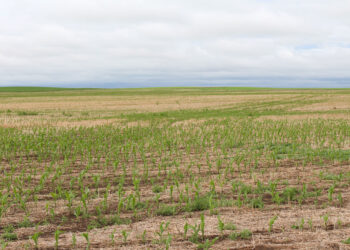
Mauck photo (Courtesy of Jason Mauck) — By planting alternating strips of corn and beans, the canopy architecture of a farm field changes. Instead of being a flat, uniform green surface, each acre of land now has a radically increased surface area.

Most of us have seen mile after mile of soybean or wheat fields. They are incredibly uniform and of a relatively short stature. They are essentially a flat surface that is collecting CO2 and sunlight from the atmosphere, along with dew, humidity and precipitation on its leaves. One of the reasons corn has higher net primary productivity (yield) than small grains and beans is its architecture. Just by being taller, it can capture more sunlight and air than a soybean. More leaf surface area and more stem surface add to this. 

An almond tree has more total yield (crop, leaves, wood are part of the total yield in ecological terms) than corn. It is easy to imagine how a 60-foot-tall oak tree can capture more air and sunshine than a two-foot-tall bean plant, but what is not so easy to imagine is how much moisture it can scrub directly from the atmosphere. In several texts I’ve read that it takes a half-inch rain just to get the exterior surfaces of a mature oak tree wet. This wetting of leaves, stems and trunk, whether we’re talking about corn or an oak, is called interception. 

Now let’s put all of these basic ecological principles together and begin to think about how we can use them to improve our ecological farm. As an example, consider the work of Jason Mauck (interviewed in the December 2023 issue of this magazine) and others. By planting alternating strips of corn and beans, the canopy architecture of a farm field changes. Instead of being a flat, uniform green surface, each acre of land now has a radically increased surface area. The crop alternates from short beans (or wheat) up to the tops of corn, then back down to beans. In addition to receiving sunlight on top, the corn now receives rays on its sides as well. 

This is one way nature optimizes the exchange of nutrients and gases between things — the design it uses is a deeply convoluted shape. Just think of the insides of your lungs. Instead of being smooth sacks for air, your bronchi (a similar root word as branches!) subdivides smaller and smaller from your single windpipe. Similarly, the insides of your intestines are lined with tiny villi, which increases surface area and facilitates the passage of fluids and nutrients. 

Growers like Jason Mauck who intercrop tall and short plants get higher per-acre yields because every acre has more exposed surface area. Think of the agroforesters who grow rows of trees between crop fields. Jason’s canopy height may only reach up to eight feet, but some agroforesters are working with trees 60 feet or taller. The increased per-acre yield, in part by increased photosynthetic surface area, is well known in agroforestry circles as the land equivalent ratio. 

What if we combined strip-cropping/relay-cropping such as Jason practices with an alley-cropping system? How much sunlight, atmosphere and moisture could we capture on each acre of ground? How could we cost-effectively design, install, manage, and harvest these systems in order to convert as much sunlight into useable biomass while living a good life? 

This is the art and science of ecological farming! Mark Shepard is a land designer and consultant and is the author of Restoration Agriculture, Water for Any Farm and the Water for Any Farm Technical Manual.

← Previous Green Living Next Pioneers of Permanence →
Tags: Photosynthesis
Mark Shepard

Mark Shepard

Mark Shepard is a land designer and consultant and is the author of Restoration Agriculture, Water for Any Farm and the Water for Any Farm Technical Manual.

Next Post
August 2024 • Issue #638

August 2024 • Issue #638

  • Trending
  • Comments
  • Latest
The Most Important Livestock in Our Fields

The Most Important Livestock in Our Fields

July 1, 2024
Glyphosate Does What It’s Designed to Do — Kill

Glyphosate Does What It’s Designed to Do — Kill

February 19, 2025
The Take-Half, Leave-Half Fallacy

The Take-Half, Leave-Half Fallacy

July 1, 2025
USDA organic seal over American farm land

Losing Organic Farms

January 27, 2026
We Don’t Need Another Bridge — We Need an Off-Ramp

We Don’t Need Another Bridge — We Need an Off-Ramp

3
Under One Roof

Under One Roof

3
A Rose By Any Other Name

A Rose By Any Other Name

2
Terra Preta’s Biological Advantage

Terra Preta’s Biological Advantage

2
Roundup glyphosate herbicide referenced in debate over national security executive order

ROUNDUP PIE

March 5, 2026
What Does “Cutting Red Tape” Mean for Eco-Ag?

What Does “Cutting Red Tape” Mean for Eco-Ag?

March 4, 2026
March 2026 • Issue #657

March 2026 • Issue #657

March 1, 2026
Fungicides and Tillage and Bare Soil, Oh My!

Fungicides and Tillage and Bare Soil, Oh My!

March 1, 2026

Recent News

Roundup glyphosate herbicide referenced in debate over national security executive order

ROUNDUP PIE

March 5, 2026
What Does “Cutting Red Tape” Mean for Eco-Ag?

What Does “Cutting Red Tape” Mean for Eco-Ag?

March 4, 2026
March 2026 • Issue #657

March 2026 • Issue #657

March 1, 2026
Fungicides and Tillage and Bare Soil, Oh My!

Fungicides and Tillage and Bare Soil, Oh My!

March 1, 2026

About ACRES USA

Acres U.S.A.® Magazine

Acres U.S.A.® is North America’s oldest publisher on production-scale organic and regenerative farming. For more than 50 years, our mission has been to help farmers, ranchers and market gardeners grow food profitably and sustainably, with nature in mind.

Magazine Issues

  • News
  • 2025
    • June 2025
    • May 2025
    • April 2025
    • March 2025
    • February 2025
    • January 2025
  • 2024 Articles
    • December 2024
    • November 2024
    • October 2024
    • September 2024
    • August 2024
    • July 2024
    • June 2024
    • May 2024
    • April 2024
    • March 2024
    • February 2024
    • January 2024
  • December 2023
    • December 2023
    • November 2023
    • October 2023
    • August 2023
    • July 2023
    • June 2023
    • May 2023
    • April 2023
    • March 2023
    • February 2023
    • January 2023
  • December 2022
    • November 2022
    • October 2022
    • September 2022
    • August 2022
    • July 2022
    • June 2022
    • May 2022
    • April 2022
    • March 2022

Contact Acres U.S.A

  • Contact Us
  • About Us
  • Advertise With Acres U.S.A.
  • My Subscription

Learn

  • Resources
  • Events
  • Magazine
  • Newsletters
  • Free Articles
  • Webinars
  • Online Courses
  • Bookstore

Our All Socials

Follow With Us...

  • My account
  • News
  • Ecological farming
  • Refund and Returns Policy
  • Privacy & Policy

© 2024 Acers USA Magazine

Welcome Back!

Login to your account below

Forgotten Password? Sign Up

Create New Account!

Fill the forms below to register

All fields are required. Log In

Retrieve your password

Please enter your username or email address to reset your password.

Log In
No Result
View All Result
  • HOME
  • ARTICLES
    • News
    • Farm
    • Ecological farming
    • Livestock
    • Crop
      • Crop management practices
      • Cover crops
      • Crop nutrition
      • Crop protection
      • Crops
      • Ag technology
    • Soil
    • Opinion
  • RESOURCES
    • Magazine
    • Online Learning
    • Newsletters
    • Blog
    • Free Articles
  • MAGAZINE ISSUES
    • 2025
      • June 2025
      • May 2025
      • April 2025
      • March 2025
      • February 2025
      • January 2025
    • 2024
      • December 2024
      • November 2024
      • October 2024
      • September 2024
      • August 2024
      • July 2024
      • June 2024
      • May 2024
      • April 2024
      • March 2024
      • February 2024
      • January 2024
    • 2023
      • December 2023
      • November 2023
      • October 2023
      • August 2023
      • July 2023
      • June 2023
      • May 2023
      • April 2023
      • March 2023
      • February 2023
      • January 2023
  • ABOUT US
    • Our History
    • Our Staff
    • Contact Us
    • Community
      • Soil Health Primer Resources
  • EVENTS
    • Eco-Ag Conference
    • On-Farm Viroqua Event
    • Farm Weird
  • SUBSCRIBE
  • Login
  • Sign Up
  • Cart

© 2024 Acers USA Magazine

Are you sure want to unlock this post?
Unlock left : 0
Are you sure want to cancel subscription?