

Green algae stimulate the growth of soil microorganisms
In Hickory, North Carolina, Russell Hedricks harvested 460 bushels of corn last year, an American dryland record. Among other practices, one of his inputs was a live green algae biostimulant. Based on soil analysis using Haney and PLFA tests, he applied 310 pounds of organic nitrogen to a field that had been farmed with regenerative practices for five years, and he applied a live Chlorella vulgaris formulation three times during the season. He estimated that the biostimulant boosted yield by 17 bushels per acre.
In a review of biostimulants in the March 2024 issue of this magazine, Patrick Freeze described four classes of biostimulants: humic and fulvic acids, seaweed extracts, microbial inoculants (rhizobacteria or mycorrhizal fungi) and protein hydrolysates that contain growth-signaling molecules called phytohormones. These four categories have variable actions with some overlap, but Dr. Freeze reported that no single class provides all of the possible benefits.
What about live green algae, though? They were the original biostimulants and can provide the full range of biostimulant benefits:
- Increased plant growth and yield for a wide variety of crops
- Reduced need for chemical fertilizer (NPK) input
- Improved fertility and a rise in soil organic matter, microbial mass and diversity
- Increased leaf chlorophyl (photosynthetic capacity)
- Increased plant resistance to abiotic stress (drought and irrigation salinity)
- In some cases, increased resistance to plant pathogens, probably because of increased plant vigor (biostimulants, including live algae, are not pesticides)
Green algae are one of many types of algae, which in general are aquatic organisms that contain chlorophyl but that lack true stems, roots and leaves. Seaweeds are algae and have of course been used in agriculture for millennia. Green algae differ in that they are generally microscopic, live in fresh water and can also survive in soil.
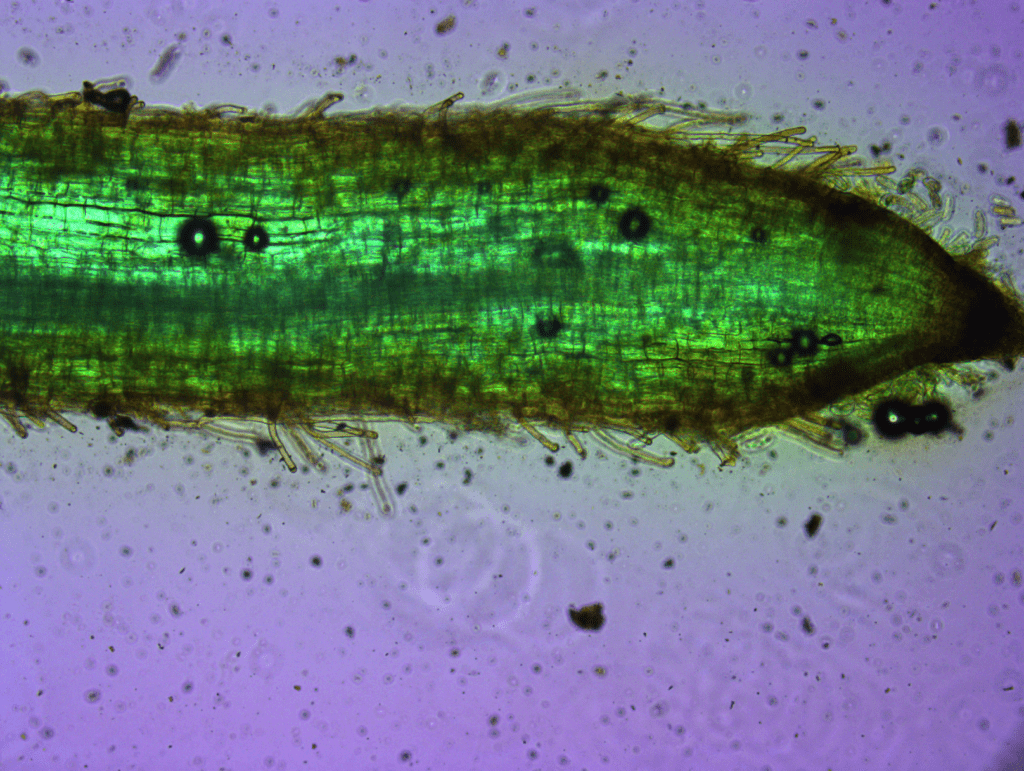
Mixotrophic Chlorella vulgaris
With research results dating to the 1970s, why hasn’t there been a live green algae biostimulant in the market? The answer is the difficulty of shelf life. Like other green plants, algae cells are usually dependent on photosynthesis and die when placed in dark storage. Live cells are not easily stored and transported. Researchers have typically grown algae locally and apply it immediately upon harvest. Systems for growing algae on the farm for this purpose are marketed but haven’t caught on; growing algae can be frustratingly difficult.
One way to categorize living organisms is according to how they feed themselves — do they make their own food via photosynthesis, like green plants and algae? These are autotrophs (auto = self, troph = feeding). Or, does the organism eat other animals in order to grow and survive — like animals and bacteria? These are heterotrophs (hetero = other).
Yet a third category exists: mixotrophs. These are organism like green algae that can produce their own food via photosynthesis and can also consume other organic materials.
Biologists have recently developed mixotrophic green algae (Chlorella vulgaris) using a novel method for inducing heterotrophic metabolism. While in light, the chlorella are autotrophic, but in the dark, they consume organic material in order to grow. These mixotrophic algae can live for more than a year in dark storage. At a concentration of 10 million live algae cells per milliliter of water, it’s easy to mix them with water and to apply a dose of 50,000 algae cells per square foot; a liter of the concentrate treats 4.5 acres.
Biostimulants work by providing plants and soil microbes growth-signaling molecules like auxins, cytokinins, gibberellins and others. This is one of the modes of action of green algae — releasing these compounds over time. Algae have a positive, symbiotic relationship with bacteria, and they also facilitate the colonization of plant roots with endophytic bacteria as part of the rhizophagy cycle. Algae also boost the activity of nitrogen-fixing bacteria.
| Get to Know the Plant Secondary MetabolitesAuxin. Auxins control cell elongation. The word comes from the Greek auxein, which means “to grow” — auxins are related to vegetative growth. Auxins are produced in shoot tips and in the developing seed. Sugar produced in photosynthesis heads toward auxin. Auxins themselves migrate from shoot tips and seeds down the plant into the root tips, where they shut off cytokinin production.Auxins promote apical dominance — the inhibition of lateral bud formation; pinching off the tops of some plants removes auxins, which are produced in the apical meristem, leading to more lateral buds. Too much auxin leads to long internodes on fruit-bearing limbs.Nitrate, potassium and chloride are associated with auxin production.Cytokinin. Cytokinins promote cell division and other developmental processes in plants. Cyto = cell and kinesis = movement. Cytokinins are produced in growing root tips. They move up from the roots toward shoot tips and seek to slow down vegetative growth and to promote reproduction.Auxins and cytokinins are competing with each other for dominance within the plant. Calcium has a synergistic relationship with cytokinin. Calcium can promote vegetative growth, but because it promotes cytokinin instead of auxin, it leads to smaller node spacing — i.e., more fruit on the same amount of branch.Gibberellin. Gibberellins promote a number of plant processes, including shoot elongation, fruit and flower maturation, and the delay of senescence in leaves and fruit. |
Rhizophagy and Green Algae
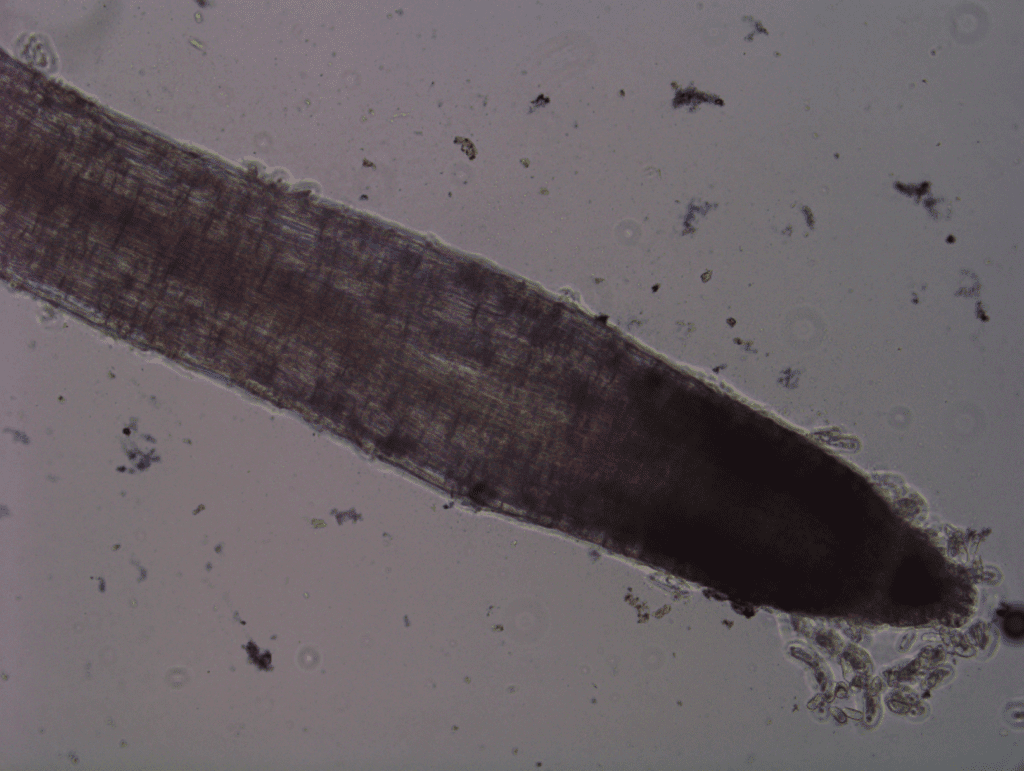
Dr. James White and his research team at Rutgers University have observed algae cells filled with bacteria in the rhizosphere and inside root hairs. Here’s Dr. White’s interpretation of the results:
Live chlorella carry their own bacterial endophytes that are delivered directly into plant roots, resulting in improved plant growth and nutrition. In a sense, live algae become a type of hidden cover crop in soil around plants, providing plants with a continuous supply of bacteria for the rhizophagy cycle.

Cover crops all provide microbes/endophytes to crop plants. The difference here is that the algae cells go right to the root tip of plants, where endophytes are delivered. It is another way to achieve healthy soils and fertilize crops in a sustainable way.
To test whether mixotrophic chlorella — those capable of heterotrophic feeding — could be a more effective biostimulant than generic (autotrophic) chlorella, Dr. White’s team also tested the growth of seedlings on agarose in petri dishes. This is an artificial system, but it has a purity advantage: growth is not influenced by soil quality or weather — just the applied biostimulant.
The team compared the effects of four biostimulants on grass, tomato and clover seedlings: 1) mixotrophic chlorella 2) generic chlorella from the same strain but not grown using the proprietary method that activates heterotrophic metabolism, 3) mixotrophic algae broth (growth medium) that contains plant growth promoters, and 4) a commercially available, American-made chlorella broth that is marketed as a biostimulant. A combination of growth measures (germination; stem, root and root-hair development; leaf expansion) were documented for each of the three plants, and the researchers found that mixotrophic chlorella performed better than generic chlorella.
The production of mixotrophic chlorella uses no commercial or laboratory gene-altering techniques, so there is no genetic modification. The heterotrophic pathway is present in green algae; it is merely activated to produce mixotrophic chlorella.
University studies of live green algae have found that their use allows reduction or elimination of chemical fertilizer, depending on the crop. Other biostimulants are generally used in addition to fertilizer, but a greater boost in grower income occurs when fertility input costs can be lowered.
Fertility effects
Dr. Freeze correctly pointed out that “the exact mechanisms for biostimulants promoting
fertility is uncertain.” What is certain is that microbial mass and diversity define fertility.
Soil testing with the Haney test, PLFA and genomics has shown that mixotrophic chlorella boosts soil respiration, organic matter, and bacterial and fungal biomass. This is to be expected, since similar effects of live chlorella on fertility have been described in published studies over the past five decades.
When used in the place of synthetic fertilizers, live green algae can — perhaps paradoxically — prevent wild algae bloom. Algae bloom happens when soluble nitrogen and phosphorus fertilizer reach groundwater and then flow into rivers and lakes, where it fertilizes wild algae. Algae cells, being particulate, do not penetrate deeply into soil and so do not reach the groundwater. Also, algal blooms are usually from cyanobacteria — so called “blue-green algae” — not Chlorella vulgaris.
Cyanobacteria can be dried and stored live and have also been shown to be effective live-cell biostimulants. However, they can produce toxins that cause neurological diseases. Simply mentioning cyanobacteria triggers alarms at the EPA, and their future in the biostimulant market is uncertain. Live chlorella is equally effective and is nontoxic.
Biostimulants have a place in the toolbox. At a recent seminar, Dr. White was asked what he would do first when switching to regenerative farming, and he advised using biostimulants early. Since biostimulants work immediately, they can help growers maintain yield during the transition. No-till, cover cropping and other regen ag practices kick in over a period of years; biostimulants provide support from day one.
George Taylor is a retired professor of medicine from the Medical University of South Carolina. He is the founder and Chief Science Officer of Enlightened Soil Corp.