Acres U.S.A.® Magazine
  • Articles
    • News
    • Ecological farming
      • Climate
      • Environmental Issues
      • Farm management & planning
      • Human health
    • Livestock
    • Farm
    • Crop
      • Crop management practices
        • Ag technology
        • Cover crops
        • Crop nutrition
          • Crop protection
          • Diseases
        • Crops
        • Fruits
    • Soil
    • Opinion
  • Resources
    • Magazine
    • Online Learning
    • Newsletters
    • Free Articles
    • Blog
  • Magazine Issues
    • 2026
      • February 2026
      • January 2026
    • 2025
      • December 2025
      • November 2025
      • October 2025
      • September 2025
      • August 2025
      • July 2025
      • June 2025
      • May 2025
      • April 2025
      • March 2025
      • February 2025
      • January 2025
    • 2024
      • December 2024
      • November 2024
      • October 2024
      • September 2024
      • August 2024
      • July 2024
      • June 2024
      • May 2024
      • April 2024
      • March 2024
      • February 2024
      • January 2024
    • 2023
      • December 2023
      • November 2023
      • October 2023
      • August 2023
      • July 2023
      • June 2023
      • May 2023
      • April 2023
      • March 2023
      • February 2023
      • January 2023
    • 2022
      • December 2022
      • November 2022
      • October 2022
      • September 2022
      • August 2022
      • July 2022
      • June 2022
      • May 2022
      • April 2022
      • March 2022
      • February 2022
  • About Us
    • Our History
    • Our Staff
    • Contact Us
    • Community
      • Soil Health Primer Resources
  • Events
    • Eco-Ag Conference
    • Farm Weird Event
    • Viroqua On Farm Event
  • Subscribe
  • Login
  • Register
No Result
View All Result
  • Articles
    • News
    • Ecological farming
      • Climate
      • Environmental Issues
      • Farm management & planning
      • Human health
    • Livestock
    • Farm
    • Crop
      • Crop management practices
        • Ag technology
        • Cover crops
        • Crop nutrition
          • Crop protection
          • Diseases
        • Crops
        • Fruits
    • Soil
    • Opinion
  • Resources
    • Magazine
    • Online Learning
    • Newsletters
    • Free Articles
    • Blog
  • Magazine Issues
    • 2026
      • February 2026
      • January 2026
    • 2025
      • December 2025
      • November 2025
      • October 2025
      • September 2025
      • August 2025
      • July 2025
      • June 2025
      • May 2025
      • April 2025
      • March 2025
      • February 2025
      • January 2025
    • 2024
      • December 2024
      • November 2024
      • October 2024
      • September 2024
      • August 2024
      • July 2024
      • June 2024
      • May 2024
      • April 2024
      • March 2024
      • February 2024
      • January 2024
    • 2023
      • December 2023
      • November 2023
      • October 2023
      • August 2023
      • July 2023
      • June 2023
      • May 2023
      • April 2023
      • March 2023
      • February 2023
      • January 2023
    • 2022
      • December 2022
      • November 2022
      • October 2022
      • September 2022
      • August 2022
      • July 2022
      • June 2022
      • May 2022
      • April 2022
      • March 2022
      • February 2022
  • About Us
    • Our History
    • Our Staff
    • Contact Us
    • Community
      • Soil Health Primer Resources
  • Events
    • Eco-Ag Conference
    • Farm Weird Event
    • Viroqua On Farm Event
  • Subscribe
No Result
View All Result
Acres U.S.A.® Magazine
No Result
View All Result
Home Magazine features Eco-Farm

Photosynthesis and Atoms

Charles Walters by Charles Walters
May 1, 2024
in Eco-Farm
0
Photosynthesis and Atoms
0
SHARES
186
VIEWS
Share on FacebookShare on Twitter

Eco-Farm: An Acres U.S.A. Primer — Lesson 1: Photosynthesis, Part 2

Charles Walters

This is an excerpt from Charles Walters’ Eco-Farm — An Acres U.S.A. Primer, available from the Acres U.S.A. bookstore at bookstore.acresusa.com. Read more excerpts from this book using the category “Eco-Farm.”

5. Photosynthesis 

Here was a factor the great chemist hadn’t even considered. Men like Hales and Priestley didn’t work in the dark. They worked in sunlight or with the aid of candlepower, and they didn’t give the matter a thought. Yet here was the reality Ingenhousz discovered: plants kept in the dark would not purify the air. As a matter of fact, in the dark all plant parts damaged air much the same as did candles and mice. Moreover, certain parts of plants wouldn’t purify the air either. Roots wouldn’t. Old stems wouldn’t. Only leaves and young stems with green coloring seemed to do this job. Green coloring? The equation seemed to get more complicated as man’s puny mind expanded itself. First air, now green coloring seemed to walk hand in hand with that air purification task. 

Once this door had been kicked open, it became more difficult to overlook contributing factors—no matter how strange—in the Creator’s handiwork. At each step along the way some investigator had a vision of what was happening. If plants didn’t get their food from the soil as a finished product, then plants—quite unlike animals—manufactured it. In the scientist’s lexicon the term of choice was synthesize. If this manufacturing chore was accomplished only in light, then photo (meaning light) and synthesize described the process. 

That is, photosynthesis described what, but not how. There were all those nagging questions. If, in Hale’s experiment, the water level only rose, it meant that plants not only gave up something (oxygen), they also consumed something else. After all, those mint plants eventually died. Did they exhaust what they were taking from the air, possibly the same thing plants and animals were giving up? 

Mental acuity and sound reasoning suggested a balance in nature. But it took chemistry to answer how this balance was being maintained. Laboratory experiments said that of the various substances released by animals into the environment, carbon dioxide was the one plants needed to grow. Somehow the plants combined water with carbon dioxide to produce food called glucose. 

Glucose has 6 atoms of carbon, 12 atoms of hydrogen, and 6 atoms of oxygen—C6H12O6. Did the oxygen released from plant life come from the water or from the carbon dioxide? Students of agriculture will run across names such as Claude Louis Berthollet, Jean Senebier, Nicholas Theodore de Saussure as they watch the debate rage back and forth. All passed from the scene long before the question was answered, or the answer was explained. A great deal had to be learned about chemistry and the chemistry of life first, about inorganic and organic chemistry. 

6. Table of known elements 

Dmitri I. Mendeleyeff, the Russian chemist, first constructed his table of known elements hardly a hundred years ago. His insight into the Creator’s order was so great he supplied spaces where he believed an element should be to comply with the rhyme and reason of the supreme plan. That table still stands. The blank spots have been filled in. And the Periodic Chart of the Elements has provided a simple and beautiful picture of the order in the universe where we live. It has done more. It has opened chemistry and physics as never before, and made it possible for lesser minds to understand the structure of the atom. Moreover, it has provided facts agronomists could not ignore. 

Each elemental entry features an inventory of information, starting with hydrogen, the lightest. 

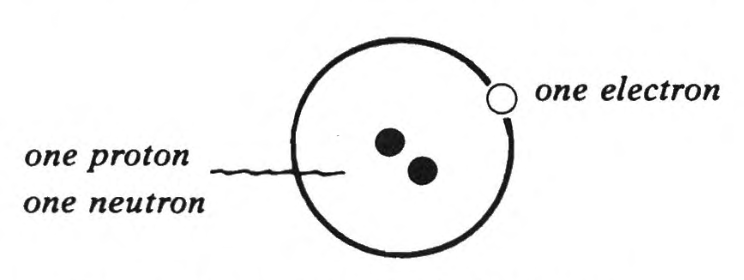
The atomic weight on a chart is almost always expressed as a single figure average when isotopes are involved. Isotopes are atomic brothers, so to speak, atoms of the same element which differ in weight. Hydrogen, as an example, has three isotopes. Protium hydrogen, the lightest form, has one proton and one orbiting electron. 
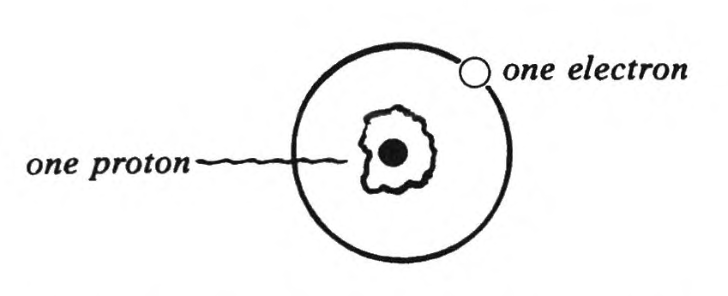
A black and white drawing of a circle with a black circle

Description automatically generated

A slightly heavier form is deuterium, sometimes called heavy hydrogen. 

The heaviest form of hydrogen is called tritium. 
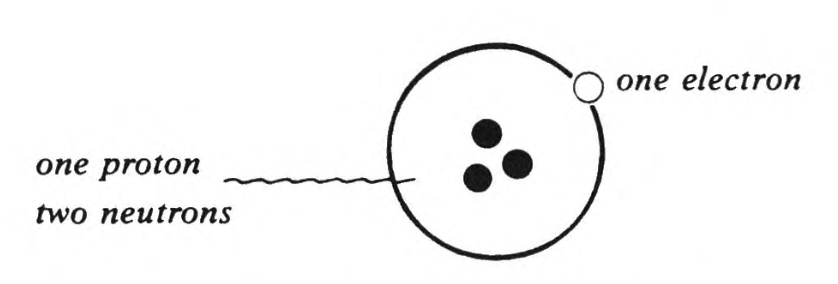
The average of these several weights is 1.00797. 

Each of the elements of life and death has an abbreviation symbol. You’ll see some on fertilizer bags, in farm literature, and even field them as slang in daily conversations. 

All the elements needed for life are listed as the first 53 of 92 natural elements on planet earth. Of these, all except one falls in order among the first 42, and all except two are listed among the first 34. There is also a natural order for abundance of elements, according to atomic weight and number. The heaviest elements are the rarest. Elements with even atomic numbers are more abundant than those with odd numbers in our universe. We don’t know why, nor can we even guess. 

The table itself is a veritable encyclopedia. There are series with missing electrons. As the eye moves from titanium to zinc, unfilled orbits change, an electron at a time. These transitions take place in natural order, moving across the table. There is also a vertical order to the table weight increasing as each element is listed under the one above. There are groups that figure in biology and signal the entrance and exit of disease. Henry A. Schroeder, M.D., possibly the world’s foremost authority on trace elements at the time of his death, wrote in The Trace Elements and Man, that a heavier metal can displace a lighter one in the same group in biological tissues and alter the reaction of the lighter one. He went on to say that tissues with an affinity for a certain element have an affinity for all other elements of the same group. Some elements are bone seekers. Some are thyroid seekers. All elements in two groups are liver and kidney seekers. 

In terms of plant life, it is too early to say which of the elements are essential, although college texts and agronomy manuals are fond of listing 14 or 16 or 18, sometimes more. 

If you look at any Periodic Chart of the Elements diagram, you will note a + symbol, designating a footnote, and the footnote says that atomic weights presented are reliable to ±3 in the last place. Other weights are reliable to ±1 in the last place. These are the isotopes. Isotopes are atoms with the same number of protons, but different number of neutrons. 

The notation 168O, 178O, 188O simply denotes three stable isotopes of oxygen. The small index 8 means there are 16 – 8 = 8 neutrons in the isotope 16; 17 – 8 = 9 neutrons in the isotope 17; and 18 – 8 = 10 neutrons in the isotope 18. 

This means oxygen 18 can be identified, just as in the case of those hydrogen forms illustrated earlier. It has more mass than, say, oxygen 16, and this mass can be identified by the mass spectrometer, a relatively modern instrument now available to scientific investigators. It was the development of this instrument, together with codified knowledge of the periodic table of elements, that finally served up an answer to the question: did the oxygen released from plant life come from the water or from carbon dioxide? Why is it so important to know the answer? 

7. Shared, rented, occupied 

There is a wonderful little book in print nowadays entitled The Lives of a Cell. In it Lewis Thomas, M.D., makes quite a point of the fact that the human system is not alone as an operating mechanism. We are shared, rented, occupied, he writes. The very interior of our cells are homesteaded by the mitochondria, small separate creatures that may or may not have entered early precursors of our eukaryotic cells, and stayed on for a few billion years. These little fellows are self sufficient sooners. They have their own DNA and RNA and replicate in their own way. Like the rhizobial bacteria on the roots of beans, they are symbionts. Except for them we couldn’t even drum a finger, much less think a thought. 

Plant life is not plant life as such either. It too is rented out and occupied. Little one cell individuals are everywhere. They are so small they are invisible to the naked eye. Except for powerful microscopes, we would never lay an eye on one, and yet plant and human life depend on them, suffer disease because of them, live and die according to how life and death are balanced among them. 

← Previous Intercropping Corn with Soy Next Translating Science and Ranching to One Another →
Tags: Eco-Farm
Charles Walters

Charles Walters

Next Post
Translating Science and Ranching to One Another

Translating Science and Ranching to One Another

  • Trending
  • Comments
  • Latest
The Most Important Livestock in Our Fields

The Most Important Livestock in Our Fields

July 1, 2024
Glyphosate Does What It’s Designed to Do — Kill

Glyphosate Does What It’s Designed to Do — Kill

February 19, 2025
The Take-Half, Leave-Half Fallacy

The Take-Half, Leave-Half Fallacy

July 1, 2025
White snakeroot

Toxic Forages?

September 1, 2025
We Don’t Need Another Bridge — We Need an Off-Ramp

We Don’t Need Another Bridge — We Need an Off-Ramp

3
Under One Roof

Under One Roof

3
A Rose By Any Other Name

A Rose By Any Other Name

2
Terra Preta’s Biological Advantage

Terra Preta’s Biological Advantage

2
Don’t You Dare Disparage Sugar!

Don’t You Dare Disparage Sugar!

February 3, 2026
February 2026 • Issue #656

February 2026 • Issue #656

February 1, 2026
Fungal Exchange Capacity

Fungal Exchange Capacity

February 1, 2026
ECO-MEETINGS

ECO-MEETINGS

February 1, 2026

Recent News

Don’t You Dare Disparage Sugar!

Don’t You Dare Disparage Sugar!

February 3, 2026
February 2026 • Issue #656

February 2026 • Issue #656

February 1, 2026
Fungal Exchange Capacity

Fungal Exchange Capacity

February 1, 2026
ECO-MEETINGS

ECO-MEETINGS

February 1, 2026

About ACRES USA

Acres U.S.A.® Magazine

Acres U.S.A.® is North America’s oldest publisher on production-scale organic and regenerative farming. For more than 50 years, our mission has been to help farmers, ranchers and market gardeners grow food profitably and sustainably, with nature in mind.

Visit Our Advertisers

Magazine Issues

  • News
  • 2025
    • June 2025
    • May 2025
    • April 2025
    • March 2025
    • February 2025
    • January 2025
  • 2024 Articles
    • December 2024
    • November 2024
    • October 2024
    • September 2024
    • August 2024
    • July 2024
    • June 2024
    • May 2024
    • April 2024
    • March 2024
    • February 2024
    • January 2024
  • December 2023
    • December 2023
    • November 2023
    • October 2023
    • August 2023
    • July 2023
    • June 2023
    • May 2023
    • April 2023
    • March 2023
    • February 2023
    • January 2023
  • December 2022
    • November 2022
    • October 2022
    • September 2022
    • August 2022
    • July 2022
    • June 2022
    • May 2022
    • April 2022
    • March 2022

Contact Acres U.S.A

  • Contact Us
  • About Us
  • Advertise With Acres U.S.A.
  • My Subscription

Learn

  • Resources
  • Events
  • Magazine
  • Newsletters
  • Free Articles
  • Webinars
  • Online Courses
  • Bookstore

Our All Socials

Follow With Us...

  • My account
  • News
  • Ecological farming
  • Refund and Returns Policy
  • Privacy & Policy

© 2024 Acers USA Magazine

Welcome Back!

Login to your account below

Forgotten Password? Sign Up

Create New Account!

Fill the forms below to register

All fields are required. Log In

Retrieve your password

Please enter your username or email address to reset your password.

Log In
No Result
View All Result
  • HOME
  • ARTICLES
    • News
    • Farm
    • Ecological farming
    • Livestock
    • Crop
      • Crop management practices
      • Cover crops
      • Crop nutrition
      • Crop protection
      • Crops
      • Ag technology
    • Soil
    • Opinion
  • RESOURCES
    • Magazine
    • Online Learning
    • Newsletters
    • Blog
    • Free Articles
  • MAGAZINE ISSUES
    • 2025
      • June 2025
      • May 2025
      • April 2025
      • March 2025
      • February 2025
      • January 2025
    • 2024
      • December 2024
      • November 2024
      • October 2024
      • September 2024
      • August 2024
      • July 2024
      • June 2024
      • May 2024
      • April 2024
      • March 2024
      • February 2024
      • January 2024
    • 2023
      • December 2023
      • November 2023
      • October 2023
      • August 2023
      • July 2023
      • June 2023
      • May 2023
      • April 2023
      • March 2023
      • February 2023
      • January 2023
  • ABOUT US
    • Our History
    • Our Staff
    • Contact Us
    • Community
      • Soil Health Primer Resources
  • EVENTS
    • Eco-Ag Conference
    • On-Farm Viroqua Event
    • Farm Weird
  • SUBSCRIBE
  • Login
  • Sign Up
  • Cart

© 2024 Acers USA Magazine

Are you sure want to unlock this post?
Unlock left : 0
Are you sure want to cancel subscription?