
Acres U.S.A.® Magazine
  • Articles
    • News
    • Ecological farming
      • Climate
      • Environmental Issues
      • Farm management & planning
      • Human health
    • Livestock
    • Farm
    • Crop
      • Crop management practices
        • Ag technology
        • Cover crops
        • Crop nutrition
          • Crop protection
          • Diseases
        • Crops
        • Fruits
    • Soil
    • Opinion
  • Resources
    • Magazine
    • Online Learning
    • Newsletters
    • Free Articles
    • Blog
  • Magazine Issues
    • 2026
      • February 2026
      • January 2026
    • 2025
      • December 2025
      • November 2025
      • October 2025
      • September 2025
      • August 2025
      • July 2025
      • June 2025
      • May 2025
      • April 2025
      • March 2025
      • February 2025
      • January 2025
    • 2024
      • December 2024
      • November 2024
      • October 2024
      • September 2024
      • August 2024
      • July 2024
      • June 2024
      • May 2024
      • April 2024
      • March 2024
      • February 2024
      • January 2024
    • 2023
      • December 2023
      • November 2023
      • October 2023
      • August 2023
      • July 2023
      • June 2023
      • May 2023
      • April 2023
      • March 2023
      • February 2023
      • January 2023
    • 2022
      • December 2022
      • November 2022
      • October 2022
      • September 2022
      • August 2022
      • July 2022
      • June 2022
      • May 2022
      • April 2022
      • March 2022
      • February 2022
  • About Us
    • Our History
    • Our Staff
    • Contact Us
    • Community
      • Soil Health Primer Resources
  • Events
    • Eco-Ag Conference
    • Farm Weird Event
    • Viroqua On Farm Event
  • Subscribe
  • Login
  • Register
No Result
View All Result
  • Articles
    • News
    • Ecological farming
      • Climate
      • Environmental Issues
      • Farm management & planning
      • Human health
    • Livestock
    • Farm
    • Crop
      • Crop management practices
        • Ag technology
        • Cover crops
        • Crop nutrition
          • Crop protection
          • Diseases
        • Crops
        • Fruits
    • Soil
    • Opinion
  • Resources
    • Magazine
    • Online Learning
    • Newsletters
    • Free Articles
    • Blog
  • Magazine Issues
    • 2026
      • February 2026
      • January 2026
    • 2025
      • December 2025
      • November 2025
      • October 2025
      • September 2025
      • August 2025
      • July 2025
      • June 2025
      • May 2025
      • April 2025
      • March 2025
      • February 2025
      • January 2025
    • 2024
      • December 2024
      • November 2024
      • October 2024
      • September 2024
      • August 2024
      • July 2024
      • June 2024
      • May 2024
      • April 2024
      • March 2024
      • February 2024
      • January 2024
    • 2023
      • December 2023
      • November 2023
      • October 2023
      • August 2023
      • July 2023
      • June 2023
      • May 2023
      • April 2023
      • March 2023
      • February 2023
      • January 2023
    • 2022
      • December 2022
      • November 2022
      • October 2022
      • September 2022
      • August 2022
      • July 2022
      • June 2022
      • May 2022
      • April 2022
      • March 2022
      • February 2022
  • About Us
    • Our History
    • Our Staff
    • Contact Us
    • Community
      • Soil Health Primer Resources
  • Events
    • Eco-Ag Conference
    • Farm Weird Event
    • Viroqua On Farm Event
  • Subscribe
No Result
View All Result
Acres U.S.A.® Magazine
No Result
View All Result
Home Magazine issues July 2025

Elevating Energy

Will Winter by Will Winter
July 2, 2025
in July 2025, Livestock, Pasture/forage health
0
Elevating Energy

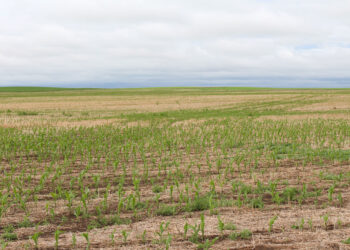
Low-Brix stubble is about all one can expect during the first year of trying to turn worn-out corn/soy fields into productive pasture.

0
SHARES
36
VIEWS
Share on FacebookShare on Twitter

Ensuring cattle have proper energy can turn even worn-out land and scraggly animals into a profitable enterprise

Will Winter

Over my many years in the livestock industry, I have found that the producers who are closest to their consumers — those who sell directly — are the ones who make the most profit per acre. Cow-calf producers unfortunately don’t fall into this category. I think this is quite unfair. They do all the heavy lifting — finding and curating the bulls, finding the maternal cows, doing the breed-up, caring for calves for months — everything, really. It’s hard work and very risky! 

But when it comes to dollars per acre, they often make the least. All too often, these animals are dumped for a pittance at the sale barn, or given away to some commodity industry, which is the lowball way to sell livestock. It’s an honest living, don’t get me wrong — but it’s just not where the ideal profits are. 

It’s also pretty much universally true that these cow-calf producers usually get by with the lowest-quality forages, since they are not fattening. Too many producers at this level don’t realize they could learn how to create good, if not great, pastures and therefore make a great living. Developing high-Brix, nutrient-dense forages is very possible. You can go from worn-out, low-production pastures and fields to higher levels of production and profit. You can start fattening cattle more quickly and economically.

Believe it or not, this young Midwestern grazier is standing in what was recently biologically dead corn/soy ground. This is a brand-new biodiverse pasture that will grow livestock.

Energy is virtually aways the limiting factor in production. I say “virtually” because protein is occasionally the thing that’s missing, but the key factor is almost always energy — i.e., carbohydrates. No matter how you slice it — average daily gain (ADG), cost of gain (COG), return on investment (ROI), or pounds or dollars per acre — I believe increasing energy is the most important improvement you can make. 

I was recently consulting for a young family in the Midwest who had just acquired new land that had been in corn and beans for probably 100 years. It was toxic and tired out. We wanted to convert it to pasture so we could extend their existing grass-based cattle farm. We needed to get it productive again, but we didn’t have any money for a true fertilizer program. Even if they did have the money for big fertilizer applications, I virtually never recommend that route. 

In their case particularly, though, it had to be organic, very inexpensive, and something they could do without special equipment or lots of labor. They also didn’t want to spend years getting there. Here’s the plan we made and implemented.

Year One

We knew we would be sacrificing some time and money the first year. That meant not putting any livestock at all on the new ground. The only thing we did was spray it heavily with a biological stimulant and (perhaps a bit too early!) a complex seed cocktail consisting of warm- and cool-season grasses, legumes and brassicas. 

A sprayer is an indispensable tool for a regenerative farmer these days — not for -cides but for lifegiving biological and nutritional amendments.

Not every program works as intended, though, and this was such a case. The land was so toxic it couldn’t even grow a batch of weeds! We only got a few scarce, scraggly weeds less than two feet tall. They mowed these down with a sickle-bar; as pitiful as it was, we wanted to get the biomass on the ground where it could compost and do some good.

Year Two

Wonderful spring rains produced unbelievable weeds that were six feet tall. The “problem” was that it was just weeds — burdock, thistles, pigweed, giant ragweed and the like. Sadly, the highest Brix on those plants was a pathetic 3! This won’t grow animals, but we didn’t want to completely lose another year, nor all that biomass. 

To speed things up, we also needed to add the magical alchemy from the rumen of animals, as well as their manure and urine. So, we put 43 scraggly mutt cattle — sale-barn quality — from a neighbor on the weedy fields. The animals were lost and invisible in the weeds in seconds, but they were starved, so they began munching away. They were overjoyed to get anything in their bellies. They were also seriously mineral starved and consumed three bags of mineral/vitamin mix within the first week. 

Due to the low Brix (low energy) we also gave the cattle 4 ounces of whole apple cider vinegar per head per day, along with 1 ounce of a fermented molasses product. We added these to a 100-gallon Rubbermaid tub every morning, then filled it with water and let them fight over it. By evening, it was always gone! 

These cattle grazed from early July until mid-November. When we pulled them out, they had somehow, magically, miraculously, turned into gorgeously plump animals ready to go to town. They had arrived averaging about 450-550 pounds and left between 1050 and 1200. This was a stunning average daily gain of nearly 4 pounds! In other words, we made a fantastic profit! On weeds! With junk cattle! 

Our secret weapon, simply put, was energy. The cattle received energy both from the ACV and from the super-energy of the fermented molasses. That year we sold them as 100 percent grassfed, which they definitely were, but they were what we call “grinders” — we didn’t cut steaks from them. Since they graded USDA Select 40 or better, we still sold them for about 70-80 percent of our top carcass price.

The moral of the story is that anyone with good grazing ability — especially those who have good grass genetics and 12+ Brix forages — can make a good living with cattle. Via the use of several energy supplements, we were able to achieve great results even with subpar forage and worn-out cattle — even by the second year of soil building. 

Year Three and Beyond

More good news — the owners are now rotationally grazing these same 80 acres, and it is a rich, biodiverse combination from many of the desirable seeds we planted in the beginning — the ones that had been so reluctant to grow the first year. The Brix levels are consistently over 6. The stocking density in an average rainfall year will already sustain 1,000-2,000 pounds per acre. Due to the increased grazing energy, we no longer need the fermented molasses, but the ACV is still quite helpful — both for increased herd health as well as improved digestive efficiency. We plan to continue that indefinitely — it’s a true moneymaker. 

It’s now impossible to know that this land was ever tilled. With proper grazing, the soil gets better every year. And best of all, these cow-calf producers are now making a great profit. 

Will Winter is a retired veterinarian, holistic herd health consultant and livestock nutritionist in Minnesota. Contact him at 612-756-1232, at willwinterdvm@gmail.com or through willwinter.com.


← Previous Make Meat Healthy Again! Next Delayed Grazing →
Tags: EnergySupplements
Will Winter

Will Winter

Will Winter, DVM, is the author of The Holistic Veterinary Handbook. He is the herd consultant for the Thousand Hills Cattle Company and raises hogs, sheep and goats at Lucky Pig Farms in Minnesota.

Next Post
ICE Raid at Omaha Meatpacking Plant Worries Farmers

ICE Raid at Omaha Meatpacking Plant Worries Farmers

  • Trending
  • Comments
  • Latest
The Most Important Livestock in Our Fields

The Most Important Livestock in Our Fields

July 1, 2024
Glyphosate Does What It’s Designed to Do — Kill

Glyphosate Does What It’s Designed to Do — Kill

February 19, 2025
The Take-Half, Leave-Half Fallacy

The Take-Half, Leave-Half Fallacy

July 1, 2025
USDA organic seal over American farm land

Losing Organic Farms

January 27, 2026
We Don’t Need Another Bridge — We Need an Off-Ramp

We Don’t Need Another Bridge — We Need an Off-Ramp

3
Under One Roof

Under One Roof

3
A Rose By Any Other Name

A Rose By Any Other Name

2
Terra Preta’s Biological Advantage

Terra Preta’s Biological Advantage

2
Roundup glyphosate herbicide referenced in debate over national security executive order

ROUNDUP PIE

March 5, 2026
What Does “Cutting Red Tape” Mean for Eco-Ag?

What Does “Cutting Red Tape” Mean for Eco-Ag?

March 4, 2026
March 2026 • Issue #657

March 2026 • Issue #657

March 1, 2026
Fungicides and Tillage and Bare Soil, Oh My!

Fungicides and Tillage and Bare Soil, Oh My!

March 1, 2026

Recent News

Roundup glyphosate herbicide referenced in debate over national security executive order

ROUNDUP PIE

March 5, 2026
What Does “Cutting Red Tape” Mean for Eco-Ag?

What Does “Cutting Red Tape” Mean for Eco-Ag?

March 4, 2026
March 2026 • Issue #657

March 2026 • Issue #657

March 1, 2026
Fungicides and Tillage and Bare Soil, Oh My!

Fungicides and Tillage and Bare Soil, Oh My!

March 1, 2026

About ACRES USA

Acres U.S.A.® Magazine

Acres U.S.A.® is North America’s oldest publisher on production-scale organic and regenerative farming. For more than 50 years, our mission has been to help farmers, ranchers and market gardeners grow food profitably and sustainably, with nature in mind.

Magazine Issues

  • News
  • 2025
    • June 2025
    • May 2025
    • April 2025
    • March 2025
    • February 2025
    • January 2025
  • 2024 Articles
    • December 2024
    • November 2024
    • October 2024
    • September 2024
    • August 2024
    • July 2024
    • June 2024
    • May 2024
    • April 2024
    • March 2024
    • February 2024
    • January 2024
  • December 2023
    • December 2023
    • November 2023
    • October 2023
    • August 2023
    • July 2023
    • June 2023
    • May 2023
    • April 2023
    • March 2023
    • February 2023
    • January 2023
  • December 2022
    • November 2022
    • October 2022
    • September 2022
    • August 2022
    • July 2022
    • June 2022
    • May 2022
    • April 2022
    • March 2022

Contact Acres U.S.A

  • Contact Us
  • About Us
  • Advertise With Acres U.S.A.
  • My Subscription

Learn

  • Resources
  • Events
  • Magazine
  • Newsletters
  • Free Articles
  • Webinars
  • Online Courses
  • Bookstore

Our All Socials

Follow With Us...

  • My account
  • News
  • Ecological farming
  • Refund and Returns Policy
  • Privacy & Policy

© 2024 Acers USA Magazine

Welcome Back!

Login to your account below

Forgotten Password? Sign Up

Create New Account!

Fill the forms below to register

All fields are required. Log In

Retrieve your password

Please enter your username or email address to reset your password.

Log In
No Result
View All Result
  • HOME
  • ARTICLES
    • News
    • Farm
    • Ecological farming
    • Livestock
    • Crop
      • Crop management practices
      • Cover crops
      • Crop nutrition
      • Crop protection
      • Crops
      • Ag technology
    • Soil
    • Opinion
  • RESOURCES
    • Magazine
    • Online Learning
    • Newsletters
    • Blog
    • Free Articles
  • MAGAZINE ISSUES
    • 2025
      • June 2025
      • May 2025
      • April 2025
      • March 2025
      • February 2025
      • January 2025
    • 2024
      • December 2024
      • November 2024
      • October 2024
      • September 2024
      • August 2024
      • July 2024
      • June 2024
      • May 2024
      • April 2024
      • March 2024
      • February 2024
      • January 2024
    • 2023
      • December 2023
      • November 2023
      • October 2023
      • August 2023
      • July 2023
      • June 2023
      • May 2023
      • April 2023
      • March 2023
      • February 2023
      • January 2023
  • ABOUT US
    • Our History
    • Our Staff
    • Contact Us
    • Community
      • Soil Health Primer Resources
  • EVENTS
    • Eco-Ag Conference
    • On-Farm Viroqua Event
    • Farm Weird
  • SUBSCRIBE
  • Login
  • Sign Up
  • Cart

© 2024 Acers USA Magazine

Are you sure want to unlock this post?
Unlock left : 0
Are you sure want to cancel subscription?