

News and Analysis on Developments in Agronomic Science
‘Talking’ tomatoes: Heirlooms Communicate Stress More Than Hybrids
The smell of cut grass is one of the defining fragrances of summer. Smells like that are one of the ways plants signal their injury.
Plants use volatile organic compounds (VOCs) for a variety of reasons: to help prepare their own defenses, to warn each other of threats, to recruit beneficial soil microbes that can help plants grow, and to alert insect predators that there is a pest chewing on that plant’s leaves. Studying the factors that influence VOC emissions, therefore, is key to understanding plant health.
Past studies have looked at how soil microbes like arbuscular mycorrhizal fungi or caterpillars or the variety of tomato plant can influence VOCs. In this new study by the University of Illinois, researchers studied the collective influence of all these factors on plant chemistry using four tomato varieties — two heirlooms (Amish Paste and Cherokee Purple) and two hybrids (Mountain Fresh and Valley Girl). The researchers compared the responses of untreated plants to those that had been exposed to AMF, caterpillars, or both.
They studied the VOCs by enclosing the eight-week-old tomato plants with an odor-blocking oven bag for an hour. They drew out the air around the plants and analyzed the different chemicals produced by each plant using gas chromatography-mass spectrophotometry.
The AMF and the caterpillars, separately, decreased the volatile emissions in all four varieties of tomato plants. Their effect when present together was minimal compared to the effects when either one was present.
Although it is unclear why the beneficial fungal associations decreased the VOCs, it is concerning that the plants were not as responsive to the caterpillars.
Furthermore, the hybrid tomatoes emitted lower quantities of volatiles compared to the heirloom tomatoes.
“Heirloom tomatoes — the big, juicy tomatoes we all love — are bred for flavor. Meanwhile, hybrids are grown for large-scale conventional production, which comes at a cost to the plant,” said Esther Ngumbi, an assistant professor at U of I.
“Our work suggests that we are compromising plant defenses through our breeding processes.”
The plants were also evaluated based on their growth both above the ground and in the soil. The researchers found that plants that had associations with the fungi had higher leaf biomass and more complex root structures.
“We found that, especially in Cherokee Purple, AMF may confer additional benefits, including enhanced growth and greater emission of VOCs,” researcher Erinn Dady said.
Surprisingly, the plants that were treated with caterpillars had greater plant growth.
“These plants had more biomass in both their roots and above the ground, which seems counterintuitive because they’ve actively been eaten. I would assume they would have less biomass,” Dady said. “It is possible that the caterpillars triggered a growth response, similar to how you prune a tree to make it produce new growth.”
“It’s possible that the plants decided that the number of caterpillars we were using were not sufficient to be considered a threat and that’s why they kept growing. It is also possible that the caterpillars weren’t hungry enough to cause enough damage,” Ngumbi said.
“There’s a lot going on behind the scenes that we don’t yet understand. For example, we are barely scratching the surface in understanding the role of different microbes,” Dady said. “People tend to think that plants are not intelligent, but our studies have shown that they are actively responding to the environment around them using chemistry.”
Root Microbes May Be the Secret to a Better Tasting Cup of Tea
You’d think the complex flavor in a quality cup of tea would depend mainly on the tea varieties used to make it. But a study in the journal Current Biology shows that the making of a delicious cup of tea depends on another key ingredient: the collection of microbes found on tea roots. By altering that assemblage, the authors showed that they could make good-quality tea even better.
“Significant disparities in microbial communities, particularly nitrogen metabolism-related microorganisms, were identified in the roots of tea plants with varying qualities through microbiomics,” said Tongda Xu of Fujian University in China. “Crucially, through the isolation and assembly of a synthetic microbial community from high-quality tea plant roots, we managed to notably enhance the amino acid content in various tea plant varieties, resulting in an improvement in tea quality.”
Improving the quality of tea through molecular genetic breeding methods is challenging. There’s interest in finding other ways to modify and enhance tea, perhaps including the use of microbial agents.
Earlier studies showed that soil microbes living in plant roots affect the way nutrients are taken up and used within plants. In the new study, the researchers found that the microbes in tea roots affected their uptake of ammonia, which in turn influenced the production of theanine, which is key for determining a tea’s taste.
They also saw variations in the microbes colonizing different teas. By comparing tea varieties with different amounts of theanine, they identified a set of microbes that looked promising for altering nitrogen metabolism and boosting theanine levels.

They next constructed a synthetic microbial community, dubbed SynCom, that closely mirrored the one found in association with a high-theanine tea variety called Rougui. When they applied SynCom to tea roots, they found it boosted theanine levels. The microbes also allowed Arabidopsis thaliana, a plant commonly used in basic biological studies, to better tolerate low nitrogen conditions.
“The initial expectation for the synthetic microbial community derived from high-quality tea plant roots was to enhance the quality of low-quality tea plants,” said study co-author Wenxin Tang. “However, to our astonishment, we discovered that the synthetic microbial community not only enhances the quality of low-quality tea plants but also exerts a significant promoting effect on certain high-quality tea varieties. Furthermore, this effect is particularly pronounced in low-nitrogen soil conditions.”
The findings suggest that synthetically produced microbial communities could improve teas, especially when grown in nitrogen-deficient soil conditions. Because tea trees require lots of nitrogen, the discovery could help to reduce the use of chemical fertilizers while promoting the quality of tea trees.
Red Nets Signal ‘Stop’ to Insect Pests, Reduce Need for Insecticides
Agricultural nets are another way to protect crops and reduce insecticide use, physically preventing insects from getting to crops. It makes sense to think that the most important feature of these nets would be the size of the holes in the mesh — the smaller the hole, the smaller the insect has to be to enter. However, a research team from the University of Tokyo has found that the net’s color may act as an even more important deterrent. Red nets are better at keeping away a common agricultural insect pest than typical black or white nets, according to the new study.
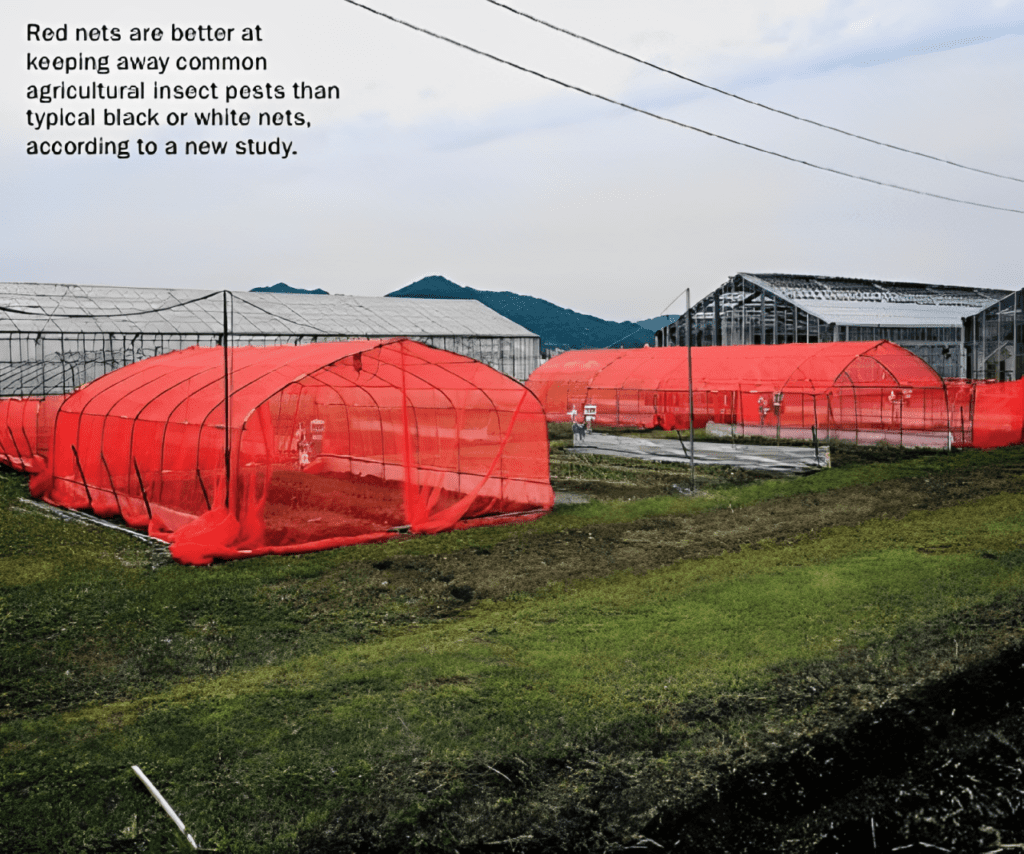
Researchers experimented with the effect of red, white, black, and combination-colored nets on deterring onion thrips from eating Kujo leeks, also called Welsh onions. In both lab and field tests, red nets were significantly better at deterring the insect than other colors. Also, in field tests, onion crops that were either partially or fully covered by red netting required 25-50 percent less insecticide than was needed for a totally uncovered field. The team contemplated whether the deterring effect on onion thrips might be due to these longer wavelengths stimulating certain receptors in the insects’ eyes.
Changing agricultural nets from black or white to red could help reduce pesticide use and the related negative impact it can have on the environment while supporting more sustainable and effective agricultural practices.
Urban Agriculture Has Carbon Footprint Six Times Larger Than Conventional Produce
A new University of Michigan-led international study finds that fruits and vegetables grown in urban farms and gardens have a carbon footprint that is, on average, six times greater than conventionally grown produce. However, a few city-grown crops equaled or outperformed conventional agriculture under certain conditions. Tomatoes grown in the soil of open-air urban plots had a lower carbon intensity than tomatoes grown in conventional greenhouses, while the emissions difference between conventional and urban agriculture vanished for air-freighted crops like asparagus.
“The exceptions revealed by our study suggest that urban agriculture practitioners can reduce their climate impacts by cultivating crops that are typically greenhouse-grown or air-freighted, in addition to making changes in site design and management,” said study co-lead author Jason Hawes.
“Urban agriculture offers a variety of social, nutritional, and place-based environmental benefits, which make it an appealing feature of future sustainable cities. This work shines light on ways to ensure that urban agriculture benefits the climate, as well as the people and places it serves.”
Most previously published studies have focused on high-tech, energy-intensive forms of UA — such as vertical farms and rooftop greenhouses — even though the vast majority of urban farms are decidedly low-tech: crops grown in soil on open-air plots. The study, published in the journal Nature Cities, compared the carbon footprints of food produced at low-tech urban agriculture sites to conventional crops. It used data from 73 urban farms and gardens in five countries and is the largest published study to compare the carbon footprints of urban and conventional agriculture.
On average, food produced through urban agriculture emitted 0.42 kilograms of carbon dioxide equivalents per serving — six times higher than the 0.07 per serving of conventionally grown produce. Inputs to the urban agriculture sites fell into three main categories: infrastructure (such as the raised beds in which food is grown, or pathways between plots), supplies (including compost, fertilizer, weed-blocking fabric, and gasoline for machinery), and irrigation water.
“Most of the climate impacts at urban farms are driven by the materials used to construct them — the infrastructure,” said co-lead author Benjamin Goldstein. “These farms typically only operate for a few years or a decade, so the greenhouse gases used to produce those materials are not used effectively. Conventional agriculture, on the other hand, is very efficient and hard to compete with.”
Mycorrhizal Inoculation Works Best Against Diseased Fields
Intensive use of fertilizers and pesticides on fields reduces biodiversity and pollutes the environment. There is therefore great interest in finding sustainable ways to protect yields without the use of agricultural chemicals. One example of alternative biologicals is mycorrhizal fungi — beneficial organisms that help plants acquire nutrients.
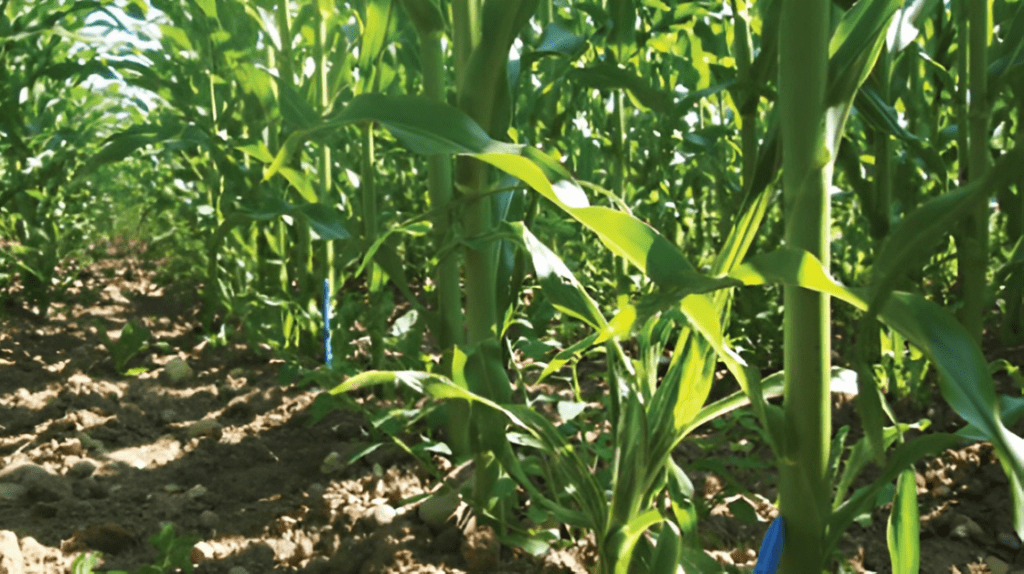
A team of researchers from the universities of Zurich and Basel has shown for the first time on a large scale that the application of mycorrhizal fungi in the field works. The fungi were mixed into the soil before sowing crops on 800 trial plots at 54 corn farms in northern and eastern Switzerland.
“On a quarter of the plots, the mycorrhizal fungi enabled up to 40 percent better yields. That’s huge,” said the study’s co-lead, Marcel van der Heijden.
But there’s a catch: on a third of the plots, the yield did not increase and in some cases even decreased. The research team was initially unable to explain why this happened. In their search for the cause, the researchers analyzed a variety of chemical, physical, and biological soil properties, including the biodiversity of soil microbes.
“We discovered that the inoculation functioned best when there were lots of fungal pathogens already in the soil,” said co-first author Stefanie Lutz. “The mycorrhizal fungi act as a kind of protective shield against pathogens in the soil that would weaken the plants.”
As a result, the normal yield can be maintained in fields where without mycorrhizal fungi there would have been losses. In contrast, mycorrhizal fungi had only a minor effect on fields that are not contaminated with pathogens.
“The plants there are strong anyway and grow excellently. The use of mycorrhizal fungi in such cases brings no additional benefits,” said the other first author, Natacha Bodenhausen.
The aim of the study was to be able to predict the conditions under which mycorrhizal inoculation works. “With just a few soil indicators — mainly soil fungi — we were able to predict the success of inoculation in nine out of 10 fields, and thus could also predict the harvest yield even before the field season,” said the study’s co-lead Klaus Schläppi. “This predictability makes it possible to target the use of the fungi in fields where they will work.”