
Acres U.S.A.® Magazine
  • Articles
    • News
    • Ecological farming
      • Climate
      • Environmental Issues
      • Farm management & planning
      • Human health
    • Livestock
    • Farm
    • Crop
      • Crop management practices
        • Ag technology
        • Cover crops
        • Crop nutrition
          • Crop protection
          • Diseases
        • Crops
        • Fruits
    • Soil
    • Opinion
  • Resources
    • Magazine
    • Online Learning
    • Newsletters
    • Free Articles
    • Blog
  • Magazine Issues
    • 2026
      • February 2026
      • January 2026
    • 2025
      • December 2025
      • November 2025
      • October 2025
      • September 2025
      • August 2025
      • July 2025
      • June 2025
      • May 2025
      • April 2025
      • March 2025
      • February 2025
      • January 2025
    • 2024
      • December 2024
      • November 2024
      • October 2024
      • September 2024
      • August 2024
      • July 2024
      • June 2024
      • May 2024
      • April 2024
      • March 2024
      • February 2024
      • January 2024
    • 2023
      • December 2023
      • November 2023
      • October 2023
      • August 2023
      • July 2023
      • June 2023
      • May 2023
      • April 2023
      • March 2023
      • February 2023
      • January 2023
    • 2022
      • December 2022
      • November 2022
      • October 2022
      • September 2022
      • August 2022
      • July 2022
      • June 2022
      • May 2022
      • April 2022
      • March 2022
      • February 2022
  • About Us
    • Our History
    • Our Staff
    • Contact Us
    • Community
      • Soil Health Primer Resources
  • Events
    • Eco-Ag Conference
    • Farm Weird Event
    • Viroqua On Farm Event
  • Subscribe
  • Login
  • Register
No Result
View All Result
  • Articles
    • News
    • Ecological farming
      • Climate
      • Environmental Issues
      • Farm management & planning
      • Human health
    • Livestock
    • Farm
    • Crop
      • Crop management practices
        • Ag technology
        • Cover crops
        • Crop nutrition
          • Crop protection
          • Diseases
        • Crops
        • Fruits
    • Soil
    • Opinion
  • Resources
    • Magazine
    • Online Learning
    • Newsletters
    • Free Articles
    • Blog
  • Magazine Issues
    • 2026
      • February 2026
      • January 2026
    • 2025
      • December 2025
      • November 2025
      • October 2025
      • September 2025
      • August 2025
      • July 2025
      • June 2025
      • May 2025
      • April 2025
      • March 2025
      • February 2025
      • January 2025
    • 2024
      • December 2024
      • November 2024
      • October 2024
      • September 2024
      • August 2024
      • July 2024
      • June 2024
      • May 2024
      • April 2024
      • March 2024
      • February 2024
      • January 2024
    • 2023
      • December 2023
      • November 2023
      • October 2023
      • August 2023
      • July 2023
      • June 2023
      • May 2023
      • April 2023
      • March 2023
      • February 2023
      • January 2023
    • 2022
      • December 2022
      • November 2022
      • October 2022
      • September 2022
      • August 2022
      • July 2022
      • June 2022
      • May 2022
      • April 2022
      • March 2022
      • February 2022
  • About Us
    • Our History
    • Our Staff
    • Contact Us
    • Community
      • Soil Health Primer Resources
  • Events
    • Eco-Ag Conference
    • Farm Weird Event
    • Viroqua On Farm Event
  • Subscribe
No Result
View All Result
Acres U.S.A.® Magazine
No Result
View All Result
Home Magazine issues March 2023

Your Freedom to Farm

Gabe Brown by Gabe Brown
August 26, 2024
in March 2023
0
Your Freedom to Farm

(Courtesy of Understanding Ag)

0
SHARES
8
VIEWS
Share on FacebookShare on Twitter

What is the real cost of subsidies?

Gabe Brown

One of the greatest joys I have had in my regenerative journey has been that of refusing to accept all the government subsidies that are so prevalent in production agriculture today. I can best describe that joy as a feeling of freedom. Freedom? (I can almost see farmers rolling their eyes as they read that.) Yes, freedom.

Why freedom? Farmers and ranchers are very proud individuals. They think of themselves as being very independent. They like to be in control. They believe that they make all of the decisions on their farm. However, in most instances, that is far from the truth.

I am going to catch a lot of flak for this statement, but here goes: The vast majority of farmers and ranchers are serfs. Here is the definition of the word “serf”: an agricultural laborer bound under the feudal system to work on his lord’s estate.

Let me explain why the word “serf” is applicable. Farming and ranching are very capital-intensive enterprises. Most farmers and ranchers need to borrow capital every year to purchase the inputs that will be used that year. To get their lender to agree to loan them that capital, the lender is going to insist that the farmer (borrower) takes part in the current USDA farm programs. The lender makes that stipulation to ensure the farmer receives those government subsidies.

Once this happens, the farmer is going to plant the crops that will guarantee them the highest return through federal crop insurance (revenue insurance). The rate of this revenue insurance is set by the government (using a ridiculous formula based on the previous year’s prices). The government also subsidizes a high percentage of the premium of that insurance policy.

The farmer (a serf) is now beholden to the government, giving up his/her freedom, and must plant that specific crop species within the constraints of that insurance policy. These constraints include many that are antithetical to healthy ecosystems.

Not only are these farmers now beholden to the government, but they are beholden to the taxpayers, as it is the taxpayer who foots the true costs. Many farmers adamantly tell me that taxpayers need to pay for these subsidies because they are getting cheap food. I would argue that cheap food is the result of oversupply, which, to a large extent, is the direct result of subsidies.

I can see the reaction of defiance on most of my farming colleagues’ faces as they read this. They don’t want to believe that they are obligated to anyone, let alone the government. Upton Sinclair said, “It is difficult to get a man to understand something when his salary depends on his not understanding it.”

Think about it.
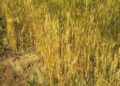
So, by not taking part in government subsidies, I am now able to grow crops that federal crop insurance will not insure. For example, for the past 15 years, my most profitable cash crop, every year, has been a fall-seeded blend of cereal rye, winter triticale, forage winter wheat, winter barley and hairy vetch. I seed it all together, combine it together, clean it as a blend and sell it for seed. My average net profit per acre for this blend has been $976. Yes, that’s net profit after all costs, including land costs.

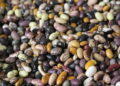
Another crop that is extremely profitable for me has been an oats, barley, spring pea and flax mix. I seed it all together, combine it together and then either sell it as livestock feed or clean it as a blend and sell it as a cover crop mix to those looking to address their farms’ resource concerns. My average net profit per acre for this crop has been $578.

Not taking part in government subsidies also allows me to be very adaptable. For example, 2020, 2021 and 2022 were the three driest years ever recorded on my ranch near Bismarck, North Dakota. While my neighbors continued to plant high-water-use crops such as corn, just so they could collect crop insurance, I switched to low-water-requirement crops such as barley or millet. I was able to combine these crops and make a profit.
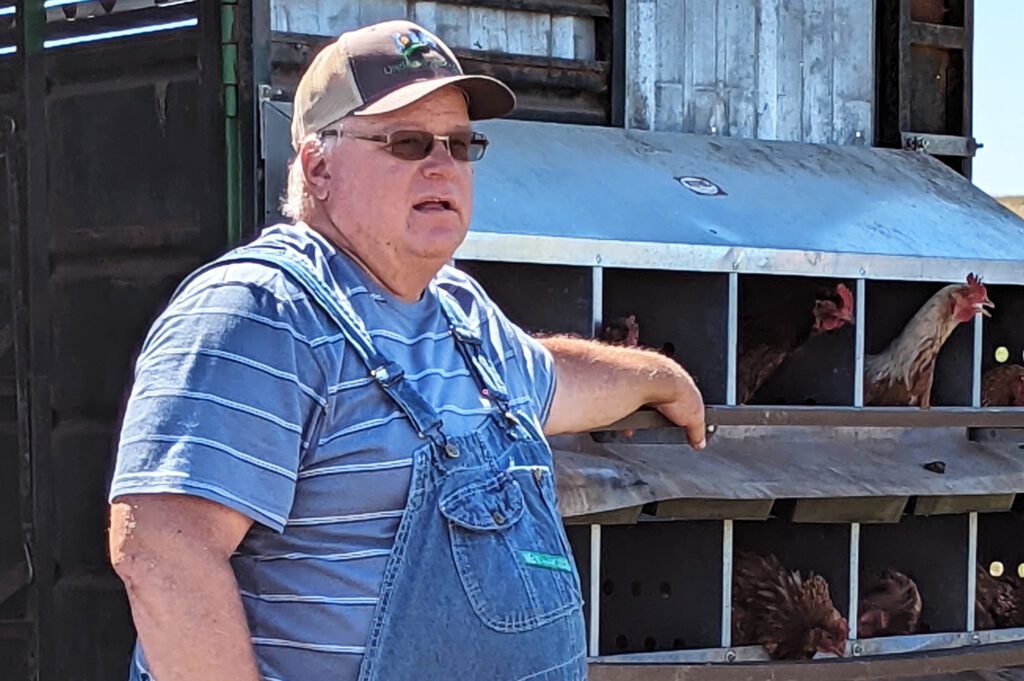
(Courtesy of Understanding Ag)

Perhaps the greatest benefit of not taking part in government programs is that by not being bound to those constraints, I am better able focus on my ranch’s resource concerns. I can plant and harvest any cash crop when I want. I can seed any cover crop whenever I want and can graze it whenever I want. This allows me to steward my ranch in a way that builds resiliency. These practices have allowed me to significantly lower my input costs while increasing profitability.

We must understand the importance of being adaptable and resilient. That is the only way we can help ensure that our children and grandchildren will be able to build on our legacy.

I want to make this clear — I used to take part in government programs, but as I went down my regenerative journey, I realized that taking part in those programs was actually holding me and my ranch back.

I am not writing this to belittle those who do. I am simply saying this: if you want to make small changes, change the way you do things; if you want to make major changes, change the way you see things.

When I started seeing the true cost of farm subsidies and not just the short-term payout, I rediscovered the value in “the freedom to farm.” My decision to “just say ‘no’” to farm subsidies was one of the very best decisions of my life.

Still, I value personal freedom, so it is up to each of us to look in the mirror and make our own decisions.

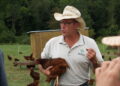
Gabe Brown farms in North Dakota and is a founding partner of Understanding Ag and of the non-profit educational organization Soil Health Academy. He is the author the best-selling book Dirt to Soil.


← Previous View from the Country Next Letters →
Tags: March 2023
Gabe Brown

Gabe Brown

Gabe Brown farms in North Dakota and is a founding partner of Understanding Ag and of the non-profit educational organization Soil Health Academy. He is the author the best-selling book Dirt to Soil.

Next Post

April 2023 • Issue #622

  • Trending
  • Comments
  • Latest
The Most Important Livestock in Our Fields

The Most Important Livestock in Our Fields

July 1, 2024
Glyphosate Does What It’s Designed to Do — Kill

Glyphosate Does What It’s Designed to Do — Kill

February 19, 2025
The Take-Half, Leave-Half Fallacy

The Take-Half, Leave-Half Fallacy

July 1, 2025
White snakeroot

Toxic Forages?

September 1, 2025
We Don’t Need Another Bridge — We Need an Off-Ramp

We Don’t Need Another Bridge — We Need an Off-Ramp

3
Under One Roof

Under One Roof

3
A Rose By Any Other Name

A Rose By Any Other Name

2
Terra Preta’s Biological Advantage

Terra Preta’s Biological Advantage

2
Don’t You Dare Disparage Sugar!

Don’t You Dare Disparage Sugar!

February 3, 2026
February 2026 • Issue #656

February 2026 • Issue #656

February 1, 2026
Fungal Exchange Capacity

Fungal Exchange Capacity

February 1, 2026
ECO-MEETINGS

ECO-MEETINGS

February 1, 2026

Recent News

Don’t You Dare Disparage Sugar!

Don’t You Dare Disparage Sugar!

February 3, 2026
February 2026 • Issue #656

February 2026 • Issue #656

February 1, 2026
Fungal Exchange Capacity

Fungal Exchange Capacity

February 1, 2026
ECO-MEETINGS

ECO-MEETINGS

February 1, 2026

About ACRES USA

Acres U.S.A.® Magazine

Acres U.S.A.® is North America’s oldest publisher on production-scale organic and regenerative farming. For more than 50 years, our mission has been to help farmers, ranchers and market gardeners grow food profitably and sustainably, with nature in mind.

Visit Our Advertisers

Magazine Issues

  • News
  • 2025
    • June 2025
    • May 2025
    • April 2025
    • March 2025
    • February 2025
    • January 2025
  • 2024 Articles
    • December 2024
    • November 2024
    • October 2024
    • September 2024
    • August 2024
    • July 2024
    • June 2024
    • May 2024
    • April 2024
    • March 2024
    • February 2024
    • January 2024
  • December 2023
    • December 2023
    • November 2023
    • October 2023
    • August 2023
    • July 2023
    • June 2023
    • May 2023
    • April 2023
    • March 2023
    • February 2023
    • January 2023
  • December 2022
    • November 2022
    • October 2022
    • September 2022
    • August 2022
    • July 2022
    • June 2022
    • May 2022
    • April 2022
    • March 2022

Contact Acres U.S.A

  • Contact Us
  • About Us
  • Advertise With Acres U.S.A.
  • My Subscription

Learn

  • Resources
  • Events
  • Magazine
  • Newsletters
  • Free Articles
  • Webinars
  • Online Courses
  • Bookstore

Our All Socials

Follow With Us...

  • My account
  • News
  • Ecological farming
  • Refund and Returns Policy
  • Privacy & Policy

© 2024 Acers USA Magazine

Welcome Back!

Login to your account below

Forgotten Password? Sign Up

Create New Account!

Fill the forms below to register

All fields are required. Log In

Retrieve your password

Please enter your username or email address to reset your password.

Log In
No Result
View All Result
  • HOME
  • ARTICLES
    • News
    • Farm
    • Ecological farming
    • Livestock
    • Crop
      • Crop management practices
      • Cover crops
      • Crop nutrition
      • Crop protection
      • Crops
      • Ag technology
    • Soil
    • Opinion
  • RESOURCES
    • Magazine
    • Online Learning
    • Newsletters
    • Blog
    • Free Articles
  • MAGAZINE ISSUES
    • 2025
      • June 2025
      • May 2025
      • April 2025
      • March 2025
      • February 2025
      • January 2025
    • 2024
      • December 2024
      • November 2024
      • October 2024
      • September 2024
      • August 2024
      • July 2024
      • June 2024
      • May 2024
      • April 2024
      • March 2024
      • February 2024
      • January 2024
    • 2023
      • December 2023
      • November 2023
      • October 2023
      • August 2023
      • July 2023
      • June 2023
      • May 2023
      • April 2023
      • March 2023
      • February 2023
      • January 2023
  • ABOUT US
    • Our History
    • Our Staff
    • Contact Us
    • Community
      • Soil Health Primer Resources
  • EVENTS
    • Eco-Ag Conference
    • On-Farm Viroqua Event
    • Farm Weird
  • SUBSCRIBE
  • Login
  • Sign Up
  • Cart

© 2024 Acers USA Magazine

Are you sure want to unlock this post?
Unlock left : 0
Are you sure want to cancel subscription?