

An excerpt from Megan Neubauer’s new book, Pick-Your-Own Farming: Free Yourself from Farmers Markets and Join the Agritourism Revolution, published by Acres U.S.A.
Editor’s note: We are very proud to have published a new book on agritourism by Megan Neubauer, who runs the pick-your-own Pure Land Farm in McKinney, Texas. The following is an excerpt from the first chapter.
Converting our farm from a market garden into an agritourism venture has had an overwhelmingly positive effect on both our business and our lives.
Agritourism solved every one of the problems we faced at the farmers market
- Pick-your-own farming is incredibly efficient. Produce is sold the moment it’s picked, so the customer gets to enjoy it at the absolute peak of freshness, and it does not require storage or transportation by the farm.
- The open hours are determined by the volume of produce ready to pick, which works out to four or five mornings a week during our picking season. This gives ample opportunity for most people to find a time that works for them to visit. If there’s plenty of produce ready to pick in the field, it’s easy to bring in more people by opening more spots, hours, or days on the fly.
- While we have not yet figured out how to control the weather, if a pick is rained out, it can be rescheduled for whenever the storm passes or the next day. It is not necessary to wait a whole week until the next opportunity for retail sales.
- Competition is low because there are very few other pick-your-owns in our area (although I don’t believe it would matter much if there were, considering the demand) and obviously, no produce from another farm to choose over ours at the pick-your-own. We are no longer in competition with grocery stores and commercial-scale industrial agriculture because what we sell is an experience they do not provide.
- Our success lies wholly within our hands and is not dependent on any larger organization to attract customers or promote us. We operate independently, enabling us to make the right decisions for our business without having to consider impacts to a partner or parent organization.
- We can set our open season around when the most profitable crops are ready.
- We don’t have to spend time away from farming to prepare orders, go to markets, or deliver to wholesale customers.
- Perhaps most consequential, there are more people who want the experience and wish to buy from us than we can supply.

Sharing the physical work of farming is good for your body. Growing, picking, prepping, and bringing produce to market is physically exhausting. To the market gardeners reading this, how many late nights have you spent hunched over after a backbreaking day of work, furiously bagging greens for market after your family has gone to bed? Or, after loading the truck, driving an hour, then unloading and thoughtfully arranging hundreds of pounds of tables, tents, and produce at the market in the wee dark hours before dawn, how many times have you lost a sale when a customer asked you if your wares were picked that morning and you snort laughed coffee through your nose? (Only once.) We’re moving as fast as we can.
There is still plenty of manual labor to support a pick-your-own farm, but delegating the harvesting and marketing tasks to the customer, frankly, is an immense physical relief. As of the 2017 USDA Census of Agriculture, the average age of an American farmer is 57.5. Fifty may be the new thirty, but there are limits to what we should put our bodies through to make them last the rest of our lives. We grow some 40,000 pounds of food every summer; if not for the pick-your-own model, we might pick up and put down those 40,000 pounds ten times before they were sold.
It takes less time overall. The labor it takes to bring produce to market is not only physically challenging but extremely time consuming. At the scale we were growing when we used to sell at farmers markets, which was smaller than our current scale, it would take one full-time employee about two days to pick, process, and market one to two thousand dollars’ worth of diversified produce. Now that we’re pick-your-own, we’ve reclaimed two whole days every week to spend growing more food.
Not every task will take less time in the pick-your-own model, but the total number of hours never comes close to the time needed to harvest, prep, and market the old way. Answering emails and messages, updating the website, and posting to social media are all daily chores that we spend more time on than we used to, an inevitable consequence of managing an experience for so many people. The distinction is that unlike most market gardening tasks, these can be performed from a comfy chair with a cold beverage.
The pick-your-own model saves time on a daily basis but can also have a more sweeping effect if you choose. We’ll get more into this later, but we have reduced our growing season from year-round to about five months of full-time farming for the two of us, freeing up the rest of the year to pursue other interests.
It is incredibly fulfilling. There is no better feeling than being thanked for your hard work. It used to happen at the farmers market on occasion, but it happens every single day at our pick-your-own. Moms who arrived with not a hair out of place just an hour earlier often reach the checkout tent soaked in sweat, wrangling a squealing crew of muddy children—some now missing their shoes—and say with absolute sincerity, “Thank you so much for letting us come to your farm! We had the best time.” Our pleasure, ma’am.
Not to get too touchy-feely, but something about the experience of being out in nature, sweating, harvesting fruits and vegetables seems to arouse our humanity. Everyone is a little kinder to each other at the farm, more patient, and helpful. We’re often treated with undue awe by our visitors, especially those who have tried their hands at gardening. But when you think about it, it is pretty marvelous to grow real food from tiny seeds to feed people. There is no one immune to the wonder of it, and it makes for a very rewarding way to spend your time.
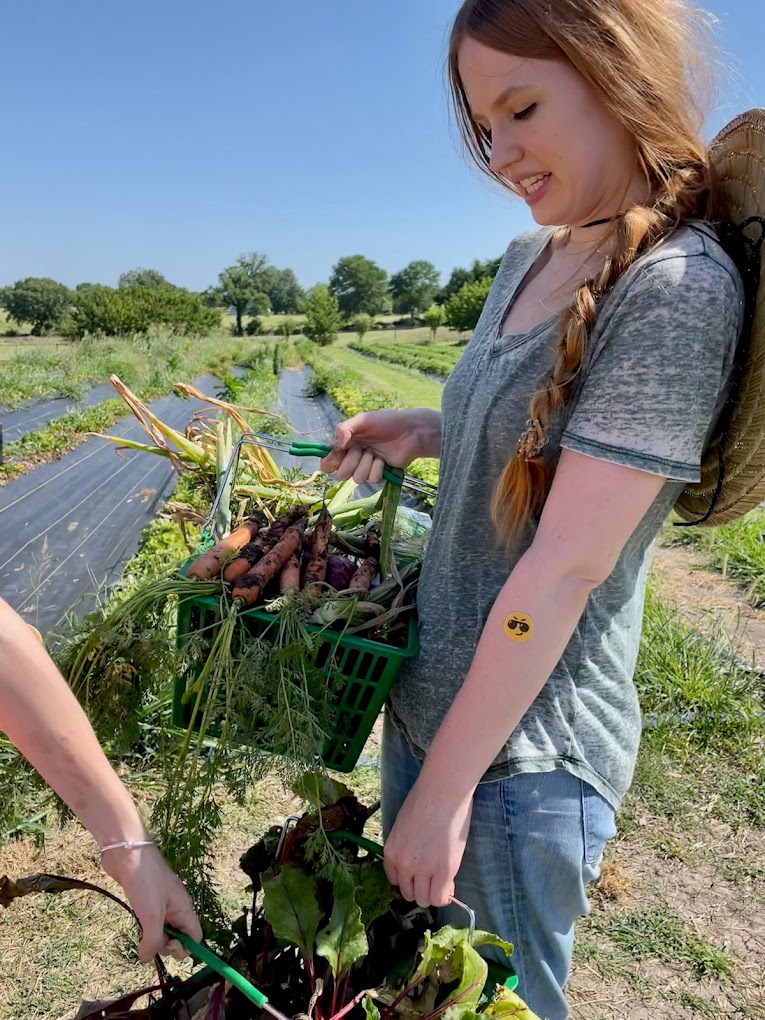
Younger generations and the planet benefit. It’s one thing to read an article about the value of regenerative agriculture, but quite another to experience it in a visceral, personal way. We spend a lot of time educating our guests on the importance of small farms like ours that use sustainable practices because every visitor is a potential new conscientious consumer, someone who might think twice about where the cheap meat from the grocery store came from and look for a local producer instead. We need way more of those people. The folks who choose to visit a pick-your-own farm are going far out of their way to opt into listening to what a farmer has to say. So, talk!
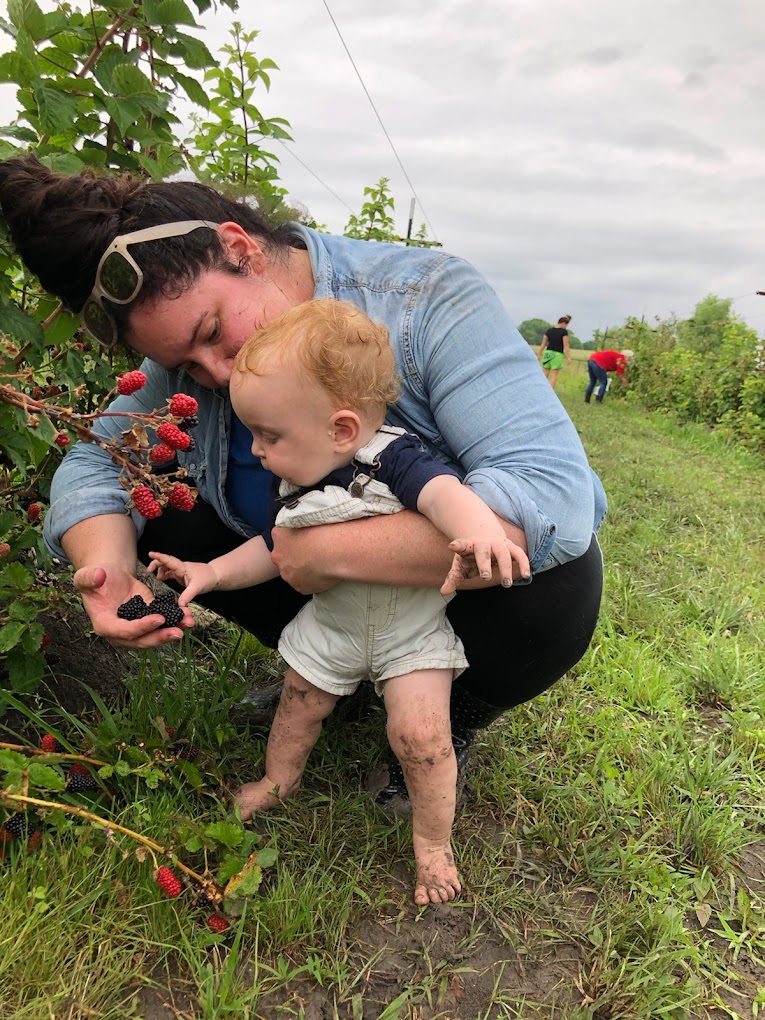
Children in particular benefit from exposure to gardens and farms, and most of our guests are families with kids. For many of the parents, let alone the kids, visiting us is the first time they’ve ever been to a farm. Children who experience hands-on learning in school gardens eat up to three times more fruits and vegetables than those without. We see it every day at the farm; a kid in the checkout line firmly gripping the carrot he worked so hard to pick, his Excalibur, saying “Can I eat it yet? Can I eat it?” And as soon as it has been weighed and washed, it’s down the hatch. Toddlers waddle up from the blackberry field with apologetic parents, their happy little faces stained purple from the eyes to the chin. We are planting seeds in their little brains, initiating the joy of healthy eating and respect for nature and the planet.
We make more money. Critically, it is profitable. The bottom-line effect of pick-your-own farming is not merely being able to sell the same amount with less work than going to the farmers market; it’s the ability to sell significantly more. Now that we can focus most of our efforts growing more food, our revenue has increased to a level that supports the two of us without having to work harder or get bigger. It’s a beautiful thing.
Pick Your Own Farming Megan Neubauer and her father Jack founded Pure Land Farm in 2012. After five years without a profit at farmers markets, they decided to convert Pure Land to a pick-your-own and quickly discovered the benefits of agritourism. By reallocating all the harvesting labor to visitors and because the produce is sold upon harvest, Megan and Jack have found they’re able to spend more time on the work of growing, allowing them to produce much more food than they could pick, prep for market, and sell by themselves. Upon encouraging other farmers to try pick-your-own, Megan and Jack ran into the same resistance over and over; most farmers are hesitant to allow the public onto their property, and they don’t know how to create a good guest experience. “I searched high and low for resources on how to run a pick-your-own when we started, but there’s just nothing out there, which is why I wrote the book,” said Megan. “I hope it will help other farmers see the potential in agritourism not only for profitability, but to push the entire local food movement forward by educating the public about regenerative agriculture through the power of fun, immersive experiences on farms.
Megan Neubauer will be presenting at the Acres U.S.A. Eco-Ag Conference, 4-7 December in Covington, Kentucky! You can also learn more about her and Pure Land Farm at purelandorganic.com.