Land use and the small water cycle are vital for understanding how the climate changes
If you were asked to point at the climate, where would you point? You could point up, where carbon gasses are concentrating, warming the atmosphere via the greenhouse effect. But you could also point down at the ground, and around at what grows on it — at the water cycle. When we damage the water cycle, we damage the climate, with resultant heating, droughts, floods and fires.
The land, as much as the atmosphere, is part of the climate, only in ways having less to do with carbon than with water. It’s less about physics than biology. It is one of the “legs” of what Mediterranean meteorologist Millan Millan calls a “two-legged climate”: one leg for CO2 and the greenhouse effect, and another leg for water cycles and the effects of land damage. It’s not a perspective you’ll encounter in mainstream media, but it plays out continuously all around you, and has been scientifically recognized for decades.
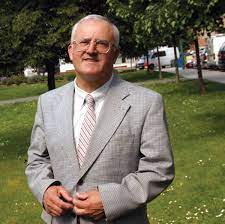
It’s important to understand that Millan didn’t invent this perspective. He encountered it. Over 53 years ago, he was working on a Ph.D. under renowned Canadian meteorologist Ted Munn when Munn handed him a book draft entitled Inadvertent Climate Modification: Study of Man’s Impact on Climate, a joint production of MIT and the Royal Swedish Academy of Sciences. Involving 30 scientists from 14 countries, it was one of the first broad scientific assessment of anthropogenic climate change in the modern climate age, and Munn was the coordinating author for a section called Climatic Effects of Man-made Surface Change. He asked Millan to check the concurrences between text, references and figures, an assignment that crystallized the two-legged concept for Millan, for it was clearly laid out in the book. Its opening paragraph, for instance, lists “Climatic Effect of Manmade Surface Change” as a “major area” for consideration, while under the heading “Man’s Activities Influencing Climate” there’s roughly equal treatment for subsections concerning both “Atmospheric Contamination” and “Land-Surface Alteration.”
“The idea was that both greenhouse gases and land use contribute to climate change,” Millan wrote me, speaking of “two rates of climate interaction and two basic mechanisms.”
For land change, the mechanism is both biological and hydrological, resulting from damage to the water cycle because of land disturbance. It occurs quickly in the place of disturbance, with the climatic effects radiating outward and upward from there. If you clearcut a forest, you immediately destroy the evapotranspiration in that place, and with it the cooling effects of the living trees. Within a few hours the temperature can rise upwards of 30 degrees Fahrenheit.
For greenhouse gases, the mechanism is physical via the absorption by greenhouse gases of outgoing long-wave radiation, now streaming upward from the sunbaked soil. The buildup of the gases occurs gradually and globally. The person sweating in the clearcut won’t feel it, but it subjects the entire planet to geological scales of change.
Water, Soil, Vegetation
Though a highly technical and practical scientist, steeped in physics and holding an engineer’s stamp, Millan turns poet when describing how soil, water and plants work together to maintain the land leg of climate, employing a tercet: water begets water, soil is the womb, and vegetation is the midwife.
What he means is that healthy landscapes seem to grow water. Water, of course, can’t just be created. There’s a set amount on earth, and though we think of it as spread amongst oceans, lakes, rivers and glaciers, it is also inside living things. Humans average 60 percent water, birds 75 percent and fish 70 to 84 percent, while plants and trees are almost entirely water — 80 to 90 percent. How much water a landscape can hold is therefore proportional to how much life is in the landscape (and soils) to hold it. This water, once held, is transpired by vegetation back into the atmosphere as vapor to make clouds and future rain, continuing the cycle, with the same water recycled over and over, up and down, across landscapes.
Though it was once thought that virtually all inland water came from large water bodies and large atmospheric circulations, it’s now realized that 40-60 percent of rain comes via this recycling, increasing the farther inland you go. It’s called the small water cycle, and in some places, like the Amazon, it is responsible for 80 percent of the rain. The more life in a landscape, the more water it can “milk” from wider oceanic circulations.
Soil is the womb because it holds the water. But here again, it’s really life holding the water: the rich belowground microbiological community, which makes the difference between compacted, water-repellent dirt and clumpy, absorptive soil. When it’s all working together, a very fortuitous feedback loop appears — the more carbon in the soil, the more water the soil can hold, and the more water in the soil, the more life it can sustain. According to the USDA, the top 6 inches of soil holds 20-27,000 gallons more water per acre per 1 percent increase in soil organic carbon: a virtuous cycle, “begetting” water, sequestering carbon and water, unseen and underground.
Vegetation is the midwife because it delivers the water to the atmosphere as vapor, where it rises, condenses and falls again as rain. But vegetation doesn’t only send up water vapor; it also delivers the seeds of future rain drops in the form of condensation nuclei. These are microscopic grains of various biota, such as bacteria, fungal spores and released vapors, all of which have uniquely low freezing thresholds, hastening the vapor’s condensation from vapor to ice and its subsequent return to land as rain. The vegetation sending up the water is also bringing it back down in another virtuous, self-amplifying cycle.
Sea Breeze at Ten, Rain at Three
Twenty years after reading Inadvertent Climate Modification, Millan was Director of the Mediterranean Center for Environment Studies, overseeing meteorological monitoring throughout the Mediterranean, when the European Commission asked him “to look into the matter of a perceived decline in summer storms around the Western Mediterranean Basin.” He had already been relaying the reports of local farmers experiencing a lack of summer rains, with rivers drying up and farms failing. It had finally gotten the attention of the higher-ups, and he was given the assignment to “do something about it.”
Remembering Munn’s advice to listen carefully to locals, Millan recalled when an old-timer passed along a local saying, “Cierzo a las siete, Solano a las diez, agua a las tres.” Roughly, “sea breeze in the morning at ten, rain in the afternoon at three.” The refrain was revealing. The sea breezes still came in off the sea each morning around ten, yet come afternoon, around three, the storms failed to materialize. The collapse, he reasoned, occurred in between.
Using traditional meteorological methods, he uncovered a key detail. When the morning winds came in, their water content was 14 grams per cubic meter of air — not enough to form clouds, which under those specific conditions would require a moisture level of 21 grams of water per cubic meter. The rest of the moisture — 7 grams per cubic meter — would have to come from the land.
It’s important to realize, as Millan knew, that the Western Mediterranean Basin was once lush, with vast oak forests, springs, and extensive coastal marshlands. That began to change two thousand years ago with the steady spread of the Roman Empire. Marshes were drained, forests cut, mountains mined. By the 16th century, much of the oak forests were gone, and lowland agriculture was spreading higher into the mountains, along with grazing and further land clearing.
Then came the industrial revolution, followed by modernity. In the 1950s, mass urbanization syphoned off yet more land as Spain industrialized. A booming tourism industry was particularly devastating for Spain’s coastal marshes, covering key links in the water cycle with parking lots and hotels. Then, in the early 1970s, due to unrest in the Middle East, petroleum infrastructure was moved across the Mediterranean from the Middle East to the shores of Spain, France and Italy, resulting in “intense industrialization of the coasts.”

Millan faced a basin-wide hydrologic system in the final stages of collapse. The midwives had not only been cut, but the womb desiccated. The climatological regime by which the oaks of old could live had long passed. In its place was a much dryer climate, supporting mostly pinyon and scrub. The soil was mostly eroded away, stretched in places over bare stone. A classic example of how badly things can go wrong is found in the nearby province of Almeria. In the 1850s its dense oak forests were clearcut to stoke the furnaces of lead smelters. The collapse to desert was so profound that the area eventually became a film locale for spaghetti westerns. Millan fears the entire Western Mediterranean Basin is at such a tipping point, on its way to becoming an Almeria-style desert, a point from which it is very difficult to return. “Once you hit rock,” he says, “you’re done.”
This roughly explains the loss of summer storms, but the process doesn’t end there. The moist layers streaming inland off the sea, rather than escaping the region via the chimney of a thunderstorm, float back out to sea, piling up over the water. Soupy, with powerful greenhouse gases like water vapor and ozone, they steadily warm the sea below, and by summer’s end the warmed sea begins supercharging coastal storms. Storm tracks that curve down over the Mediterranean on their way back up to central Europe also gather the warm, moist layers over the sea, becoming supercharged as well, contributing to the devastating floods in Eastern Europe.
Dueling Reports
Unfortunately, when Millan finished his analysis and began publishing his work and making presentations, he found himself at odds with the modelling community, which didn’t appreciate his insights as to how their models were off. When invited by the IPCC to contribute to their Third Assessment Report, scheduled for publication in 2002, he ran into the same conflict. The modelers there “questioned every result we presented,” describing a time of endless argument and report generation, which he eventually grew impatient with, leaving the IPCC. “I had 80 mouths to feed at CEAM and no time to argue,” he recalls.
While Millan had taken the two-legged climate to heart, using it to solve the mystery of the missing Mediterranean storms, the scientific bureaucracy took a different path, adopting an essentially one-legged understanding of climate. It’s not hard to trace the pathway, which began in 1979, when two very different climate reports came out.
The first was produced by the World Meteorological Organization in conjunction with its first World Climate Congress: A Conference of Experts on Climate and Mankind. As in the MIT report, the two legs are seen side by side, with the conference’s keynote address neatly summing them up: “We now change the radiative processes of the atmosphere and perhaps its circulation by emission of the products of our industrial and agricultural society. We now change the boundary processes between earth and atmosphere by our use of the land.”
From there we encounter repeated references to land change as a human cause of climate change. The first paper, for instance, under a discussion of “the impacts that are of the most relevance to the subject of climate,” places “the transformation of the land surface of the planet by forest clearance, the ploughing up of the steppes and great plains, land reclamation, etc.” at the top of the list.
The report’s next section, Influences of Mankind on the Climate System, includes a paper coauthored by none other than Ted Munn. Munn’s paper, Human Activities that Affect Climate, lays out, as in the MIT book eight years earlier, the two-legged approach. “The subject of this paper is clearly of very wide scope and accordingly presented in two main parts as follows: Part I, by Munn, covers the main human impacts on climate, excluding mankind’s interference in the atmospheric carbon dioxide (CO2) balance; and Part II by Machta deals comprehensively with those aspects of climatic change which are related to the carbon dioxide balance.”
There you have it: the two legs of climate. But another report soon followed that proved far more influential, effectively christening CO2 as the sole matter of climate. Called Carbon Dioxide and Climate: A Scientific Assessment, it’s otherwise known as the “Charney Report,” named after its lead author, the mathematician Jules Charney.
Charney led an ad hoc group of scientists in reviewing all the modeling on CO2 to date, essentially averaging the results, producing a slim, 22-page report. Unlike the WMO report, which, though comprehensive, offered no clear prediction regarding CO2, this report provided the closest thing yet to a firm prognostication. If CO2 concentrations double, it said, global temperatures will increase 3 degrees centigrade.
It was a bombshell. Media had an attention-grabbing headline and grabbed it, with petroleum interests and environmentalists lining up on either side of its conclusion, one attacking, the other defending. Suddenly the CO2 leg stood in the spotlight, with the land-change leg hidden in shadow, lost in the uproar.
You can imagine where this left the WMO and the other international organizations. The Americans had come out with a strong statement on CO2, while they were far from such scientific consensus. The CO2 train had pulled out of the station and there they were still sorting through the luggage of various uncertainties, often related to land change. What to do?
In a series of workshops and conferences held between 1980 and 1988, leading international climate organizations, such as the WMO (World Meteorological Associate), UNEP (United Nations Environmental Program) and ICSU (International Society of Scientific Unions), attempted to resolve their uncertainties around the CO2 leg and articulate their own consensus. Meanwhile, an organizational structure for international climate cooperation was needed, out of which two organizations were created.
One we’re all familiar with: the Intergovernmental Panel on Climate Change, or IPCC. The other, the International Geosphere Biosphere Program, or IGBP, is hardly a household name. The pesky land leg, with all its complex, difficult-to-model processes, was filed there, but in the context of different language. Rather than dealing with “climate change,” this group’s work was placed under the much vaguer term “global change.”
What happened to the two-legged approach to climate? The land leg proved “incommodious,” as Millan puts, so the two were split. The CO2 leg, championed by the IPCC, strode into the climate spotlight to save humanity, while the land-change leg, housed under the IGBP, remained behind for further research. There it was funded at 10 percent of the IPCC, ignored by the climate press and in 2015 shuttered.
The conventional climate community has yet to take up Millan’s insights, and the models don’t even see them. But the relationships he ascertained between land and atmosphere play out everywhere. Land is either contributing vapor and cloud nuclei to the atmosphere or it’s not. It’s either pulling heat out of the environment and sending it skyward as water vapor, or it’s baking in the sun, releasing long-wave radiation directly into the carbon gases hovering overhead, low in the atmosphere because of their weight.
Readers of Acres U.S.A. already know that in addition to growing food they are growing soil. According to Millan, they should add water to the list.
Rob Lewis is a poet, writer and activist and is the author of The Silence of Vanishing Things. He also produces the Substack newsletter “The Climate According to Life.”