

Farming was difficult in 2023, but we’ve learned to roll with change and to keep our expectations in line
2023 was not our favorite year of farming here in Wisconsin!
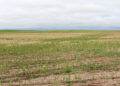
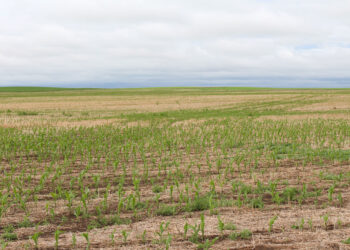
As the old saying goes, “Plant in dust, and in fall the bins will bust.” But that’s assuming it rains in June. We planted in dust, but it never rained — we had less than an inch of rain from early-May until mid-July. We planted in dust, cultivated in dust, and watched the corn not grow in dust. We farm organically, and there were no weeds growing in the dust, either.
It finally did rain in July, but by that point the corn stand was thin and short, and the weeds took off. For the conventional farmers who planted early, their crops looked good — at least from the road — but their corn was shorter, had bad spots, and had weeds, as the chemicals not only don’t work like they used to, but the dryness also affected them.

As I write this in October, at harvest time, farmers here are saying it looks better than they expected. I’ve heard it said that it takes less than 20 inches of rain to grow 200-bushel corn. We normally get 34, so it’s the timing of rain, the amount at one time, and the water infiltration (soil health) that makes the difference. We certainly didn’t have runoff this year, and the dry spring reduced farming compaction. Farmers are also optimistic because the year following a dry year is usually a really good one. And most have insurance, which provides a safety net for avoiding total disaster.
In this dry year, we didn’t use as many nutrients. They didn’t erode off, and the biology and worms slowed down, leaving a carryover for next year. Also, water moves up by capillary action, bringing nutrients with it from deeper in the soil that previous wet years had taken down.
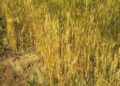
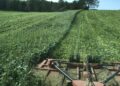
On our organic farm we grow corn one year and rye the next, fall-seeded after corn harvest. Then in early March we frost-seed a legume blend. We were concerned with our clover, as it started and then got really dry; we did plant the rye at lower rates, as the clover feeding the corn the next year is most important. The rye crop was good — it didn’t seem to care that it didn’t rain. It was clean and stood great. And the clover really looks good this fall. As my son would say, “That’s farming — you had better learn to live with changes and keep your expectations in line. There’s always next year.”
In terms of quality of the crop, nutrient density seems really good. You can push yields and get a big pile, but what’s in it? The disease and insect pressure also seems low, and you can certainly pick out the fields that have been farmed biologically and have been regenerated. I don’t think farmers realize how much disease and insects and soluble nutrients affect their crop — soluble nutrients are sure low in a drought. Maybe they do, and that’s why biotechnology and chemistry are normal farming practices. Many farmers say they can’t afford better fertilizers or grow cover crops or use compost, but they sure spend money on chemistry that doesn’t make their farm any better. A high-yielding national corn grower had his inputs listed in a magazine recently — he applied over 15 different nutrients and chemicals, in many trips over the fields.
The livestock farmers — especially the dairy ones, with their low prices and high costs — are taking the big hit this year. Feed is short; a lot of grass dried up a long time ago, and winter-stored feeds had to be fed. The good news is that last year provided extra, so there is good carryover in many areas.
Making the farming switch doesn’t come instantly or without risk. Hopefully this year will show farmers the difference between healthy, high-fertility fields and dead soil with chemistry. One can only hope.
Gary Zimmer — longtime Wisconsin farmer, founder of Midwestern BioAg, and author of The Biological Farmer and Advancing Biological Farming — will be presenting the final keynote address at this year’s Acres U.S.A. Eco-Ag Conference, 4-7 December in Covington, Kentucky.