Acres U.S.A.® Magazine
  • Articles
    • News
    • Ecological farming
      • Climate
      • Environmental Issues
      • Farm management & planning
      • Human health
    • Livestock
    • Farm
    • Crop
      • Crop management practices
        • Ag technology
        • Cover crops
        • Crop nutrition
          • Crop protection
          • Diseases
        • Crops
        • Fruits
    • Soil
    • Opinion
  • Resources
    • Magazine
    • Online Learning
    • Newsletters
    • Free Articles
    • Blog
  • Magazine Issues
    • 2026
      • February 2026
      • January 2026
    • 2025
      • December 2025
      • November 2025
      • October 2025
      • September 2025
      • August 2025
      • July 2025
      • June 2025
      • May 2025
      • April 2025
      • March 2025
      • February 2025
      • January 2025
    • 2024
      • December 2024
      • November 2024
      • October 2024
      • September 2024
      • August 2024
      • July 2024
      • June 2024
      • May 2024
      • April 2024
      • March 2024
      • February 2024
      • January 2024
    • 2023
      • December 2023
      • November 2023
      • October 2023
      • August 2023
      • July 2023
      • June 2023
      • May 2023
      • April 2023
      • March 2023
      • February 2023
      • January 2023
    • 2022
      • December 2022
      • November 2022
      • October 2022
      • September 2022
      • August 2022
      • July 2022
      • June 2022
      • May 2022
      • April 2022
      • March 2022
      • February 2022
  • About Us
    • Our History
    • Our Staff
    • Contact Us
    • Community
      • Soil Health Primer Resources
  • Events
    • Eco-Ag Conference
    • Farm Weird Event
    • Viroqua On Farm Event
  • Subscribe
  • Login
  • Register
No Result
View All Result
  • Articles
    • News
    • Ecological farming
      • Climate
      • Environmental Issues
      • Farm management & planning
      • Human health
    • Livestock
    • Farm
    • Crop
      • Crop management practices
        • Ag technology
        • Cover crops
        • Crop nutrition
          • Crop protection
          • Diseases
        • Crops
        • Fruits
    • Soil
    • Opinion
  • Resources
    • Magazine
    • Online Learning
    • Newsletters
    • Free Articles
    • Blog
  • Magazine Issues
    • 2026
      • February 2026
      • January 2026
    • 2025
      • December 2025
      • November 2025
      • October 2025
      • September 2025
      • August 2025
      • July 2025
      • June 2025
      • May 2025
      • April 2025
      • March 2025
      • February 2025
      • January 2025
    • 2024
      • December 2024
      • November 2024
      • October 2024
      • September 2024
      • August 2024
      • July 2024
      • June 2024
      • May 2024
      • April 2024
      • March 2024
      • February 2024
      • January 2024
    • 2023
      • December 2023
      • November 2023
      • October 2023
      • August 2023
      • July 2023
      • June 2023
      • May 2023
      • April 2023
      • March 2023
      • February 2023
      • January 2023
    • 2022
      • December 2022
      • November 2022
      • October 2022
      • September 2022
      • August 2022
      • July 2022
      • June 2022
      • May 2022
      • April 2022
      • March 2022
      • February 2022
  • About Us
    • Our History
    • Our Staff
    • Contact Us
    • Community
      • Soil Health Primer Resources
  • Events
    • Eco-Ag Conference
    • Farm Weird Event
    • Viroqua On Farm Event
  • Subscribe
No Result
View All Result
Acres U.S.A.® Magazine
No Result
View All Result
Home Magazine issues April 2023

Simple Yet Powerful

Jesse Wiser by Jesse Wiser
August 26, 2024
in April 2023
0
Simple Yet Powerful

A boomless sprayer applies a foliar application of compost extract on fall cover crops in southern Pennsylvania.

0
SHARES
12
VIEWS
Share on FacebookShare on Twitter

Growers can extract their own liquid amendments from bio-rich compost

Jesse Wiser

Awareness is growing in agricultural circles as to the importance and influence of soil microbiology in crop nutrition, disease and pest resistance, soil aggregation and water infiltration. Research exists and is increasing at all levels around methods to expand and diversify the microbial populations within soil ecosystems. While professional solutions may be sought, a low-cost, high-impact, self-driven process offers tremendous upside: the extraction of liquid biological amendments from microbiologically rich compost. 

Producing Biologically Rich Compost 
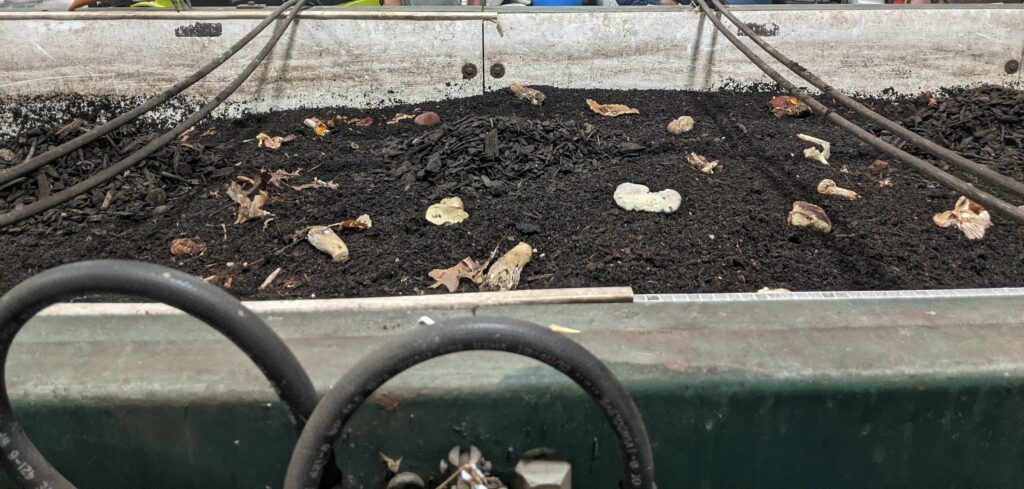
A continuous-flow-through vermicomposting system. Pre-composted materials are fed to the worms from above, and castings harvested from below. Additional fungi has been added to this batch to propagate within the vermicompost.

Matt Ball, who runs the composting program at North Carolina State University, defines composting as “managed aerobic decomposition.” That’s a broad definition for an extremely variable process, and the resulting material — compost — is far from homogenous, even if aerobic conditions are successfully maintained. Feedstock material, temperature, airflow, moisture and time are all variable factors that drive decomposition, and a wide range of outcomes are possible in terms of microbial content within materials generally called “compost.”

Specific composting methods exist to produce a microbiologically rich compost product. Perhaps the most versatile and efficient is vermicomposting. Among the roles of earthworms within the soil ecosystem is the inoculation of microbes via the worms’ digestive process; these microbes then multiply within the worms’ castings. Feeding organic materials — preferably already at least somewhat decomposed — to and through a highly concentrated worm population can exponentially multiply the biomass and diversity of plant-beneficial microbes. 

A recent study by Dr. Zack Jones of Aggrego Data entitled “The Vermi-Microbiome Project” analyzed a variety of vermicompost samples using DNA sequencing. Dr. Jones demonstrated a high level of bacterial biodiversity across all samples, regardless of feedstock and other factors. Well-represented bacterial genii included those responsible for the production of auxins, gibberellins and other plant growth- and health-promoting compounds. 
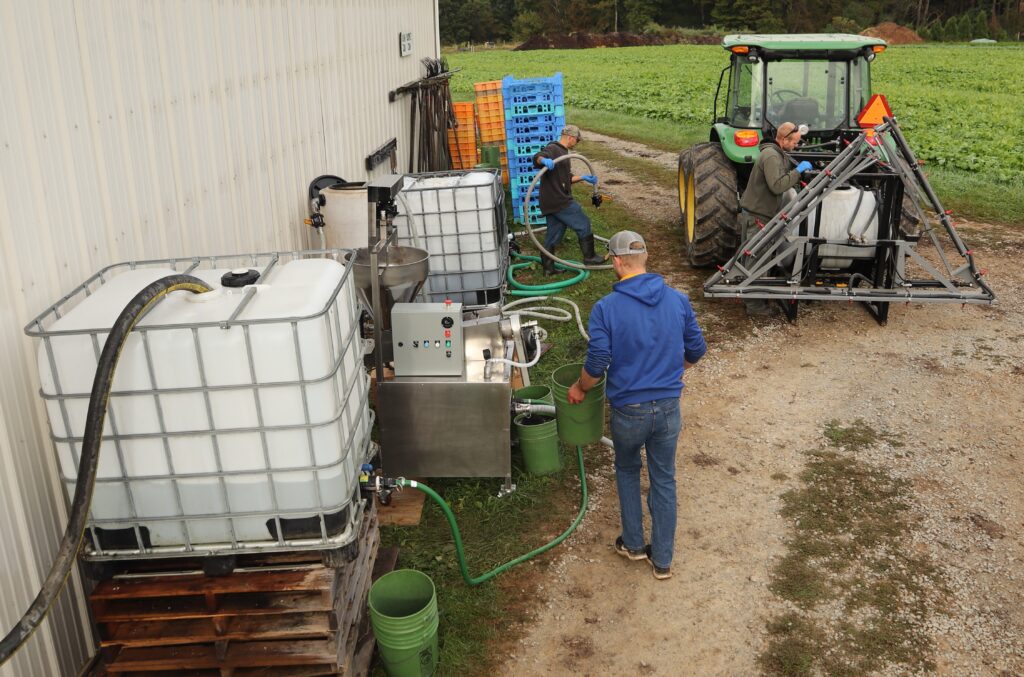
A sample setup for same-day extraction and application. From left: water source, extraction system, mixing system (for adding microbial foods), collection tank, application system.

If a fungal-dominant compost product is desired, the Johnson-Su bioreactor process is both simple and effective. Dr. David Johnson of New Mexico State University has developed an easily replicable, low-cost, low-labor method to control decomposition of carbon-dominant organic materials through static aeration and moisture control. (Earthworms are involved in this process as well, so it could be considered a derivative form of vermicomposting.) The resulting product contains a high level of beneficial fungi, which is often unachievable through other composting methods. The only downside to this process is the time commitment — it can take 9-12 months for the material within a bioreactor to completely decompose. 

Regardless of composting method, the microbiological quality of the resulting compost can be assessed prior to extraction. Samples can be sent to labs, such as those certified by Dr. Elaine Ingham’s Soil Foodweb School, or tested with simple onsite tools such as the microBIOMETER. Results from these tests can help guide decisions on the concentration and application rate of the liquid amendment to be extracted.

Extracting Liquid Compost Amendments

While there are many benefits of applying compost in solid form, extracting the microbiology into a liquid amendment can increase the efficiency and area of the application. It enables the grower to transfer the microbes directly into the soil — via infiltration or injection — or onto leaf surfaces via a foliar spray. The liquid solution will also contain soluble compounds already produced by the microbes. 

Before extracting the liquid amendments, it’s important to make sure the mineral content of the water source is suitable for microbiology. It may be necessary to use rainwater (which should also be tested) or to pre-treat the water through a filtration system. 
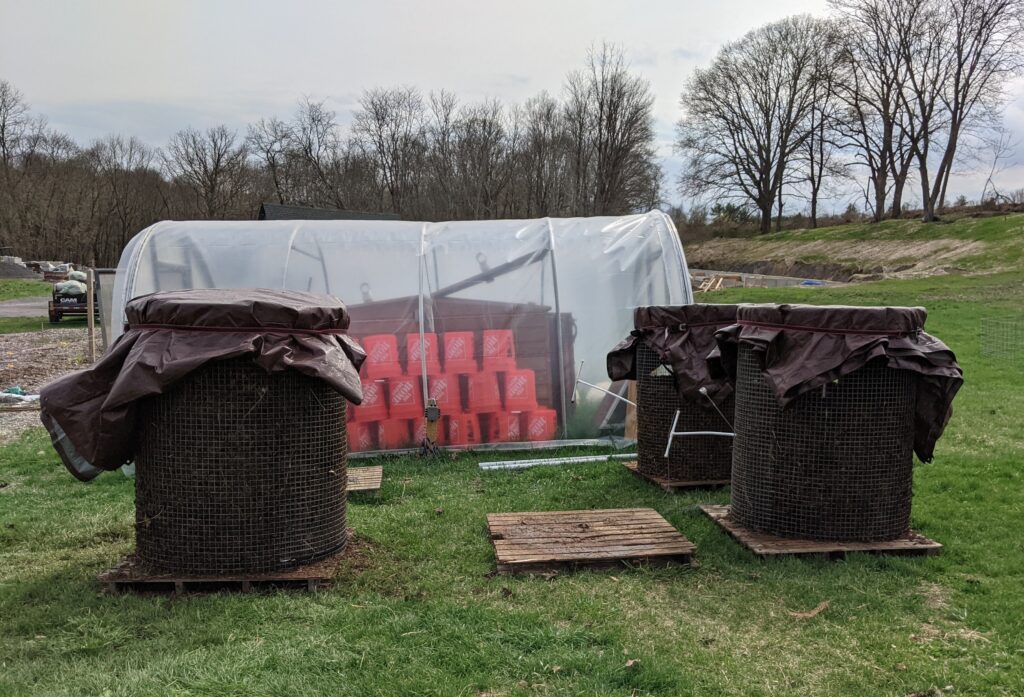
Johnson-Su bioreactors can be easily constructed from obtainable materials such as used pallets, hardware cloth, and landscape fabric.

Widely accepted terminology regarding liquid amendments has yet to be ironed out — perhaps it never will be — but it’s important to note the difference between what I’ll call “compost extract” and “compost tea.” The two are produced in crucially distinct manners. Compost extract is a direct liquid extraction from the solid compost. Microbes are held in a static condition within the solution — they maintain homeostasis, but the population remains constant. Because of this, compost extract can be stored for several days, or even weeks, before application. Note that it should be circulated on a daily basis until application to introduce enough dissolved oxygen to prevent the solution from turning anaerobic. 

Compost tea, on the other hand, is created by aerating the solution with bubbles of oxygen, which stimulates the microbes to multiply. This shortens the aerobic shelf life of the solution to a matter of hours; this means that compost tea must be made within a deliberate window prior to application. Compost tea is typically produced directly from the compost material; however, compost extract can be used to produce compost tea through a separate aerating process. For instance, an operator may wish to produce a large batch of compost extract and store it for several days, using it to produce one daily batch of compost tea at a time. 

An quick aside on compost leachate: Some composters mistakenly consider leachate — the liquid that collects and runs out of the bottom of a compost pile — to be “compost tea” and treat it as beneficial. This is incorrect, and potentially damaging, as it is most likely anaerobic and frequently contains high concentrations of pathogens and/or heavy metals. Please don’t make that mistake!

Microbial foods, such as blackstrap molasses, kelp powder and fish hydrolysate, can also be added to compost extract or compost tea, before or during application. Simeon Kleinsasser, a certified Soil Food Web soil consultant from New York’s Hudson Valley, mixes these foods into compost extract while filling his sprayer tank, likening it to “sending the microbes out to work with a lunch pail.” These foods help the introduced microbes establish themselves while also stimulating existing microbes within the soil or leaf surfaces. 

Applying Liquid Biological Amendments

Application of compost extract and/or tea will depend largely on the desired results. Broadacre applications will provide some benefit, but more specific application methods will yield more intentional results. Soil drenches and injections target the microbial ecosystem surrounding plant roots, while seed coating and root-drench applications prior to planting will import desired microbiology with the crop itself. Foliar sprays, which provide some of the most robust protection from pathogenic microbes, can be applied throughout the growing season. 
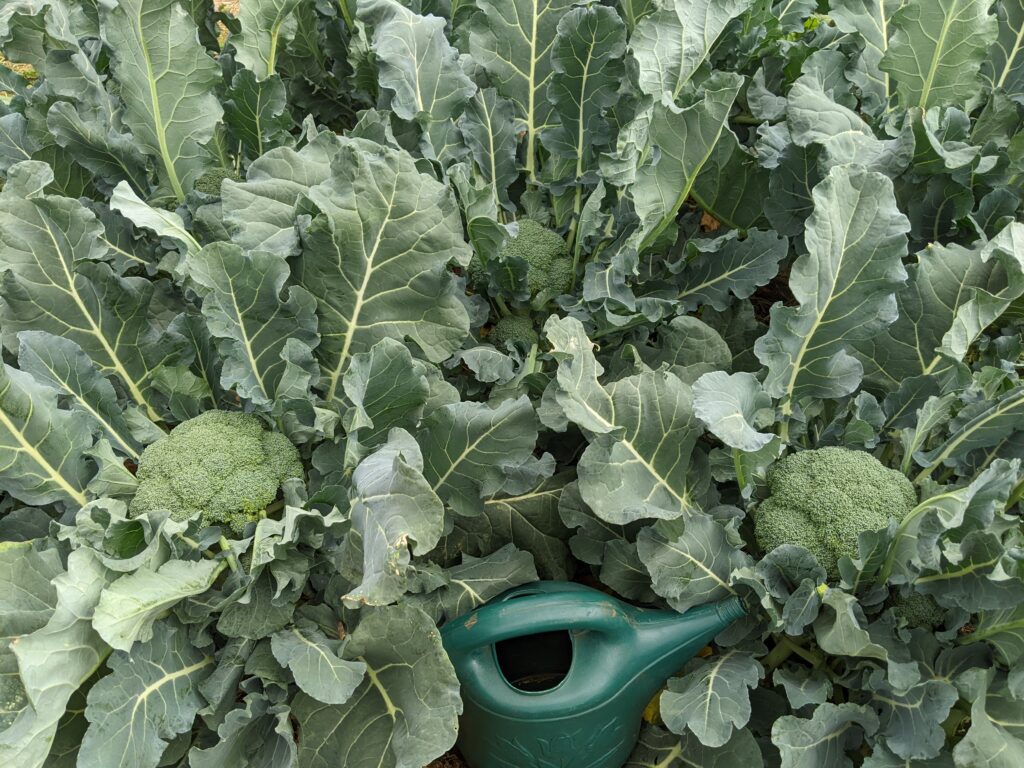
A single pre-planting soil drench of vermicompost extract was the only input used in growing these broccoli plants. Note size and health of heads and leaves – watering can included for scale.

Spray systems demand particular consideration. Many conventional sprayers are designed for chemical applications and contain features such as rotary pumps and smaller spray nozzles, which can damage the microbiology, especially when applied at high pressures. Diaphragm and centrifugal pumps are safer options. Microbial solutions should be applied at low pressure with larger spray tips to create a droplet, rather than mist, effect. 

Benefits of Self-production 

Beyond the biological impacts, there are several particular benefits to self-producing liquid compost amendments. Composting organic debris generated by the farm itself and/or sourcing local materials such as fall leaves and wood chips fosters a closed-loop recycling system while minimizing waste. Microbes native to these local materials are best adapted to local environments, and locally sourced organic materials tend to be easy and affordable to acquire. Economic and environmental costs of shipping, including paying for water weight, are eliminated in self-production. 

Cost savings are even more dramatic when compared to synthetic inputs. Jay Young, who produces compost extract at his 8,000-acre farm and ranch in western Kansas, estimates cost savings of $200,000 for 2022 alone without experiencing any decreases in yield per acre. With increasing prices of synthetic fertilizers, compost amendments will become increasingly economical — and could even generate an income stream of their own. 

Some biological knowledge or consultancy may be necessary to achieve the best results, as may a certain degree of trial and error to discover the best avenues to pursue for each situation within a highly variable process. However, the cost-effectiveness and simplicity of self-produced biological amendments makes this both a powerful and accessible tool for fostering healthy and abundant soil ecosystems. 

Jesse Wiser is the director of marketing and outreach for Hiwassee Products in Madisonville, Tennessee. Learn more at hiwasseeproducts.com.


← Previous No-till Vegetable Cover Crops Next Improving Vegetable Production →
Tags: April 2023
Jesse Wiser

Jesse Wiser

Jesse Wiser is the director of marketing and outreach for Hiwassee Products in Madisonville, Tennessee. Learn more at hiwasseeproducts.com.

Next Post
View from the Country

View from the Country

  • Trending
  • Comments
  • Latest
The Most Important Livestock in Our Fields

The Most Important Livestock in Our Fields

July 1, 2024
Glyphosate Does What It’s Designed to Do — Kill

Glyphosate Does What It’s Designed to Do — Kill

February 19, 2025
The Take-Half, Leave-Half Fallacy

The Take-Half, Leave-Half Fallacy

July 1, 2025
White snakeroot

Toxic Forages?

September 1, 2025
We Don’t Need Another Bridge — We Need an Off-Ramp

We Don’t Need Another Bridge — We Need an Off-Ramp

3
Under One Roof

Under One Roof

3
A Rose By Any Other Name

A Rose By Any Other Name

2
Terra Preta’s Biological Advantage

Terra Preta’s Biological Advantage

2
Don’t You Dare Disparage Sugar!

Don’t You Dare Disparage Sugar!

February 3, 2026
February 2026 • Issue #656

February 2026 • Issue #656

February 1, 2026
Fungal Exchange Capacity

Fungal Exchange Capacity

February 1, 2026
ECO-MEETINGS

ECO-MEETINGS

February 1, 2026

Recent News

Don’t You Dare Disparage Sugar!

Don’t You Dare Disparage Sugar!

February 3, 2026
February 2026 • Issue #656

February 2026 • Issue #656

February 1, 2026
Fungal Exchange Capacity

Fungal Exchange Capacity

February 1, 2026
ECO-MEETINGS

ECO-MEETINGS

February 1, 2026

About ACRES USA

Acres U.S.A.® Magazine

Acres U.S.A.® is North America’s oldest publisher on production-scale organic and regenerative farming. For more than 50 years, our mission has been to help farmers, ranchers and market gardeners grow food profitably and sustainably, with nature in mind.

Visit Our Advertisers

Magazine Issues

  • News
  • 2025
    • June 2025
    • May 2025
    • April 2025
    • March 2025
    • February 2025
    • January 2025
  • 2024 Articles
    • December 2024
    • November 2024
    • October 2024
    • September 2024
    • August 2024
    • July 2024
    • June 2024
    • May 2024
    • April 2024
    • March 2024
    • February 2024
    • January 2024
  • December 2023
    • December 2023
    • November 2023
    • October 2023
    • August 2023
    • July 2023
    • June 2023
    • May 2023
    • April 2023
    • March 2023
    • February 2023
    • January 2023
  • December 2022
    • November 2022
    • October 2022
    • September 2022
    • August 2022
    • July 2022
    • June 2022
    • May 2022
    • April 2022
    • March 2022

Contact Acres U.S.A

  • Contact Us
  • About Us
  • Advertise With Acres U.S.A.
  • My Subscription

Learn

  • Resources
  • Events
  • Magazine
  • Newsletters
  • Free Articles
  • Webinars
  • Online Courses
  • Bookstore

Our All Socials

Follow With Us...

  • My account
  • News
  • Ecological farming
  • Refund and Returns Policy
  • Privacy & Policy

© 2024 Acers USA Magazine

Welcome Back!

Login to your account below

Forgotten Password? Sign Up

Create New Account!

Fill the forms below to register

All fields are required. Log In

Retrieve your password

Please enter your username or email address to reset your password.

Log In
No Result
View All Result
  • HOME
  • ARTICLES
    • News
    • Farm
    • Ecological farming
    • Livestock
    • Crop
      • Crop management practices
      • Cover crops
      • Crop nutrition
      • Crop protection
      • Crops
      • Ag technology
    • Soil
    • Opinion
  • RESOURCES
    • Magazine
    • Online Learning
    • Newsletters
    • Blog
    • Free Articles
  • MAGAZINE ISSUES
    • 2025
      • June 2025
      • May 2025
      • April 2025
      • March 2025
      • February 2025
      • January 2025
    • 2024
      • December 2024
      • November 2024
      • October 2024
      • September 2024
      • August 2024
      • July 2024
      • June 2024
      • May 2024
      • April 2024
      • March 2024
      • February 2024
      • January 2024
    • 2023
      • December 2023
      • November 2023
      • October 2023
      • August 2023
      • July 2023
      • June 2023
      • May 2023
      • April 2023
      • March 2023
      • February 2023
      • January 2023
  • ABOUT US
    • Our History
    • Our Staff
    • Contact Us
    • Community
      • Soil Health Primer Resources
  • EVENTS
    • Eco-Ag Conference
    • On-Farm Viroqua Event
    • Farm Weird
  • SUBSCRIBE
  • Login
  • Sign Up
  • Cart

© 2024 Acers USA Magazine

Are you sure want to unlock this post?
Unlock left : 0
Are you sure want to cancel subscription?