
Acres U.S.A.® Magazine
  • Articles
    • News
    • Ecological farming
      • Climate
      • Environmental Issues
      • Farm management & planning
      • Human health
    • Livestock
    • Farm
    • Crop
      • Crop management practices
        • Ag technology
        • Cover crops
        • Crop nutrition
          • Crop protection
          • Diseases
        • Crops
        • Fruits
    • Soil
    • Opinion
  • Resources
    • Magazine
    • Online Learning
    • Newsletters
    • Free Articles
    • Blog
  • Magazine Issues
    • 2026
      • February 2026
      • January 2026
    • 2025
      • December 2025
      • November 2025
      • October 2025
      • September 2025
      • August 2025
      • July 2025
      • June 2025
      • May 2025
      • April 2025
      • March 2025
      • February 2025
      • January 2025
    • 2024
      • December 2024
      • November 2024
      • October 2024
      • September 2024
      • August 2024
      • July 2024
      • June 2024
      • May 2024
      • April 2024
      • March 2024
      • February 2024
      • January 2024
    • 2023
      • December 2023
      • November 2023
      • October 2023
      • August 2023
      • July 2023
      • June 2023
      • May 2023
      • April 2023
      • March 2023
      • February 2023
      • January 2023
    • 2022
      • December 2022
      • November 2022
      • October 2022
      • September 2022
      • August 2022
      • July 2022
      • June 2022
      • May 2022
      • April 2022
      • March 2022
      • February 2022
  • About Us
    • Our History
    • Our Staff
    • Contact Us
    • Community
      • Soil Health Primer Resources
  • Events
    • Eco-Ag Conference
    • Farm Weird Event
    • Viroqua On Farm Event
  • Subscribe
  • Login
  • Register
No Result
View All Result
  • Articles
    • News
    • Ecological farming
      • Climate
      • Environmental Issues
      • Farm management & planning
      • Human health
    • Livestock
    • Farm
    • Crop
      • Crop management practices
        • Ag technology
        • Cover crops
        • Crop nutrition
          • Crop protection
          • Diseases
        • Crops
        • Fruits
    • Soil
    • Opinion
  • Resources
    • Magazine
    • Online Learning
    • Newsletters
    • Free Articles
    • Blog
  • Magazine Issues
    • 2026
      • February 2026
      • January 2026
    • 2025
      • December 2025
      • November 2025
      • October 2025
      • September 2025
      • August 2025
      • July 2025
      • June 2025
      • May 2025
      • April 2025
      • March 2025
      • February 2025
      • January 2025
    • 2024
      • December 2024
      • November 2024
      • October 2024
      • September 2024
      • August 2024
      • July 2024
      • June 2024
      • May 2024
      • April 2024
      • March 2024
      • February 2024
      • January 2024
    • 2023
      • December 2023
      • November 2023
      • October 2023
      • August 2023
      • July 2023
      • June 2023
      • May 2023
      • April 2023
      • March 2023
      • February 2023
      • January 2023
    • 2022
      • December 2022
      • November 2022
      • October 2022
      • September 2022
      • August 2022
      • July 2022
      • June 2022
      • May 2022
      • April 2022
      • March 2022
      • February 2022
  • About Us
    • Our History
    • Our Staff
    • Contact Us
    • Community
      • Soil Health Primer Resources
  • Events
    • Eco-Ag Conference
    • Farm Weird Event
    • Viroqua On Farm Event
  • Subscribe
No Result
View All Result
Acres U.S.A.® Magazine
No Result
View All Result
Home Magazine issues March 2023

New Equipment for Weed Management

Gina Colfer by Gina Colfer
August 27, 2024
in March 2023
0
New Equipment for Weed Management

Verdant Robotics uses AI to target weeds with herbicides, resulting in far less total application than conventional sprayers.

0
SHARES
11
VIEWS
Share on FacebookShare on Twitter

A number of new technologies will help reduce herbicide applications

Gina Colfer

What is a weed? Is it what we have been taught — a plant out of place? How do we determine if a plant is out of place? 

My plant-breeder husband loves the malva (bull mallow) plant that we encounter on our evening walks. I have scoffed at him, “But it’s malva!” because I have been taught to view malva as a weed. 

But if we look closely, it is a beautiful plant that has a deep taproot that can help with water infiltration and carbon sequestration deep down. It can bloom when other plants do not, supporting pollinators and beneficial insects such as ladybird beetles and syrphid flies, both of which are pollen and nectar feeders. It is also an amazingly drought-tolerant plant that can grow when and where other plants may not. 
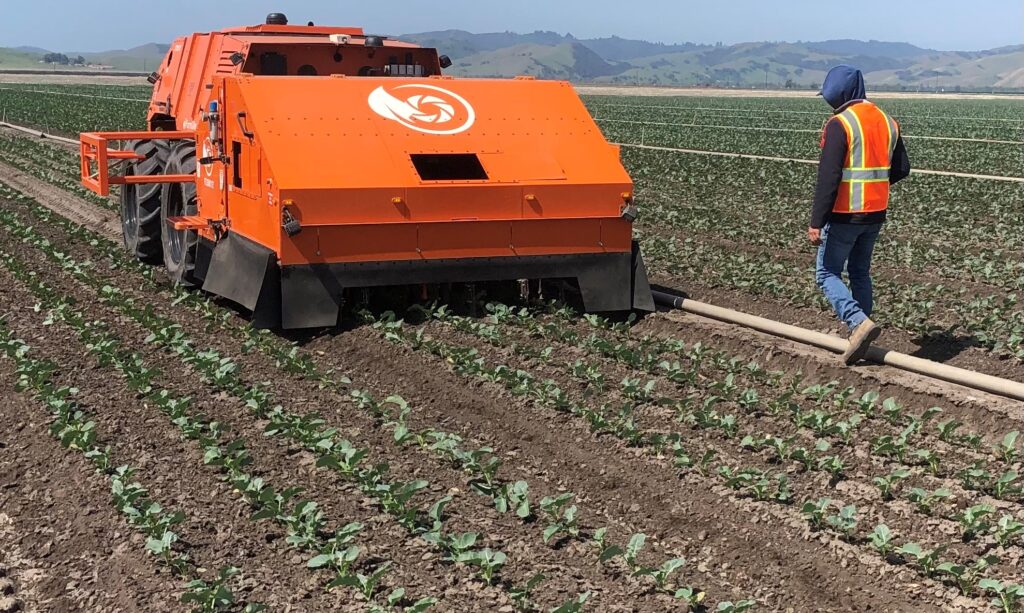
A Farmwise machines uses precision blades to removes weeds in-between rows of broccoli.

We should not judge a plant by its species, but rather by whether it is noxious or beneficial for a given location. 

Some growers use weeds for diversity on the farm since they are limited in funds, time and water. If the weed is not a reservoir for pests and is not competing for space and water, but rather is a refuge and food source for beneficial insects … then maybe it should stay put. If the weed does not impede on the crop and reduce yield or quality, that weed may just be the plant that is supposed to be there. 

On the other hand, I am a Pest Control Advisor and Certified Crop Advisor on the Central Coast of California — the salad-bowl capital of the world — and we have weeds that harbor a virus called Impatiens Necrotic Spot Virus (INSV) that can be deadly to the lettuce plant. INSV is transmitted to lettuce by the ubiquitous western flower thrips (WFT — Frankliniella occidentalis), which acquires the virus from a host plant, which happens to be many common weeds in the Central Coast area. 

Larval and adult stages of WFT can actively feed on the host plant, but only early larval instars can acquire the tospovirus, and the later instar and adult can transmit that virus after a latent period. Adult WFT can acquire the virus, but they do not transmit it because the virus does not have enough time to multiply to infectious levels. The virus is also not transmitted into the eggs, so the virus dies with the adult thrips and the next generation must feed on infected host plants to continue the cycle. 
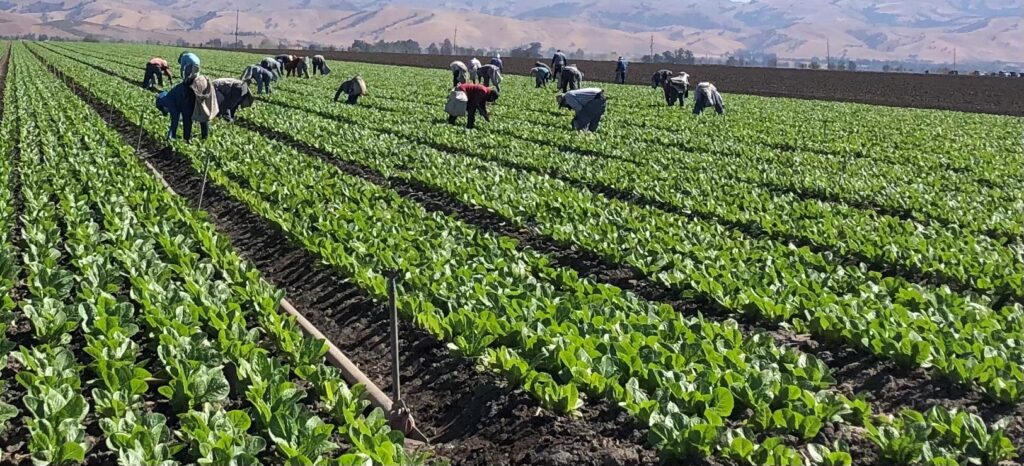
Hand weeding crews in romaine lettuce. This can be a very expensive practice, depending on weed pressure — $800 to $3,000 per acre.

On the Central Coast, where lettuce is the dominant crop, weed control is very important. For many decades, hand labor has been the go-to for weed control. But with the cost of labor getting to the point where hand weeding has become cost prohibitive, new technologies have risen to the challenge. These include the following devices and companies:

Carbon Robotics — Machine-learning weed control utilizing lasers that pinpoint the weed within the leafy green crop and kill it. 

Capric/caprylic acid herbicides — Various herbicides using capric/caprylic acid as the active ingredient offers good control of small weeds when coverage is optimum and water is buffered to pH 4. 

Farmwise — Machine-learning mechanical weed control built for leafy greens that removes weeds in-between the crop line with precision blades. 

Mantis/Vision Robotics — Precision sprayers that kill unwanted plants and can spray a beneficial product on the crop at the same time. 

Robovator — Vision-based robotic hoeing machine for controlling weeds in row crops. 

Stout Industries — Uses machine vision and artificial intelligence to cultivate and weed fields using mechanical blades. 

Verdant Robotics — Uses artificial intelligence to target weeds within the crop with a precision sprayer utilizing soft herbicide chemistries. 

Steam — Effective weed control, but can be costly and time consuming, although technologies are improving. 
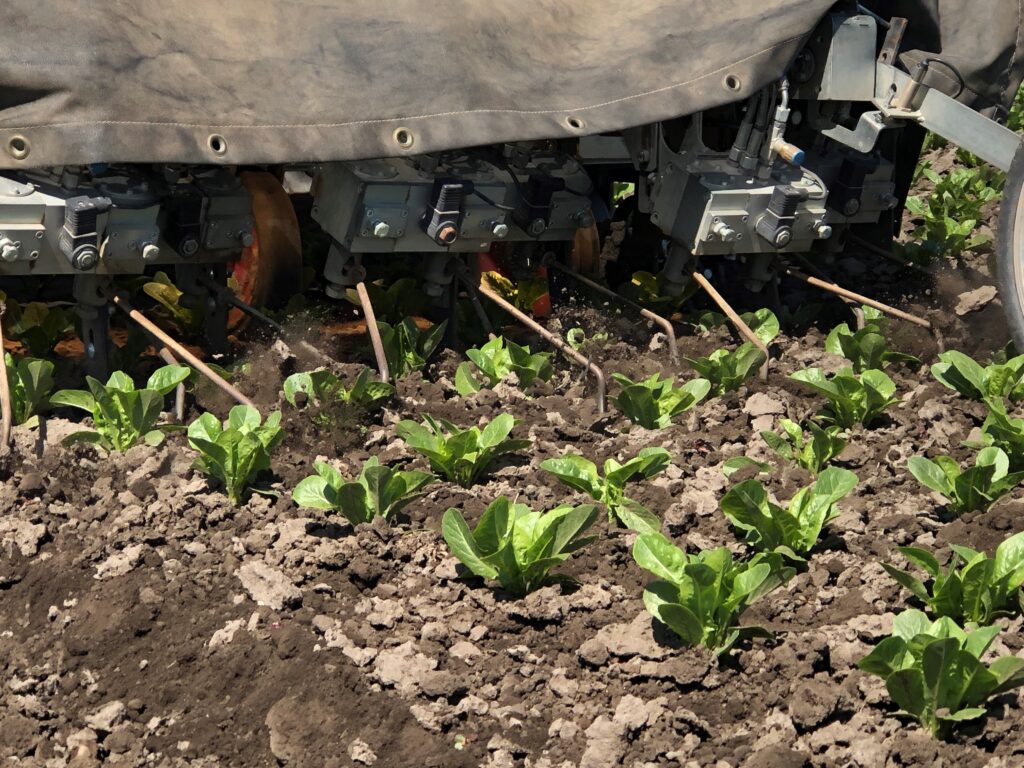
The Robovator is a vision-based machine that weeds in-between plants.

These technologies are just a snapshot of what is happening on the Central Coast of California. Since most are AI-driven, they improve every time they go through the field. Some of these technologies are offered as a service by the company and others are sold as an implement to attach to the tractor. 

I also want to throw out a word of caution: beware of things that sound too good to be true and run trials and decide for yourself! Know your weeds (or plants) and be thoughtful with what you have. Practice good farm hygiene. If there is a true plant out of place and it is a weed, then I liken it to a dirty sock in the middle of your kitchen floor! Take the time to stop and pick it up. If it’s like purslane and can propagate, then remove it from the field. Remember that one plant that goes to seed can multiply your problem exponentially the following year. 
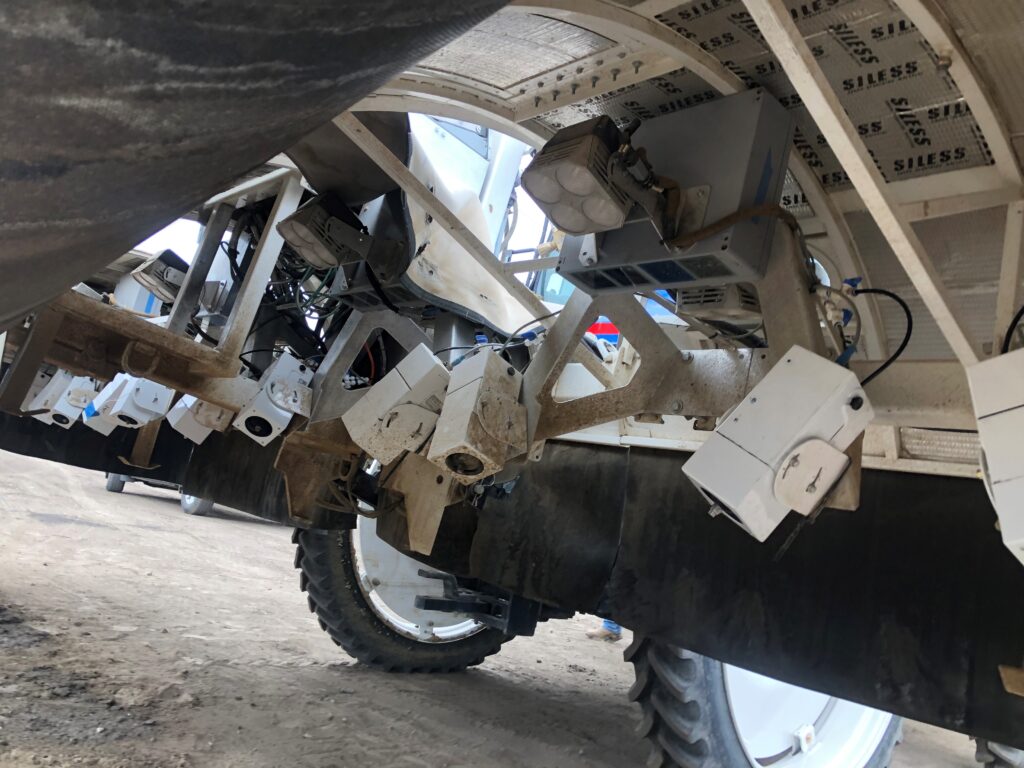
 Verdant Robotics uses AI to target weeds with herbicides, resulting in far less total application than conventional sprayers.

We must always be thinking outside the box to reinvent how we do things. Don’t be satisfied with the status quo. A wise grower once told me, “We were taught to obey, not to think!” Now it’s time for us to stand up and think. It’s not rocket science — it’s way more complicated!

← Previous More Is Loss Next Microbial Self-Defense →
Tags: March 2023
Gina Colfer

Gina Colfer

Gina Bella Colfer is a sustainable solutions manager at Wilbur Ellis and is the 2023 California DPR IPM lifetime achievement award winner.

Next Post

April 2023 • Issue #622

  • Trending
  • Comments
  • Latest
The Most Important Livestock in Our Fields

The Most Important Livestock in Our Fields

July 1, 2024
Glyphosate Does What It’s Designed to Do — Kill

Glyphosate Does What It’s Designed to Do — Kill

February 19, 2025
The Take-Half, Leave-Half Fallacy

The Take-Half, Leave-Half Fallacy

July 1, 2025
White snakeroot

Toxic Forages?

September 1, 2025
We Don’t Need Another Bridge — We Need an Off-Ramp

We Don’t Need Another Bridge — We Need an Off-Ramp

3
Under One Roof

Under One Roof

3
A Rose By Any Other Name

A Rose By Any Other Name

2
Terra Preta’s Biological Advantage

Terra Preta’s Biological Advantage

2
Don’t You Dare Disparage Sugar!

Don’t You Dare Disparage Sugar!

February 3, 2026
February 2026 • Issue #656

February 2026 • Issue #656

February 1, 2026
Fungal Exchange Capacity

Fungal Exchange Capacity

February 1, 2026
ECO-MEETINGS

ECO-MEETINGS

February 1, 2026

Recent News

Don’t You Dare Disparage Sugar!

Don’t You Dare Disparage Sugar!

February 3, 2026
February 2026 • Issue #656

February 2026 • Issue #656

February 1, 2026
Fungal Exchange Capacity

Fungal Exchange Capacity

February 1, 2026
ECO-MEETINGS

ECO-MEETINGS

February 1, 2026

About ACRES USA

Acres U.S.A.® Magazine

Acres U.S.A.® is North America’s oldest publisher on production-scale organic and regenerative farming. For more than 50 years, our mission has been to help farmers, ranchers and market gardeners grow food profitably and sustainably, with nature in mind.

Visit Our Advertisers

Magazine Issues

  • News
  • 2025
    • June 2025
    • May 2025
    • April 2025
    • March 2025
    • February 2025
    • January 2025
  • 2024 Articles
    • December 2024
    • November 2024
    • October 2024
    • September 2024
    • August 2024
    • July 2024
    • June 2024
    • May 2024
    • April 2024
    • March 2024
    • February 2024
    • January 2024
  • December 2023
    • December 2023
    • November 2023
    • October 2023
    • August 2023
    • July 2023
    • June 2023
    • May 2023
    • April 2023
    • March 2023
    • February 2023
    • January 2023
  • December 2022
    • November 2022
    • October 2022
    • September 2022
    • August 2022
    • July 2022
    • June 2022
    • May 2022
    • April 2022
    • March 2022

Contact Acres U.S.A

  • Contact Us
  • About Us
  • Advertise With Acres U.S.A.
  • My Subscription

Learn

  • Resources
  • Events
  • Magazine
  • Newsletters
  • Free Articles
  • Webinars
  • Online Courses
  • Bookstore

Our All Socials

Follow With Us...

  • My account
  • News
  • Ecological farming
  • Refund and Returns Policy
  • Privacy & Policy

© 2024 Acers USA Magazine

Welcome Back!

Login to your account below

Forgotten Password? Sign Up

Create New Account!

Fill the forms below to register

All fields are required. Log In

Retrieve your password

Please enter your username or email address to reset your password.

Log In
No Result
View All Result
  • HOME
  • ARTICLES
    • News
    • Farm
    • Ecological farming
    • Livestock
    • Crop
      • Crop management practices
      • Cover crops
      • Crop nutrition
      • Crop protection
      • Crops
      • Ag technology
    • Soil
    • Opinion
  • RESOURCES
    • Magazine
    • Online Learning
    • Newsletters
    • Blog
    • Free Articles
  • MAGAZINE ISSUES
    • 2025
      • June 2025
      • May 2025
      • April 2025
      • March 2025
      • February 2025
      • January 2025
    • 2024
      • December 2024
      • November 2024
      • October 2024
      • September 2024
      • August 2024
      • July 2024
      • June 2024
      • May 2024
      • April 2024
      • March 2024
      • February 2024
      • January 2024
    • 2023
      • December 2023
      • November 2023
      • October 2023
      • August 2023
      • July 2023
      • June 2023
      • May 2023
      • April 2023
      • March 2023
      • February 2023
      • January 2023
  • ABOUT US
    • Our History
    • Our Staff
    • Contact Us
    • Community
      • Soil Health Primer Resources
  • EVENTS
    • Eco-Ag Conference
    • On-Farm Viroqua Event
    • Farm Weird
  • SUBSCRIBE
  • Login
  • Sign Up
  • Cart

© 2024 Acers USA Magazine

Are you sure want to unlock this post?
Unlock left : 0
Are you sure want to cancel subscription?