Acres U.S.A.® Magazine
  • Articles
    • News
    • Ecological farming
      • Climate
      • Environmental Issues
      • Farm management & planning
      • Human health
    • Livestock
    • Farm
    • Crop
      • Crop management practices
        • Ag technology
        • Cover crops
        • Crop nutrition
          • Crop protection
          • Diseases
        • Crops
        • Fruits
    • Soil
    • Opinion
  • Resources
    • Magazine
    • Online Learning
    • Newsletters
    • Free Articles
    • Blog
  • Magazine Issues
    • 2026
      • February 2026
      • January 2026
    • 2025
      • December 2025
      • November 2025
      • October 2025
      • September 2025
      • August 2025
      • July 2025
      • June 2025
      • May 2025
      • April 2025
      • March 2025
      • February 2025
      • January 2025
    • 2024
      • December 2024
      • November 2024
      • October 2024
      • September 2024
      • August 2024
      • July 2024
      • June 2024
      • May 2024
      • April 2024
      • March 2024
      • February 2024
      • January 2024
    • 2023
      • December 2023
      • November 2023
      • October 2023
      • August 2023
      • July 2023
      • June 2023
      • May 2023
      • April 2023
      • March 2023
      • February 2023
      • January 2023
    • 2022
      • December 2022
      • November 2022
      • October 2022
      • September 2022
      • August 2022
      • July 2022
      • June 2022
      • May 2022
      • April 2022
      • March 2022
      • February 2022
  • About Us
    • Our History
    • Our Staff
    • Contact Us
    • Community
      • Soil Health Primer Resources
  • Events
    • Eco-Ag Conference
    • Farm Weird Event
    • Viroqua On Farm Event
  • Subscribe
  • Login
  • Register
No Result
View All Result
  • Articles
    • News
    • Ecological farming
      • Climate
      • Environmental Issues
      • Farm management & planning
      • Human health
    • Livestock
    • Farm
    • Crop
      • Crop management practices
        • Ag technology
        • Cover crops
        • Crop nutrition
          • Crop protection
          • Diseases
        • Crops
        • Fruits
    • Soil
    • Opinion
  • Resources
    • Magazine
    • Online Learning
    • Newsletters
    • Free Articles
    • Blog
  • Magazine Issues
    • 2026
      • February 2026
      • January 2026
    • 2025
      • December 2025
      • November 2025
      • October 2025
      • September 2025
      • August 2025
      • July 2025
      • June 2025
      • May 2025
      • April 2025
      • March 2025
      • February 2025
      • January 2025
    • 2024
      • December 2024
      • November 2024
      • October 2024
      • September 2024
      • August 2024
      • July 2024
      • June 2024
      • May 2024
      • April 2024
      • March 2024
      • February 2024
      • January 2024
    • 2023
      • December 2023
      • November 2023
      • October 2023
      • August 2023
      • July 2023
      • June 2023
      • May 2023
      • April 2023
      • March 2023
      • February 2023
      • January 2023
    • 2022
      • December 2022
      • November 2022
      • October 2022
      • September 2022
      • August 2022
      • July 2022
      • June 2022
      • May 2022
      • April 2022
      • March 2022
      • February 2022
  • About Us
    • Our History
    • Our Staff
    • Contact Us
    • Community
      • Soil Health Primer Resources
  • Events
    • Eco-Ag Conference
    • Farm Weird Event
    • Viroqua On Farm Event
  • Subscribe
No Result
View All Result
Acres U.S.A.® Magazine
No Result
View All Result
Home General

Manage with Mother Nature in Mind

Loran Steinlage by Loran Steinlage
March 19, 2024
in General
0
Manage with Mother Nature in Mind
0
SHARES
9
VIEWS
Share on FacebookShare on Twitter

Lessons learned from cover crops in 2023

Loran Steinlage

This year has once again provided us with another learning opportunity, and I fear that most of us did not pass the test Mother Nature offered us. I know this is true of myself. I tried to react and adapt much earlier than I normally would have, but the moving target seemed to be more challenging than normal. While we have not yet received our report card for the year, I will try to convey some of my early thoughts as I sit here in mid-July.

My operation is somewhat diversified this year. We have corn, soybeans, and cereal rye. The majority of the cereal rye is grown in the relay-cropping fashion, in which we plant the rye in the fall in twin rows and then plant the soybean in the spring in between the rye. We had to terminate a majority of our relay acres this year due to a dry spell and some of the rye not being the quality we would normally keep.

As in any no-till environment, the cropping season begins with the harvest of the previous crop. If we plant covers into standing crops, it actually begins earlier. Every action we employ in a field affects every successive action or reaction. Acquiring an adaptive mindset is critical. One needs to constantly ask themselves, “What are the signs Mother Nature is offering us?”

We often let one bad experience dictate future actions or opportunities. If we can get comfortable trusting our gut and intuition, combined with historical information — yet yielding to the whimsical attitude Mother Nature seems to be giving us — we would realize that using diverse tactics is critical. Folks often hear us refer to using these multiple options, but as I’ve said several times in the past, “They need to have the answer before the question is asked.”

Adaptations
Here are a couple of things we did this year in response to the external factors we couldn’t control.

First was to terminate early. Normally I am very comfortable delaying termination until well after the next crop is established, but the forecast was dry; we had missed several rain events, and our snow levels over winter just didn’t seem normal. So I committed to terminating early on most of my acres. The hard part with that decision was that we had a very slow-growing cover, and some didn’t even germinate till after planting. Talk about a nightmare in a no-till system with non-GMO crops! Fortunately, we have tested several options in the past to know which practices or products we could use.

On our relay acres, we kept only a fraction of what we normally would have. We planted timely last fall, but as usual, here in northern northeast Iowa, on the edge of the Driftless region, every day earlier we can get in the fall is critical. It seemed like we only had a two-day window.
On our conventional acres, we knew which products we could use, and on our organic acres, with the hooded sprayer, we could’ve used one of the organic herbicides to help clean things up. Even on our conventional acres, though, I used the in-row roller, as it is less stressful on the crop; I then finished it with some of the herbicides. To me, it is all about having options.

On our organic soybean acres, the original plan was to plant soybeans and then roll-crimp the rye. It was so dry at the end of May, though, that I knew we would be planting the soybeans in dry soil. I made the call that it was probably wiser to take the rye crop to harvest versus rolling down a perfectly good cash crop to plant a failure.
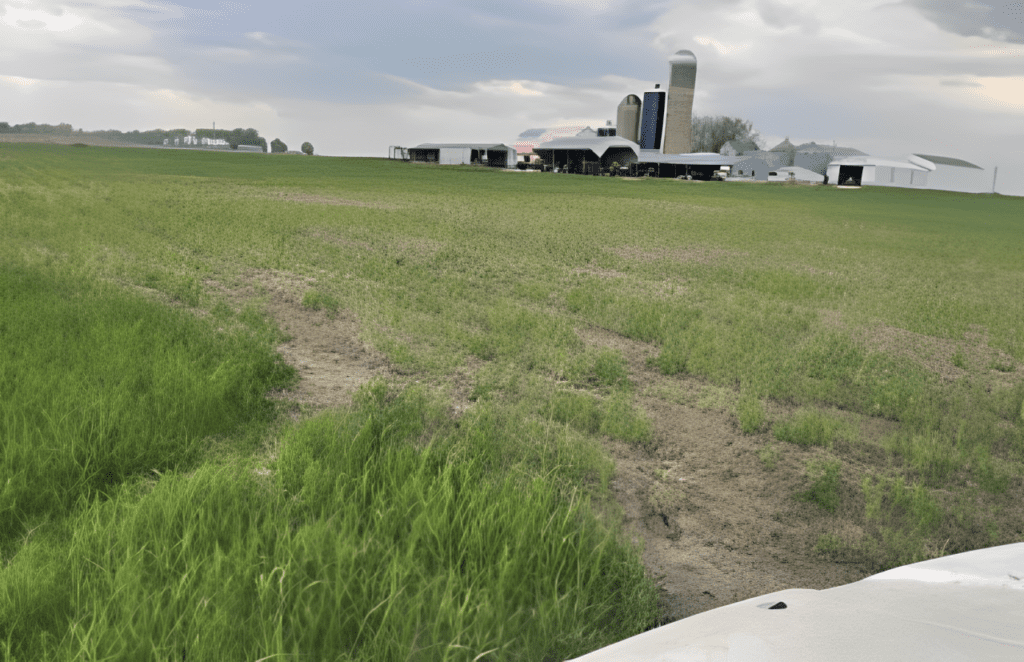
Some of this winter’s cereal rye cover crop was terminated because it failed to provide enough biomass.

How It Turned Out
The rains did finally come, and the soybeans might have germinated about July 1 — which may or may not have resulted in a decent crop. Instead, we are currently in the process of harvesting a decent rye crop and will bale the straw to make cash flow. Was this the very best decision we could have made? Maybe, maybe not … but it is a sound decision that will keep us afloat.

That is probably the most critical lesson learned in 2023: make a decision and own it. Don’t look back with regrets — sometimes the safe route is the sane route. We also intentionally solid-seeded rye on some acres just to allow us a window to attempt some critical field and fenceline maintenance — something that has been a challenge when the cover crop is often growing before harvest begins or the drill is chasing the combine at harvest.

We have finished cereal rye harvest now, so the first report card is in: organic cereal rye that was supposed to be soybeans ended up being our lowest-yielding rye, at 25 bushels per acre and 1.5 bales per acre of straw, whereas the intentional, conventional, solid-seeded cereal rye came in at 32 bushels and the same 1.5 bales of straw. The relay cereal rye acres we kept came in at 35 bushels per acre and have a beautiful crop of soybeans underneath them that are off to the races.

My takeaway lesson from the beginning of the 2023 season is that it is as crucial as ever to adapt to whatever Mother Nature hands us.

Loran Steinlage is a lifelong farmer, systems thinker, and fabricator. His farming practices have earned him environmental leadership awards and the 2020 No-Till Farmer Innovator award.

← Previous Seven Agronomic Virtues Next Cooperation Motivation →
Tags: Adaptive ManagementCrop DiversityWeather Challenges
Loran Steinlage

Loran Steinlage

Loran Steinlage is a lifelong farmer, systems thinker and fabricator. His farming practices have earned him environmental leadership awards and the 2020 No-Till Farmer Innovator award.

Next Post
Cooperation Motivation

Cooperation Motivation

  • Trending
  • Comments
  • Latest
The Most Important Livestock in Our Fields

The Most Important Livestock in Our Fields

July 1, 2024
Glyphosate Does What It’s Designed to Do — Kill

Glyphosate Does What It’s Designed to Do — Kill

February 19, 2025
The Take-Half, Leave-Half Fallacy

The Take-Half, Leave-Half Fallacy

July 1, 2025
White snakeroot

Toxic Forages?

September 1, 2025
We Don’t Need Another Bridge — We Need an Off-Ramp

We Don’t Need Another Bridge — We Need an Off-Ramp

3
Under One Roof

Under One Roof

3
A Rose By Any Other Name

A Rose By Any Other Name

2
Terra Preta’s Biological Advantage

Terra Preta’s Biological Advantage

2
Don’t You Dare Disparage Sugar!

Don’t You Dare Disparage Sugar!

February 3, 2026
February 2026 • Issue #656

February 2026 • Issue #656

February 1, 2026
Fungal Exchange Capacity

Fungal Exchange Capacity

February 1, 2026
ECO-MEETINGS

ECO-MEETINGS

February 1, 2026

Recent News

Don’t You Dare Disparage Sugar!

Don’t You Dare Disparage Sugar!

February 3, 2026
February 2026 • Issue #656

February 2026 • Issue #656

February 1, 2026
Fungal Exchange Capacity

Fungal Exchange Capacity

February 1, 2026
ECO-MEETINGS

ECO-MEETINGS

February 1, 2026

About ACRES USA

Acres U.S.A.® Magazine

Acres U.S.A.® is North America’s oldest publisher on production-scale organic and regenerative farming. For more than 50 years, our mission has been to help farmers, ranchers and market gardeners grow food profitably and sustainably, with nature in mind.

Visit Our Advertisers

Magazine Issues

  • News
  • 2025
    • June 2025
    • May 2025
    • April 2025
    • March 2025
    • February 2025
    • January 2025
  • 2024 Articles
    • December 2024
    • November 2024
    • October 2024
    • September 2024
    • August 2024
    • July 2024
    • June 2024
    • May 2024
    • April 2024
    • March 2024
    • February 2024
    • January 2024
  • December 2023
    • December 2023
    • November 2023
    • October 2023
    • August 2023
    • July 2023
    • June 2023
    • May 2023
    • April 2023
    • March 2023
    • February 2023
    • January 2023
  • December 2022
    • November 2022
    • October 2022
    • September 2022
    • August 2022
    • July 2022
    • June 2022
    • May 2022
    • April 2022
    • March 2022

Contact Acres U.S.A

  • Contact Us
  • About Us
  • Advertise With Acres U.S.A.
  • My Subscription

Learn

  • Resources
  • Events
  • Magazine
  • Newsletters
  • Free Articles
  • Webinars
  • Online Courses
  • Bookstore

Our All Socials

Follow With Us...

  • My account
  • News
  • Ecological farming
  • Refund and Returns Policy
  • Privacy & Policy

© 2024 Acers USA Magazine

Welcome Back!

Login to your account below

Forgotten Password? Sign Up

Create New Account!

Fill the forms below to register

All fields are required. Log In

Retrieve your password

Please enter your username or email address to reset your password.

Log In
No Result
View All Result
  • HOME
  • ARTICLES
    • News
    • Farm
    • Ecological farming
    • Livestock
    • Crop
      • Crop management practices
      • Cover crops
      • Crop nutrition
      • Crop protection
      • Crops
      • Ag technology
    • Soil
    • Opinion
  • RESOURCES
    • Magazine
    • Online Learning
    • Newsletters
    • Blog
    • Free Articles
  • MAGAZINE ISSUES
    • 2025
      • June 2025
      • May 2025
      • April 2025
      • March 2025
      • February 2025
      • January 2025
    • 2024
      • December 2024
      • November 2024
      • October 2024
      • September 2024
      • August 2024
      • July 2024
      • June 2024
      • May 2024
      • April 2024
      • March 2024
      • February 2024
      • January 2024
    • 2023
      • December 2023
      • November 2023
      • October 2023
      • August 2023
      • July 2023
      • June 2023
      • May 2023
      • April 2023
      • March 2023
      • February 2023
      • January 2023
  • ABOUT US
    • Our History
    • Our Staff
    • Contact Us
    • Community
      • Soil Health Primer Resources
  • EVENTS
    • Eco-Ag Conference
    • On-Farm Viroqua Event
    • Farm Weird
  • SUBSCRIBE
  • Login
  • Sign Up
  • Cart

© 2024 Acers USA Magazine

Are you sure want to unlock this post?
Unlock left : 0
Are you sure want to cancel subscription?