

Snacktivist founder Joni Kindwall-Moore explains why regenerative agriculture is ready for innovative technology to better connect growers with processers and new markets
Acres U.S.A. Can we start with your background?
Joni Kindwall-Moore. Sure. I grew up in a small fishing-timber-farming community in rural Oregon, rooted in that economy. But I went into the hard sciences, and then I went into healthcare until I was 40. I started Snacktivist, our first company, when I was 40. I’d always been involved in food-system activism — usually nonprofit-type roles — and I always had a very deep awareness of where food comes from. I was one of those kids who grew up with “subsistence living” activities, so it is part of my thinking. I’ve always been passionate about getting people reconnected with bioregional food systems.
My education was in ethnobotany. You take the field of botany, add some medicinal chemistry, and then a little splash of anthropology. I was documenting indigenous knowledge systems and how people use plants for food and medicine. My expertise was looking for medicinal plants that could contribute to novel therapeutics — solving for difficult-to-manage diseases.
I love science. I always consider myself a scientist at heart — but I also like people! I hated being trapped in a lab. I didn’t want to pursue my Ph.D., and a lot of the funding dried up in the nineties because of a bunch of lawsuits that changed the trajectory of the pharmaceutical research industry. So, I went into nursing for 15 years — in the ICU, the ER, and diabetes education.

We have a trillion-dollar healthcare epidemic that is largely fueled by corruptions in the food-ag complex. I started to realize that this is crazy. We have to take our staples back. We’re never going to win the public health war if we’re telling people to eat raw almonds and kale. That’s just unreasonable. It’s not affordable. It’s not equitable. And a lot of people don’t like it — it doesn’t taste good. And if they don’t like it, it will fail.
When I left healthcare, I was on a mission to realign food and agriculture with positive human health impacts and resiliency. Resiliency is both environmental and economic — you can’t have one without the other. So, we started innovating around staples. How do we make a better flour? How do we make better pizza? How do we make better bread? That migrated into things like potatoes and other commodities.
After 10 years of building supply chains and doing value-chain consulting, I’ve realized there’s a fundamental lack of visibility and market connectivity out there. I feel like that holds the whole system hostage. We live in 2025, but food still uses the same playbook from the 1980s. We have not embraced a lot of the market structures that dominate the economic landscape of this century. Nobody buys a plane ticket by calling the airline and booking it — you go to a platform and book a ticket online. It’s a consumer-driven experience, and there’s a lot of transparency. You can see the competition in front of your eyes. We don’t have that in B2B food systems at all.
Acres U.S.A. So, your idea for a platform to better connect regenerative farmers and buyers has been in the works for a while.
Kindwall-Moore. Yes — what’s become The Ryzosphere was actually first developed and written out in 2016. Snacktivist was brand new, but I was frustrated at what we were up against, trying to do something new and novel. And then at one point I was at the Washington Small Business Development Center office and was sitting down with the bankers and the business development people there, and they had a huge project working on grassfed cattle that had specific finishing requirements. It was all going to a really bougie export market, and it was a huge contract. And their biggest barrier was that they couldn’t find enough qualified feed to secure the contract for the cattle. They had the cattle, but they didn’t have the non-GMO feed. And I thought, “This is just stupid. Why are we still doing business like this?”
That’s how the idea for The Ryzosphere got started. At that time, it was a little too early. We circulated the opportunity to some investors, but they basically said, “No offense, but you’re a mom and a nurse from Idaho.” They said that the last thing I should do was to get involved in a disruptive technology. I should just make cookies, or something that’s more aligned with my stereotype.
Acres U.S.A. Snacktivist wasn’t that type of disruptive technology, in their minds?
Kindwall-Moore. I know — to me, Snacktivist is; but to them, it was a permissible disruption because it came through a vehicle they expected a mom to take — baking products.
So, that was really tough. I couldn’t break through. But I was like, “Fine, we’re going to do this — Snacktivist — and we’ll build it, and then we’ll build this technology company.” So that’s what we’re doing now. We’re building the technology company, and I think that the timing is right now.
Acres U.S.A. I like how you describe The Ryzosphere as “LinkedIn meets Airbnb for sustainable food systems.” I can’t remember now — was Airbnb even a thing ten years ago?

Kindwall-Moore. It was just getting going. Back then we actually described it as “Facebook meets Priceline.com” because LinkedIn was more niche back then too. I felt like it was just for salespeople looking for jobs — not like it is today. We considered other analogies — “Instagram meets Alibaba,” etc. I’ve settled on “LinkedIn meets Airbnb” because the foundation is a community — like LinkedIn. Community networks are so to food and agriculture. We align through associations and bioregions and communities. That’s really what makes a lot of the system tick. But to have that kind of attribute-filtered search, and the ability to transact within a community, makes it have a feel and a functionality like a product — like Airbnb.
One key distinction that sets The Ryzosphere apart from those other examples is our strong emphasis on intelligent matchmaking and the ability to upload detailed specifications that buyers require. Instead of users having to constantly search for sellers or buyers, our platform will notify them when a relevant match is made — making the process faster, more efficient and more aligned with real-time needs.
We’re launching the community and all the AI-enabled mapping soon — that’s phase one. But when we do launch our trade technology tools, they won’t be obligatory. If somebody meets another person, and they decide to do business together and they just write a check to one another at the point of sale, I’m not going to stand in the way of that. Fundamentally, on a philosophical level, I feel like that’s sacred territory. I want federated businesses — independent, sovereign businesses — to thrive. But it’s really easy to do these deals digitally, and we’ll be there to make that simple. Especially for more complex contracts, that’s important.
Acres U.S.A. I listened to one of your webinars, and you were describing how the whole middle of the system is just not easy to find. You can’t look these things up. Where are all the processing facilities — mills, warehouses, etc.? I was surprised at that — given that we do have the internet today.
Kindwall-Moore. Right — that information isn’t there. Or, it is — but it’s in a silo. For example, North American Milling Alliance — it’s a great organization that represents independent milling across the country, and they have mapping. Colorado Grain Chain — they have mapping. Artisan Grains Alliance — they have mapping. But none of these cross-pollinate with other segments of the industry or with other links in the chain. That’s where The Ryzosphere is really unique. We’re trying to connect communities of seed breeders, communities of agronomists, communities of producers, communities of processors, communities of purchasers, communities of state and local agencies like NRCS and USDA, etc. These are all critical parts of the food system, but we don’t have a place where we can come together and have cross-pollination of our vocational communities or our regional communities. Again, the AI matchmaking is so essential here.
The reality, no matter how much people want to deny it, is that our food system is global. That’s not going to change anytime soon. We do need to regionalize our food systems — bioregional is super important. But even still, right here in the inland Northwest, for example — we have 2 million people in Idaho, but Idaho grows enough food for probably 20 million. We have to be part of the global food system if we’re going to support our agricultural industry. There aren’t enough people here to make it economically worthwhile.
Acres U.S.A. How do agronomists fit into this? You’ve talked about how farmers want to produce a crop, and companies want to buy it, but sometimes there’s a missing link in knowing how to grow the crop. If you’ve only been growing corn and soy, you need to know something more about how to grow millet or sorghum or whatever.
Kindwall-Moore. Absolutely. I was assisting a project last year with millet and high-protein hull-less oats, as an ingredient and as a value chain. It’s a processing facility called Civic in Montana. It’s an incredible project on so many levels. But when you’re building these markets for upcoming crops — even if they’re not brand-new crops, but maybe a resurrected crop, like an ancient grain — there’s a really delicate dance that needs to happen with supply and demand. And if you have a bunch of farmers plant something, but we don’t have the market demand set up, they end up being stuck with it, or they have to sell it at a super cheap rate, and then the market’s scared because we have price volatility. When we can coordinate the supply and demand, we de-risk commitments to new supply chains for novel ingredients. Novel ingredients do require coordination — from germplasm to agronomic consulting, producer-level support, sometimes special processing or special handling, etc. A lot of coordination needs to happen to make that realistic and profitable and efficient for everyone involved.
One of the biggest things that I think is a threat to our food system is the fact that we’ve lost so much genetic diversity. We’ve just drifted to a consolidated model, and along with that consolidated model has come the elimination and extinction of that biodiversity in our foods. We know that harms the soil, and we know that harms our gut microbiome. We know that it’s reflective in other nutrient deficiencies that are in our diet in epidemic proportions in America. We have to bring back that diversity.
But the realistic infrastructure coordination that’s needed to make that happen at scale is pretty sophisticated. That’s where things like mapping and AI and aggregation and smart contracting and blockchains come in — there’s a lot of tech out there that is not new anymore. It’s commonly used in other industries. We know how it works, and we know what works; we just need to apply it to this use case, and then we can unlock those efficiencies for regenerative agriculture.
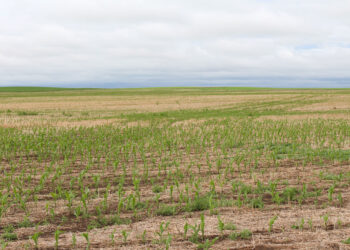
Millet is a perfect example. If we could commercialize more millet market demand in our region — and we know there are more and more people interested, but it’s still viewed as risky — it would help eliminate summer fallow in our area. Summer fallow is one of the biggest drivers of soil degradation in the Palouse. After wheat harvest, farmers could direct-seed proso millet; it’s a short-season, warm-season crop. They get an additional harvest, and the soil gets to keep a living root in the ground all summer long. We reduce the rain and wind erosion. We don’t bake the heck out of those fields, which is great for so many reasons — with the sun exposure out here, that’s a huge win.

What’s stopping this from happening? I know so many farmers who want to grow millet. The problem is access and stabilization of the market forces. That’s where a platform that’s built to serve this need can critically unlock these novel supply chains that need to emerge everywhere across the country.
Acres U.S.A. How much is shipping a part of this problem that technology could help solve?
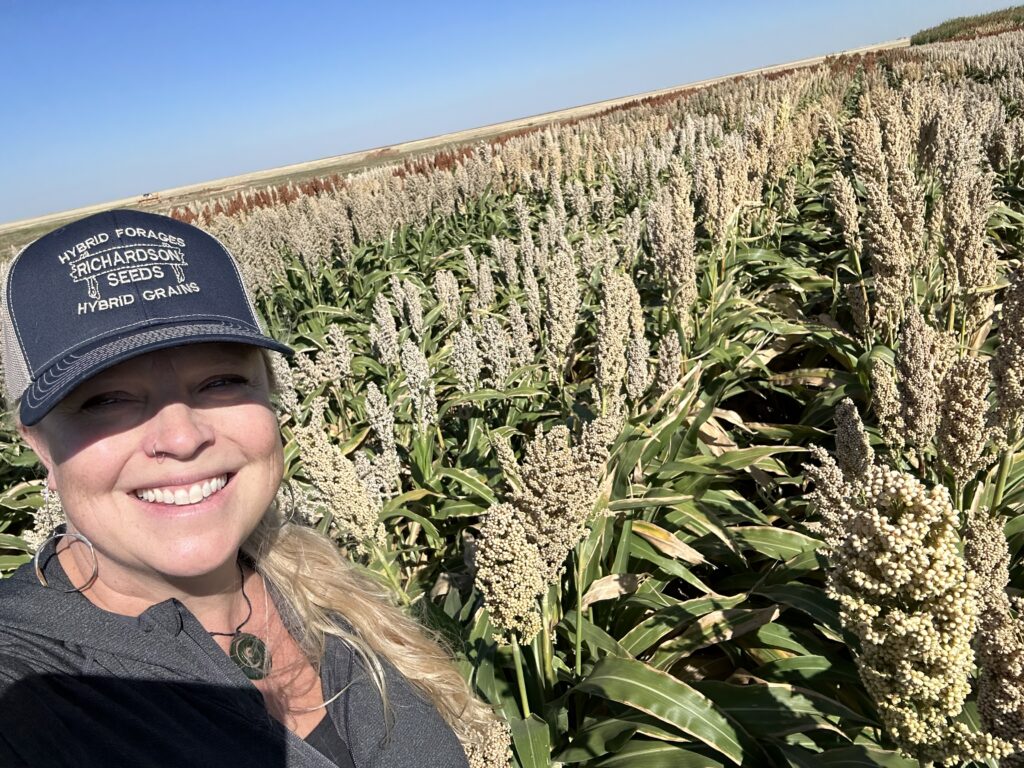
Kindwall-Moore. Shipping can be a nightmare. To get a novel crop like millet to a processing or post-harvest handling facility can be really difficult or even cost prohibitive. There are only a handful of places in the country that could even process it, historically. The shipping can make it completely unreasonable to grow, unless you were just cleaning it and selling it as poultry feed or mushroom substrate. There are other cool market offtakes for things like millet, but if you wanted to grow it for a human-grade supply chain, you had to ship it all the way to Bay State, a miller in Sterling, Colorado, to have it cleaned and processed. If you’re not 80 miles from Bay State, that doesn’t make a lot of sense.
Transportation drives the whole system. Again, this is why having robust asset mapping across the country helps, so we can truly understand and calculate shipping impact. Shipping is one of the biggest things that drives margin erosion in the food system. If you’re trying to build a better product, the number one thing that’s probably going to tug away from your commitment to higher-quality ingredients is shipping cost. We sacrifice a lot of the value of our food from a nutritional level because of the cost of shipping and the inefficiencies within the system. We’ve lost our bioregional infrastructure. That’s a whole heavy lift in itself, but it’s coming back. People want to bring it back. We have a lot of vacant processing buildings and infrastructure across the country. It’s just sitting there; we need to put it to work.
Acres U.S.A. What kind of operational scale do you think is best suited for the type of innovation you’re talking about — trying to provide better market access?
Kindwall-Moore. I think our sweet spot is the people who are right smack dab in the middle. They’re big enough to be competitive in the market, but they’re doing something different. They’re differentiated. They’re not just a commodity farmer — they’re planting drought-resistant crops or using regenerative soil management. We really like these mid-size players because if you’re trying to connect larger market opportunities across this value stream, it needs to be a big enough harvest to make it worthwhile. A big purchaser is not going to spend the time and effort to create an offtake agreement with a tiny farm where they may be getting one truckload; it doesn’t make sense from a unit economic standpoint to get it all through the value chain and get it cleaned and all of that.
So, I really like the middle of the road. They’re usually privately held and privately operated — family-owned and -operated enterprises — so the bureaucracy levels are lower and the appetite for competitive advantage is high. This whole segment — this middle class of our food-and-fiber ag sector — is worth about $50 billion. It’s huge. But it’s totally ignored as a driver in our entire global economy. Everyone tries to go for the biggest of the big, but we love that middle — the $5- to $500-million-a-year operation, whether it’s a farm or a processor or a brand. They can move mountains as a part of food-system transformation. That’s where we’re focused.
Acres U.S.A. And what’s your timeline for The Ryzosphere?
Kindwall-Moore. We’re currently raising capital, which is always an adventure; we are just booking our first influx of capital, which is exciting. Our plan is to have our beta — our first trial platform — live by September. That’s going to be an invite-only community to get started. The platform is always going to be private; we don’t want people coming in and potentially trolling a highly sensitive community. This is an industry-specific community, so we will always be an application-only community. Starting in September we’ve got some fantastic communities on board, and we’ll have some time to make sure we’ve got the kinks worked out. We’re building it to meet the needs of the community. And then, going into 2026, we’ll open it up to a larger audience.
Acres U.S.A. As an editor, I have to ask why you switched the “h” and “i” for a “y” in “Ryzosphere”!
Kindwall-Moore. We had a good reason for it! I love the symbol of the rhizosphere. My oldest daughter and I came up with that as a concept for digitized food systems. We didn’t come up with it — other people have thought of it too — but we think it’s just so perfect. Because when you think about the rhizosphere in nature — without it, life doesn’t happen. Nothing blossoms. There’s no health or vitality to the organisms aboveground. But you don’t see the rhizosphere. It’s invisible. It’s complex, but it’s not in front of your face. It’s not the hero of the system, although if you really understand nature, you realize it is the hero, because we owe everything we have to those six inches of topsoil and the fact that it rains. It’s the humble, silent partner — the driver of the natural world.
We love the symbolism of the rhizosphere. We’re not the star of the show. We’re just hosting a party for a federated system, and they’re the stars — all the partners and peers that come into The Ryzosphere — they’re the ones that should get the attention. We’re like the silent layer that just allows for that diverse community to thrive.
But we changed the spelling so that it would be unique to us. It was a suggestion from a great colleague who happens to be an intellectual property attorney. He said it’d be a little bit more defendable from a trademark standpoint — that we could really make it our own. We liked it and have run with it.
Acres U.S.A. That’s great. I mean, the spelling messes people up all the time anyways.
Kindwall-Moore. Yes — the real word is hard to spell. But there is a lot of very deep technology underlayment here. We don’t talk about it all that much because the community is the star of the show. But the deep tech that will come into play here is very biomimicry focused. We’re literally building through a nature-based design. So again, the name just made sense.
Acres U.S.A. How will AI be a component of this?
Kindwall-Moore. I think AI can be very daunting and intimidating as a concept — and a little creepy. But I also think AI can really help movements like ours because it can automate a lot of the tasks that we do every day — things that take a lot of our time but that aren’t fun and are not really high ROI — tasks that don’t have a high return on investment of your time, but they just have to be done. AI can play an automation function.
But the other really incredible function of AI is that it can go through enormous datasets that no single human brain could filter through in a lifetime. It can do it super quickly and can help point out highlights of the data.
So, we’re using AI in both of those ways. We’re automating tasks, but we’re also providing that analysis — that mass synthesis. You’ll be able to go into The Ryzosphere AI network and say, “I need to find farmers who are growing fava beans within 500 miles of a fava bean processing plant,” and it will tell you where fava beans are grown and where are the processors are that meet your criteria. That would take a long time to find today, even with the internet. I know that because I do it for a living — people literally hire me to figure this stuff out. They’re like, “Can we hire you to help us build this value chain?” And it takes us months. It’s very time intensive, and it’s expensive. I love doing this to help people, but my hourly rate is stealing margin from the farmers I’m trying to represent.
I realized that I have to get a lot of this wasted energy out of the middle — we’re never going to be able to reinvest at the producer level if all of the margin escapes because we’re doing things the dumb way. Let’s use technology, which is much cheaper, more accurate, and faster, and let’s put those profits back in the pockets of the producers, where it belongs.
Acres U.S.A. I can see this being hugely helpful — to help both farmers and processors identify opportunities.
Kindwall-Moore. We can start to connect the dots. It’s almost like you have an on-demand feasibility calculator. You start to see feasibility unfold in front of your eyes. I know so many farmers in our region who want to grow flax — they grow garbonzo beans, and they know that if they have flax in their rotation, it helps diminish the need for fungicides. But there’s no flax processing, so their hands are tied.
I don’t ever want to speak against the farmers who’ve stuck with the conventional system — we just need to be intentional and help redirect that system so that it helps mitigate externalities while still focusing on the economic and agronomic needs of farmers. Farmers get stuck in the middle, and so do consumers, because we end up eating inferior food that’s making us sick.
Acres U.S.A. Are you including corn and soy in The Ryzosphere, even though the whole system already revolves around those crops?
Kindwall-Moore. Yeah, definitely. We can’t ignore our major commodities. They’re what drive the engine. We can’t ignore that major market offtake — it’s part of the mosaic that makes our rural economic engine tick.
Our criteria is, “What are you doing, and what are your barriers to get to the next level?” We need to understand what the barriers are for farmers to take their production system to that next level. If they’re starting to go toward a regenerative model, or they’re reducing their inputs, or they’re growing better-quality crops, what’s standing in their way, and are they thinking about it? Are they actively trying to advance the health of their system? That’s where The Ryzosphere comes in. We’re not here to judge you as good, bad, or otherwise; we’re just concerned that you’re doing something every year to advance your system toward a more sovereign, healthy system.
To me, that’s where it’s at. If a farmer can come to me and demonstrate that they’ve taken the steps needed to reduce excess use of nitrogen or wasted irrigation, those are the kind of people we want to work with. They’re the innovators. They’re making the advancements that we need. How do we reward and incentivize that — so that people don’t feel like they’re wasting their time and efforts?
| Learn more about The Ryzosphere at ryzosphere.io, and get on the wait list at bit.ly/RyzosphereWaitList. |