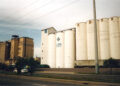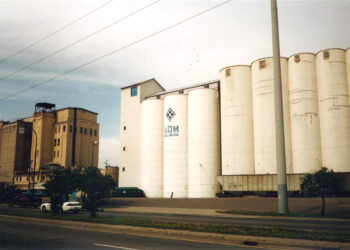


On Monday, June 2, 2025, Wabash County, Indiana put a moratorium on drilling carbon dioxide injection wells. The moratorium was requested by local farmers who were concerned when the POET ethanol plant near North Manchester announced plans to start a carbon capture and sequestration (CCS) project.
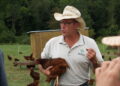
“It just kind of made my blood boil,” farmer Josh Leffel told The Farmer’s Exchange, a local farming paper. Despite living near the ethanol plant, Leffel wasn’t informed about the project. He found out about it only when POET started doing seismic testing near his farm and he was startled by the “earthquake-like booming going on.”
Carbon dioxide is a natural byproduct of ethanol production, produced by yeast during the fermentation process. Approximately one pound of carbon dioxide is produced for each pound of ethanol. Because this carbon dioxide is very pure, it can be liquified and used in the food and beverage industry or sold as dry ice. This is already being done at other ethanol plants operated by POET.
What concerns Leffel and other Wabash County farmers is that, at this particular plant, POET intends to use their carbon dioxide liquification technology in a CCS project. Over a period of 12 years, POET plans to inject 250,000 tons of liquid carbon dioxide into a deep rock formation 3200 feet below the surface.
“The safe and responsible use of carbon capture represents a consequential opportunity to transform rural economies and benefit farm families,” POET reassures farmers on their website. “CO2 capture will position farmers as the nation’s leading suppliers of low-carbon commodities and solutions while providing new market opportunities and adding value to every bushel of corn and every acre of land.”
Leffel and other Wabash County farmers aren’t so sure about that. CCS is a new, relatively untested technology, and they worry about what could go wrong. While carbon dioxide is harmless to humans at atmospheric concentrations, if it were to come back up the wells to the surface in high concentrations, it could displace air and cause suffocation.
Advocates of CCS say that such a catastrophe will never happen because there are too many safety monitoring protocols in place. But there have already been some issues. Carbon dioxide leaked out of the target formation at the first ethanol plant CCS project, operated by Archer-Daniels-Midland (ADM) in Decatur, Illinois. While the leak did not contaminate drinking water, ADM paused carbon injection at the site last October.
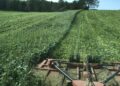
Fortunately, eco-ag farmers have another option for carbon sequestration. Any farming practice that increases soil organic matter will sequester carbon in a safe, stable form – and improve soil water-holding capacity and plant health at the same time. Building healthy soils will help both farmers and the climate in the long run far more than any CCS project.