

The R-Soil database promises community-level quorum sensing for soil
Farmers struggle in so many ways today because they are driving mostly blind. Going down the road with a dirty windshield feels dangerous; why would we do that with our business or with the food we feed our families? It feels like there’s no glass cleaner in the car and we’ve all had to make do — even researchers are stuck with limited windows into what’s going on in the soil.
That’s why I felt compelled to create the R-Soil Database. It aims to provide a way to holistically understand what’s going on in soil and plant tests and to tie that to practices and inputs.
Farmers often test a limited range of aspects — not all five that must be examined for a holistic understanding of soil. They’ll make decisions based on incomplete information, and we all know how that goes: it’s a gamble. Primarily, what’s done is mineral testing (usually M3 or Albrecht), pH, CEC, and sometimes Brix; sometimes plant sap analysis or tissue analysis; and sometimes PLFA.
But all too often, farmers don’t even compare their test results outside their own farms. They may compare results to previous seasons, which is essential, but what would happen if they could compare results to other farmers growing the same crops?

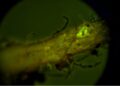
What if we could compare across all the regenerative aspects of soil: minerals, biology, organic matter, air & water, and plant roots & photosynthesis? What if we could compare soil minerals to plant sap analysis — not just your soil season to season, but compared to other growers focused on the same crops you grow? What if you could look at actual microscope images and video to compare soils or composts? What if you could compare your roots to other examples of roots and mycorrhizal fungi? What if you could share your results publicly? What if we tested before, during, and after, so farmers could see the cradle-to-grave effects of their choices, micro to macro? That means testing the compost we are thinking about adding. That means testing the manure before we buy it. Testing the biofertilizers we are using — practicing good quality control and documenting the process for our records and reference.
Why the R-Soil Database Exists
I want farmers to be able to see how much money the exemplars in this space are saving by ditching NPK reliance, building their soil structure and mineral coherence, and feeding the microbial life that powers the entire system by design. I want them to see it, and then to feel the burn — to know they could be saving so much, working so much more efficiently, and making the farm so much more attractive to the next generation as a business and a lifestyle.
My vision is to help not just farmers, but gardeners, ranchers, landscapers and everyone else who works with soil — to help them see the nuance between applications and methods so they can discern for themselves good, better and best. I envision a viral feedback loop developing and leading to rapid change in practice. For example, we’ll know how influential moon cycles are after a few years of tracking. Further, we’ll see how biodynamic farming, natural farming, effective microbes, and so many of these amazing methods and solutions compare in different soils, with different plants, and in different combinations with different equipment. We’ll also see massive innovation and development as these new insights emerge.
From Testing to Shared Insight
Farmers can look at a total digestion soil test, or even just an M3 soil test, and see what is missing on their plant sap analysis report. There’s a reason it’s not being incorporated into the plant properly — it could be pH, Eh, mineral, or biologically related. Using test results, we can deduce where the gap, toxicity or antagonism is to be found. For composters who use microscopes, this will provide the long-anticipated microbial database they’ve been waiting for. For consultants, this will be where they can showcase their work — before and after — and develop an online résumé and portfolio of their work in the soil, with sites and farmers.

We are currently in pre-beta testing and final building for the website. I’m collaborating with John Kempf and others to take things to a higher level of insight and service for everyone using the database. It’s going to allow clarity in spaces that were once confusing to so many people. I initially thought of it as a space for microscopists focused on soil and compost, since that didn’t exist, and we all get buried under a mountain of images and videos quite quickly when we start documenting our work in soil microscopy. I had to make it happen to organize my own work, and I knew others would benefit. From there, vetting soil and compost microscopy meant including mineral testing (total digestion, M3, Albrecht, etc.) as well as other biological assessments (PLFA, Microbiometer, eventually DNA), plus pH, Eh, CEC, Brix, and root assessments for mycorrhizal fungi.
Once this is done, almost everyone will end up with a basic understanding of what soil life is and should look like, and what we are doing with the microscope — how it’s not that complicated, and how many myths and misconceptions around soil and compost microscopy are easily dispelled with experience and understanding. It will certainly pull some mystery out of this space. In exchange, this community will become recognizable as a valuable asset because we will all be able to see before-and-after results, both in terms of actual produce and the soil, down to the minerals and biology.
Connecting Soil, Food and Health
I’m confident we’ll soon have food nutrition metrics as well from a portable sensor. Medical doctors, health practitioners, dietitians and nutritionists will be able to interpret test results and make health recommendations in relation to specific foods and nutritional levels. The regenerative agriculture community will be able to fully connect to those communities: health, longevity and even biohacking. They all rely on regenerative soil, and now we can prove it.

We are on the cusp of a revolution in regenerative food production and medicine, including ranching. Researchers are testing grassfed versus CAFO meat, and vitamin levels are sometimes more than 60 percent higher in grassfed — despite CAFO animals being supplemented with those same vitamins. Shockingly, grassfed animals have up to 600 percent more antioxidants. It’s not just one ranch accomplishing this — it’s a trend. An extensive Utah State University study by Stephan Van Vliet, which Dr. Allen Williams discussed in depth at an Eco-Ag 2024 keynote, shows the data are there.
When the R-Soil Database is up and running, soil consultants around the world will be able to upload test results, and these trends will be recognizable to the entire community in real time. The people are in place. The solutions are here. The need is real. The demand is real (just look at Azure Standard’s growth). The savings are real.
The movement is gaining steam and recognition. Are you ready to verify your work is working in an entirely new way?