Acres U.S.A.® Magazine
  • Articles
    • News
    • Ecological farming
      • Climate
      • Environmental Issues
      • Farm management & planning
      • Human health
    • Livestock
    • Farm
    • Crop
      • Crop management practices
        • Ag technology
        • Cover crops
        • Crop nutrition
          • Crop protection
          • Diseases
        • Crops
        • Fruits
    • Soil
    • Opinion
  • Resources
    • Magazine
    • Online Learning
    • Newsletters
    • Free Articles
    • Blog
  • Magazine Issues
    • 2026
      • February 2026
      • January 2026
    • 2025
      • December 2025
      • November 2025
      • October 2025
      • September 2025
      • August 2025
      • July 2025
      • June 2025
      • May 2025
      • April 2025
      • March 2025
      • February 2025
      • January 2025
    • 2024
      • December 2024
      • November 2024
      • October 2024
      • September 2024
      • August 2024
      • July 2024
      • June 2024
      • May 2024
      • April 2024
      • March 2024
      • February 2024
      • January 2024
    • 2023
      • December 2023
      • November 2023
      • October 2023
      • August 2023
      • July 2023
      • June 2023
      • May 2023
      • April 2023
      • March 2023
      • February 2023
      • January 2023
    • 2022
      • December 2022
      • November 2022
      • October 2022
      • September 2022
      • August 2022
      • July 2022
      • June 2022
      • May 2022
      • April 2022
      • March 2022
      • February 2022
  • About Us
    • Our History
    • Our Staff
    • Contact Us
    • Community
      • Soil Health Primer Resources
  • Events
    • Eco-Ag Conference
    • Farm Weird Event
    • Viroqua On Farm Event
  • Subscribe
  • Login
  • Register
No Result
View All Result
  • Articles
    • News
    • Ecological farming
      • Climate
      • Environmental Issues
      • Farm management & planning
      • Human health
    • Livestock
    • Farm
    • Crop
      • Crop management practices
        • Ag technology
        • Cover crops
        • Crop nutrition
          • Crop protection
          • Diseases
        • Crops
        • Fruits
    • Soil
    • Opinion
  • Resources
    • Magazine
    • Online Learning
    • Newsletters
    • Free Articles
    • Blog
  • Magazine Issues
    • 2026
      • February 2026
      • January 2026
    • 2025
      • December 2025
      • November 2025
      • October 2025
      • September 2025
      • August 2025
      • July 2025
      • June 2025
      • May 2025
      • April 2025
      • March 2025
      • February 2025
      • January 2025
    • 2024
      • December 2024
      • November 2024
      • October 2024
      • September 2024
      • August 2024
      • July 2024
      • June 2024
      • May 2024
      • April 2024
      • March 2024
      • February 2024
      • January 2024
    • 2023
      • December 2023
      • November 2023
      • October 2023
      • August 2023
      • July 2023
      • June 2023
      • May 2023
      • April 2023
      • March 2023
      • February 2023
      • January 2023
    • 2022
      • December 2022
      • November 2022
      • October 2022
      • September 2022
      • August 2022
      • July 2022
      • June 2022
      • May 2022
      • April 2022
      • March 2022
      • February 2022
  • About Us
    • Our History
    • Our Staff
    • Contact Us
    • Community
      • Soil Health Primer Resources
  • Events
    • Eco-Ag Conference
    • Farm Weird Event
    • Viroqua On Farm Event
  • Subscribe
No Result
View All Result
Acres U.S.A.® Magazine
No Result
View All Result
Home Magazine issues June 2023

Feeding in Hard Times

Kelly Klober by Kelly Klober
May 30, 2024
in June 2023
0
Feeding in Hard Times

Game Cock, Silver Spangled, White Feathered Bantam Hen, Dorking Hen, Black Polish Hen, Malay Cock, and Hen from A history of the earth and animated nature (1820) by Oliver Goldsmith (1730-1774). Digitally enhanced from our own original edition.

0
SHARES
6
VIEWS
Share on FacebookShare on Twitter

Advice for managing ever-fluctuating feed prices
Kelly Klober
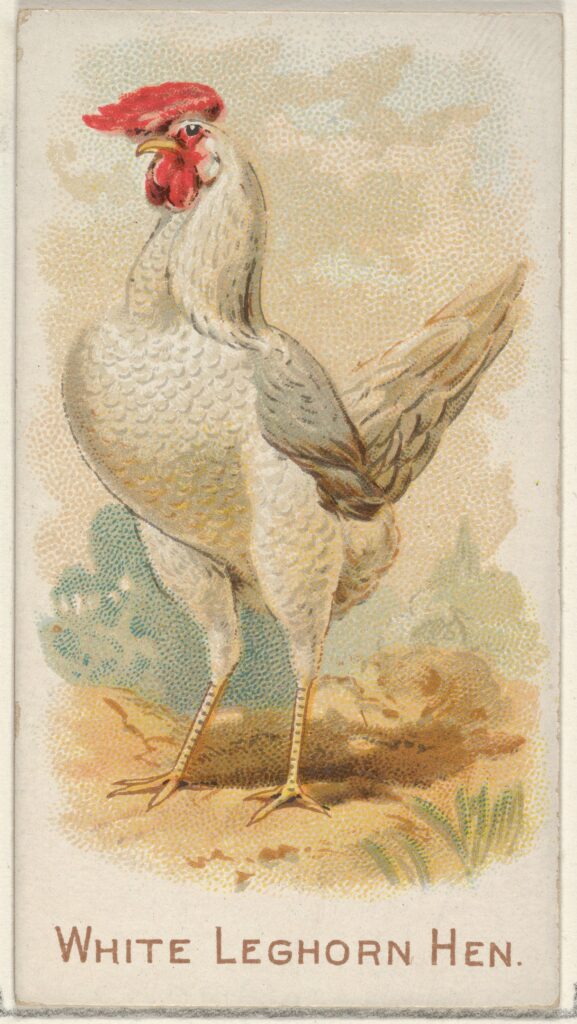
White Leghorn Hen, from the Prize and Game
Chickens series (N20) for Allen & Ginter Cigarettes

I heard an old joke my first day on the job as a field rep for a feed company and have heard variants of it several hundred times since then. In the face of ever-rising feed costs, an old farmer devised a feeding program whereby he would feed the animals in his care just half of what they had been fed the day before. 

Presumably, they would become conditioned to eat less — and, by his accounts, it was working fairly well. Fairly well until along about the tenth or eleventh day, when they would develop some sort of disease and start dying. 

Feed prices have ever been the bane of the stock raisers’ existence, and in my years as a feed salesman I was often viewed as being somewhere between the boll weevil and a lawyer turned politician. I did find some comfort in the words of my vo-ag teacher, who would say, “Boys, to have hogs to sell in the good times, you have to be feeding hogs in the hard times.”

That is why, I think, economics is often called the dark science. Feed is the fuel for a livestock venture, and high feed prices sometimes do more than just impact the bottom line. 

The current round of higher feed prices sometimes does more than just impact the bottom line. It’s starting to have an impact on poultry numbers — especially some of the rare and lesser-known breeds. They are certainly valuable for the genetic resources they represent, but many are also among the less productive varieties. 

The silver living in this is for heirloom breeds like the Light Brown Leghorn and Ancona. They were both in place on U.S. farms well before breeds like the New Hampshire were sanctioned by the American Poultry Association. And every value-adding measure used in the production of brown-shelled eggs will work with white eggs, too.

As feedstuffs are the primary out-pocket cost for a livestock venture, they have always been under sharp scrutiny. That scrutiny has spawned all sorts of theories about feed-cost management — some good, some not so good and some on par with the old farmer’s theory above. 

One of the most common is that the best time to buy needed feedstuffs is always at harvest. Always be wary of that word — always. In years of short crops, prices have sometimes been their highest at harvest, driven up by growing concerns over the crop’s size — an unknown while much of the crop is still in the field. These are termed “psychological markets,” motivated by fears and doubts, and prices in such years have often begun to fall not long after harvest. 

To pare feeding costs, some have chosen to invest in increasing levels and systems for on-farm processing and handling. There is logic in this, but at what level of feeding volume? The old rule-of-thumb has been that at least one hundred tons of feed must be fed annually to invest in an even minimal on-farm processing system. And just as ration component prices have increased, so too have energy and implement costs. 

The largest farm in our area, with a number of bins and its own mill and elevator leg, was sent scrambling for grain in a dry year. And another truth from that dark science of economics is that even if you could grow corn for two bits a bushel, if it’s selling for $6 a bushel in town, the cost of feeding that two-bit corn to the farm is a loss of its selling price.

Some of the proven methods for coping with feed prices are the simplest. The most basic way to stay plugged into the markets that affect your farm is to know where they are headed, and why. And while high prices and hard markets often have long tails, there are also early tells that they are coming. 

Old as the hills is the importance of comparison shipping. I learned early on not to get plugged in to a feed company just because of the newest cap they were giving away. Flipping about with ration choices can cause health and stress problems for the animals, but differences in price for the same feedstuffs can be found between different suppliers. I have seen differences of 5 cents or more per bushel on corn between elevators in the same town. 

With some ventures, the reverse of stocking up may be a better method of feed cost management. With our smaller ventures, we have often benefited from buying in smaller amounts — often our feed needs for just 10 to 14 days. As a result, there is less need for on-farm storage and feedstuffs are kept fresher and more palatable. This is also a way to average out highs and lows in feed prices across the course of a year. A 55-gallon drum with a sealable top will hold 350 pounds of shelled corn and most other feedstuffs.

A profit cannot be starved out of a livestock venture, and high feed costs will eventually resolve themselves as they result in the cutting back of livestock numbers. To use the terminology of the grain trade, the bigger the bull market, the bigger the bear market it produces to kill it. Just keep in mind that more money has been made feeding high-priced feed to high-priced livestock than feeding cheap feed to cheap livestock.

Higher feed costs cause the producer to take a long and hard look at where the feed inputs are going, how well they are being applied, and for what ends and benefits. Rather than cutting corners, the better measure may be to cut animal numbers and to apply limited resources to the animals that will use them best. In so doing, many have found an improvement in the output of the herd or flock, with limited, if any, real impact on earnings. 

Kelly Klober farms in Missouri and is the author of the books Dirt Hog, Talking Chicken and Beyond the Chicken.

← Previous Small-Scale Problems Next Honoring the Soil →
Tags: June 2023
Kelly Klober

Kelly Klober

Kelly Klober farms in Missouri and is the author of the books Dirt Hog, Talking Chicken and Beyond the Chicken.
Next Post
What’s Inside? July 2023 • Issue #625

What’s Inside? July 2023 • Issue #625

  • Trending
  • Comments
  • Latest
The Most Important Livestock in Our Fields

The Most Important Livestock in Our Fields

July 1, 2024
Glyphosate Does What It’s Designed to Do — Kill

Glyphosate Does What It’s Designed to Do — Kill

February 19, 2025
The Take-Half, Leave-Half Fallacy

The Take-Half, Leave-Half Fallacy

July 1, 2025
White snakeroot

Toxic Forages?

September 1, 2025
We Don’t Need Another Bridge — We Need an Off-Ramp

We Don’t Need Another Bridge — We Need an Off-Ramp

3
Under One Roof

Under One Roof

3
A Rose By Any Other Name

A Rose By Any Other Name

2
Terra Preta’s Biological Advantage

Terra Preta’s Biological Advantage

2
Don’t You Dare Disparage Sugar!

Don’t You Dare Disparage Sugar!

February 3, 2026
February 2026 • Issue #656

February 2026 • Issue #656

February 1, 2026
Fungal Exchange Capacity

Fungal Exchange Capacity

February 1, 2026
ECO-MEETINGS

ECO-MEETINGS

February 1, 2026

Recent News

Don’t You Dare Disparage Sugar!

Don’t You Dare Disparage Sugar!

February 3, 2026
February 2026 • Issue #656

February 2026 • Issue #656

February 1, 2026
Fungal Exchange Capacity

Fungal Exchange Capacity

February 1, 2026
ECO-MEETINGS

ECO-MEETINGS

February 1, 2026

About ACRES USA

Acres U.S.A.® Magazine

Acres U.S.A.® is North America’s oldest publisher on production-scale organic and regenerative farming. For more than 50 years, our mission has been to help farmers, ranchers and market gardeners grow food profitably and sustainably, with nature in mind.

Visit Our Advertisers

Magazine Issues

  • News
  • 2025
    • June 2025
    • May 2025
    • April 2025
    • March 2025
    • February 2025
    • January 2025
  • 2024 Articles
    • December 2024
    • November 2024
    • October 2024
    • September 2024
    • August 2024
    • July 2024
    • June 2024
    • May 2024
    • April 2024
    • March 2024
    • February 2024
    • January 2024
  • December 2023
    • December 2023
    • November 2023
    • October 2023
    • August 2023
    • July 2023
    • June 2023
    • May 2023
    • April 2023
    • March 2023
    • February 2023
    • January 2023
  • December 2022
    • November 2022
    • October 2022
    • September 2022
    • August 2022
    • July 2022
    • June 2022
    • May 2022
    • April 2022
    • March 2022

Contact Acres U.S.A

  • Contact Us
  • About Us
  • Advertise With Acres U.S.A.
  • My Subscription

Learn

  • Resources
  • Events
  • Magazine
  • Newsletters
  • Free Articles
  • Webinars
  • Online Courses
  • Bookstore

Our All Socials

Follow With Us...

  • My account
  • News
  • Ecological farming
  • Refund and Returns Policy
  • Privacy & Policy

© 2024 Acers USA Magazine

Welcome Back!

Login to your account below

Forgotten Password? Sign Up

Create New Account!

Fill the forms below to register

All fields are required. Log In

Retrieve your password

Please enter your username or email address to reset your password.

Log In
No Result
View All Result
  • HOME
  • ARTICLES
    • News
    • Farm
    • Ecological farming
    • Livestock
    • Crop
      • Crop management practices
      • Cover crops
      • Crop nutrition
      • Crop protection
      • Crops
      • Ag technology
    • Soil
    • Opinion
  • RESOURCES
    • Magazine
    • Online Learning
    • Newsletters
    • Blog
    • Free Articles
  • MAGAZINE ISSUES
    • 2025
      • June 2025
      • May 2025
      • April 2025
      • March 2025
      • February 2025
      • January 2025
    • 2024
      • December 2024
      • November 2024
      • October 2024
      • September 2024
      • August 2024
      • July 2024
      • June 2024
      • May 2024
      • April 2024
      • March 2024
      • February 2024
      • January 2024
    • 2023
      • December 2023
      • November 2023
      • October 2023
      • August 2023
      • July 2023
      • June 2023
      • May 2023
      • April 2023
      • March 2023
      • February 2023
      • January 2023
  • ABOUT US
    • Our History
    • Our Staff
    • Contact Us
    • Community
      • Soil Health Primer Resources
  • EVENTS
    • Eco-Ag Conference
    • On-Farm Viroqua Event
    • Farm Weird
  • SUBSCRIBE
  • Login
  • Sign Up
  • Cart

© 2024 Acers USA Magazine

Are you sure want to unlock this post?
Unlock left : 0
Are you sure want to cancel subscription?