Acres U.S.A.® Magazine
  • Articles
    • News
    • Ecological farming
      • Climate
      • Environmental Issues
      • Farm management & planning
      • Human health
    • Livestock
    • Farm
    • Crop
      • Crop management practices
        • Ag technology
        • Cover crops
        • Crop nutrition
          • Crop protection
          • Diseases
        • Crops
        • Fruits
    • Soil
    • Opinion
  • Resources
    • Magazine
    • Online Learning
    • Newsletters
    • Free Articles
    • Blog
  • Magazine Issues
    • 2026
      • February 2026
      • January 2026
    • 2025
      • December 2025
      • November 2025
      • October 2025
      • September 2025
      • August 2025
      • July 2025
      • June 2025
      • May 2025
      • April 2025
      • March 2025
      • February 2025
      • January 2025
    • 2024
      • December 2024
      • November 2024
      • October 2024
      • September 2024
      • August 2024
      • July 2024
      • June 2024
      • May 2024
      • April 2024
      • March 2024
      • February 2024
      • January 2024
    • 2023
      • December 2023
      • November 2023
      • October 2023
      • August 2023
      • July 2023
      • June 2023
      • May 2023
      • April 2023
      • March 2023
      • February 2023
      • January 2023
    • 2022
      • December 2022
      • November 2022
      • October 2022
      • September 2022
      • August 2022
      • July 2022
      • June 2022
      • May 2022
      • April 2022
      • March 2022
      • February 2022
  • About Us
    • Our History
    • Our Staff
    • Contact Us
    • Community
      • Soil Health Primer Resources
  • Events
    • Eco-Ag Conference
    • Farm Weird Event
    • Viroqua On Farm Event
  • Subscribe
  • Login
  • Register
No Result
View All Result
  • Articles
    • News
    • Ecological farming
      • Climate
      • Environmental Issues
      • Farm management & planning
      • Human health
    • Livestock
    • Farm
    • Crop
      • Crop management practices
        • Ag technology
        • Cover crops
        • Crop nutrition
          • Crop protection
          • Diseases
        • Crops
        • Fruits
    • Soil
    • Opinion
  • Resources
    • Magazine
    • Online Learning
    • Newsletters
    • Free Articles
    • Blog
  • Magazine Issues
    • 2026
      • February 2026
      • January 2026
    • 2025
      • December 2025
      • November 2025
      • October 2025
      • September 2025
      • August 2025
      • July 2025
      • June 2025
      • May 2025
      • April 2025
      • March 2025
      • February 2025
      • January 2025
    • 2024
      • December 2024
      • November 2024
      • October 2024
      • September 2024
      • August 2024
      • July 2024
      • June 2024
      • May 2024
      • April 2024
      • March 2024
      • February 2024
      • January 2024
    • 2023
      • December 2023
      • November 2023
      • October 2023
      • August 2023
      • July 2023
      • June 2023
      • May 2023
      • April 2023
      • March 2023
      • February 2023
      • January 2023
    • 2022
      • December 2022
      • November 2022
      • October 2022
      • September 2022
      • August 2022
      • July 2022
      • June 2022
      • May 2022
      • April 2022
      • March 2022
      • February 2022
  • About Us
    • Our History
    • Our Staff
    • Contact Us
    • Community
      • Soil Health Primer Resources
  • Events
    • Eco-Ag Conference
    • Farm Weird Event
    • Viroqua On Farm Event
  • Subscribe
No Result
View All Result
Acres U.S.A.® Magazine
No Result
View All Result
Home Magazine issues July 2022

Eliminating the Burndown Pass

Rick Clark by Rick Clark
October 30, 2024
in July 2022
0
Eliminating the Burndown Pass

Photo courtesy of Rick Clark

0
SHARES
8
VIEWS
Share on FacebookShare on Twitter

A good defense leads to a good offense

Rick Clark

Cover crops’ primary job is to improve the soil. In my opinion, they are just as important — if not more important — than the cash crop! 

Cover crops help smother weeds, control pests and diseases, enhance water availability and increase biodiversity on the farm. Cover crops are often thought of as defensive mechanism against something that is “abnormal.” An abnormal event is exactly the reason I started using cover crops in the first place. This experience absolutely changed the way I viewed farming. 

We were some of the best tillers of the soil in the county, and we were proud of it. It was a warm April day and we had finished our usual preparation — a shallow tillage pass followed by a slightly deeper tillage pass to air out the soil, in order to hopefully plant corn the next day. That evening there was a 1-inch rain event that moved soil from the field to the ditch and onto the road. I was absolutely shocked at the amount of erosion that had occurred. It hit me square in the face that my precious topsoil was being lost. It was definitely time for a change! 

I researched all I could about cover crops and the various ways to terminate them successfully. This led me to the tillage radish — a great species that has a deep taproot that can sequester nutrients deep from the profile and store them in a tuber close to the surface. The other benefit of the tillage radish is that it will die when the temperature drops below 25 degrees Fahrenheit. This sounded perfect for a rookie like me! 

The cash crop of soybeans was harvested that fall and the tillage radish was drilled into the bean stubble. It was exciting to watch the field turn green in the fall and to be so different than the rest of our farm, which was being destroyed with tillage. The radishes grew and did what they were intended to do — sequestering nutrients, mitigating compaction and self-terminating in the cold. Perfect! 

The next spring we no-tilled corn into that field using the same chemical and fertility program as the rest of the farm. The only difference was the no-tillage. By the time fall arrived, the field following the radish experiment looked awesome. Not only was that field the highest-yielding field on the farm, but it also had the best Return on Investment (ROI). I was hooked! How fast could we take this across the rest of the farm?
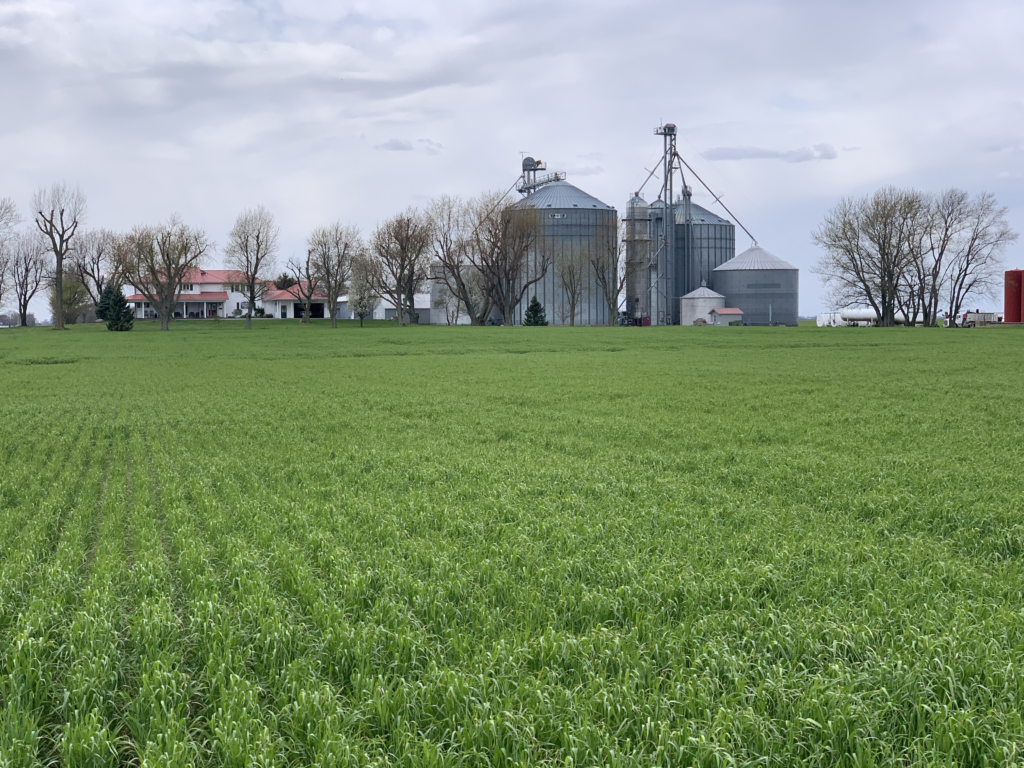
Photo courtesy of Rick Clark

A good defense always leads to a good offense. After being in the cover crop and no-till mindset for four years, I realized covers were an offensive juggernaut. We started utilizing and testing cereal rye to assess the nutrients that were being sequestered and how much of each. What we found was absolutely amazing. By letting these cover crops grow further into maturity, they were pulling enough nutrients to the surface to raise our cash crops with no synthetic inputs. 

We are now heading into year eight of no synthetic P or K and year three of no synthetic N. We still monitor the nutrients in the soil through the Haney soil health test. We just received our spring analysis, and everything is either the same as two years ago or higher. This is what building soil health and working with Mother Nature can do for the soil. It is amazing to watch the transformation happen in front of your eyes in a relatively short time period. 

The next logical step for our farm was to “farm green” and eliminate the high cost of burndown chemistry. We were talking about removing all tillage and all chemistry. In my opinion, this is the summit of all regenerative farming practices! 

I have to give credit to Dr. Erin Silva at the University of Wisconsin-Madison for inspiring and teaching me to farm regeneratively. Erin taught me and many other farmers how to plant soybeans into cereal rye at boot stage and then wait 35 to 40 days to roll-crimp the rye and the beans together. The first year of our experiment, we cut our burndown chemistry rates in half. The second year we eliminated the burndown chemistry completely. This was really the turning point in our operation that got me thinking about transitioning to organic with no tillage. 

There are a couple of things that must happen in the fall to dramatically increase the success of farming green. First, the cover crop must be planted as early as possible in the fall. Second, there needs to be diversity whenever possible. Farming green always goes back to the six principles of soil health: minimizing disturbance, adding diversity, maintaining living roots, armoring the soil, remembering your context and integrating livestock. My advice it to learn and follow these principles religiously. 

When you look at current input prices, it makes total sense to farm green and to follow the principles of soil health. I firmly believe that every acre of soybeans should be grown with cereal rye as the offensive powerhouse to sequester nutrients and suppress weeds with zero chemistry. 

On our farm, we are committed to farming green in order to build soil health and human health for generations to come. 

Remember — if you aren’t just a little uncomfortable with your farming practices, you aren’t trying hard enough to change! 

Rick Clark grows row crops and cattle in central Indiana. Follow him on social media at Farmgreen13, and visit his website at farmgreen.land. 

← Previous Companion Planting for Pest Management Next Nutrient Management for Market Farms →
Tags: July 2022
Rick Clark

Rick Clark

Rick Clark grows row crops and cattle in central Indiana. Follow him on social media at Farmgreen13, and visit his website at farmgreen.land.

Next Post
Regenerating Soil with Betsy Ross

Regenerating Soil with Betsy Ross

  • Trending
  • Comments
  • Latest
The Most Important Livestock in Our Fields

The Most Important Livestock in Our Fields

July 1, 2024
Glyphosate Does What It’s Designed to Do — Kill

Glyphosate Does What It’s Designed to Do — Kill

February 19, 2025
The Take-Half, Leave-Half Fallacy

The Take-Half, Leave-Half Fallacy

July 1, 2025
White snakeroot

Toxic Forages?

September 1, 2025
We Don’t Need Another Bridge — We Need an Off-Ramp

We Don’t Need Another Bridge — We Need an Off-Ramp

3
Under One Roof

Under One Roof

3
A Rose By Any Other Name

A Rose By Any Other Name

2
Terra Preta’s Biological Advantage

Terra Preta’s Biological Advantage

2
Don’t You Dare Disparage Sugar!

Don’t You Dare Disparage Sugar!

February 3, 2026
February 2026 • Issue #656

February 2026 • Issue #656

February 1, 2026
Fungal Exchange Capacity

Fungal Exchange Capacity

February 1, 2026
ECO-MEETINGS

ECO-MEETINGS

February 1, 2026

Recent News

Don’t You Dare Disparage Sugar!

Don’t You Dare Disparage Sugar!

February 3, 2026
February 2026 • Issue #656

February 2026 • Issue #656

February 1, 2026
Fungal Exchange Capacity

Fungal Exchange Capacity

February 1, 2026
ECO-MEETINGS

ECO-MEETINGS

February 1, 2026

About ACRES USA

Acres U.S.A.® Magazine

Acres U.S.A.® is North America’s oldest publisher on production-scale organic and regenerative farming. For more than 50 years, our mission has been to help farmers, ranchers and market gardeners grow food profitably and sustainably, with nature in mind.

Visit Our Advertisers

Magazine Issues

  • News
  • 2025
    • June 2025
    • May 2025
    • April 2025
    • March 2025
    • February 2025
    • January 2025
  • 2024 Articles
    • December 2024
    • November 2024
    • October 2024
    • September 2024
    • August 2024
    • July 2024
    • June 2024
    • May 2024
    • April 2024
    • March 2024
    • February 2024
    • January 2024
  • December 2023
    • December 2023
    • November 2023
    • October 2023
    • August 2023
    • July 2023
    • June 2023
    • May 2023
    • April 2023
    • March 2023
    • February 2023
    • January 2023
  • December 2022
    • November 2022
    • October 2022
    • September 2022
    • August 2022
    • July 2022
    • June 2022
    • May 2022
    • April 2022
    • March 2022

Contact Acres U.S.A

  • Contact Us
  • About Us
  • Advertise With Acres U.S.A.
  • My Subscription

Learn

  • Resources
  • Events
  • Magazine
  • Newsletters
  • Free Articles
  • Webinars
  • Online Courses
  • Bookstore

Our All Socials

Follow With Us...

  • My account
  • News
  • Ecological farming
  • Refund and Returns Policy
  • Privacy & Policy

© 2024 Acers USA Magazine

Welcome Back!

Login to your account below

Forgotten Password? Sign Up

Create New Account!

Fill the forms below to register

All fields are required. Log In

Retrieve your password

Please enter your username or email address to reset your password.

Log In
No Result
View All Result
  • HOME
  • ARTICLES
    • News
    • Farm
    • Ecological farming
    • Livestock
    • Crop
      • Crop management practices
      • Cover crops
      • Crop nutrition
      • Crop protection
      • Crops
      • Ag technology
    • Soil
    • Opinion
  • RESOURCES
    • Magazine
    • Online Learning
    • Newsletters
    • Blog
    • Free Articles
  • MAGAZINE ISSUES
    • 2025
      • June 2025
      • May 2025
      • April 2025
      • March 2025
      • February 2025
      • January 2025
    • 2024
      • December 2024
      • November 2024
      • October 2024
      • September 2024
      • August 2024
      • July 2024
      • June 2024
      • May 2024
      • April 2024
      • March 2024
      • February 2024
      • January 2024
    • 2023
      • December 2023
      • November 2023
      • October 2023
      • August 2023
      • July 2023
      • June 2023
      • May 2023
      • April 2023
      • March 2023
      • February 2023
      • January 2023
  • ABOUT US
    • Our History
    • Our Staff
    • Contact Us
    • Community
      • Soil Health Primer Resources
  • EVENTS
    • Eco-Ag Conference
    • On-Farm Viroqua Event
    • Farm Weird
  • SUBSCRIBE
  • Login
  • Sign Up
  • Cart

© 2024 Acers USA Magazine

Are you sure want to unlock this post?
Unlock left : 0
Are you sure want to cancel subscription?