
Glyphosate Impairs Glucose Regulation
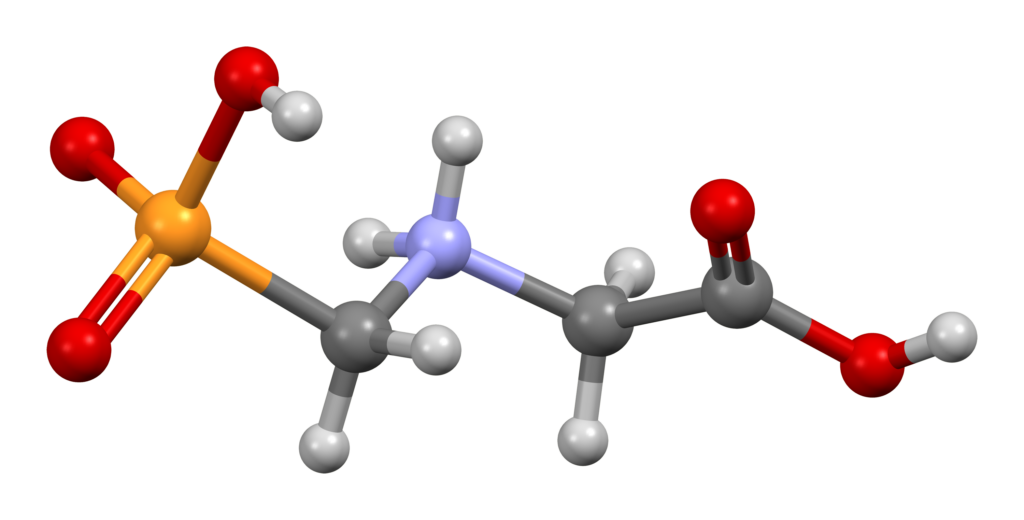
A recent study published in Scientific Reports has revealed a concerning link between environmental exposure to glyphosate and disruptions in glucose homeostasis — the process by which the body maintains stable blood sugar (glucose) levels within a narrow range, ensuring that cells receive a steady supply of energy while preventing harmful fluctuations.
Source: Ben Mills, Wikimedia
Conducted using data from the National Health and Nutrition Examination Survey (NHANES) from 2013 to 2016, the study underscores potential metabolic risks associated with one of the most widely used herbicides in agriculture. While much of the debate over glyphosate has focused on its carcinogenic potential, this study shifts attention to its impact on glucose metabolism.
Researchers found that individuals with higher glyphosate exposure exhibited signs of impaired glucose regulation, a key factor in the development of type-2 diabetes.
The study also found that the negative effects of glyphosate exposure were more pronounced in obese individuals. Additionally, alkaline phosphatase (ALP), an enzyme involved in liver function and bone metabolism, was identified as a partial mediator in this relationship. Higher ALP levels were associated with greater disruptions in glucose homeostasis, suggesting that glyphosate may influence metabolic pathways through liver function.
These findings raise concerns about the long-term metabolic consequences of glyphosate exposure. With its widespread use in conventional agriculture, individuals are exposed through food, water, and environmental contamination.
Herbicides on the Brain
Glyphosate Exposure Exacerbates Neuroinflammation and Alzheimer’s-Like Symptoms

Source: GPT-4o
A recent study published in the Journal of Neuroinflammation has revealed that exposure to glyphosate, a widely used herbicide, can lead to significant and lasting adverse effects on brain health. Conducted by researchers at Arizona State University and the Translational Genomics Research Institute, the study used a mouse model to investigate the impact of glyphosate exposure on neuroinflammation and Alzheimer’s disease-like pathology.
The researchers administered glyphosate to both genetically modified mice predisposed to Alzheimer’s disease and non-transgenic control mice over a 13-week period. Following this exposure, the mice underwent a six-month recovery phase without further glyphosate contact. Despite this extended recovery period, the study found that glyphosate’s primary metabolite, aminomethylphosphonic acid (AMPA), remained detectable in the cortical tissues of the brain.
Both the Alzheimer’s-prone and control mice exhibited significant increases in brain inflammation following glyphosate exposure. This neuroinflammatory response is a known contributor to the progression of neurodegenerative diseases.
In the Alzheimer’s-prone mice, glyphosate exposure exacerbated the accumulation of amyloid-beta plaques and tau protein tangles — hallmarks of Alzheimer’s disease. These pathological changes were observed even after the six-month recovery period.
The study also noted that glyphosate-exposed mice displayed anxiety-like behaviors, suggesting that the herbicide’s impact extends beyond physical brain changes to affect behavior.
These findings raise concerns about the long-term neurological effects of glyphosate exposure, particularly given its widespread use in agriculture and potential presence in food and water sources.
Atrazine-Induced Neurotoxicity
A recent study published in Research has unveiled significant insights into the neurotoxic effects of atrazine, a widely used herbicide, on the hypothalamus — a critical brain region governing numerous physiological processes. The study elucidates how atrazine exposure leads to structural and functional impairments in the hypothalamus, potentially increasing the risk of neurodegenerative diseases.
The researchers discovered that exposure to atrazine resulted in notable morphological and structural damage to the hypothalamus, including the loss of mature neurons and activation of microglia, the brain’s primary immune cells. These changes were observed to be dose-dependent, with higher atrazine concentrations causing more severe damage.
They also found that atrazine exposure prompted hypothalamic neural stem cells (HtNSCs) to migrate to damaged areas. However, instead of facilitating repair, these HtNSCs exhibited signs of senescence — ceasing to divide and grow — thereby impairing their regenerative capacity.
Given atrazine’s widespread use and its presence in agricultural runoff, these results underscore the importance of re-evaluating environmental safety standards and regulatory policies to mitigate potential health risks to both farmers and the public.
AgriStress Helpline
AgriStress Helpline is a free and confidential crisis and support line that you can call or text 24/7. The helpline is answered by trained professionals who can offer support and help you find mental health and agriculture-related resources in your area. 833-897-2474
Bats Play Key Role in Combating Rice Pests
Rice is the staple food for more than half of the world’s population. But in Asia, planthopper insects can cause massive damage to rice fields. The insects are very mobile during their dispersal phase and can use winds to travel long distances, often flying at altitudes over 3,000 feet.
A scientific team led by Christian Voigt of Leibniz-IZW has now shown that the Wrinkle-lipped free-tailed bat (Mops plicatus) is able to use these heights as hunting grounds. “Mops plicatus bat is a skillful hunter that specializes in catching insects in the open air — i.e., above the vegetation,” said Voigt. The team investigated the hunting behaviour of Wrinkle-lipped free-tailed bats in the entire airspace using miniaturized GPS loggers.

Wrinkle-lipped bats are a tropical bat species, common in Southeast Asia and known to roost in large caves in colonies of hundreds to millions. When planthoppers appear in large numbers, they travel at high altitudes to raid rice fields in other regions and reproduce there.
The scientists captured several adult Wrinkle-lipped free-tailed bats in a cave in Lopburi province, central Thailand, using mist nets and hand nets. They attached a 0.95-gram miniaturized GPS logger to the back of each animal using a medical skin glue. The GPS loggers were programmed to record the spatial position in all three dimensions at 10-minute intervals throughout the night. After a few days, the miniaturized loggers fell off and were collected by the scientists.
“We were able to demonstrate that Mops plicatus has large foraging areas of up to 1,743 km², which is roughly twice the size of the area of Berlin,” said Voigt. “No vertebrate with a body weight of just 18 grams has ever been reported to have such a foraging range. Some bats traveled distances of more than 200 km from the cave on a single foraging trip and spent up to 11.5 hours in continuous flight in a single night. They spent more than 50 percent of the time at altitudes of more than 150 m [500 feet] above ground, regularly reaching more than 1,600 m [5,250 feet] above ground.”
This study is just one more example of a natural pest control method that should be better understood and encouraged.
Nutrient Management = Nutrition Management
A recent global meta-analysis published in Agronomy for Sustainable Development has demonstrated that the application of fertilizers not only enhances crop yields but can also significantly improve the nutritional quality of food crops.
The study, which synthesized data from numerous field trials worldwide, found that, on average, fertilizer use increased crop yields by 30.9 percent. Moreover, the nutritional quality of these crops, encompassing essential components such as vitamins, minerals, and proteins, also saw a notable enhancement — 11.9 percent.
These findings underscore the dual benefits of appropriate fertilizer application in addressing both food security and nutritional deficiencies.
Modern U.S. Corn Varieties Have Forgotten How to Seek Out Water
A corn plant knows how to find water in soil with the very tips of its roots, but some varieties, including many used for breeding high-yielding corn in the U.S., appear to have lost a portion of that ability, according to a Stanford-led study.
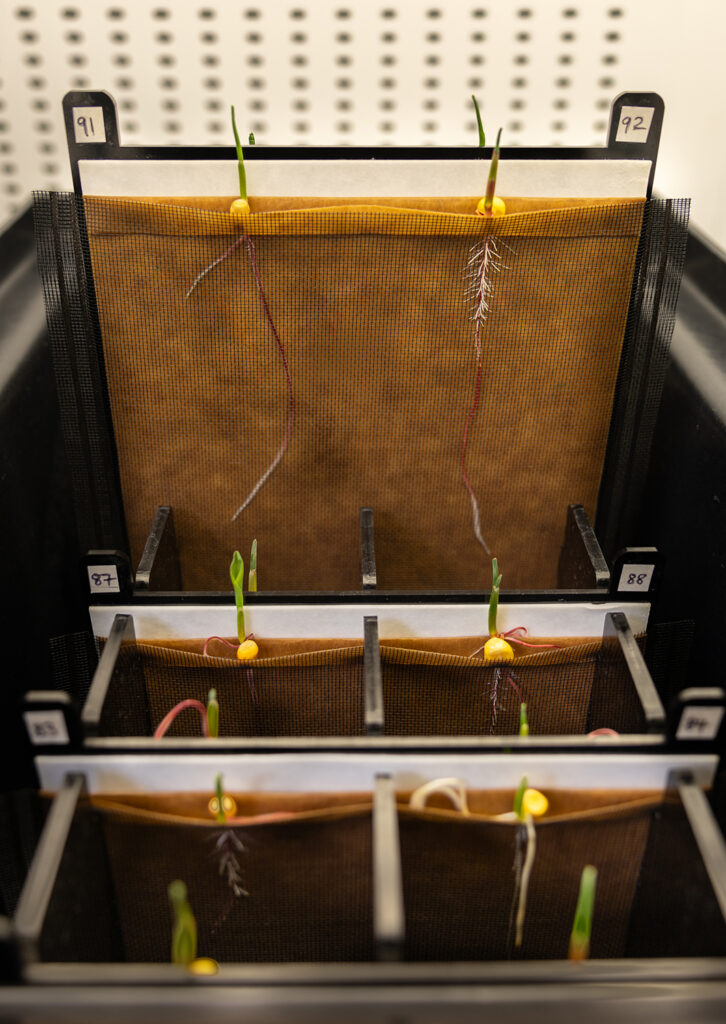
The study, published in the journal Science, uncovers genetic mechanisms behind root “hydropatterning,” or how plant roots branch toward water and avoid dry spaces in soil. In particular, the researchers discovered that ethylene, a plant hormone known to help bananas ripen, also influences how roots grow to seek water.
“Plants are sophisticated in the way that they ‘see’ where water is in soil, and the genes that are responsible for that play an important role in helping the plant create a root system that is optimized for efficient water uptake,” said José Dinneny, the study’s senior author. Essentially, the plants use the gaseous ethylene produced by their roots to sense where the air spaces are in the soil. Then they regulate the branching of roots downstream of that hormone.
While the lab had previously revealed the fine sensitivity that corn roots have for detecting water, just how well a plant does this was found to heavily depend on the specific variety of corn.
For this study, the researchers developed a new, simplified way to study water sensitivity in roots, making it possible to analyze the responses of 250 corn varieties that reflect the genetic pool present in modern corn breeding. They found that corn varieties adapted to grow in tropical or subtropical areas like Mexico were very good at making new root branches toward water and avoiding dry areas. In contrast, the varieties adapted to temperate regions of North America frequently grew roots in many directions without distinguishing between dry and wet areas in the soil.
The development of modern corn grown in the U.S., a major crop often grown on highly fertile agricultural lands, may have weakened the plants’ water-seeking root response, the researchers said. They also noted that comparisons to field studies showed that stronger hydropatterning was linked to greater root depth.
“Interestingly, the plants that are better at sensing where the water is are also making deeper root systems,” said lead author Johannes Scharwies. “One hypothesis could be that if the plant doesn’t waste time growing root branches into places where it doesn’t find any water and nutrients, then it has more energy to grow deeper down where water is more likely.”
The researchers found through genetic analyses that two plant hormones, auxin and ethylene, play a role in how corn roots respond to water. While auxin was already known to help control this process, ethylene’s involvement was a new discovery. In experiments with thale cress (Arabidopsis thaliana) — a model plant often used in research — the researchers found that the genetic signaling pathways of the two hormones complement each other: auxin signaling promotes root branch development toward water, while ethylene suppresses branching when the root is exposed to air.
Another Insect ID Tool
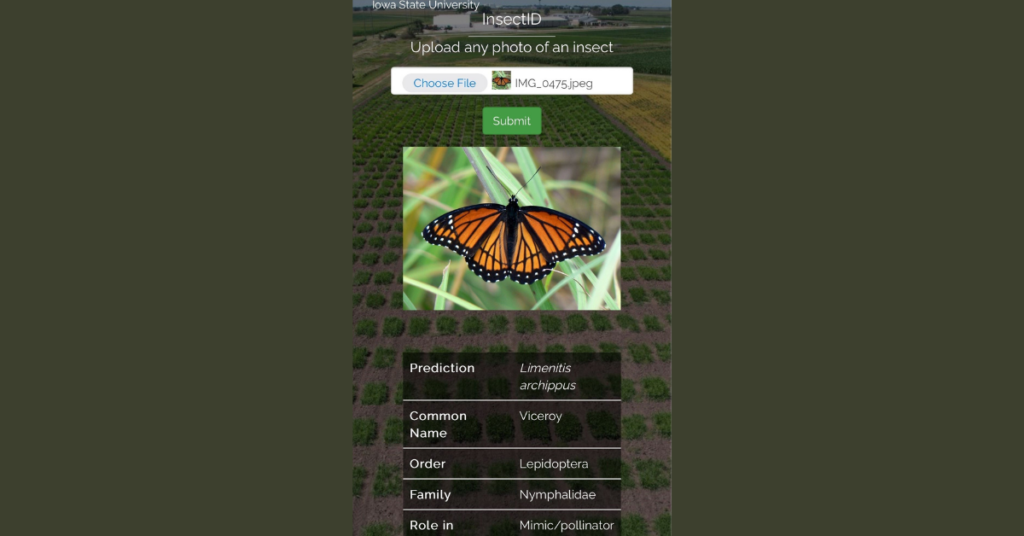
Source: Iowa State University
InsectNet, a new tool from Iowa State University, is backed by a dataset of 12 million insect images, including many collected by citizen-scientists. It provides identification and predictions for more than 2,500 insect species at more than 96 percent accuracy. The prediction includes the insect’s taxonomic classification and role in the ecosystem as a pest, predator, pollinator, parasitoid, decomposer, herbivore, indicator and invasive species.
https://insectapp.las.iastate.edu