Acres U.S.A.® Magazine
  • Articles
    • News
    • Ecological farming
      • Climate
      • Environmental Issues
      • Farm management & planning
      • Human health
    • Livestock
    • Farm
    • Crop
      • Crop management practices
        • Ag technology
        • Cover crops
        • Crop nutrition
          • Crop protection
          • Diseases
        • Crops
        • Fruits
    • Soil
    • Opinion
  • Resources
    • Magazine
    • Online Learning
    • Newsletters
    • Free Articles
    • Blog
  • Magazine Issues
    • 2026
      • February 2026
      • January 2026
    • 2025
      • December 2025
      • November 2025
      • October 2025
      • September 2025
      • August 2025
      • July 2025
      • June 2025
      • May 2025
      • April 2025
      • March 2025
      • February 2025
      • January 2025
    • 2024
      • December 2024
      • November 2024
      • October 2024
      • September 2024
      • August 2024
      • July 2024
      • June 2024
      • May 2024
      • April 2024
      • March 2024
      • February 2024
      • January 2024
    • 2023
      • December 2023
      • November 2023
      • October 2023
      • August 2023
      • July 2023
      • June 2023
      • May 2023
      • April 2023
      • March 2023
      • February 2023
      • January 2023
    • 2022
      • December 2022
      • November 2022
      • October 2022
      • September 2022
      • August 2022
      • July 2022
      • June 2022
      • May 2022
      • April 2022
      • March 2022
      • February 2022
  • About Us
    • Our History
    • Our Staff
    • Contact Us
    • Community
      • Soil Health Primer Resources
  • Events
    • Eco-Ag Conference
    • Farm Weird Event
    • Viroqua On Farm Event
  • Subscribe
  • Login
  • Register
No Result
View All Result
  • Articles
    • News
    • Ecological farming
      • Climate
      • Environmental Issues
      • Farm management & planning
      • Human health
    • Livestock
    • Farm
    • Crop
      • Crop management practices
        • Ag technology
        • Cover crops
        • Crop nutrition
          • Crop protection
          • Diseases
        • Crops
        • Fruits
    • Soil
    • Opinion
  • Resources
    • Magazine
    • Online Learning
    • Newsletters
    • Free Articles
    • Blog
  • Magazine Issues
    • 2026
      • February 2026
      • January 2026
    • 2025
      • December 2025
      • November 2025
      • October 2025
      • September 2025
      • August 2025
      • July 2025
      • June 2025
      • May 2025
      • April 2025
      • March 2025
      • February 2025
      • January 2025
    • 2024
      • December 2024
      • November 2024
      • October 2024
      • September 2024
      • August 2024
      • July 2024
      • June 2024
      • May 2024
      • April 2024
      • March 2024
      • February 2024
      • January 2024
    • 2023
      • December 2023
      • November 2023
      • October 2023
      • August 2023
      • July 2023
      • June 2023
      • May 2023
      • April 2023
      • March 2023
      • February 2023
      • January 2023
    • 2022
      • December 2022
      • November 2022
      • October 2022
      • September 2022
      • August 2022
      • July 2022
      • June 2022
      • May 2022
      • April 2022
      • March 2022
      • February 2022
  • About Us
    • Our History
    • Our Staff
    • Contact Us
    • Community
      • Soil Health Primer Resources
  • Events
    • Eco-Ag Conference
    • Farm Weird Event
    • Viroqua On Farm Event
  • Subscribe
No Result
View All Result
Acres U.S.A.® Magazine
No Result
View All Result
Home Magazine issues April 2022

Considering On-Farm Inputs

Sam Malriat by Sam Malriat
November 30, 2024
in April 2022
0
Considering On-Farm Inputs

Compost can be a great way to provide nutrients and build soil health.

0
SHARES
17
VIEWS
Share on FacebookShare on Twitter

Replacing some inputs with those produced naturally on the farm

Sam Malriat

There’s no doubt that farmers have a lot more tools at their disposal to manage soil fertility, pests and disease today than they did 30 years ago. The unfortunate thing is that having so many tools has helped obscure the fact that the more basic elements of a naturally cycling system are still the most effective way to produce healthy crops.

At Rodale Institute, when we meet with farmers across the country, we take a broad look at their entire farm system. We look at soil test results, buffer zones, crop rotation, tillage practices and available equipment, and we use that information to help us make informed decisions about how to implement holistic improvements. 

But one of the documents we’re receiving more and more often when visiting a farm for the first time is a long, long list of inputs. On some conventional farms, these inputs make sense given the system in which they operate — if you plant Roundup Ready soybeans, success is contingent upon the application of herbicide and maybe an adjuvant or a pesticide. 

But among organic, transitioning and regenerative farmers, or farmers using those practices to market to their consumers, the list of inputs used should theoretically be smaller, since they should be relying on natural systems to fix nutrients, balance the population of pests and beneficials, and produce healthy plants that resist disease. It’s increasingly common for our consultants to receive a list of (sometimes extremely expensive) inputs for crop rotations that just don’t require them.

Overall, the volume and variety of products available has been a boon to organic farmers who want to use more targeted, precision technologies to treat specific issues. The Organic Materials Review Institute (OMRI) products list, which provides an exceptionally helpful database of all products that are allowable for use in certified organic systems, only listed around 2,000 products in 2010. Today it includes over 8,000. 

We’ve learned a lot more about disease pathways, pest lifecycles and plant microbial interactions in that timeframe — all of which are exceptionally positive developments in agricultural production. But unfortunately, the increase in the number of products that make unverifiable claims has also increased. It’s not that they’re necessarily fraudulent or non-compliant; it’s that there hasn’t always been a rigorous testing regimen applied to their use on farms.
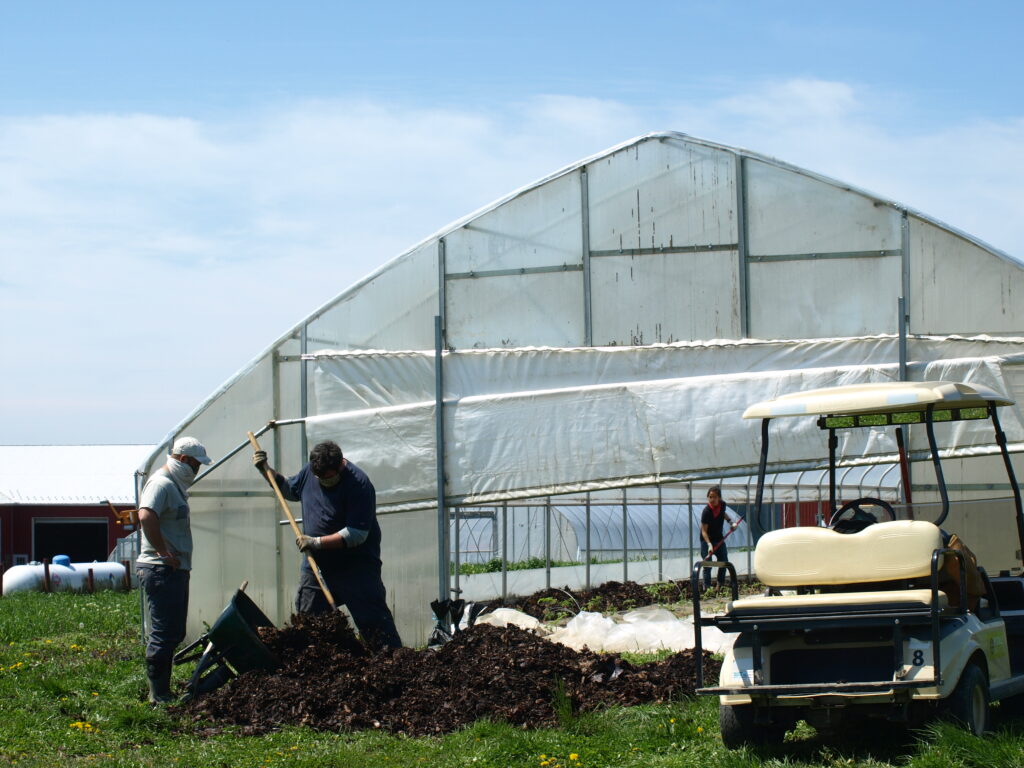
Compost can be a great way to provide nutrients and build soil health.

There are several other reasons why purchasing dozens of inputs isn’t always the best choice — compared to using one’s own on-farm inputs. One is obviously the associated cost. It’s difficult to see farmers spending small fortunes on inputs without a clear justification for what they’re meant to accomplish; this is why we always work to try and trim the list down when appropriate. 
Another reason is that heavily input-based operations are largely inconsistent with the typical consumer’s perception of an organic system — and rightfully so. The manufacturing and shipping of these inputs incurs carbon emissions, which can sometimes even compete with the externalized costs of conventional farms, if the list of inputs is long enough. How are we really improving agriculture if we’re shipping dozens of products from several different manufacturers to one farm every single season? 

Yet another reason is the dependence these input-heavy systems may create. If a grower requires inputs to produce a healthy yield, what if one of them goes off the market? How will they adapt the system if something isn’t readily available — or more likely, if the supply chain is disrupted for a significant length of time? A nutrition management system should not require a large number of inputs year after year — improving soil health should mean fewer inputs over time.

Before you purchase an input, it’s important to ask yourself, “Am I buying this because I heard that it’s popular? Have I done my due diligence in exploring the active ingredients and feel confident in the data provided on the label claims? Have I talked to any other growers about it?” 

Processed animal-based inputs can be a great way to supplement your cash-crop rotation, to apply via side-dress techniques or to target specific fertility issues. It’s also important to remember that raw manure can usually be obtained at a reasonable price (plus shipping) and will provide myriad benefits to soil and subsequent cash crops. To be more methodical with manure application, get a manure analysis performed on your source, don’t create a situation where spreading manure becomes an environmental hazard, and then use it in a targeted way by understanding what your total macronutrient contribution to the system will be.

Overall, the increase in products and technology available to organic, transitional and the greater farming community today is a good thing. There are plenty of companies that produce inputs that are perfectly reasonable and valuable in organic and transitioning systems. We don’t endorse any specific product, but we do sometimes recommend tools to farmers that we know work properly or that have made data available for our review. 

Be critical of the inputs you’re considering using, and when in doubt, stick to the core tenets of improving soil health: cover cropping, compost or manure application, crop rotation, grazing and reducing tillage.

Sam Malriat is the Director of the Organic Consulting program at the Rodale Institute in Kutztown, Pennsylvania. Farmers interested in transitioning their land to organic can contact Rodale Institute’s Organic Crop Consulting Services to get started. Reach out at Consulting@RodaleInstitute.org or 610-683-1416.


← Previous ECO-UPDATE Next Transitioning Land →
Tags: April 2022
Sam Malriat

Sam Malriat

Sam Malriat is the Director of the Organic Consulting program at the Rodale Institute in Kutztown, Pennsylvania. Farmers interested in transitioning their land to organic can contact Rodale Institute’s Organic Crop Consulting Services to get started. Reach out at Consulting@RodaleInstitute.org or 610-683-1416.

Next Post
May 2022 • Issue #611

May 2022 • Issue #611

  • Trending
  • Comments
  • Latest
The Most Important Livestock in Our Fields

The Most Important Livestock in Our Fields

July 1, 2024
Glyphosate Does What It’s Designed to Do — Kill

Glyphosate Does What It’s Designed to Do — Kill

February 19, 2025
The Take-Half, Leave-Half Fallacy

The Take-Half, Leave-Half Fallacy

July 1, 2025
White snakeroot

Toxic Forages?

September 1, 2025
We Don’t Need Another Bridge — We Need an Off-Ramp

We Don’t Need Another Bridge — We Need an Off-Ramp

3
Under One Roof

Under One Roof

3
A Rose By Any Other Name

A Rose By Any Other Name

2
Terra Preta’s Biological Advantage

Terra Preta’s Biological Advantage

2
Don’t You Dare Disparage Sugar!

Don’t You Dare Disparage Sugar!

February 3, 2026
February 2026 • Issue #656

February 2026 • Issue #656

February 1, 2026
Fungal Exchange Capacity

Fungal Exchange Capacity

February 1, 2026
ECO-MEETINGS

ECO-MEETINGS

February 1, 2026

Recent News

Don’t You Dare Disparage Sugar!

Don’t You Dare Disparage Sugar!

February 3, 2026
February 2026 • Issue #656

February 2026 • Issue #656

February 1, 2026
Fungal Exchange Capacity

Fungal Exchange Capacity

February 1, 2026
ECO-MEETINGS

ECO-MEETINGS

February 1, 2026

About ACRES USA

Acres U.S.A.® Magazine

Acres U.S.A.® is North America’s oldest publisher on production-scale organic and regenerative farming. For more than 50 years, our mission has been to help farmers, ranchers and market gardeners grow food profitably and sustainably, with nature in mind.

Visit Our Advertisers

Magazine Issues

  • News
  • 2025
    • June 2025
    • May 2025
    • April 2025
    • March 2025
    • February 2025
    • January 2025
  • 2024 Articles
    • December 2024
    • November 2024
    • October 2024
    • September 2024
    • August 2024
    • July 2024
    • June 2024
    • May 2024
    • April 2024
    • March 2024
    • February 2024
    • January 2024
  • December 2023
    • December 2023
    • November 2023
    • October 2023
    • August 2023
    • July 2023
    • June 2023
    • May 2023
    • April 2023
    • March 2023
    • February 2023
    • January 2023
  • December 2022
    • November 2022
    • October 2022
    • September 2022
    • August 2022
    • July 2022
    • June 2022
    • May 2022
    • April 2022
    • March 2022

Contact Acres U.S.A

  • Contact Us
  • About Us
  • Advertise With Acres U.S.A.
  • My Subscription

Learn

  • Resources
  • Events
  • Magazine
  • Newsletters
  • Free Articles
  • Webinars
  • Online Courses
  • Bookstore

Our All Socials

Follow With Us...

  • My account
  • News
  • Ecological farming
  • Refund and Returns Policy
  • Privacy & Policy

© 2024 Acers USA Magazine

Welcome Back!

Login to your account below

Forgotten Password? Sign Up

Create New Account!

Fill the forms below to register

All fields are required. Log In

Retrieve your password

Please enter your username or email address to reset your password.

Log In
No Result
View All Result
  • HOME
  • ARTICLES
    • News
    • Farm
    • Ecological farming
    • Livestock
    • Crop
      • Crop management practices
      • Cover crops
      • Crop nutrition
      • Crop protection
      • Crops
      • Ag technology
    • Soil
    • Opinion
  • RESOURCES
    • Magazine
    • Online Learning
    • Newsletters
    • Blog
    • Free Articles
  • MAGAZINE ISSUES
    • 2025
      • June 2025
      • May 2025
      • April 2025
      • March 2025
      • February 2025
      • January 2025
    • 2024
      • December 2024
      • November 2024
      • October 2024
      • September 2024
      • August 2024
      • July 2024
      • June 2024
      • May 2024
      • April 2024
      • March 2024
      • February 2024
      • January 2024
    • 2023
      • December 2023
      • November 2023
      • October 2023
      • August 2023
      • July 2023
      • June 2023
      • May 2023
      • April 2023
      • March 2023
      • February 2023
      • January 2023
  • ABOUT US
    • Our History
    • Our Staff
    • Contact Us
    • Community
      • Soil Health Primer Resources
  • EVENTS
    • Eco-Ag Conference
    • On-Farm Viroqua Event
    • Farm Weird
  • SUBSCRIBE
  • Login
  • Sign Up
  • Cart

© 2024 Acers USA Magazine

Are you sure want to unlock this post?
Unlock left : 0
Are you sure want to cancel subscription?