

Benny McLean, a lifelong Florida citrus expert, talks with John Kempf about the conventional agronomic practices that have led to the steep decline of the industry and how ecological approaches that emphasize soil and plant health are the solution
Kempf. Benny, I remember a story that you shared with me a number of years ago about the first applications of Roundup on the citrus crops you were helping to manage at the time. Today, the citrus industry in Florida is less than 10 percent of what it was just 10 or 15 years ago. I’d love to get your perspective on how we got here and where the citrus industry is going.
McLean. I grew up in the citrus industry. I’m the oldest of five boys, and four of us are in the citrus business. My dad was an expert in the citrus business; he graduated from the University of Florida in 1939 with a degree in ag, and he actually set up the citrus class at Florida Southern College in Lakeland and taught there for a couple of years in the early fifties. He was well respected in the citrus industry, and I had the opportunity to grow up riding with my dad in the citrus groves, and every day there was something he would point out about the trees, the grove, irrigation, fertilizer, etc.
When glyphosate was first introduced, I had a caretaking company here in Clermont. We did a lot of contract herbicide. Herbicide was not popular at that time. Here in Lake County there were about 300,000 acres of bearing citrus. My dad called me up one morning and said, “Hey, didn’t y’all just put out some Roundup in a couple blocks up there in the Mineola Hill? How long have they been out?” I said, “Oh, about 30 days.” And he said, “Let’s ride up there and take a look at ’em.”
So we go up there, and he’s riding with me, and we go into the first block, and it was about a 20-year-old grapefruit grove, 30 by 30 — which was normal back then, 48 trees to an acre — and we’re easing along down one of the middles, and he says to me, “Tell me what you see.” And I said, “Dad, man — look — all the weeds are dead! This is awesome! It killed the lantana and killed the Guinea grass.” He said, “That’s what you see?” I said, “Yeah, Dad. What do you see?” He said, “What about those six, seven, eight grapefruit laying on the ground?” This was like in September, so the grapefruit had decent size, they weren’t ready to harvest yet.
And I said, “Oh, Dad, that’s nothing. We’ve got a big boom on the tractor that goes under the tree and applies the herbicide. More than likely the boom is what’s knocking the fruit off because it’s hanging down low on the limbs.” And my dad said, “You really think so? Don’t you have another block right up here that’s got young grapefruit that you treated?” I said, “Yes, sir.” He said, “Let’s ride up there and look at that.”
So we eased on down the road and went in there. These were about seven or eight-year-old trees. Dad said, “What do you see here?” I said, “Man, Dad, look at the weed control!” Younger trees get a lot more sun on the ground, and weeds are really rampant. He said, “You see any grapefruit on the ground?” I said, “Yeah, matter of fact, I do.” Well, there were two or three grapefruit per tree laying on the ground.
He said, “Huh. There’s no fruit hanging down for the boom to hit — this is a young tree. So how do you explain that?” I said, “Dad, I don’t know.” He said, “I’m going to tell you. We have been lied to about glyphosate. This chemical is absorbed through the trunk, it’s absorbed through the leaves, it’s absorbed through the roots. You watch — it’s going to be a major disaster in this whole citrus industry.” Now this was 1973, John.
Kempf. Wow.
McLean. It was 1973 when glyphosate first came out for citrus in Florida. In what little bit of citrus is left in the state, we still have major fruit drop. The majority of this fruit drop is blamed on a disease — what we call citrus greening. And that’s true — greening does create fruit drop. But we have a few organic groves left in the state, and we do not have near the fruit drop as our neighbors who are conventional. And they use glyphosate, and we don’t.
Kempf. How did citrus used to be farmed before the use of herbicides? I’m of the persuasion that the prevalence of greening is in part a reflection of the modern growing practices and the environment that we find ourselves in, which is very different from 60 or 70 years ago. Before the use of herbicides, how was vegetation managed, and how was citrus production different then compared to today?
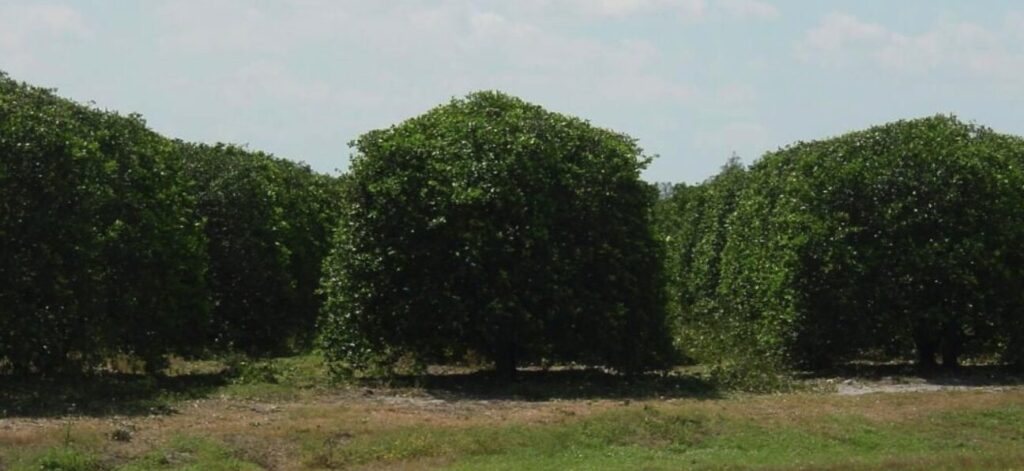
McLean. Very good question. That is something that we openly discuss in meetings. I was production manager for Libby’s prior to the ’83 freeze. They had about 10,000 acres of citrus here in the Clermont area. Most of that acreage was set 30 by 30, but the trees were on rough lemon rootstock and Cleopatra-mandarin and sour orange rootstock — which grew very big trees — very tall and tight. Even though there were only 48 trees to an acre, Libby hedged every middle. It took them four years. You’d go one row north and south, then one row east and west, then the off-middle north and south and the off-middle east and west. That’s the way we worked the grove.
All we had back then was a disc and choppers. Nobody even had a mower; nobody knew what a mower was in a citrus grove. But the trees created so much shade in those groves that the vegetation underneath the canopy was not a big problem. For a new grove, we had hand crews of about 20 or 25 guys, and that’s all they did in the summertime — they all had hoes, and they would walk through the grove and hoe anything that was around that young tree.
The way we irrigated those young trees is we built a water ring out of dirt around the tree with a hand hoe, and it would hold about five gallons of water. We had a truck that had a 500- or 1,000-gallon tank on the back, and we’d get water out of a lake and would drive through the grove and give each tree roughly five gallons of water. Now, during the summer, you didn’t have to do that because we got a lot of rain. The dry part was usually January, February, March, April.
Most of the growers would plant resets in the summertime. You had plenty of labor. Once we got into September and October, most of that hand labor went into harvesting.
Kempf. I remember walking through a grove with you probably 10 years ago, and you described how you remembered the soil being dark in color and having a high organic matter content. What were the management practices that led to building that organic matter content, and then also to losing it?
McLean. Most of the growers were here in central Florida; there wasn’t any citrus in south Florida. A lot of the growers used chicken manure. They would spread it during the summertime.
Kempf. Was that spread across the entire acre or was it concentrated underneath the trees?
McLean. No, it was spread trunk to trunk. My dad and other growers would get some sludge and would spread that also. That was a common practice. Back then it wasn’t that expensive. It only cost $2 or $3 an acre.
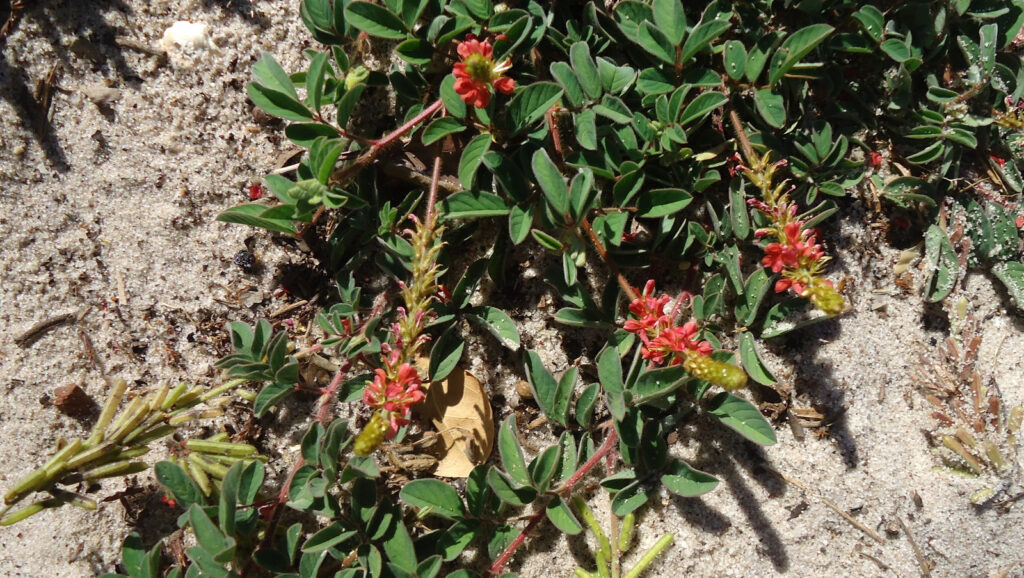
And just about everybody grew a cover crop in the summertime. The one that was the most popular was hairy indigo. That was planted trunk to trunk. Most of the harvesting was done by May, and the grower would spread hairy indigo just like you’d spread fertilizer. You had a good 90-day cover crop, and they’d let the hairy indigo grow all the way up to the tree trunk.
The interesting thing about hairy indigo was that it reduced the population of the burrowing nematodes. That was a big problem here. Everybody who had citrus on the very sandy soil here had problems with nematodes. Not only did hairy indigo produce nitrogen — I don’t remember the exact figure, but I think it was 45 or 50 pounds of nitrogen per acre — it also produced an exudate in the roots that pushed out the nematodes. It was very popular. You saw that in just about every grove you went into in the summertime here in central Florida.
Kempf. What happened with the hairy indigo — that sounds like a great practice. Why was that practice discontinued?
McLean. Well, it’s funny because we even put in nematode barriers in some of the groves. When you would see the trees starting to show a decline, the county agent would go in there and pull a test. If you had nematodes, they would come in and put a chemical barrier in to keep the nematodes from going into your neighbor’s grove or moving farther into your own grove. And they would highly encourage you to plant hairy indigo to keep the nematodes from spreading.
You go to these talks now, and they talk about cover crops, and hairy indigo is never mentioned. I have even stood up and asked, “Why isn’t hairy indigo popular anymore?” We have nematodes in all of the citrus. But they say, “Well, we don’t think it produces nematicide,” or “Okay, next question.” They don’t even want to discuss it.
Kempf. Are you suggesting that the folks who are selling nematicide don’t want hairy indigo to be popular?
McLean. Exactly right.
Kempf. Wouldn’t be the first time that scenario has played out. Fascinating. So, when did people begin using less hairy indigo, and when did cover crops fall into disfavor?
McLean. After the ’83 and ’85 freezes. First we had a devastating freeze on Christmas Eve, 1983. At my house here in Clermont it was 17 degrees, with a 25-mile-an-hour wind, for three days. Then 15 months later, in January of ’85, the same thing — 17 degrees for three days with a 25-mile-an-hour wind. After those two freezes, all the lending institutions in the state of Florida made an announcement that if you were north of Interstate 4, which runs from Tampa all the way to Daytona Beach, the banks would no longer loan any money to replant citrus. But if you wanted to develop your property, they’d finance it 100 percent.
So, the ’83-’85 freeze totally wiped out citrus in central Florida. About 15 or 20,000 acres were replanted here in central Florida afterwards. And then on Christmas Eve, 1989, the same thing happened again, and then we were dealing with two-, three-, four-year-old trees, and it killed them. After that there was no citrus.
I don’t know exactly, but I would say that today, from 300,000 acres of bearing citrus here in central Florida there’s now less than 10,000 acres. Just in Lake County we had five juice plants, with two of them being in the top five in the state of Florida. We had 25 fresh-fruit packing houses here in Lake County. I figure there were 30,000 employees who worked in the juice plants, the packing houses, the fertilizer plants, the harvesting companies, etc. They no longer had jobs. They were the third generation of people who grew up right up here and worked in the citrus industry. After those freezes, there was no more citrus, and nobody would loan you the money to even plant it back. You had to do it all on your own.
Kempf. What do you think has led to the decline of health in citrus orchards generally across the state of Florida over the last 30, 40 years?
McLean. That’s a very good question. After the ’83-’85 freeze, my dad and I went to a meeting at the research center in Lake Alfred, and the leading scientists made it mandatory that all the nurseries had to be a licensed — they had to buy all of their budwood through the budwood registration program at Lake Alfred. One of the scientists got up and told how they were so excited because they’d eliminated these undesirable traits in the budwood. He said we’d be able to grow citrus with no more problems with these diseases.
My dad raises his hand, and he stands up, and he says, “This is great science — great technology — but I’m going to make a prediction. You have removed all these undesirable traits that God put in this budwood to protect this tree. Now, when all the growers are forced to buy through this organization, when we get a problem in the citrus industry, the entire state is going to have the same problem. I won’t be here to see it — I won’t live long enough — but that’s my prediction.” And guess where we are today? Every tree in the state of Florida is infected with greening, and he was right.
Kempf. Your father was saying that these plants are designed to be host to some of these organisms, and when they clean them up, they’re actually removing beneficial organisms — or they’re removing organisms that are creating and enhancing immunity in some way.
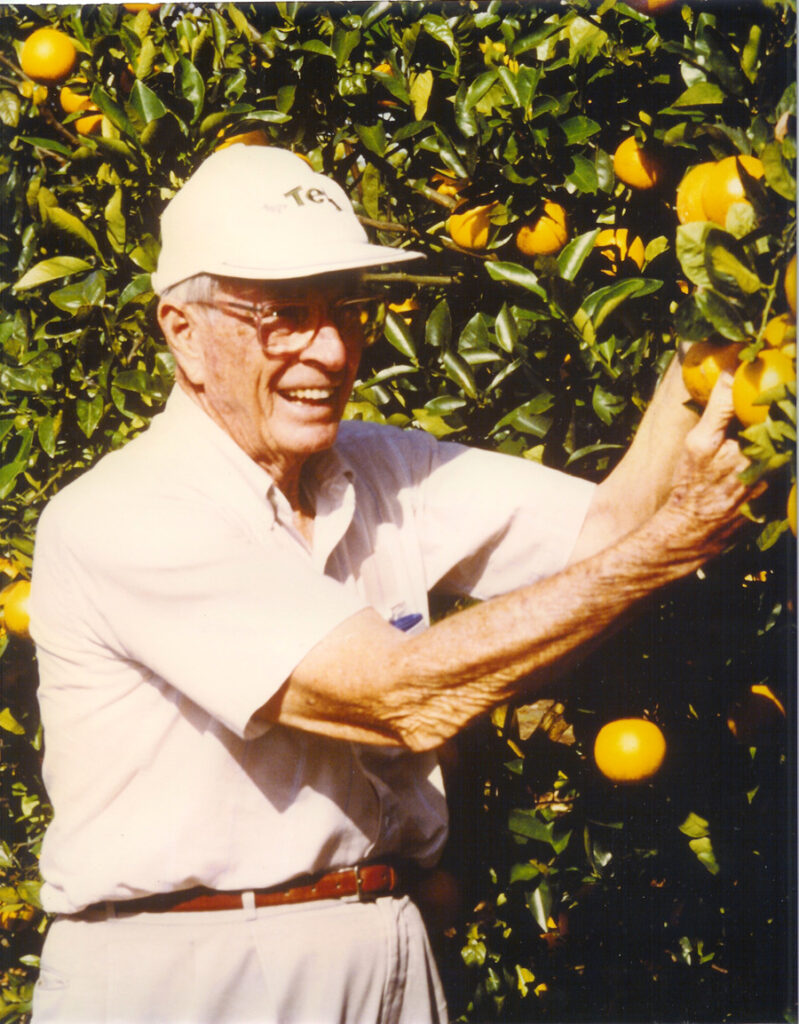
McLean. Right. My dad’s whole thing was that we’re creating the problems ourselves as growers. Is it something we’re spraying? Is it something we’re fertilizing with? Is it something we’re not doing? My dad’s favorite saying to us was, “Turn your phone off, turn your radio off, turn your TV off, and get your butt in the truck. Get out there and ride and look in the grove. That’s where the answer is. You’ve got to observe and watch that tree.”
My brothers and I still get together about once a month, and it’s amazing the things that we talk about — things we see that we did not see 30 years ago, when they cleaned up the budwood — when they took out all these undesirable traits — and the excess use of herbicides. When I was at Libby’s, we used Roundup one time a year, in the fall, like August and September. It would kill all the weeds before we’d start harvesting around Thanksgiving and Christmas. The weeds wouldn’t grow during that time. Now most of the growers down in south Florida do four applications a year of Roundup. It is unbelievable.
Now, they have spacings that are much smaller today. The most popular spacing up here was 25 by 25, which was 70 trees an acre. Today down in south Florida it’s not uncommon at all to see 7.5 by 15, which is almost 400 trees per acre. There’s no way they can cross-edge or cross-mow or cross-chop. And nobody chops or discs on what we call these “bedded groves” — it’s all mowing. It’s herbicide under the trees, and they mow the middles about every 30 days.
Kempf. You mentioned that when you and your brothers and sons get together, you talk about how things have changed. What are some of the other things you’re observing in the trees and in the industry in general that are very different today from in the past?
McLean. As I mentioned earlier, every tree in the state of Florida is infected with citrus greening. Now the research centers are coming out with rootstock that’s not resistant to greening, but it is tolerant. Also, some of the budwood they are releasing now is not resistant, but it is tolerant to greening. Most of those groves are probably seven, eight years old. So right now, a seven- or eight-year-old tree compared to a 25- to 30-year-old tree looks a lot different. However, we’re beginning to see leaf drop and fruit drop and discoloration on the new trees too. Even though the tree is on a tolerant root stock, it’s still getting greeny.
But there’s another story I’d like to tell about herbicides. Sinbar was one of the first pre-emergent herbicides that came out. Obviously glyphosate is not pre-emergent — it’s strictly a contact herbicide. I was production manager at Libby’s, and my dad calls me up and says, “Have you put out any Sinbar?” At that time, that was all you could use on a young tree. It was approved on a three-year-old and down. I said, “Yeah, Dad, we got a block out here.” He said, “Okay, let’s go out there.”
So we go out there, and they were putting out the herbicide as we were out there. My dad says, “Let’s leave this one row — don’t put any herbicide on it.” I said okay, so we did. We left that one row. Well, about 30, 45 days later we go back out there, and my dad says, “Okay, here’s what I want you to do: take a shovel and get a five-gallon bucket, and on the rows that were treated, I want you to dig down and get about a half a five-gallon bucket of soil and put it in your pickup, and roll the windows up and let it sit there overnight, and then get in the truck in the morning. Call me in the morning and tell me what you smell.”
So I did that, and the next morning I got in my truck, there and this nice smell. It was really unusual. I called my dad, and he said, “Okay, what do you smell?” I said, “Man, Dad, I’m taken away with how nice it smells in my truck. It’s really got a soil smell.” And he said, “Okay, dump that out and now go to the row that we did not treat, and do the same thing.”
So I did. When I got in that truck the next morning, I was flabbergasted. I could not believe the sweet aroma that was in my truck from those three or four shovelfuls of soil in that five-gallon bucket. It was really dominating and had a very, very sweet smell. So, I called my dad up and said, “Dad, you will not believe the difference.”
After that we took some of each soil and sent it off to a lab in Georgia. When the analysis came back, my dad showed it to me, and he said, “Look — the Sinbar has an algaecide in it. And guess what that algaecide does? It kills all the algae. And guess what the main food is for the microbes that live in that soil? You’ve taken all of their food away.” And he said, “Guess where that tree’s headed now?”
Now, this was back in the seventies. That old man really got me thinking.
Kempf. Sounds like he was well ahead of his time.
McLean. Yeah, it’s amazing. He said, “Okay, on that row that we had left free of Sinbar, don’t put anything on it. Leave that one row so we can study it for the next six months or so.” I did, and after about six months we rode out there — and this was a young grove — and we pulled up there, and my dad says to me, “Okay, tell me what you see.” Now you can imagine — the weeds were as high as my truck! I said, “Dad, look, the weeds have taken over!” And he said, “When you say ‘taken over,’ what do you mean?” And I said, “They’re getting all the water, they’re getting all the fertilizer, they’re getting all the sunlight — they’ve taken over.”
He said, “Oh, you really think so? What if your goal was to grow these weeds? What would you say about that orange tree? You’d say the same thing. ‘That tree — I gotta get that tree out of there. It’s getting all the sunlight, it’s getting all the water, it’s getting all the rainfall.’ It’s all observation.”
My brothers and I still laugh about that every time we’re riding together.
Kempf. Yes. Our internal bias frames what we perceive.
Greening has become such an almost overwhelming part of the story that it has tended to erase the memories of what came before. What was the trend of the health of citrus trees from 1970 until 1995 or the early-2000s — before greening really took hold and ran its own race?
Source: Mongi Zekri, UF/IFAS
McLean. I can give you very good examples of the roughly 10,000 acres that Libby had. All the varieties, all the rootstock — and not all was irrigated — but it was not uncommon at all to go into a grapefruit grove with 48 trees to an acre and pick 1,500 boxes per acre. We had groves that would even pick 2,000 boxes per acre. It was not uncommon at all for oranges, especially Hamlin oranges, which are an early variety, to have 600 or 700 boxes per acre with 48-50 trees to an acre.
And you only saw a small difference with irrigation. Just prior to the ’83 freeze, one of the researchers had done a five-year study on irrigation and non-irrigation in the grapefruit grove that Libby owned. At the end of five years, the researcher sat down with me and told me that if he had not done this research himself it would be hard to believe. The only influence the irrigation had was in two years out of five, and even then it wasn’t a dramatic increase — it was only like 75 to 85 boxes per acre more.
Our rootstock back then was rough lemon rootstock. Rough lemon rootstock has about the highest hydraulic conductivity in the root system for citrus rootstocks. Today down in south Florida, everything is irrigated. I don’t know of any grove down there that doesn’t have irrigation. And not one grove has rough lemon rootstock. They’ve all gone with different rootstocks that have lower and lower hydraulic conductivity. And you hardly see any overhead irrigation, which covers 100 percent of the root zone — you see mostly microjet irrigation, where an emitter is under every tree, and it only does about a six-foot radius.

But like my dad always told us, most of the roots in all of these rootstocks are outside of the canopy. When it hasn’t rained in 30 days, and trees only have microjet irrigation that’s only covering about 30 percent of the root zone, and all of the roots that are outside of the canopy are the biggest moisture-absorbing roots, the roots under the tree are sending a signal out — they’re saying, “I got all the water I need! We’re great! Everything’s going good!” And all the roots outside of that canopy are saying “It’s an emergency! Shut down! Don’t do anything else — we’re about to die out here with no water!”
My dad’s point was, what do you think this does to the immune system in that tree? How does that tree run if its immune system is half on and half off?
Kempf. The other aspect of that is, how does that then shape the root system development for the future? If that root system outside the canopy continues to decline, and underneath the canopy it continues to expand, then the tree becomes reliant on only the roots under the canopy.
McLean. Right. The nutrient-absorbent roots are on the outside of that canopy, not under the tree. Here we are trying to prevent this disease, and only 50 percent of the root systems are getting water, and they are not the ones that are providing the protection. Down there in south Florida now there’s just about every disease known to man.
Kempf. I also think about what that reduced root system volume would mean for nutrient absorption capacity and for yield capacity. You’ve just reduced that plant’s ability to bear fruit.
McLean. Right.
Kempf. I want to go back to the organic matter conversation. You’ve been talking about growing the hairy indigo cover crop, and you’re putting on manure applications as your primary source of fertilizer, and you have very high organic matter in your soils, even though your soils resemble beach sand more than topsoil — or at least they do today. But back then, they were black, and today they’re gray or bordering closer to the white end of the spectrum, correct? What are the changes that led to that?
Source: Alex Popovkin, Wikimedia
McLean. That’s a good question, John. Back in the forties, the fifties, and the sixties, the cover crop was a major ingredient in growing citrus. And now, like I said, you go down to south Florida and there’s no cover crop. It’s just grass.
Kempf. And it’s grass that gets sprayed with herbicide four times a year.
McLean. Right. Just about everybody back then grew something in the summertime, whether it was hairy indigo or cow peas or some other cover crop. They let it grow up to five or six feet, and then they would chop it in. All of that organic matter — fiber and leaves and roots and everything — it decomposed in the middles and continued to increase the biodiversity that was in that soil.
Kempf. Yeah, when you lose that — when you lose the cover crops and you lose the manure application, and you replace them with herbicide and bare soil in the tree row, and mowed grass between the tree rows, and nitrogen fertilization — you’re going to lose your soil carbon.
McLean. Exactly. A year or two ago we took an 80-acre Valencia grove and pulled soil samples in five middles. We were trying to see what a cover crop would do to the nutrition in the soil — the zinc, manganese, iron, boron, copper, etc. — whether there’s any benefit to having the cover crop. We planted cow peas in there, and in 60 days they had all flowered and bloomed, and we came in and we cut ’em in. Then we went back about 65, 70 days after we had planted the cow peas and pulled soil samples.
And John, if I hadn’t have seen it with my own eyes, I would’ve questioned it. It was sandy soil, but the manganese levels increased by 20 percent with just cow peas. And now I stand up in these meetings and say, “Why isn’t this public information? The growers need to know this. The most expensive thing I have to add to the soil is manganese, if I have to go out and buy it.” And that was just with cow peas. We haven’t done a test yet with hairy indigo or with any of the other cover crops.
Kempf. Yeah, and imagine what happens when you perhaps begin planting some of those plants in combination with each other.
McLean. That’s what we’ve got to do. We’ve got some combos now, and we’re fixing to cut ’em in here in another week or so, and we’re going to pull soil samples.
Kempf. Benny, you’ve shared a number of remarkable stories. What are some other memorable moments that really stand out in your memory?
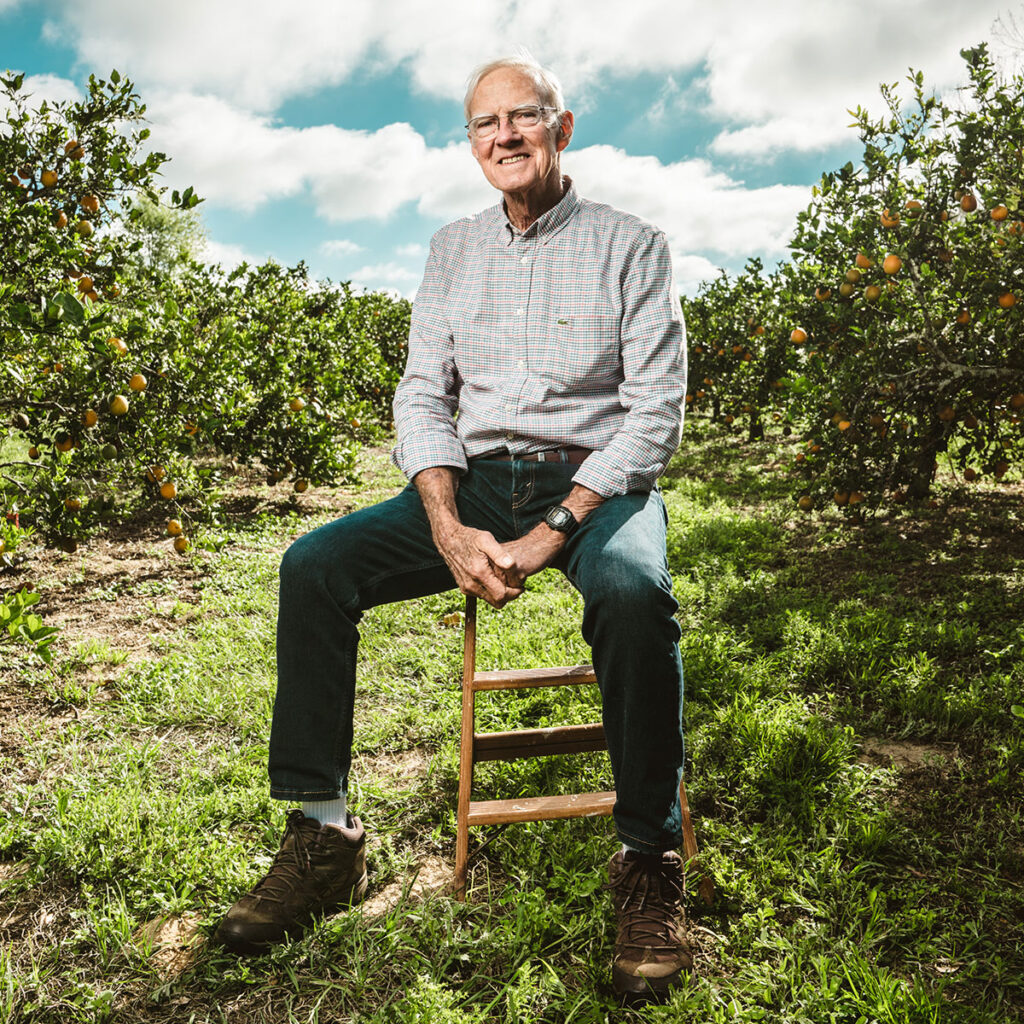
McLean. Well, my dad graduated from UF in 1939. I’ve been told that the Albrecht method of soil balancing was taught at UF back then. I remember sitting in the truck with my dad, and he’s chewing me out, and he says, “After the war, the government did away with teaching that method in all the land-grant universities, and they came up with the conventional pH method.”
I learned the pH method at the University of Florida. I graduated in 1965. I tried to avoid these conversations with him about this! But he would look at me and say, “You didn’t learn a thing about soil chemistry, physics or biology. All you learned was to chase the damn pH! In the Albrecht method, pH is the last thing you look at! All these growers around here, they don’t even know why they’re out spreading lime and dolomite, just to lower the pH. You don’t understand how antagonistic calcium is to blah, blah, blah, and manganese is to blah, blah, and magnesium is — you didn’t learn any of this!”
So, luckily, after the ’83, ’85 and ’89 freezes, as soon as Libby shut down everything, I got hired by company that sent me to the Bahamas, and we did a 10,000-acre project. And the pH in that soil over there — Marsh Harbor, Abaco Island — the pH levels are unreal. You can’t make it up. It’s like an 8.0 pH — very alkaline.
I hired my dad to go over there and help us because I was getting nowhere dealing with that chemistry. Well, lo and behold, I had hired brother Scott and brother John as well because they ran the nurseries over there, and they were growing the trees that we were planting. Scott comes home one weekend on the company plane. He’s in the airport at Miami, and for some reason the flight was delayed. He’s sitting there, and this guy comes up and sits down by him, and it turns out it’s Neal Kinsey. Scott says, “Neal Kinsey — boy, that name sounds familiar.” And Neal says, “Yeah, I teach the Albrecht method.” And Scott was like, “Wait until I tell my dad this!”
When he got home, he calls my dad and says, “Dad, you won’t believe who I met at the airport — a guy named Neal Kinsey. In two weeks he’s having a class in Missouri.” So, my dad paid for all of us — my brothers and I — to go to it. And once we took that class, I couldn’t believe what I didn’t know.
After that I went back to the Bahamas, and man, we turned that thing around. Those trees started growing. It was all dark-red grapefruit. It was unbelievable how that changed the whole way I thought. And of course, today, in the organic arena, that’s all we use.
Now, did it cure greening? No, it didn’t cure greening. But we don’t have near the leaf drop, and we don’t have near the fruit drop that our neighbors do that are conventional.
Kempf. Mineral balance is a major part of the equation of tree or plant resistance and immunity. Another part of it is microbiome balance and microbiome integrity. We started this whole conversation talking about budwood that has compromised microbiome integrity because of the treatments it’s been exposed to — the most perfect mineral nutrition in the world can’t overcome some of those imbalances.
McLean. Exactly. That was my dad’s whole complaint. I’ll tell you another story that illustrates this.
My mom grew up in Alachua, which is about 10 miles north of Gainesville. My granddad was a farmer there, and we would go up maybe once a month for a big family dinner. My granddad loved grapefruit, so every time we would go there, my dad would pick a bunch of grapefruit and take it for him.
One time, in about 1952 — I’m about 10 years old — we go to a grove, and he says, “I’m going to take Grandpa Carl a bag of these red grapefruit and see if he likes them.” It was a Thompson pink seedy grapefruit. We picked 15 or 20, and we’re fixing to eat lunch — my grandmom is cutting the grapefruit and sectionizing them to make a big fruit salad. And she hollers to my dad, “Ben, what am I supposed to do with this bucketful of seeds?” And my dad says, “Just go out in the backyard and throw ’em out there, and maybe one day one of those seeds will germinate and you’ll have your own grapefruit tree here in your backyard.”
Courtesy of AEA
Well, to this day the whole family still rallies up there once a year. Of course, my grandmom and granddad and dad are passed away, but one of my cousins is living in the old house. And about ten years ago he says to me, “Have you ever seen that grapefruit tree that’s in the backyard here?” And I said, “What? A grapefruit tree? No, I never have.”
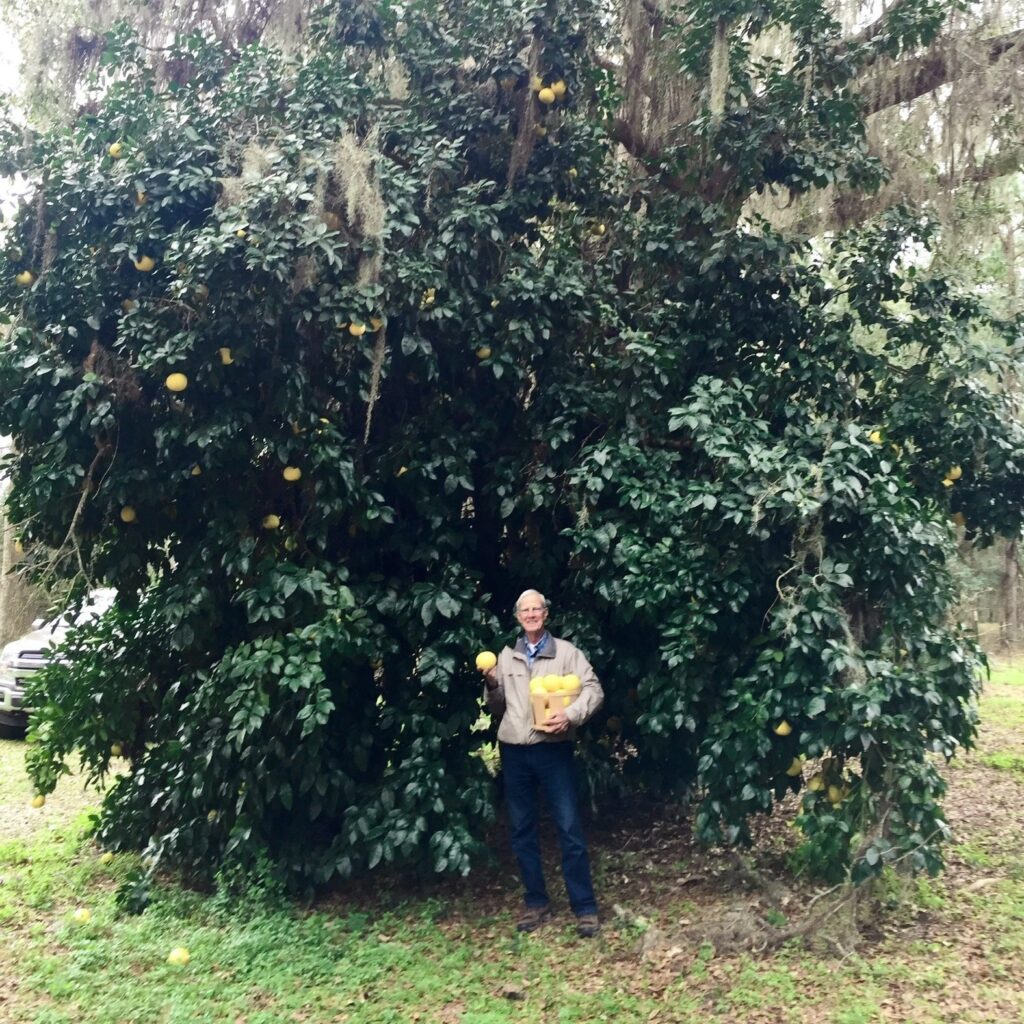
So, later that day, I go out there, and here’s this 30-foot-tall grapefruit tree that’s growing straight up, about 15 yards away from the house. It’s surrounded by oak trees, so I never saw it. I couldn’t believe that tree was there, but I go and cut the fruit, and it’s the Thompson pink seedy. It is a perfect-looking grapefruit tree. It has the biggest, darkest green leaves you’ve ever seen. It’s never been fertilized, it’s never been herbicided, it’s never been topped, it’s never been hedged, it’s never been irrigated. It grew up there all by itself, and it is an absolutely gorgeous grapefruit tree.
I even took some of the fruit to the research center, and I cut it open, and the researcher said, “I don’t know what it is. I’ve never seen a pink seedy.” I called up the Texas A&M research station about three or four years ago, and there was a researcher there who was as old as me, and I told him I had a pink seedy grapefruit. I said, “I was born and raised in the citrus industry in Florida, and I have never seen a pink seedy grapefruit.” And he said, “We got one growing out here at the research units. It’s about a hundred years old now. Someone from Florida wanted them made seedless, so we did all the gene splicing and sent it back, so all you have in Florida now is the pink seedless. That one you have may be the only pink seedy besides the one here.”
Kempf. Wow.
McLean. It’s unbelievable. My son, Ben, has taken leaf samples back to the lab, and it tests positive for citrus greening — but everything is working in that tree.
Kempf. Well, it’s got its complete microbiome.
McLean. Yes. None of the budwood was new. None of the seeds were treated with a fungicide or anything. It grew up wild. And the immune system is working at 100 percent, like God designed it to work.
Kempf. And it tests positive for HLB.
McLean. Yeah, can you believe that?
Kempf. I can absolutely believe that. That’s an incredible story. It’s really intriguing to me how many stories like this are out there. There are many old farmers and people in academia and research who’ve paid attention and who’ve observed and who’ve noticed things for a very long time. That’s one of the things that I’ve come to really appreciate — that there is an incredible wealth and depth of knowledge that many people have that the rest of the world deserves to know about.
McLean. I agree. And of course, citrus grew in Alachua County for many years, but after the ’83, ’85, ’89 freezes, it was decimated. Those freezes killed everything.
Kempf. But it didn’t kill this tree.
McLean. That’s right. That is unbelievable. I can tell you if a grapefruit tree has ever been pruned or not, and I guarantee it was never pruned. There was not any deadwood in it. If it was 17 degrees here during those freezes, it had to be below 10 up there in Gainesville. It’s cold up there compared to here in central Florida.
Let me tell you just one more quick story. This one is all about nutrient density. When we first got in the business — our Uncle Matt’s brand — we were in Publix, which is a big supermarket here in Florida. They were one of the first customers taking our juice. They called us up and said, “We’d love for you guys to grow us some organic watermelons. Can y’all do that for us?” I said, “No problem,” and they told me the variety, how many they needed, etc.
We had a 20-acre piece here, so we got ready to start planting, and I checked with a watermelon grower up in north Florida. We’d never grown any watermelons. And he told me, “The main thing for a good melon is you’ve got to make sure you got all the zinc, manganese, iron, boron, copper — they really play a big factor on these melons.” So, I went out and pulled four or five soil samples, sent ’em to the lab, and got the recommendations. I spent close to $300 an acre bringing the zinc, manganese, iron, and boron up to the levels they recommended.
We got a beautiful melon crop. We get done harvesting, and every fifth row was a big seeding melon for pollination. The other four rows were seedless. We obviously picked all the seedless melons to sell. But then I’d hired a guy to go out there and mow everything up.
So, he’s out there mowing, and he’s got a 15-foot bat-wing mower. I go out there to check on him, and I pull up there and he’s got about 10 of the big pollinator melons on the back of his mower. He jumps off and says, “Hey, Mr. McLean, I’ll be glad to pay for these melons.” And I said, “Nah, you don’t have to pay me — take ’em. What are you going to do with ’em?” He said, “I’m a hog farmer. I’ve got about 20 acres, and I go around to all the grocery stores about once a week and get all their throw-away veggies and melons and whatever. I throw it all over the fence to feed the hogs.”
Well, the next day I go out there again to check on him, and he sees me coming, and he stops and he’s waving at me, and I thought, “Oh no, something happened.” So I go up there to him, and he said, “I need to know what variety of melon that is.” I said, “Why?” And he said, “Man, I’m going to grow those melons. I’ve been a hog farmer for 20 years, and I’ve never witnessed anything like this. I put those melons in the back of my truck, and I’m driving along the fence, and I look in the mirror, and there’s about six or seven hogs running right along the fence by my truck. I’ve been feeding these hogs for 20 years. I’ve never once seen them notice me. I’ve got a concrete slab, and I normally drop cantaloupes or watermelons on the slab to bust then open so the hogs can eat them.”
And he said, “Hogs are just like dogs. They’ll fight over food. Those 25-30 hogs, when I busted that first one, they come running up there and had the biggest damn hog fight I’ve ever seen in my life fighting over that one melon. I ended up busting all those melons, and they ate every piece of them. There’s not one seed left on that concrete slab.” And these were pollinator melons, so there were a lot of seeds. And he said, “They even ate the white part of the peel. Normally a hog will only eat the colored part of the melon. I’ve never seen anything like it.”
So, guess what? They could smell that those seeds had the optimum levels of zinc, manganese, iron, boron and copper — and they were attracted right to it.
Kempf. It is a remarkable story. How is it that animals know? They can somehow tell the difference. I’ve experienced something similar with cows on sweet corn being able to tell a difference. My wife’s family are very passionate deer hunters, and they can tell you that the deer definitely know which fields have been planted into GM versus non-GM corn. And if I’ve heard one story I must have heard 50 stories about chicken and mice selecting one batch of grain over another. There is no question that they do know the difference.
McLean. The seeds, once they get the right nutrition, produce an energy that these animals tune into. I’ll tell you one other quick story about this. I’ve got three cousins in the cattle business. During the wintertime, of course they feed the cows hay. They take about 20 bales of hay and put it in the back of the pickup, and they go out. This was ahead of about 20 or 25 yearlings. They took one bale of hay that had come from the Midwest that they’d paid like $10 a bale for — and the other hay was only like a dollar — and they put that bale in the very front of the pickup bed and covered it with the other bales.
They went out there and beat the horn, and all the yearlings came running up there, and one cousin was in the back to bust the bales of hay and throw ’em out. They threw those 20 bales right in a row, and those yearlings would sniff at all the hay, but they wouldn’t take a bite. They just kept following the truck, sniffing the hay. And when they got to the last bale, they busted that open and all 20 came to that one bale.
Kempf. Yep. There are aspects of nutritional quality that we will continue to spend a lot of time trying to figure out, but we don’t understand it as well as animals do. Dr. Albrecht talked about this — about the cow testing the fence to get what was on the other side.
McLean. John, I greatly appreciate you inviting me to talk about these things.
Kempf. Well, thank you! Thank you for being willing to share.