


America’s enthusiastic embrace of regenerative agriculture will only succeed if policy, investment and regulation shift to reward biological performance, nutritional quality and farmer innovation
“Regenerative” agriculture has quickly emerged as a nearly universally embraced goal. This is generally a good thing — except that attaining the goal means different things to different people.
In her December 2025 announcement of the $700 million NRCS regenerative agriculture program, Secretary of Agriculture Rollins focused on practices and systems known to promote soil health. The repackaged program draws on the cost-share tools and baseline funding of existing USDA conservation programs. It’s a reboot, not a new build.
Food companies are hoping for opportunities to partner with USDA in helping their growers become more regenerative. Multiple sources of investment capital are flowing into farmland in order to make it more “regenerative” and to stabilize the climate. Every year, pesticide-seed-biotech companies are bringing to market dozens of new corn, soybean and cotton varieties engineered to express multiple herbicide-tolerant traits and insect toxins. They believe that more and higher levels of toxins is the “modern ag” way to help farmers become regenerative.
Fortunately, more and more farmers are questioning their logic, their science and their motives.
Policy Is the Problem – and a Big Part of the Solution
Most of the serious problems plaguing row-crop farmers today have been brought about by the unintended consequences of incremental changes in farm programs and policies, public- and private-sector R&D priorities, and subsidy streams. Such changes were adopted in good faith to address pressing problems, but in the rush to reach consensus and implement new policies, little or no effort was invested in foreseeing and avoiding negative, long-run impacts like polluted water, dead soils, industrial consolidation, loss of market options and rising reliance on bailouts, lax regulation and tax subsidies.
It is widely recognized now that our food system needs to change. Regenerative agriculture has emerged as the North Star to guide this. The semantic shift is more than a bit ironic, given that Bob Rodale was the first leader in the agricultural community to use the term “regenerative” in describing food and farming systems built to last.
When members of Congress and Hill staffers (including me) first heard Bob use the term regenerative in the early 1980s, there was no ambiguity about what he meant and the kind of agriculture he was promoting. The Rodale Institute now has 50 years of experience in studying the attributes of regenerative systems and how to help farmers make the journey.
But from the 1980s to the present, changes in farm policy and taxpayer support for agriculture have incrementally undercut farmer innovation on the road to regeneration. Fast forward to 2026 and a broad cross-section of agricultural leaders, innovative companies and government institutions are promoting regenerative agriculture to address the systemic problems that have blossomed.
The “regenerative” chapter in the history of American agriculture and our food systems has begun as the “sustainable” chapter slips below the horizon. The odds of this chapter ending on a more positive note than the last will depend on whether our new North Star guides us in different directions on the farm and in the policy arena.
Timely action is badly needed. Many pioneers of regenerative farming are struggling to keep their operations afloat because cheaper, low-quality ag commodities are undercutting their ability to remain, or become, economically regenerative. This is especially hard to swallow when the cheaper, lower-quality, less-safe products are imported from countries that are investing heavily in capturing a larger slice of the high-dollar U.S. food pie.
This is why our weak food-quality standards, minimal to non-existent testing of imports, and lax regulatory environment matters. It is why failure to prevent large companies from gaining excessive power over markets, politicians and policy has created an existential crisis playing out across rural America. And lastly, it is why public health in America is eroding faster than in any other advanced country.
Let’s hope the embrace of regenerative agriculture matters and that it leads to changes in policies, investment patterns and regulation that enable and support progress in diversifying agriculture, enhancing soil health, and improving the nutritional quality and safety of the U.S. food supply. That is precisely what the next farm bill must focus on.
For this to happen, general agreement must be reached on the metrics used to set baselines and goals, and to track progress. Rigorous testing and vetting of proposed solutions are essential, since no one really knows how to steer this massive ship toward calmer waters. Disciplined experimentation of alternative approaches is needed to figure out how to do so most cost effectively, while also dealing with an extensive list of long-ignored equity and fairness issues.
Practical Metrics to Stress Test Changes in Policy and Investment Patterns
For most types of farms and production systems, four leading indicators will effectively differentiate how regenerative a farming system is likely to be.
First, higher levels of organic matter in soil support larger pools of nitrogen cycling within the soil. This is a universally good thing on conventional, organic and GMO farms. It is also good for water quality, the climate and farm profit margins.
Regenerative farms depend primarily on biological sources of N produced on or near the farm. The larger the percent of total N from chemical fertilizers brought onto the farm, the less likely a farm will be regenerative. Metrics capturing this percent, and related soil health dynamics, are relatively easy to measure and verify, and belong among the leading indicators of the degree to which a farm is regenerative.
Measuring and tracking changes in soil organic matter, on the other hand, is exceptionally difficult and ephemeral since so many biotic and abiotic factors will arise in all growing seasons, triggering short-term changes in organic matter levels and N pools cycling in the soil. Too often, results reflect when and how a sample was collected and tested, not actual changes in soil health.
Second, diverse plant species over space and time are a hallmark of regenerative farms. Diversity and living roots build and sustain soil health, supporting larger pools of circulating N to meet the next crop’s needs. Soil absent growing plants wastes the farmer’s most important valuable, but free asset — the solar energy landing on the ground.
Diversity delivers a trifecta of benefits — adequate surface biomass year-round, thereby largely preventing wind and water erosion; faster water intake into the soil and improved water quality off the farm; and diversification of an operation’s income streams and enhanced economic resiliency. This core attribute of regenerative systems is also readily measured and verified.
Third, low or no routine reliance on off-farm toxins or pharmaceuticals.
Farmers managing mature and diverse regenerative systems do not rely heavily on pesticides for a host of reasons. Herbicide-resistant weeds are rarely a problem. Microbial biocontrol of soilborne insects and pathogens promotes plant health and lessens the need for pesticides that undermine biodiversity and that too often trigger even worse pest outbreaks.
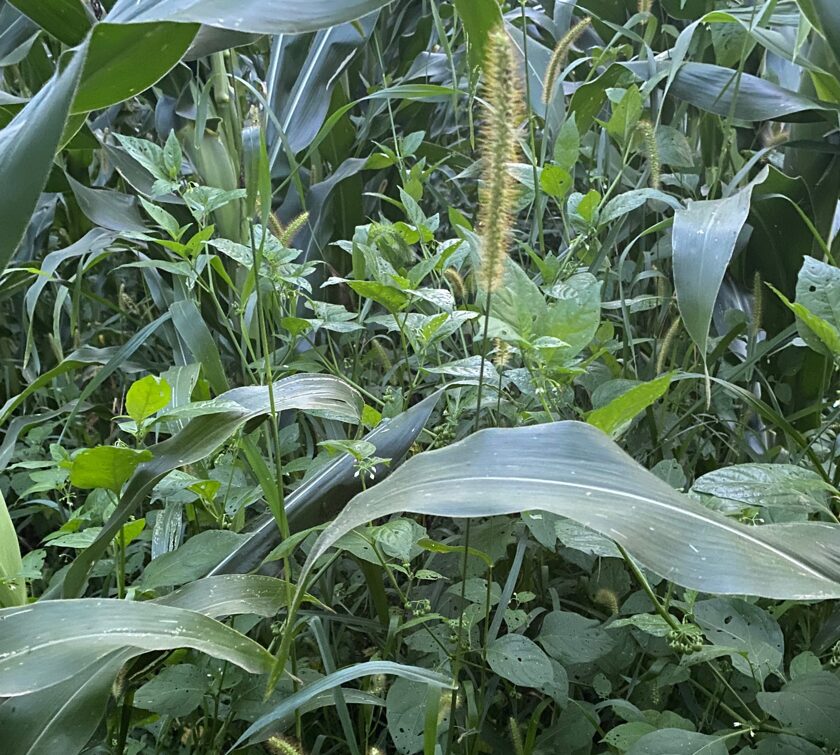
The level of reliance on pesticides is an important indicator of the maturity of regenerative systems. It is also a performance attribute easily measured and translated into leading-indicator metrics. These are among the reasons serious efforts to advance regenerative agriculture need to measure and track pesticide use and risk trends. Yet to this day, many stakeholders insist that the quest to promote regenerative agriculture should steer clear of talks to reduce pesticides.

Fourth, the crops harvested off mature, well-managed regenerative farms are typically, year to year, more nutrient dense and tastier. The reasons are well known — in particular, the dilution effect and heightened levels of plant polyphenols. But this is aggressively contested by supporters of the status quo.
Regenerative systems deliver enough N to meet crop needs, but not excessive levels, as is now routinely the case on most conventional farms. Avoiding extra N steers regenerative farms away from spikes in soil microbes that can churn through organic matter quickly, thereby undermining soil health and raising production costs.
Avoiding excessive levels of N also prevents the dilution of health-promoting phytonutrients in harvested crops. Such dilution occurs because plants convert extra N into sugars and starches. This is why conventionally grown fruit is often both bigger and sweeter than organic fruit but lacks the health-promoting nutrients per calorie. This is also why the flavor profile in produce harvested from mature regenerative systems shifts from overwhelming sweetness to complexity; it is what separates a good peach from a great one.
Crops and pastures on regenerative farms also must fend for themselves in the face of multiple biotic (pests, nutrient imbalances) and abiotic (weather, drought) stressors. They do so by expressing plant polyphenols and other biochemicals, many of which are antioxidants beneficial to both plants and mammals.
Nutrient profiling systems can be used to quantify leading-indicator metrics capturing changes in food nutritional quality. A full accounting of such benefits will require much more testing and research, as well as concurrence on methods to translate improvements in macro and phytonutrient density into projected human and animal health outcomes.
Investing in the Ability of Regenerative Farms to Grow and Thrive
Applying the above four sets of metrics will be a solid first step in gauging whether a farming system is regenerative. But no one set of metrics and regenerative ag benchmarks will meet the needs of all farms and ranches. This is because of the diversity of:
- The crops and animal products that make up the U.S. food supply,
- The environments where farmers farm, and
- Unique region- and crop-specific biological challenges, impacts of policy, and market dynamics that can, alone or in combination, render a farm operation unsustainable for one or a combination of reasons.
Other metrics and benchmarks will be needed. These include soil bulk density, aggregate stability, soil microbial diversity, impacts on pollinators, availability of a labor force with requisite skills and experience, and better ways to feed animal to keep them healthy and to improve the fatty acid profiles in meat, milk and eggs.
A quick look at a few of the contemporary forces and factors that can, and in many cases are, undermining regenerative farming systems will help drive home the need for a diverse set of metrics and performance benchmarks across the U.S. ag and food system landscape.
King Grove Farm in Eustis, Florida, produces some of the most wonderful, tasty and nutrient-dense blueberries on the planet. Years of experience and testing confirms that their organic system almost certainly meets all the soil health, pest management and nutritional quality benchmarks that characterize a regenerative farm. But King Grove Farm is struggling to stay in business because of the rapidly rising flood of lower-cost blueberries from Peru, Chile and Mexico that are mostly grown in hydroponic systems and are often labeled organic.
Three clusters of decisions made by policy makers and government agencies will either put farms like King Grove out of business, or limit them to niche, direct-marketing channels in order to survive:
- Trade and tariff policy,
- Absence of government data and verified methods to quantify and verify the superior nutritional quality and safety of King Grove berries, and
- The decision by the USDA to allow organic crops to be grown in pots without soil, despite the emphasis on creating and sustaining soil health in the federal statute governing USDA’s National Organic Program.
Regenerative corn-soybean farmers use production systems that reliably deliver multiple benefits, including enhanced soil health, improved water quality, safer and more nutrient-dense harvests, more resiliency in the face of climate extremes, and more. But since USDA policy holds that farming systems have no significant nor consistent impact on crop nutritional quality and safety, regenerative farmers struggle to secure premium prices for the central attribute that should make their crops more desirable.
Regenerative farms must follow more diverse rotations, including crops other than corn and soybeans, yet farm bills and USDA policy have gone “all in” for only a few large-acre commodity crops. These few crops benefit substantially from layers of subsidies and tax benefits, coupled with taxpayer-financed “risk management” tools. The total cost of all these subsidies and payments is rapidly rising in step with the collapsing biological and economic sustainability of many contemporary production systems.
Diverse rotations are also hard to justify in the absence of marketing infrastructure and demand for rotational crops and forages. The steady flow of tax dollars supporting corn and soybeans and biofuels — and not oats, buckwheat, forage crops and nutrient-dense human foods — is holding back adoption of more assuredly regenerative systems.
On the economic front, government policy and programs essentially block regenerative farms from securing a premium price in line with the enhanced nutritional quality and safety of their harvests, while also shielding other farms from the added costs they impose on society as a result of lax regulation and excessive reliance on chemicals and animal drugs.
It is no wonder so few operations have pieced together a way to afford to farm regeneratively. Public subsidies and policy, and lax regulation, make their systems artificially and comparatively expensive, while shielding conventional systems from the external costs they pose on society and rural neighbors.
Largely because of especially difficult pest management challenges, there are only a few commercial scale organic vegetable farms in Florida. Some of them periodically lose an almost-ripe field of tomatoes, cucumbers and other crops to late blight or another opportunistic pathogen. Sometimes swarms of white flies or other insects move from a heavily sprayed field to relative safety in a nearby organic field.
Lacking effective, organically approved biopesticides, even the most experienced organic vegetable farmers in Florida sometimes have to watch a field that would generate $30,000 or more in sales per acre shrivel and die in just a few days. Such farms can remain regenerative if such losses are isolated and occur infrequently. But the need is acute for new safe, effective and affordable biopesticides that are acceptable under the rules governing organic certification.
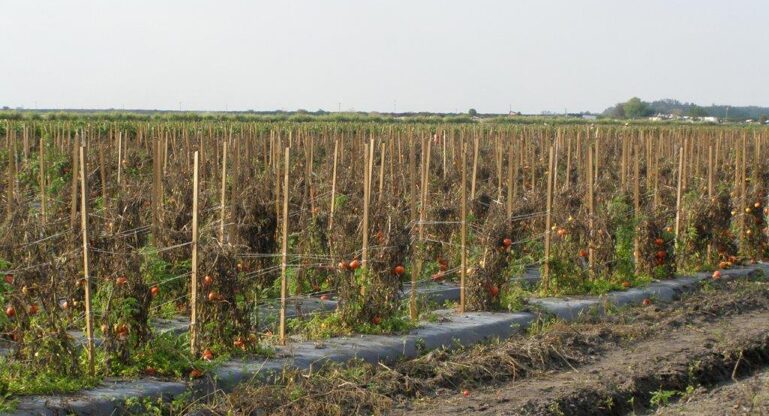

Pest damage is a major roadblock for regenerative agriculture in the southern U.S. and other hot, humid regions. Left: Late blight devastated an almost ready-to-harvest 40-acre field of organic tomatoes in Florida. Right: The damage done, and why more investment is needed in discovering effective biofungicides. Photo: C. Mellinger
Regrettably, few such products exist because investing in the science and infrastructure needed to bring biopesticides to market has never been a priority in the U.S. That has to change in order for healthy, nutrient-dense, U.S.-grown fruits and vegetables to be available at competitive and affordable prices, and in the volume needed to MAHA. Only a shift in federal ag R&D policies and priorities can bring this about.
To accelerate progress toward a healthier food supply, Secretary Rollins and the USDA need to invest more heavily in generating the data and analytical tools needed to quantify the linkages between soil health, food nutritional quality and safety, and public health outcomes.
For healthier and safer food to command premium prices and bring about food-system-wide change, USDA must back away from its current policy that asserts farming system choices do not have a meaningful impact on food nutritional quality and safety. USDA-funded research confirms that system choices do make a difference, and, brand by brand, the public needs to learn why and by how much.