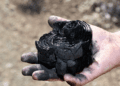


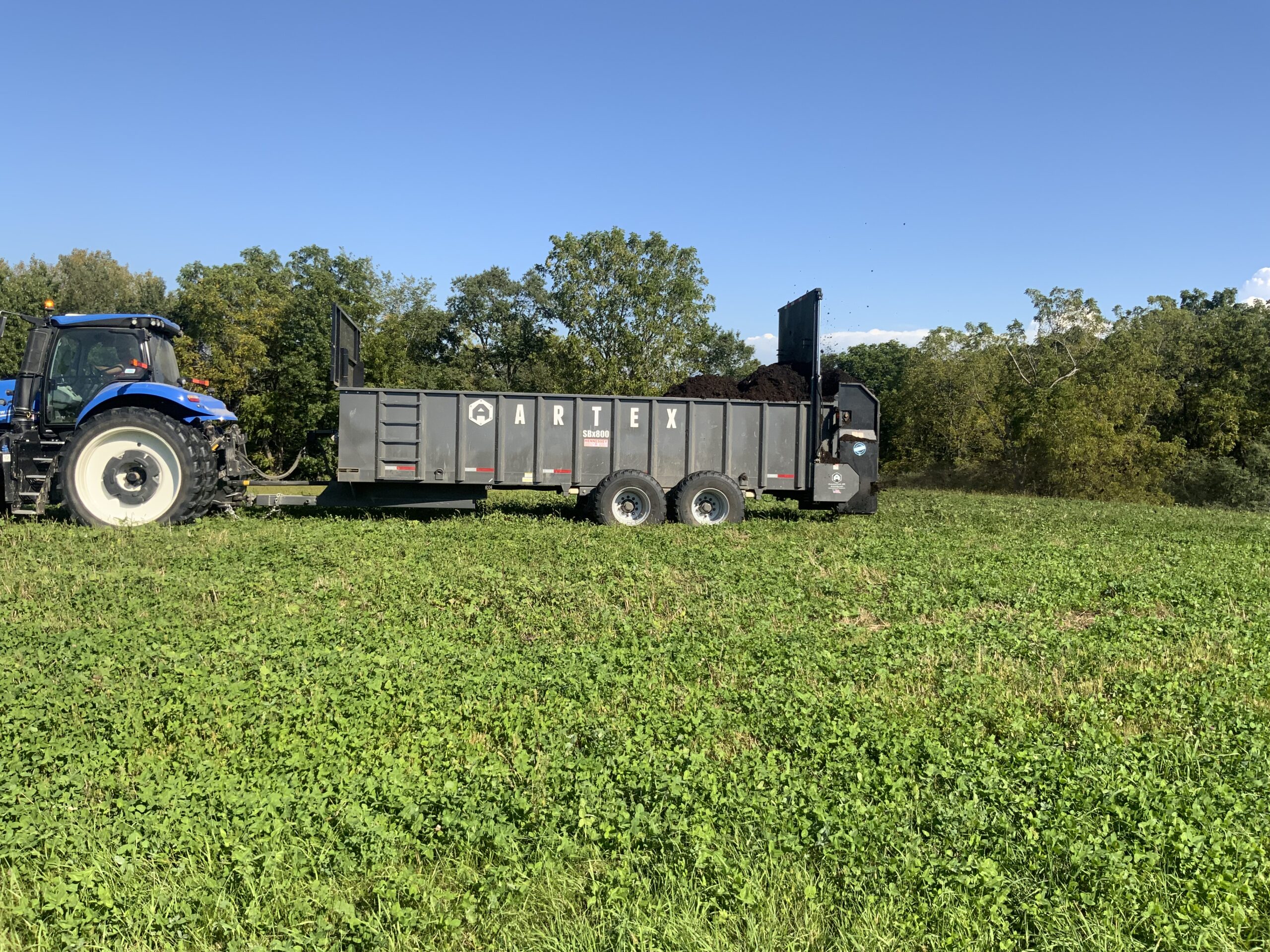

Composting helps stabilize manure and minerals so nutrients are more available to crops — even on the commercial scale
It’s long been known that a plant’s ability to use minerals depends on how the minerals are delivered. There are different sources, all with different nutrient use efficiency. The sulfates, for example, do better than the oxides, while chelated minerals do better yet; it’s not just a numbers game.

Regenerative agriculture is all about getting better nutrient use efficiency. The goal is to tap into all the minerals that exist in the soil, plus what has been purchased. How? Biology is the path, with cover crops, using humates with fertilizers, and compost, along with adding certain types of organisms to the soil. These steps take us in the right direction.
I always say that the dumbest idea we humans ever had was putting all the minerals in solution, applying them early in the growing season, and expecting them to be plant-available whenever the plant needs them. They leach, they tie up, and they erode, and then we think we know how many units of NPK are needed to grow the crop.
Support authors and subscribe to content
This is premium stuff. Subscribe to read the entire article.