

The rhizosphere, rhizodeposition, the rhizosheath and rhizophagy form the biological basis of soil health
Lately I’ve been giving lectures to farmers and vineyard growers who’ve heard about regenerative agriculture but are curious to know more. Before and after images of soil humus transformation is a powerful start.
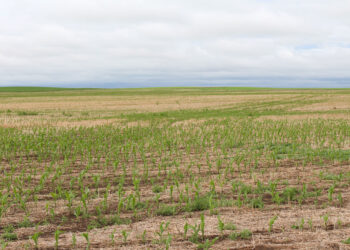
Worldwide, farmers experience a visceral feeling when they observe improvements to soil health. It is sometimes dramatic: impoverished, cloddy dirt transformed into humus-ey, crumbly, dark soil. When it rains, water infiltrates instead of puddling and running off. Awareness of this “living soil” resonates in the farmer’s whole being.
I think it’s helpful to view regenerative agriculture as a progression of holistic farming systems. We now have over 100 years of carbon farming experience since biodynamic agriculture was founded in Europe, and over 50 years in the United States since organic farming organizations mushroomed in the 1970s. Acres U.S.A. — the voice of eco-agriculture — was established in 1971. Regenerative agriculture draws upon and builds on this carbon-farming experience with cover crops, compost, organic mulching, humates, biological inoculants, no-till and holistic grazing.
Holistic farming systems — organic, sustainable, biodynamic, permaculture, holistic grazing, etc. — embrace the principles of agroecology, or natural systems agriculture: biodiversity, intercropping, keeping the soil covered, recycling and transforming organic wastes, minimizing soil disturbance, and integration of livestock with cropland and forage rotations. Moreover, they aim to enhance soil health, food quality and local food systems, and ultimately to reduce the toxic load brought about by synthetic pesticides, fungicides and other inputs.
Natural plant ecosystems are the working model for understanding soil biological processes that drive functions like soil aggregation, soil structure, nutrient cycling, pest suppression and plant productivity. Farmers can gain a lot of insights by studying internet images and thinking about these principles and interconnections that take place in temperate forests, boreal forests, tropical rainforests, prairies and grasslands, savannas, and deserts and chaparral. Nobody is spreading fertilizer or spraying pesticides on these natural ecosystems, and yet look how healthy and productive they are.
In fact, this is how permaculture came about. Bill Mollison, who coined the term, based on the words “permanent agriculture,” was inspired to create this ecological design system — which integrates edible landscapes, green architecture, appropriate technology, and regenerative types of agriculture — after observing forest ecology in Tasmanian rain forests.
In the 1930s and 40s, Arthur Paul Jacot — an Appalachian forest biologist — published a series of papers on soil fauna, how soil biology influences on soil structure, and the immense ecology of the forest floor. Jacot painted an intricate, interwoven image — detritus composed of dead leaves, twigs, branches, midribs, petioles, fruit husks, samaras, insect wings and skulls, and feces; layers of this litter that function as walls, ceilings and sub-basements; leaves that become more fragmentary; multitudes of creepy crawly arthropods; minute fungi feeding on dead leaves and organic refuse, weaving it all together into a forest mat with their myriad white hyphae. In other words, organic-matter-driven “soil biota habitat” and the “living soil.”
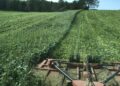
In a vineyard or orchard setting, farmers can implement multispecies cover crops in alleyways and low-growing living mulches under rows. Timely grazing is a tool for vegetative control and has the added benefits of nutrient cycling and carbon building, and it encourages one of the famous denizens of holistic grazing: dung beetles. Research by the USDA in Georgia found that dung beetles cycled nitrogen in bermudagrass amended with feces by an equivalent to 200 pounds of ammonium nitrate per acre. The roller-crimper is an appealing tool to manage cover crops in vineyard alleyways because it helps create a resemblance of Jacot’s forest floor — a diverse living, dying and dead organic matter habitat.

Fungal Abundance
A fundamental lesson of perennial ecosystems like forests and prairies — and therefore vineyards and orchards — is a greater abundance of fungi and their hyphal networks. Acres U.S.A. published my article “Understanding Fungal-to-Bacterial Ratios” in the June 2022 issue. Fungi thrive in non-disturbed soils with layers of litter and lignocellulosic debris.
The number of fungal species, the soil volume they occupy, and the biomass weight they contribute are far more abundant and diverse than their bacterial, algal, or actinomycetes microfloral counterparts. For a long time, scientists noted that bacteria moved distances by hitching a ride on microarthropods. In recent years, advanced microscopy has shown bacteria cohabitate with fungi and use fungal hyphae as superhighways to move long distances by way of internal cytoplasmic streaming and by swimming along external fungal hyphae biofilms.
The saprophytic or decomposer fungi occur universally wherever plants and animals exist. Otherwise, we’d be knee deep in detritus and feces. Decomposer fungi manufacture enzymes and organic acids capable of breaking down complex cellulose, hemicellulos and lignin — essentially the lignocellulose that make up bark and wood. While science has identified over 70,000 fungal species, the latest metagenomic studies estimate there are 5.1 million fungal species worldwide.
Mycorrhizal fungi, which have co-evolved with land plants 450 (fossil record) to 700 (molecular clock) million years ago — long before dinosaurs — form symbiotic associations with plant roots. Most vascular plants (excluding a few families such as the crucifers and amaranths) form “fungus roots,” or mycorrhizae. In fact, in natural ecosystems, plants do not strictly speaking have roots — they have mycorrhizae. Plants provide essential photosynthate carbon to the fungi, while the fungi explore the soil with their vast networks of filamentous hyphae, in return supplying nutrients and moisture to the plant.
Ectomycorrhizae (ECM) associate with tree roots, including needle (coniferous) and broadleaf (deciduous) tree species in about two dozen genera (e.g., fir, spruce, pine, alder, birch, beech, poplar, oak, willow, hemlock). Over 5,000 species of fungi are capable of forming ECM associations with trees from the zygomycetes, basidiomycetes and ascomycetes fungal groups. Puffball and truffle mushrooms, for example, are the fruiting bodies of these ECM-fungi.
In ectomycorrhizal associations, the fungal symbiont forms an intercellular “Hartig net” of hyphae between root cells as well as a fungal sheath or “mantle” of external hyphae that envelop the plant root, creating the appearance of a swollen root. External fungal hyphae occur as both individual strands and multiple strands that fuse together into thick branching structures called “rhizomorphs.” These external hyphae can extend several centimeters or even meters into the surrounding soil.

Endomycorrhizae are the most common mycorrhizal group, forming associations with roughly 90 percent of the 390,000 species of higher plants — including grasses, broadleaves, shrubs, vines and trees — as well as bryophytes like mosses and liverworts. Endomycorrhizas are commonly known as arbuscular mycorrhizae fungi (AM), but an older term is vesicular arbuscular mycorrhizae (VAM). Over 350 species of fungi in the glomeromycetes and endogonomycetes groups form arbuscular mycorrhizal associations.
The fungal symbionts of AM fungi penetrate plant roots both intercellularly (between cells) and intracellularly (within cell membranes), forming specialized vesicles and arbuscules inside root cells for the purpose of nutrient storage and exchange. Fine external hyphae may extend several millimeters or centimeters into the surrounding soil. These AM fungal hyphae and their associated glomalin glues enmesh and stitch soil particles together and form soil aggregates, which are the building blocks of soil structure with its attendant porosity, which is a critical feature of soil habitat. Spores that form on these external hyphae are an important source of propagules in AM mycorrhizal inoculants.
I want to highlight two amazing findings about AM fungi. In 1996, Sara Wright, a USDA soil scientist, discovered glomalin in AM fungi — a sugar protein, or glycoprotein, that functions as a strong glue or waxy substance. Glomalin is not only a major contributor to formation of water-stable aggregates; it also comprises as much as 30 percent of soil carbon. Think about that the next time you hear the words “carbon sequestration.” The waxy nature of glomalin gives support to filamentous fungal hyphae that help them function as transport vessels.

This leads to the next incredible insight, which comes from advanced microscopy only available at prestigious institutes. A 2025 paper in the journal Nature — “A travelling-wave strategy for plant–fungal trade” — included downloadable video clips of bi-directional flow of carbon and nutrients taking place within fungal hyphae. They measured particles moving at speeds as high as 50 to 120 micrometers per second. In addition, these scientists described how AM fungi create complex hyphal networks to explore soil resources, creating roadways and highways to transport plant-microbe goods in both directions simultaneously, solving bottlenecks, creating new pathways, and widening fungal hyphae at crucial junctures.
The Four R’s
Well-aggregated, humus-ey, and crumbly soils result from a rich population and diversity of soil organisms. Fungi, bacteria, protozoas, nematodes, arthropods, earthworms, and a myriad of soil microfloral and microfaunal species — each of these lend attributes that contribute to soil aggregation, soil structure and nutrient cycling. In the process of moving around, eating and reproducing, they generate soil-enhancing byproducts, produce biotic glues, and create tunnels. Farming boils down to “soil habitat management” through agroecological practices that maintain and build soil carbon — recreating Jacot’s forest floor with living, dying and dead organic matter. A fundamental concept of regenerative agriculture is “build it and they will come.”
The biological influence on soil health all comes together when you visualize and understand the plant microbiome, the soil microbiome, and the Four R’s of regenerative agriculture: rhizosphere, rhizodeposition, rhizosheath and rhizophagy.
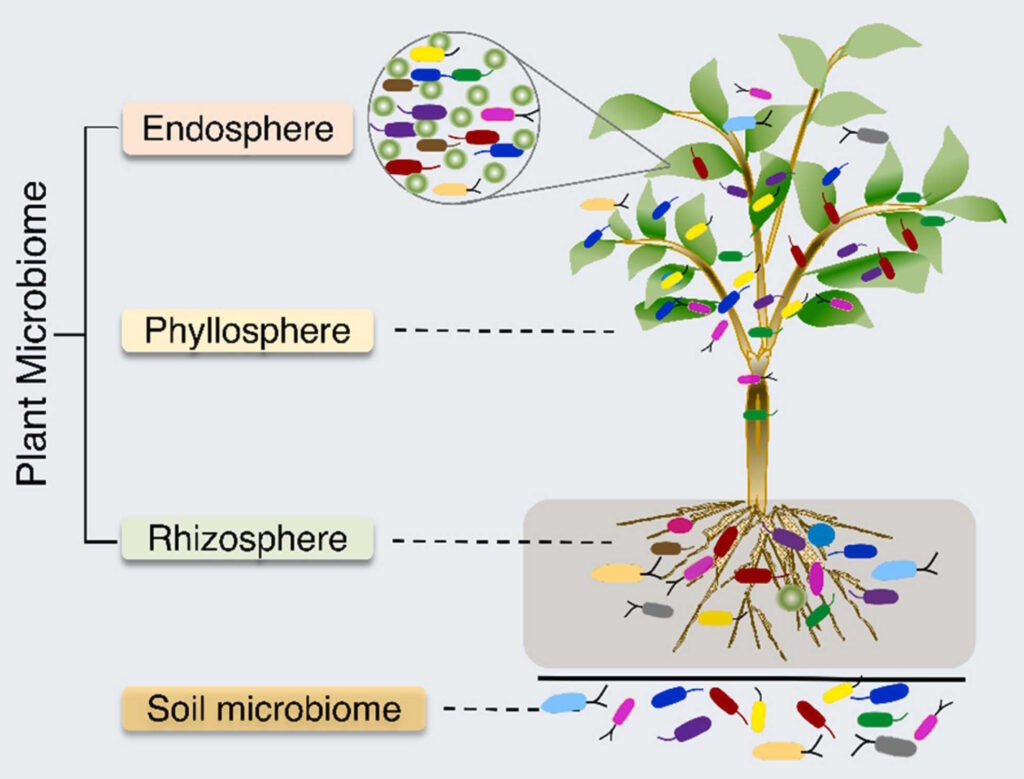
The plant microbiome is composed of the rhizosphere, the phyllosphere, and the endosphere — the roots, the leaves, and the internal plant zones. These are the three-dimensional biospheres where microorganisms inhabit and interact with plants. To microflora, these spaces must seem like mountain ranges and canyonlands. The soil microbiome encompasses the greatest living diversity on Earth and contains vast pools of soil carbon.
Rhizosphere. The rhizosphere was first described in 1904 by Lorenze Hiltner — the German scientist who developed Rhizobium legume inoculants — as the area surrounding plant roots inhabited by soil microorganisms. He correctly postulated that these rhizospheric microorganisms were stimulated by chemicals released from plant roots, which have since been recognized as “root exudates.”
A key concept, which harkens back to N.A. Krasilnikov in Soil Microorganisms and Higher Plants (1958) — a pivotal book that gave credence to modern biological agriculture — is that microbial populations are higher in the rhizosphere than in bulk soil. In addition, researchers have found steep gradients for pH, enzymes, organic acids, and water content at the root-soil interface. pH, for example can vary but more than two units in the rhizosphere compared to the surrounding bulk soil. These mechanisms help solubilize mineral nutrients such as phosphorus and make them more bioavailable.
The rhizosphere may be divided into three zones: the rhizoplane (the root surface and extensive epidermal root hairs), the endorhizosphere (where microbes inhabitat inter-cellular spaces in the interior cortex), and the ectorhizosphere (where microbes cluster outwards from the rhizoplane into the bulk soil). The rhizosphere zone of soil influence typically ranges from a few hundred micrometers to a half dozen millimeters — or even a few centimeters, accounting for volatile compounds and gases released by roots, depending on plant species and soil conditions. When roots are colonized by endo- or ectomycorrhizal fungi, the “mycorrhizosphere” greatly expands this sphere of influence with its filamentous fungal hyphae.
Rhizodeposition. Plants leak and exude a large number of carbon compounds, or rhizodeposits, into the rhizospheric root zone, including sloughed-off root cells, dead cell lysates, plant mucilages, and most famously in regenerative agriculture, “root exudates.” Root exudates are the collection of substances released into the rhizosphere by healthy plant roots in order to alter the rhizosphere’s physical, chemical or biological properties. These metabolites include sugars, amino acids, organic acids, enzymes, vitamins and growth factors, flavonoids, and nucleotides, as well as inorganic ions and gaseous molecules, with the greatest percentage being organic acids, sugars and amino acids. Studies have shown that 10 to 70 percent of photosynthetically fixed carbon transformed into these substances may be released as root exudates, although a range of 20 to 40 percent seems most common.
If you think of the rhizosphere as the command-and-control center of the plant-soil interface, root exudates are its communication signals. Root exudates are constantly recruiting and shepherding soil microbes, and in return soil microbes are stimulating and protecting plants. These chemical signals include symbiotic fungi community instructions, instructions for vast populations of plant growth promoting bacteria, nutrient acquisition, root protection, and an infinite number of plant communications with the soil microbiome.
Rhizosheath. The soil adhering to roots after they are extracted from the soil, and even shaken, is known as the rhizosheath. In farm circles, rhizosheaths are commonly known as “dreadlock roots” because they resemble the hairstyle worn by Rastafarians. The formation of rhizosheaths is influenced by the occurrence and length of root hairs, and through release of plant and microbial gelatinous mucilage, which is composed of polysaccharides, lipids and proteins. In response to drought stress and sandy soils, plants produce greater amounts of mucilage, which promotes rhizosheath formation in order to maintain contact with the soil and associated water uptake.
Farmers get excited about dreadlock roots because they are one of the most readily visible indications of healthy plant roots that are exuding mucilaginous rhizodeposits in partnership with soil microbes. It just so happens that cereal crops like rye, wheat and barley that double as cover crops are known to form large, visible rhizosheaths.
Regenerative ag farmers are learning how to improve rhizosheath formation between different fields and growing seasons by employing various protocols. Among these, seed treatments are fast and easy. These seed treatments include both biologicals (e.g., root-enhancing biological inoculants, Johnson-Su compost extract, farm-brewed biofertilizers) and mineral blends. Trace elements like cobalt and molybdenum perform critical functions but are needed in such small quantities that a seed coating is sufficient to turn on plant mechanisms. Silica applications, in particular, have been shown to increase rhizosheath formation.

Rhizophagy. The complexity of the rhizosphere and its signaling ability with the soil microbiome through root exudates took a major leap in 2010 and 2013 when a research team at the University of Queensland, Australia, discovered and then coined the term “rhizophagy.” It was further fleshed out and described as the “rhizophagy cycle” by James White at Rutgers University in 2018. After attending White’s lecture on the “Rhizophagy Cycle and Endophytes in Plants” at the 2022 Acres U.S.A. conference — which you can download at ResearchGate — I am convinced rhizophagy will go down in history as one of the epic advancements in soil science.
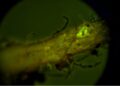
The rhizophagy cycle describes how soil bacteria enter plants through root tip cells, exist as endophytes in intercellular spaces, then lose their cell walls from superoxide — a reactive oxygen produced by a plant enzyme —and subsequently leak cellular contents that serve as plant nutrients. Most of these cell-wall-deficient bacteria, or protoplasts, survive and trigger root hair elongation, exiting through root hair tips and reforming cell walls as they emerge back into the soil. After acquiring nutrients in the rhizosphere, bacteria re-enter the rhizophagy cycle. It’s no surprise that root exudates are involved in herding, feeding and signaling these microbes on both ends of the rhizophagy cycle.
This kind of active rhizophagy munching in the rhizosphere is a direct source of plant nutrients. It complements soil-food-web processes where plants acquire nutrients indirectly through microfauna grazing on microflora and through microbial digestion of organic matter.
The Four R’s provide a solid foundation for biological agriculture and help explain why carbon farmers are able to grow productive crops with reduced or no fertilizer inputs. Just remember the slogan “build it and they will come” — what does it take to create carbon-rich, well-aggregated soil habitat on your farm?
In addition, the regenerative ag toolbox includes both biostimulants that feed soil biology (e.g, humates, molasses, seaweed, crustacean meal) and bio-augmentation blends that add soil biology (e.g., farm-brewed biofertilizers, bio-inoculants, liquid compost extracts). Seed treatments, root injections, soil and foliar bio-sprays — these practices can modify and enhance the rhizosphere and its multidimensional influences on soil and plant health.