Acres U.S.A.® Magazine
  • Articles
    • News
    • Ecological farming
      • Climate
      • Environmental Issues
      • Farm management & planning
      • Human health
    • Livestock
    • Farm
    • Crop
      • Crop management practices
        • Ag technology
        • Cover crops
        • Crop nutrition
          • Crop protection
          • Diseases
        • Crops
        • Fruits
    • Soil
    • Opinion
  • Resources
    • Magazine
    • Online Learning
    • Newsletters
    • Free Articles
    • Blog
  • Magazine Issues
    • 2026
      • February 2026
      • January 2026
    • 2025
      • December 2025
      • November 2025
      • October 2025
      • September 2025
      • August 2025
      • July 2025
      • June 2025
      • May 2025
      • April 2025
      • March 2025
      • February 2025
      • January 2025
    • 2024
      • December 2024
      • November 2024
      • October 2024
      • September 2024
      • August 2024
      • July 2024
      • June 2024
      • May 2024
      • April 2024
      • March 2024
      • February 2024
      • January 2024
    • 2023
      • December 2023
      • November 2023
      • October 2023
      • August 2023
      • July 2023
      • June 2023
      • May 2023
      • April 2023
      • March 2023
      • February 2023
      • January 2023
    • 2022
      • December 2022
      • November 2022
      • October 2022
      • September 2022
      • August 2022
      • July 2022
      • June 2022
      • May 2022
      • April 2022
      • March 2022
      • February 2022
  • About Us
    • Our History
    • Our Staff
    • Contact Us
    • Community
      • Soil Health Primer Resources
  • Events
    • Eco-Ag Conference
    • Farm Weird Event
    • Viroqua On Farm Event
  • Subscribe
  • Login
  • Register
No Result
View All Result
  • Articles
    • News
    • Ecological farming
      • Climate
      • Environmental Issues
      • Farm management & planning
      • Human health
    • Livestock
    • Farm
    • Crop
      • Crop management practices
        • Ag technology
        • Cover crops
        • Crop nutrition
          • Crop protection
          • Diseases
        • Crops
        • Fruits
    • Soil
    • Opinion
  • Resources
    • Magazine
    • Online Learning
    • Newsletters
    • Free Articles
    • Blog
  • Magazine Issues
    • 2026
      • February 2026
      • January 2026
    • 2025
      • December 2025
      • November 2025
      • October 2025
      • September 2025
      • August 2025
      • July 2025
      • June 2025
      • May 2025
      • April 2025
      • March 2025
      • February 2025
      • January 2025
    • 2024
      • December 2024
      • November 2024
      • October 2024
      • September 2024
      • August 2024
      • July 2024
      • June 2024
      • May 2024
      • April 2024
      • March 2024
      • February 2024
      • January 2024
    • 2023
      • December 2023
      • November 2023
      • October 2023
      • August 2023
      • July 2023
      • June 2023
      • May 2023
      • April 2023
      • March 2023
      • February 2023
      • January 2023
    • 2022
      • December 2022
      • November 2022
      • October 2022
      • September 2022
      • August 2022
      • July 2022
      • June 2022
      • May 2022
      • April 2022
      • March 2022
      • February 2022
  • About Us
    • Our History
    • Our Staff
    • Contact Us
    • Community
      • Soil Health Primer Resources
  • Events
    • Eco-Ag Conference
    • Farm Weird Event
    • Viroqua On Farm Event
  • Subscribe
No Result
View All Result
Acres U.S.A.® Magazine
No Result
View All Result
Home Magazine issues August 2022

Soil Conditioning for Organic Vegetable Production

Aaron Weaver by Aaron Weaver
September 30, 2024
in August 2022
0
Soil Conditioning for Organic Vegetable Production

Giant foxtail

0
SHARES
12
VIEWS
Share on FacebookShare on Twitter

How to recreate an old pasture field … without cattle or horses

Aaron Weaver

The best-conditioned soil for growing organic vegetables is an old pasture field where cattle and horses have grazed for twenty years or more. It has received manure from these animals over the years and possibly some lime or gypsum. Most of these fields have a high total exchange capacity, good organic matter and good water drainage, but the soil can hold moisture during dry periods. 

Not all farmers are able to have old pasture fields to grow vegetables in, but even with other fields it is possible build up humus and microbes and have healthy soils. 

Taking a soil sample is one of the most important steps in building soil health. It will show us what type of soil we have (sandy loam, clay, etc.). The total exchange capacity will tell you what the nutrient holding capacity is. You will be able to see where the levels of your main minerals are at (phosphorus, calcium, magnesium, potassium, sulfur, trace minerals, boron, manganese, copper and zinc). 

Sometimes the farmer is ahead by not trying to grow vegetables the first few years after buying a farm or acquiring some land. Consider incorporating cover crops or pasture mix and grazing the fields for a few years. If your soils have poor drainage, contact somebody to run drainage tile in the fields. Poor drainage slows down plant growth and promotes diseases, and insect pests love plants that are stressed. Running drainage tile is expensive but pays for itself in a few years with the good, quality crops that you will then harvest. This is especially important for heavy clay soils.

Clay soils can hold more minerals but need to be worked differently from sandy loam soil. Rule number one is to never work the soil when it is too wet. Working the soil when it is too wet kills the microbes and creates a hard pan; it takes several years to get it back to where it was. 

Our farmers use old-time methods of tillage — moldboard plows, harrows with culti-mulchers and cultivators for weed control. No-till practices are better for the soil but are not practical for a farmer that makes a living growing organic vegetables. So, our farmers use minimal tillage, being conscious about the microbial life in the soil. They set the plow depth just deep enough to turn the cover crop over. 

On clay soils, start balancing the soil by applying the minerals to work toward ideal levels, which are 68 percent calcium, 12 percent magnesium and 5 percent potassium. This will take a few years to accomplish, but you will notice it getting better each year. Adding sulfur, humates and boron will help make these minerals available to your crop. Phosphorus levels are often low in these soils and can be raised by applying rock phosphate. If you have your own bedded pack manure or compost, this will help raise your phosphorus and potassium levels. Manure has more value today than it ever had, with the high fertilizer prices. Doing cover crops, along with applying these minerals, will help create a nice texture and help break up hard pan.

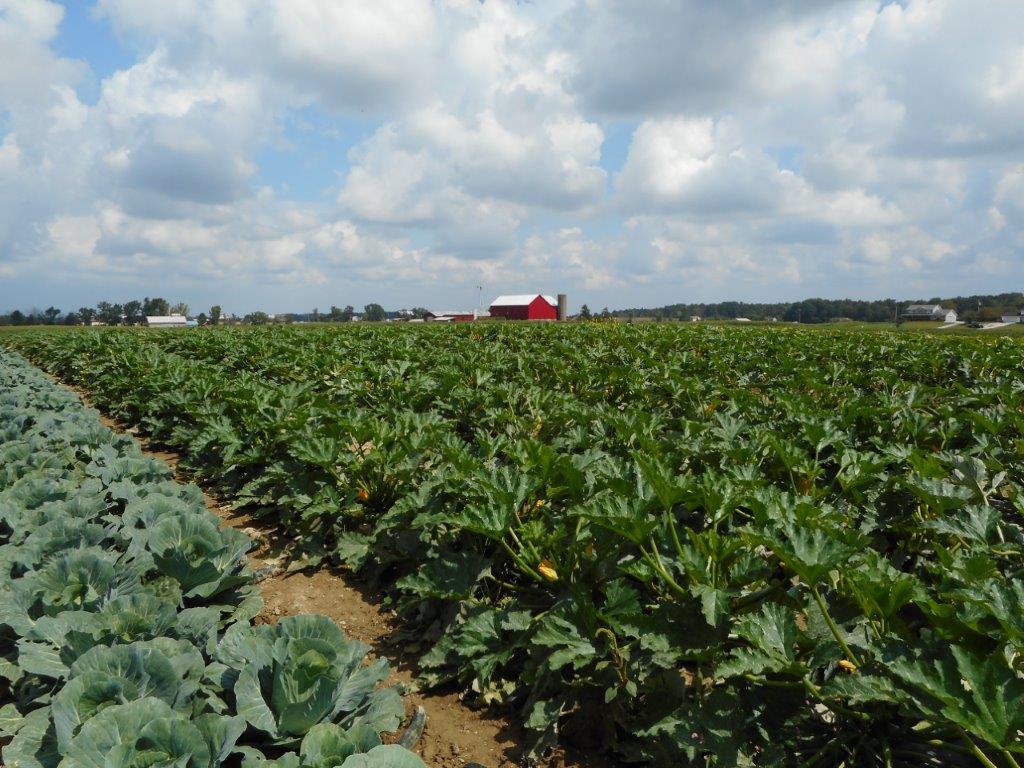
Nutrient transport can be visualized as a wagon with a horse hitched to it — Dad and Mom on the front seat with the children on the back seat. Being calcium, the king of nutrients, Dad determines how many children go along and where they will go. Mom is phosphorus —reproduction, for rooting and fruiting. The children on the back are the trace minerals. The horse is boron; the family isn’t going anywhere till he starts walking. Running along beside the wagon is a dog, which is sulfur — he will keep things stirred up.

Here in our area, we have a silt loam soil that is generally high in calcium and magnesium but low in potassium and phosphorus. By not working the soil when it is wet and applying sulfur, humates and trace minerals, the other minerals become plant available. The farmers can grow very good, quality crops. They are also doing cover crops. The produce fields are done in zones, with permanent drives that are seeded with clovers and grasses for our pollinators. 

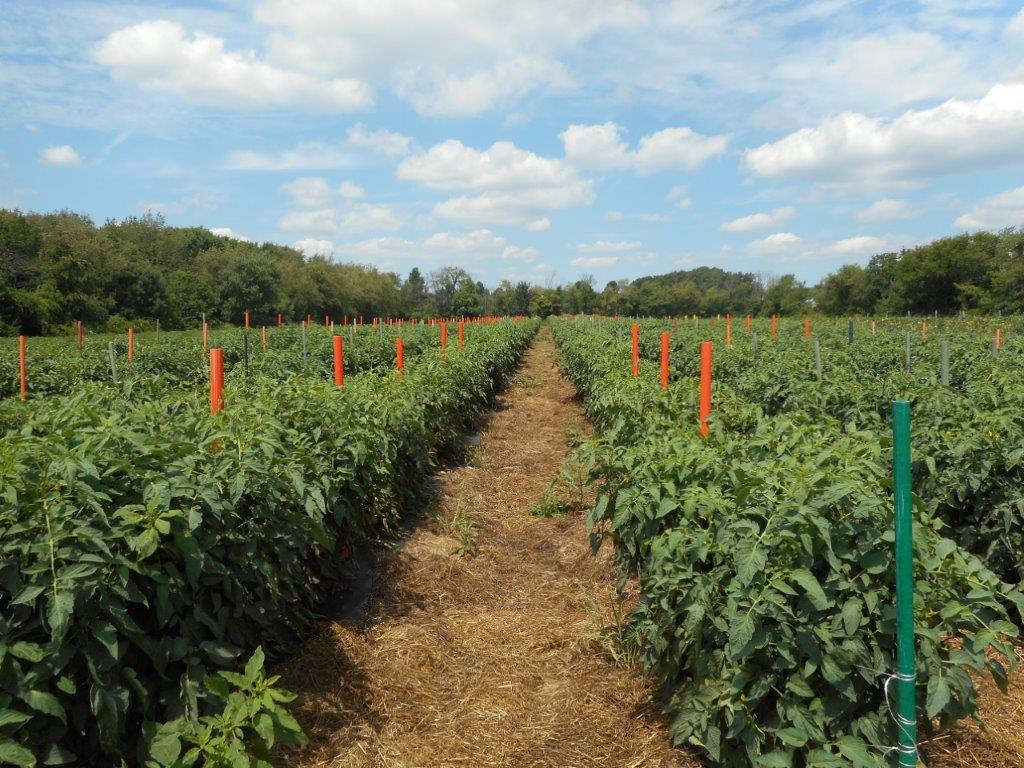
Crop rotation is also very important to help with disease control. Some farmers are leaving zones fallow for a year, growing different species of cover crops to help revitalize the soil. Mulching between rows with hay or straw also helps build up microbial activity and keeps the soil nice and cool. It also keeps water from splashing on the lower plant leaves for disease control.

Sandy loam soils have a low total exchange capacity, which means to balance the soil you must use spoon-size servings instead of cup size. Minerals need to be supplied small amounts at a time or they will leach away. By incorporating humus compost, compost or manure and by cover cropping, you will be able to hold the nutrients better and build organic matter. Irrigation is a must in light soils. It works well to spread a dry crop food with nitrogen, plant-available phosphorus, potassium and food for the microbes. This builds a hot bed of biology right where the crop is planted. It is also good to feed liquid crop food through the drip irrigation. This would be considered spoon feeding. It is also good to apply minerals for balancing the soil twice a season, rather than then just once.
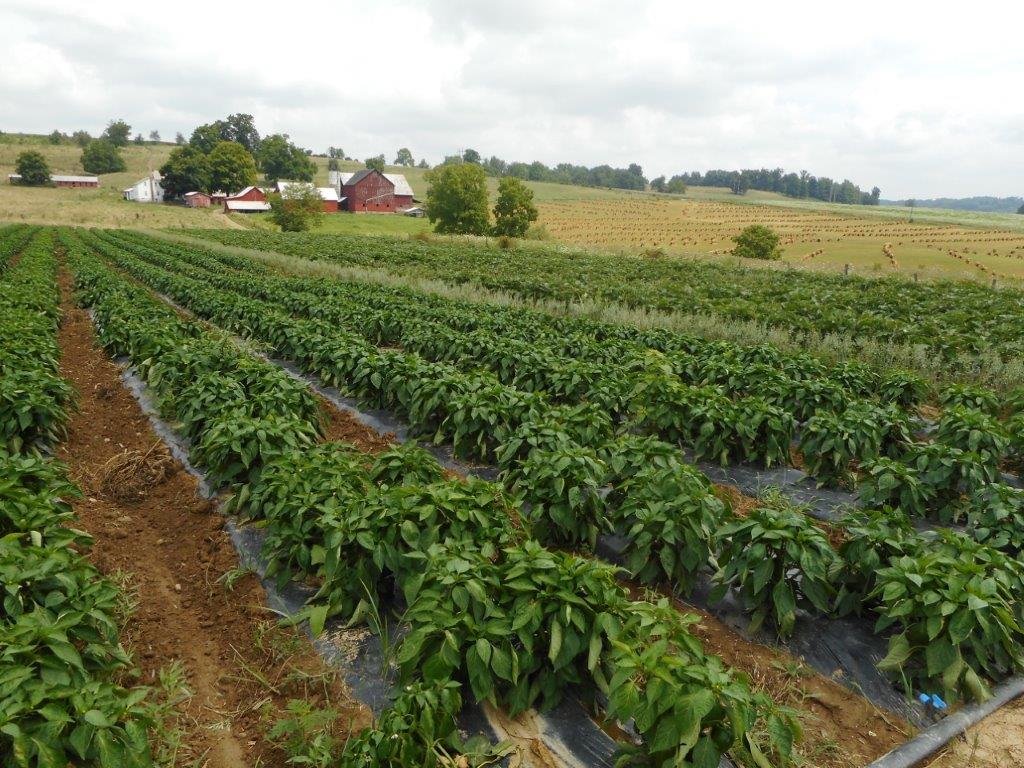
Try to seed cover crops as soon as you have cash crops harvested. On fields that have early harvested crops you have the opportunity to grow a cover crop mix with nine or more different species. Use legumes, grasses and broadleaf plants. Walking into a field like this when it is in full bloom is awesome. The tops are alive with pollinators, and if you pull up a handful of this crop, the soil is alive with all kinds of microbes. This helps bring nutrients back in the soil, builds humus and improves organic matter. Most of this mix will winter kill — it will cover the soil over the winter but can be worked into the soil in the spring. 

For late-season crops you can do a cover crop in the spring like buckwheat, which will aid in making more phosphorus plant available to the soil. Plow it under in the summer for your fall squash crop. Mustard is also a good cover crop. It helps to fumigate the soil of some soilborne diseases like Phytophthora. Cereal rye is used as a cover crop mostly on the late-harvested crops. 

Be diverse with cover crops and try different species. Diversity builds immunity. When we are harvesting crops every season, we are taking minerals out of the soil, so we need to be putting them back in. 

Aaron Weaver is the field coordinator for Green Field Farms, a farmer-owned co-op that markets products from Amish and Mennonite farms in Ohio. Find out more about Green Field Farms at 330.263.0246, info@gffarms.com, or 6464 Fredericksburg Road, Wooster, Ohio 44691. 


Practical Advice for a Common Problem: Preventing Foxtail

Here are some thoughts on controlling giant foxtail from Dr. Adam Davis of the University of Illinois: 

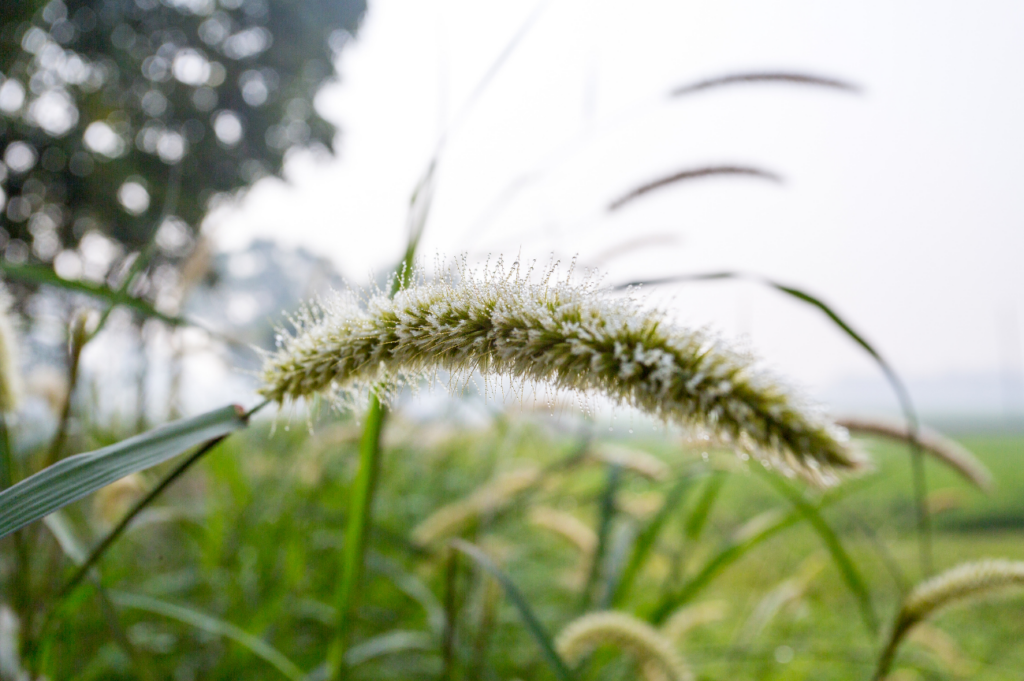
1. It is very susceptible to weed seedbank control: A lot of different granivores, including mice, ground squirrels, birds, crickets and ground beetles, like to eat giant foxtail seeds. If we provide habitat/shelter (mulch, living cover, crop residues) for those granivores during the August through November time period, they can eat up to 90 percent of the newly produced seed.

2. Primary tillage timing: Fall tillage vs. spring. Keeping giant foxtail seeds on the soil surface for as long as possible (delaying primary tillage) can maximize seed predation benefits. However, tillage timing considerations are clearly linked to a lot of other factors: soil type (Is the soil heavy enough to require fall tillage to allow for mellowing over the winter? Is the clay content low enough and drainage good enough to permit primary tillage in the spring?), crop rotation (does a following cover crop or primary crop require fall seedbed preparation?) and soil quality goals (do you even include primary tillage or go for some form of limited tillage?).

3. Cover crops: I’ve noticed that legume cover crops do considerably better than grass covers in suppressing giant foxtail. There’s a large allelopathic impact of red clover, alfalfa, birdsfoot trefoil and medics on giant foxtail seedling recruitment. I haven’t seen much impact of rye or other cereals on giant foxtail germination and establishment. During the seven years that I ran a roller-crimper study in soybeans, the weed community went from being dominated by common waterhemp, with very little giant foxtail, to being dominated by giant foxtail, with very little waterhemp.

4. Rotations: It’s good to get a winter annual in there to interrupt giant foxtail’s summer-annual life history. For organic grains, corn-soybeans-wheat/red clover is nice, or corn-soybeans-oats/alfalfa-alfalfa.
← Previous Microbially Friendly Farming  Next Creating a Beneficial Rhizosphere →
Tags: August 2022
Aaron Weaver

Aaron Weaver

Aaron Weaver is the field coordinator for Green Field Farms, a farmer-owned co-op that markets products from Amish and Mennonite farms in Ohio. Find out more about Green Field Farms at 330.263.0246, info@gffarms.com, or 6464 Fredericksburg Road, Wooster, Ohio 44691.
Next Post
September 2022 • Issue #615

September 2022 • Issue #615

  • Trending
  • Comments
  • Latest
The Most Important Livestock in Our Fields

The Most Important Livestock in Our Fields

July 1, 2024
Glyphosate Does What It’s Designed to Do — Kill

Glyphosate Does What It’s Designed to Do — Kill

February 19, 2025
The Take-Half, Leave-Half Fallacy

The Take-Half, Leave-Half Fallacy

July 1, 2025
White snakeroot

Toxic Forages?

September 1, 2025
We Don’t Need Another Bridge — We Need an Off-Ramp

We Don’t Need Another Bridge — We Need an Off-Ramp

3
Under One Roof

Under One Roof

3
A Rose By Any Other Name

A Rose By Any Other Name

2
Terra Preta’s Biological Advantage

Terra Preta’s Biological Advantage

2
Don’t You Dare Disparage Sugar!

Don’t You Dare Disparage Sugar!

February 3, 2026
February 2026 • Issue #656

February 2026 • Issue #656

February 1, 2026
Fungal Exchange Capacity

Fungal Exchange Capacity

February 1, 2026
ECO-MEETINGS

ECO-MEETINGS

February 1, 2026

Recent News

Don’t You Dare Disparage Sugar!

Don’t You Dare Disparage Sugar!

February 3, 2026
February 2026 • Issue #656

February 2026 • Issue #656

February 1, 2026
Fungal Exchange Capacity

Fungal Exchange Capacity

February 1, 2026
ECO-MEETINGS

ECO-MEETINGS

February 1, 2026

About ACRES USA

Acres U.S.A.® Magazine

Acres U.S.A.® is North America’s oldest publisher on production-scale organic and regenerative farming. For more than 50 years, our mission has been to help farmers, ranchers and market gardeners grow food profitably and sustainably, with nature in mind.

Visit Our Advertisers

Magazine Issues

  • News
  • 2025
    • June 2025
    • May 2025
    • April 2025
    • March 2025
    • February 2025
    • January 2025
  • 2024 Articles
    • December 2024
    • November 2024
    • October 2024
    • September 2024
    • August 2024
    • July 2024
    • June 2024
    • May 2024
    • April 2024
    • March 2024
    • February 2024
    • January 2024
  • December 2023
    • December 2023
    • November 2023
    • October 2023
    • August 2023
    • July 2023
    • June 2023
    • May 2023
    • April 2023
    • March 2023
    • February 2023
    • January 2023
  • December 2022
    • November 2022
    • October 2022
    • September 2022
    • August 2022
    • July 2022
    • June 2022
    • May 2022
    • April 2022
    • March 2022

Contact Acres U.S.A

  • Contact Us
  • About Us
  • Advertise With Acres U.S.A.
  • My Subscription

Learn

  • Resources
  • Events
  • Magazine
  • Newsletters
  • Free Articles
  • Webinars
  • Online Courses
  • Bookstore

Our All Socials

Follow With Us...

  • My account
  • News
  • Ecological farming
  • Refund and Returns Policy
  • Privacy & Policy

© 2024 Acers USA Magazine

Welcome Back!

Login to your account below

Forgotten Password? Sign Up

Create New Account!

Fill the forms below to register

All fields are required. Log In

Retrieve your password

Please enter your username or email address to reset your password.

Log In
No Result
View All Result
  • HOME
  • ARTICLES
    • News
    • Farm
    • Ecological farming
    • Livestock
    • Crop
      • Crop management practices
      • Cover crops
      • Crop nutrition
      • Crop protection
      • Crops
      • Ag technology
    • Soil
    • Opinion
  • RESOURCES
    • Magazine
    • Online Learning
    • Newsletters
    • Blog
    • Free Articles
  • MAGAZINE ISSUES
    • 2025
      • June 2025
      • May 2025
      • April 2025
      • March 2025
      • February 2025
      • January 2025
    • 2024
      • December 2024
      • November 2024
      • October 2024
      • September 2024
      • August 2024
      • July 2024
      • June 2024
      • May 2024
      • April 2024
      • March 2024
      • February 2024
      • January 2024
    • 2023
      • December 2023
      • November 2023
      • October 2023
      • August 2023
      • July 2023
      • June 2023
      • May 2023
      • April 2023
      • March 2023
      • February 2023
      • January 2023
  • ABOUT US
    • Our History
    • Our Staff
    • Contact Us
    • Community
      • Soil Health Primer Resources
  • EVENTS
    • Eco-Ag Conference
    • On-Farm Viroqua Event
    • Farm Weird
  • SUBSCRIBE
  • Login
  • Sign Up
  • Cart

© 2024 Acers USA Magazine

Are you sure want to unlock this post?
Unlock left : 0
Are you sure want to cancel subscription?