
Over the course of the next year we’ll be following a Georgia farm as it seeks to optimize its farm business practices
Over the past eight months or so, this column has worked through all the different strands of a safety net that farmers can weave for themselves. In the next year, we’re going to dive into how one farm is weaving those strands together and balancing the tradeoffs that every company has to make as they grow. We’ll explain the whole process as they seek to optimize production, market their produce, and analyze their results in order to make even better decisions in 2025.
The farm we will focus on together is called Love Is Love Cooperative Farm (LIL), a worker-owned cooperative and certified organic operation about an hour southeast of Atlanta. It started in 2008 as the work of two landless, first-generation farmers, Joe Reynolds and Judith Winfrey. The farm quickly gained a following and a long-term lease on five acres in Atlanta, where they grew vegetables, strawberries, and muscadines for direct-to-consumer and restaurant sales. In 2018, Joe and Judith joined forces with Monica Ponce, Russell Honderd, and Demetrius Milling. The group started conversations with the Working Farms Fund, and in 2021 they converted to a worker-owned cooperative and moved to 70 acres in Mansfield, Georgia.
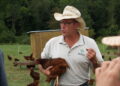
This is an incredibly talented group of farmers. Joe has been farming since 2005 and has built a reputation as an amazing mentor for dozens of young farmers
When I first started farming myself, I would get occasional calls from Joe where he asked me how I was doing, talked me through problems, and offered solutions. Joe served as the chair of the GA Organics Board of Directors from 2018 to 2019 and currently serves as the farmer representative on the Southern Cover Crops Council.
Judith brings a wealth of experience in food distribution to the group, having spent five years leading the meal delivery service PeachDish and another several years as COO of Linton Hopkins restaurant group, during which time it won several James Beard Foundation awards. She co-founded Wholesome Wave Georgia, which doubles SNAP/EBT dollars spent with local growers throughout the state, and Community Farmers Markets, which manages 13 markets around the metro Atlanta area, including eight at mass transit stations in food deserts.
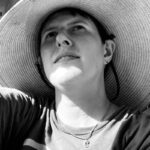
Monica has been farming since 2012. She helped start an urban farm in Atlanta early on and has since grown her skills to tackle everything from the greenhouses, irrigation, and wholesale wash/pack for a 60-acre vegetable operation. She has also grown specialty crops for the Star Provisions Group and the kitchen gardens at the Greyfield Inn on Cumberland Island.
Russel started his farming career in Michigan, where he attended and then taught at the Organic Farmer Training Program at Michigan State University. Upon moving to Georgia, he spent three years converting a conventional nursery to the King of Crops farm, which grows for the King of Pops popsicles. He joined Monica in managing the kitchen gardens at the Greyfield Inn on Cumberland Island for two years before joining.
Demetrius started farming on an urban farm in Atlanta, then moved to managing the campus farm at Gwinnett Technical College and has been with LIL since 2016. He quickly rose to become an assistant manager and joined the group discussing the cooperative future of LIL in 2018. He serves on multiple boards with the Georgia Farm Bureau and the board of the Horticulture Program at Gwinnett Technical College.
LIL is navigating the process of scaling from five acres to 70 with grace. This year they plan to increase their greenhouse space by 50 percent and their cultivated field space by 40 percent. They currently have three main enterprises — a year-round mixed vegetable operation that sells to restaurant, wholesale and 400+ CSA customers; a seedling business that sells to other farmers as well as local consumers; and a cut-flower operation selling direct-to-consumer and wholesale. They’re growing into their 70 acres and learning how their business changes as it scales to new levels of production.
Over the next year, my company, Good Agriculture, will be working with LIL and explaining the process here. In the next few months, our focus will be on operations and marketing. We’ll be working to document SOPs and to develop an employee training manual in preparation for welcoming the first H2A workers to the farm. LIL will be increasing their production significantly, so we’ll be helping to create and execute a marketing strategy to make sure all the new production results in an equivalent increase in income.
Once things are running smoothly on the operations and marketing front, we’ll dig into finances. LIL already works with a bookkeeper, but we’ll help them with the analysis and projections to ensure that they have all the information they need to make informed decisions. And finally, we’re going to be working with LIL to develop an operational analysis tool so that they can easily collect data in the field and get real-time statistics and insights into their production.
Throughout this process, we will be telling the stories in this space. We’ll be transparent about the numbers, the challenges, and the growing pains. Our goal is for you to find ideas that you can apply to your own farm and stories that make you feel less alone as you grow your own farm business.
Learn more about LIL at loveislovefarm.com and about Good Agriculture at goodagriculture.com.