

While nothing can replace good cultural management practices, certified organic farms do have a number of options for controlling weeds chemically
Organic herbicides caught the attention of farmers in 2002 when the USDA published a study on the use of vinegar for weed control. The Organic Foods Production Act of 1990 had set the stage for research and product development in support of the USDA National Organic Program, which officially launched 12 years later in 2002.
A few natural herbicide products had been in the market since the mid-1990s, composed of pelargonic acid and potassium salts of fatty acids. The first U.S. patents for these two natural weed control products were filed and approved between 1990 and 1994, by Mycogen Corp and Safer, Inc. However, the USDA study was the first research that examined the efficacy of industrial-strength acetic acid on weed control at 5, 10, 15, and 20 percent concentrations. For comparison, household vinegar is 3 percent.
A lesser-known study by USDA in 2002, also in response to the Organic Foods Production Act, examined the herbicidal effect of essential oils, which are natural products “generally regarded as safe.” Twenty-five different essential oils — ranging from basil, canola, cinnamon, and caraway to savory, sunflower, sweet birch, and red thyme — were initially screened for visual injury to dandelion leaves. Next, they sprayed the most promising candidates on lambsquarter, ragweed, and Johnsongrass. These researchers concluded that eugenol (cinnamon), clove, summer savory, and thyme essential oils provided very effective burnback. It’s no wonder these are some of the key active ingredients in modern organic herbicides.
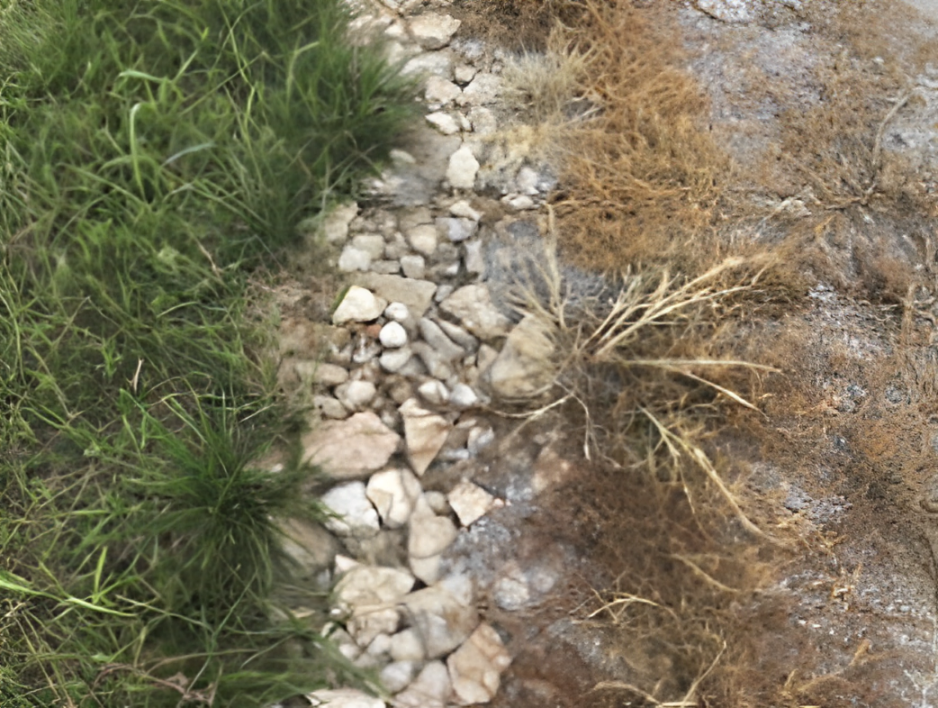
While organic herbicides still function as contact, as opposed to systemic, herbicides, new formulations and innovative uses of these natural weed control products have made them more attractive. For example, early versions of acetic acid were sold and applied at 20 percent industrial strength, meaning “straight, no chaser.” One gallon of this 20 percent vinegar disappears pretty quickly when you’re spraying it out at full strength; yes, that means without diluting in water. That’s obviously too expensive for anything besides limited spot spraying. In contrast, a newer formulation — Weed Terminator 20 + Organic Boost — is effective at 4-6 fluid ounces per gallon. It does this because the Organic Boost additive (likewise added at 4-6 fl. oz.) combines organic acids and natural oils that function as emulsifiers and additives, thus reducing 20 percent acetic acid to a 3-5 percent concentration while achieving excellent burnback control. It’s these kinds of details that generate questions from farmers on the efficacy, costs, usage, and status of organic herbicides.
Terminology: These eco-friendly products are variously known as “organic herbicides,” “natural herbicides,” or “green chemistry herbicides.” They are commonly classified as “least toxic,” “alternative,” or “non-chemical” control products.
Natural Herbicides in Certified Organic
In Kentucky, we have a saying that goes, “All bourbon is whiskey, but not all whiskey is bourbon.” By the same token, one can state, “All organic herbicides are natural, but not all natural herbicides are certified organic.” Since product manufacturing, labeling, and commercial availability keep changing, one can’t assume every single natural herbicide on the market is approved for use in certified organic.
The classic advice for organic farmers is “study the label” and “check with your ACA” — accredited certifying agent. The organic-allowed logos from OMRI (Organic Materials Review Institute), WSDA (Washington Department of Agriculture), and CDFA (California Department of Food & Agriculture) are still the fastest way to identify approved pest control products for certified organic production.
Another factor is that the National Organic Program specifies how organic farmers can use “botanical” vs “allowed synthetic” herbicides. The allowed synthetics — including all of the soap-based herbicide ingredients — can only be used for farmstead maintenance in non-cropland areas such as roadways, ditches, right-of-ways, and building perimeters. An added difficulty navigating the organic standards is that ACAs focus on compliance and regulatory minutiae. In contrast, regenerative ag farmers are free to use these natural and organic herbicides more widely and innovatively.
| Active Ingredients | Product Name |
|---|---|
| Acetic acid (vinegar) | Finalsan, Green Gobbler, Vinagreen |
| Acetic acid + citric acid | All Down |
| Ammonium nanoate | AXXE, Final San-O, Mirimichi Green |
| Ammonium salt of fatty acid | Finalsan |
| Caprylic & capric acids | Suppress EC, Fireworxx, Homeplate |
| Citrus oil (d-limonene) | Avenger |
| Citric acid + clove oil | Burnout |
| Clove oil + soap | Herbor-G, Torched |
| Clove oil + lactic acid, potassium oleate, vinegar | Phydura |
| Clove oil + cinnamon oil | Weed Zap |
| Clove leaf oil | Matran EC |
| Eugenol (clove oil) + sodium lauryl sulfate | EcoSmart |
| Lemongrass oil + clove oil + soybean oil | Weed-A-Way |
| Pelargonic acid | Scythe |
| Potassium salt of fatty acids | Safer Weed & Grass Killer |
| Sea salt + vinegar | Harris Sea Salt 10X |
| Sodium chloride | A.D.I.O.S. |
| Soybean oil | EcoBlend |
Composition: Natural and organic herbicides are based on active ingredients in the following groups: acetic acid, organic acids, soaps, essential oils, crude botanicals, iron HEDTA (hydroxyethylenediaminetriacetic acid), and salts. Bioherbicides, such as MBI-104 from Marrone Bio Innovations, are under development, but product availability is lacking. Some products are formulated and sold as a single active ingredient while other products are blended with a combination of active ingredients or additives to increase efficacy.
Examples of these spray-based natural and organic herbicides (excluding turf-based corn gluten meal and iron HEDTA) are summarized in the accompanying table.
Mode of Action
All natural and organic herbicides function as non-selective grass and weed killers through contact with green leaves, causing burnback by disrupting plant cells and desiccating weedy vegetation.
Essential oils are the distilled and concentrated extracts from plants which, in agriculture, have strong antimicrobial, insecticidal, and herbicidal properties. Essential oils are secondary metabolites produced in glandular trichomes, leaves, stems, bark, roots, and fruits of plants and contain complex mixtures of terpenes, alcohols, esters, phenols, and ketones. More than 23,000 different types of terpenes, or terpenoids, can be found in plants.
Soap-based herbicides — which include the salts of fatty acids, sodium lauryl sulfate, nanoates, and pelargonic acid — are the other big class of phytotoxic natural herbicides that have both emulsifier and surfactant properties.

Active ingredients of natural herbicides cause damage and death of plant leaves by penetrating the leaf, breaking down and stripping away the waxy cuticle, disrupting cellular membranes, causing oxidative damage to cellular structures, and inhibiting cellular processes including photosynthesis. This disruption and desiccation lead to fast-acting browning of aboveground plant tissue.
Effective Kill
While natural herbicides provide good to very effective burnback of weedy vegetation, in spite of improved formulations and product options they still have a “contact,” as opposed to “systemic,” effect. Applications to young, tender broadleaf weeds — from hairy galinsoga to pigweed — can result in effective kill. However, mature broadleaf weeds like marestail can experience severe browning but usually eventually recover and green back up, thus requiring a second application. Grassy weeds, since they have belowground growing points, are famous for out-growing the burnback effect and require repeat applications.
In my experience, the ammonium nanoate and “straight, no chaser” acetic acids do a good job burning back vegetation, but weeds and grasses recover faster. In contrast, the newer formulations containing organic acids (caprylic and capric acid), essential oils (clove and cinnamon), and boosted-up acetic acids knock weeds back well, and this longer setback gives farmers an advantage.
Non-Chemical Weed Control in Vegetable Production
Over the past 50 years — since the founding of Acres U.S.A. magazine (1971), MOFGA (Maine Organic Farming & Gardening Association, 1971), IFOAM (International Federation of Organic Agriculture Movements, 1972), and CCOF (California Certified Organic Farmers, 1973) — organic vegetable production has proven to be very successful in both small-scale and large-scale production systems. Many farms in the past 50 years — and for thousands of years before that — have successfully done this with only non-chemical weed control.
Organic weed control in vegetable production is fundamentally based on cultural practices that include crop rotations, cover crops, timely cultivation with specialized cultivation tools like basket weeders and finger weeders, living mulches that suppress weeds, sub-surface drip irrigation, stale seed beds, organic mulches, weed barriers and tarps, and not allowing major weeds like pigweed or lambsquarter go to seed. The integration of these “many little hammers” is known as the “cropping system effect.”
Living mulches in alleyways between plastic culture beds are easy to establish and extraordinarily effective at suppressing weeds since they offset a weed succession, adding beauty and biodiversity. Stale seedbeds, which aim to knock out the first one or two flushes of weeds, can eliminate more than 90-95 percent of all the weeds that will ever emerge on the production bed after planting.
While specialized cultivation equipment has always been the mainstay of organic vegetable production, the introduction of European-made finger weeders has revolutionized non-chemical weed control, providing “in-row” weed control for both direct-seeded and transplanted crops.
In practice, this kind of integrated and mechanized weed management can be very effective, eliminating the need for hand hoeing and, similarly, organic herbicides.
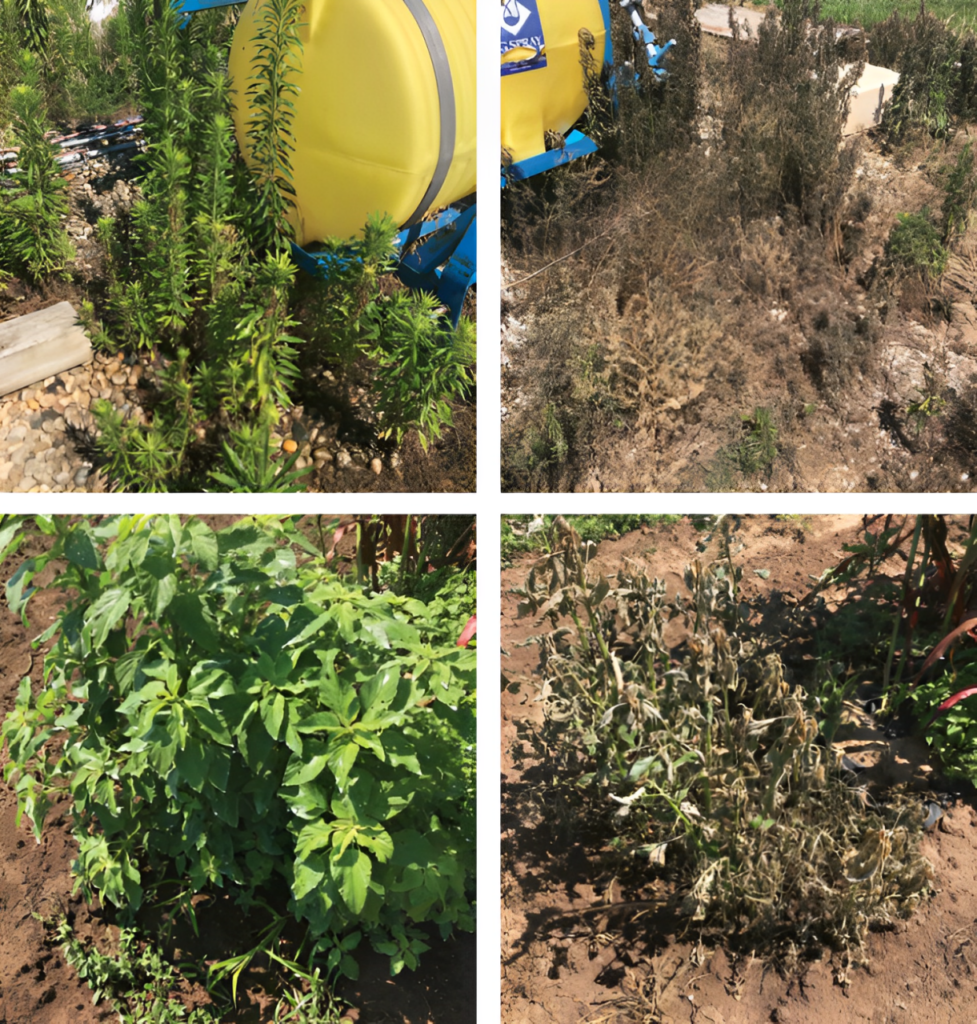
When you think about a working vegetable farm, the places that tend to get weedy are, in fact, those non-crop-land areas such as row ends, edges of plastic mulch, sides of weed barriers, irrigation risers, layflat hoses stretched across pasture fields and roads, fence posts, rock piles, and equipment yards. This is where a backpack sprayer loaded with an organic herbicide can swiftly knock back weedy vegetation and settle down angst over messy spots.
Since a lot of small farms double their outreach through agritourism, natural herbicides can help keep these places looking clean and tidy.
Innovative Uses of Organic Herbicides
The use of roll-down cover crops for no-till production has empowered small-scale vegetable farmers. However, due to the vagaries of weather and local soil conditions, it’s not always perfect, and this is where organic herbicides can be a handy tool — to knock back those pop-up weeds. Researchers in Oklahoma sprayed organic herbicides over the top of onion beds and achieved weed control without killing the onions; while this is “experimental,” it might give farmers ideas on innovative uses.
Steve Diver is the farm superintendent of the Horticulture Research Farm at the University of Kentucky. He started attending Acres U.S.A conferences in 1985.