Tariffs should force a reset for American agriculture toward regional food systems that are more resilient to global price shocks
With President Trump’s recently imposed tariffs on imported goods from countries like China, Canada and Mexico, much has been made about the negative impact of tariffs on farmers and food prices. Missing is a discussion of how our agricultural system has become so dependent on government policy in the first place. Tariffs and the surrounding policy turmoil provide a unique opportunity to reassess and redesign our country’s agricultural system for the better.
Today’s agricultural market is more a construct of government policy than an individual enterprise. The U.S. provides enormous subsidies for producing a handful of agricultural commodities at a massive scale for global markets. Whether in the form of direct payments, subsidized crop insurance, or nutrition assistance programs, government resources flow into the market and tip the scale. The result is that most agricultural land is dedicated to a few commodities, with corn and soy alone representing more than 50 percent of U.S. cash crop receipts.
This centralization has led to a system where agricultural commodities are shipped vast distances into multinational supply chains without consideration for provenance or quality. These supply chains are efficient from a technical perspective but deliver a low-value, undifferentiated product through a distribution system easily disrupted by external shocks—of which current trade policies are just the most recent.
As founder of agricultural lender Steward, I work every day to fund alternative agrarian models. Generations of policy interventions and government subsidies have crowded out private capital and left few resources available for producers taking a different approach. The focus should instead be on regional supply chains designed around crops suited to the region, traceable from producer to consumer, with higher margins for farmers and verifiable, clean food for consumers. More resilient to global shocks — with products only traveling a few hundred miles from source of origin to finished good — these emerging agricultural networks have been built outside of traditional government policy support and are instead driven by consumer demand and the creativity of farmers and food producers.
Wheat in the Palouse tells a familiar story. An agricultural region spanning Northeast Oregon, Southeast Washington, and Northcentral Idaho, known for its undulating hills and prized for its grain, the Palouse has the right amount of moisture in the spring with long, hot, and dry summers to produce some of the world’s finest wheat. A few generations ago, the area had dozens of flour mills; now none remain — the last one having burned down in 2022 in Pendleton, Oregon. Instead of being milled in the region, the cherished wheat of the Palouse now gets loaded onto barges on the Columbia River, transported to West Coast shipping terminals, blended with nondescript grain, and shipped to Asia to be milled and made into noodles. A once valuable, nutritious product has become a genericized input into a global supply chain, resulting in low prices to producers, diminished quality to customers, and disinvestment in rural economies.

Cairnspring Mills, a flour mill in the Pacific Northwest, showcases a different model. Purchasing wheat directly from farmers and utilizing a unique combination of roller and stone mills, Cairnspring has created traceable, differentiated flour beloved by the country’s leading bakeries and pizza shops, including Tartine and Pizzeria Bianco. With a streamlined, transparent supply chain delivering a high-value product, Cairnspring pays farmers more than a 20 percent premium to commodity prices while still operating at competitive margins. After eight years, their mill in Skagit Valley Washington is at a capacity of 8 million pounds of flour per year, driven by market demand for their unique product.
To expand capacity and meet surging demand, Cairnspring is building a regional-scale mill in the heart of the Palouse that will produce more than 80 million pounds of flour per year, purchasing over 40,000 acres of wheat directly from farmers in the region. The mill will provide growers with an alternative to the low prices offered by the commodity system and will enable them to earn a premium for wheat milled and sold within the country through a resilient supply chain not reliant on global trade policies. The result is improved farmer incomes, enhanced resilience, reduced reliance on the government, and nutritious, flavorful products for consumers.
A similar trend is occurring across the country. In Northern Iowa and Southern Minnesota, there is a collection of 65 farmers who are investing millions of their own capital to build a regional-scale oat mill. A new mill called Green Acres will provide a traceable connection for oats from field to a finished product. The mill will pay farmers 40 percent more than the commodity oat price ($5.25 per bushel vs commodity price of $3.75) on a multi-year contract, while still delivering a cost-competitive product to buyers. Because it’s owned by the farmers, gains generated by value-added processing will accrue to their benefit — putting more money back into their pockets and the regional economy.
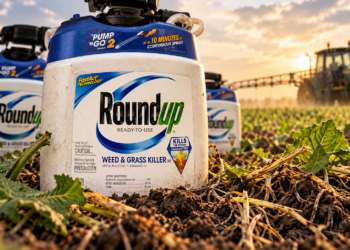
Currently, oats have been pushed out of the traditional Midwestern crop rotation due to low-cost imports from Canada. Canadian oats are grown at massive scale using methods requiring significant applications of synthetic herbicides — testing at 30x the glyphosate residue as their American counterparts. Oats are an important rotational crop for soil health, and prices paid by the mill to farmers will provide sufficient income for oats to compare economically with corn and soy, enabling a third crop to be added to the traditional rotation, resulting in multiple benefits — from economic diversification to a reduction in synthetic chemicals.
The United States has incredible productive capacity and is the world’s largest market. Instead of relying on an agricultural system directed by government policy, we should reinvest in our own capacity and direct resources toward farmers and entrepreneurs serving market demand. By rebuilding traceable, domestic agriculture supply chains, we can reconnect with the sources of our sustenance, improve our collective health, reinvigorate rural communities, and create a more prosperous and resilient country while reducing our dependence on politicians, multinational corporations and trade wars.
Dan Miller is the founder of Steward Capital (gosteward.com).