

Historic Wildfires in Nebraska Sandhills Devastate Ranchers
On March 12, sparks from a downed power pole started a wildfire in Morrill County, Nebraska, which was quickly spread by 70-mile-an-hour winds and burned a total of 642,029 acres before it was finally contained on March 29. Other wildfires swept through the Sandhills region, burning a total of 945,381 acres.
It was the largest wildfire in Nebraska’s recorded history and the ninth-largest wildfire in US history. One woman, 86-year-old Rose White, died while trying to seek shelter. Some ranchers lost buildings, trees, and miles of fences that will take a lot of time and money to rebuild.
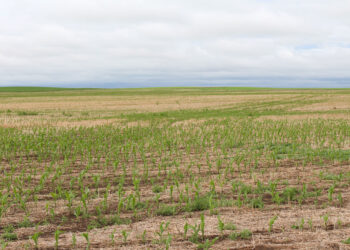
While some cattle perished, the majority of cows and calves were in dry lots for calving season and survived. Ranchers were able to save much of their stored hay, too. But the pastures where they were planning on grazing their cattle this summer are now a barren wasteland of ash, charcoal, and shifting sands.
Farmers in neighboring states have stepped in to help in any way they can. The Kingsbury County Cattleman’s Association of Lake Preston, South Dakota sent two convoys of trucks hauling a total of 1,100 round bales of hay to the Sandhills. The Clinton County, Iowa Cattleman’s Association collected 200 lick tubs of mineral and protein supplements. Other farmers in Nebraska, Colorado, Oklahoma, and South Dakota have offered to let impacted ranchers pasture cattle on their land. Even so, it’s going to be a tough year.
“The pastures will regenerate,” agricultural economist Jay Parsons said. There’s historical evidence to support that statement. Two years after a similar wildfire burned huge areas of the Sandhills in 2012, researchers from the University of Nebraska-Lincoln discovered that “aboveground herbaceous biomass in burned areas had recovered to levels that did not differ from unburned areas.”

“The Sand Hills recovered remarkably fast—that’s what grasslands do,” one of the researchers, Dirac Twidwell, said in 2017. “They thrive with fires.” Twidwell explained that fire suppression policies make wildfires worse and that periodic fires are necessary to maintain the grassland ecosystem and suppress invasive woody species like eastern red cedar.
Ideally, those would be small, controlled burns, where the grasses quickly grow back, providing nutritious fresh growth for cattle and a “shifting mosaic” of different plant species. Unfortunately, land management practices over the past 150 years have created “a more uniform grassland ecosystem,” which is more susceptible to catastrophic megafires like the ones that burned the Sandhills this March.
“It’s not a question of if it can recover or not,” Twidwell said in response to this year’s fire. “But how do you navigate given how people tend to manage these landscapes today and how can we do a better job of coexisting with this reality in the future?”
That’s a question that eco-farmers should be asking, too. How can we help Nebraska ranchers recover from this tragedy—while at the same time working to develop more resilient land management practices?