

Reduced tillage — used responsibly — might even impart some benefits to soil health
One of the most significant barriers to organic adoption in certain regions of the United States is tillage. Organic systems are perceived as tillage-heavy systems, and tillage is perceived as a destructive practice. Yet nutrient cycling and weed control (along with improved crop emergence) happen to be the main reasons why tillage is used on farms. Just as most conventional growers do not spray for fun, most organic growers do not till for fun. And on both sides, everyone is trying to reduce the use of these tools. As in many situations, we tend to go from one extreme to the other before we realize that the best situation is somewhere in the middle and is more complex than we initially thought.
Let’s start with some definitions. In 1972, No-Till Farmer magazine said, “No-till, or no-tillage, does not mean a total absence of tillage. Rather, it refers to a variety of crop production systems employing a reduced or limited amount of tillage. How limited depends on who you are and where you farm.”
Here’s a definition from 1990: “No-tillage: except for nutrient injection, the soil is left undisturbed from harvest to planting. Planting is completed in a narrow seedbed or slot by coulters, row cleaners, disc openers, in-row chisels or other row attachments. Weed control is accomplished primarily with herbicides. Cultivation may be used for emergency weed control.”
After having explored the far end of the spectrum for the past 30 years, it might be time to go back to a more inclusive definition of no-till.
How Bad Is Tillage?
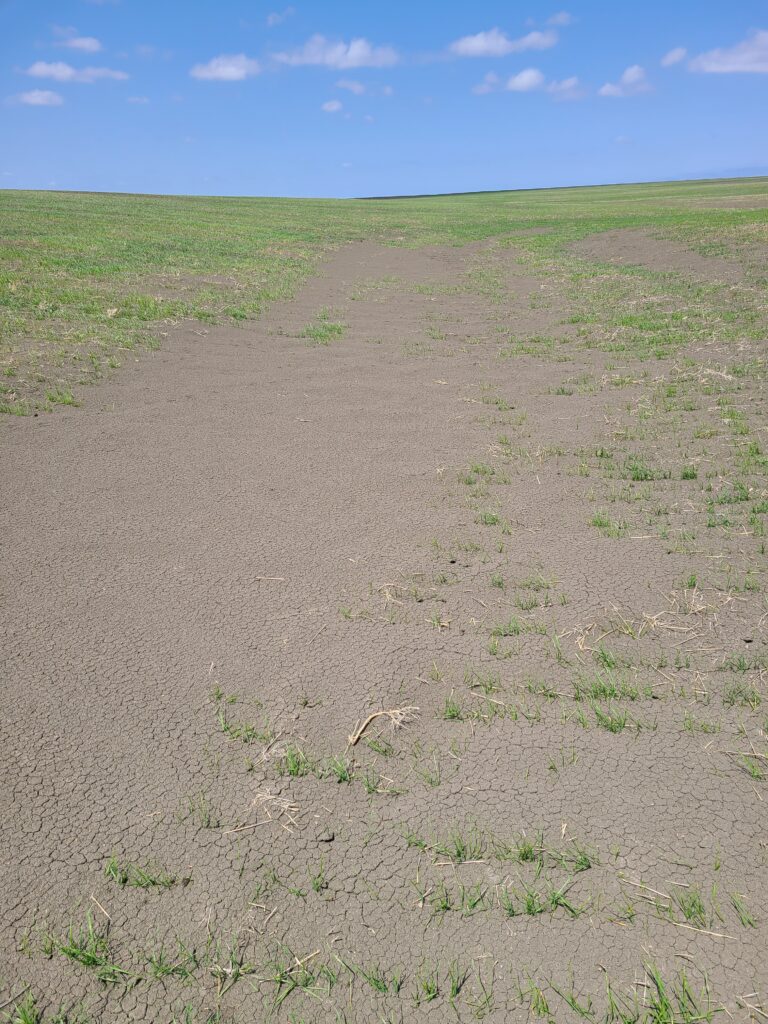
Erosion is the most visible negative consequence of excessive tillage. Water erosion leaves obvious scars on the landscape. Wind erosion can have negative consequences on communities’ health, with the Dust Bowl as the most dramatic example. Both also impact farmers’ livelihoods; eroded land is not productive land.
Soil health is often brought up in conversations about tillage, but the definition of soil health is broad, and it can be hard to measure. Our understanding of how soil health is influenced by various agronomic practices is also constantly evolving. What does the scientific literature say about the effects of tillage?
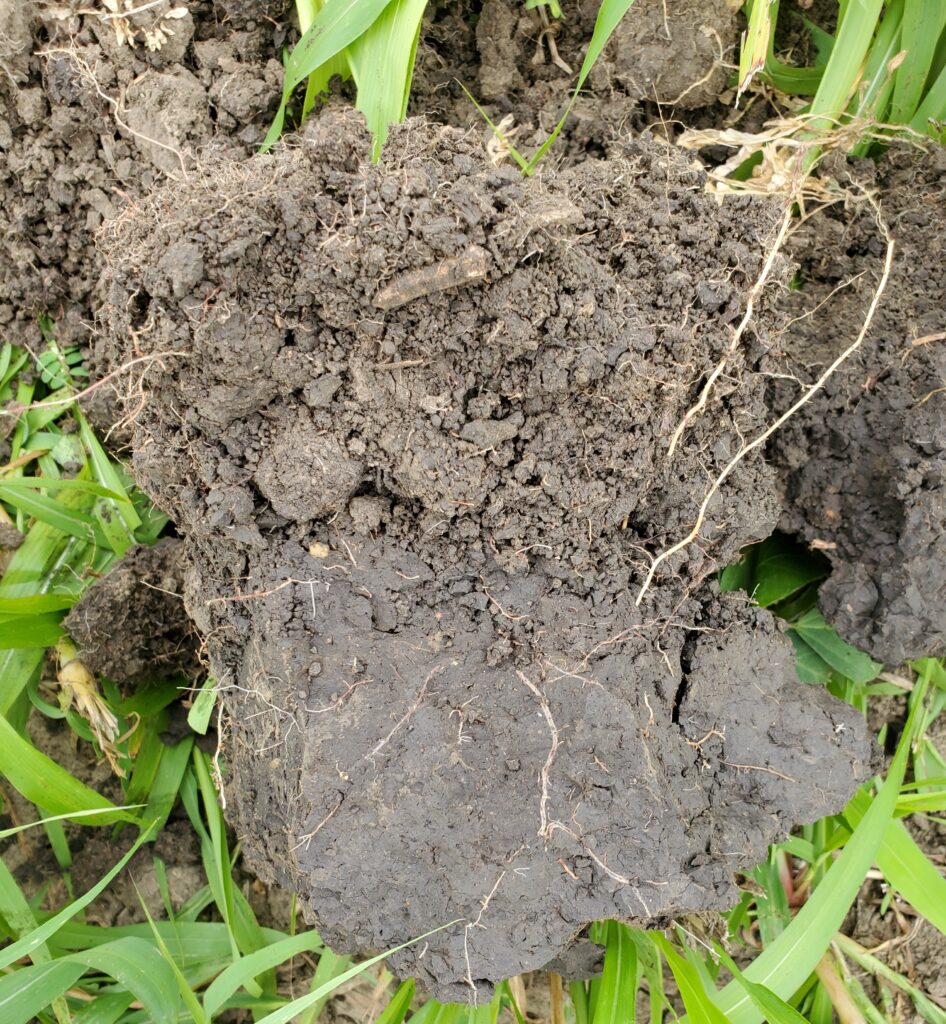
- The quality of the soil’s physical structure — generally assessed by measuring the stability of its aggregate — is one commonly used metric to assess soil health. PASA’s 2021 Soil Health Benchmarks report showed that tilled and no-till row crop operations exhibit comparable aggregate stability. And in 2018, Puerta et al. compared the soil structure between conventional intensive tillage, conventional no tillage, organic intensive tillage, and the organic reduced tillage systems and found that “soil structure is most improved during continuous cropping when combining organic crop management with reduced tillage.”
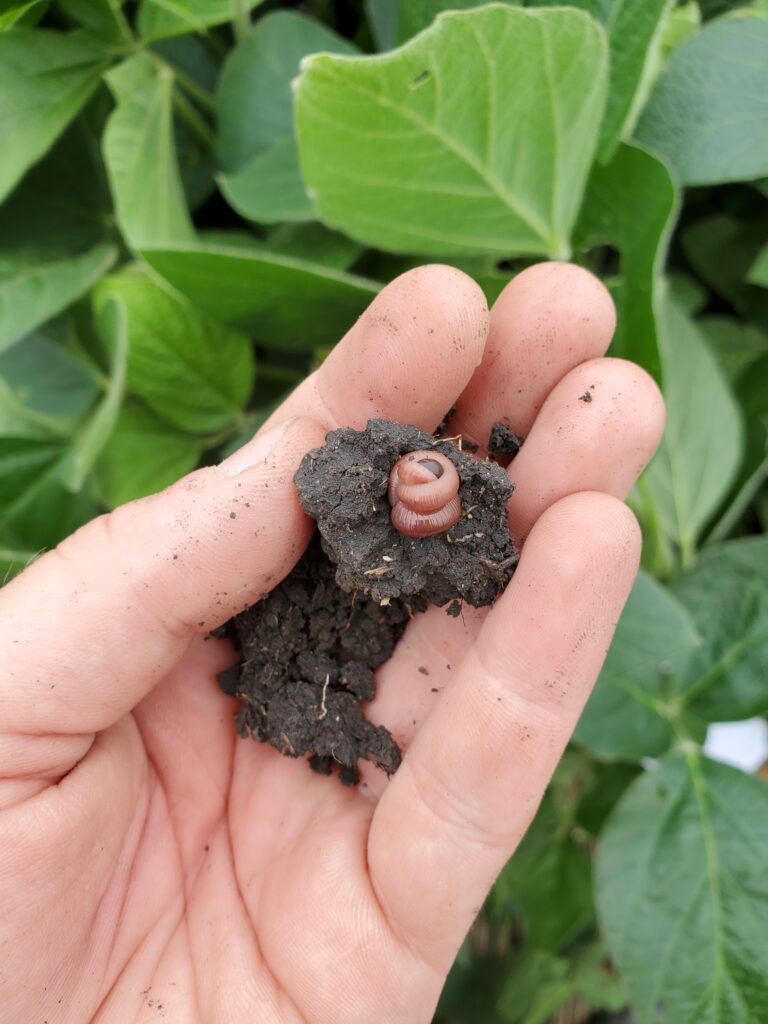
- Soil biological function is also widely accepted as a component of soil health. Methods to assess soil biological function, however, are not well standardized. Soil macrofauna biomass and activity is one of the most accessible metrics, and one recent study, conducted by Torppa and Taylor in 2022, showed that “highest earthworm bioturbation is best achieved with no tillage.” But the same study also recognizes that “earthworm densities, and potentially bioturbation, can be increased by a diversified crop rotation, when reducing tillage intensity is not feasible.”
Microfauna measurement gets complicated. Soil microorganisms are not observable with the naked eye, are extremely diverse and are poorly understood in terms of their population dynamics and functions. But one thing we all agree on is that they play a significant role in soil functionality. Just as with soil structure, the intuition is that tillage — by disturbing habitat and potentially physically damaging those organisms — would negatively impact microorganisms. However, one recent finding by Hu et al. (2021) suggests that compared to no-till and moldboard plowing, reduce tillage is the optimal practice to “stabilize microbial network structure … and finally enhance crop yields, providing a new perspective for tillage application in agroecosystems.”
- With carbon emissions on the rise, the negative impact of increased carbon dioxide concentration in the atmosphere and the soil’s capacity for short- and long-term carbon sequestration is being scrutinized by the general public now more than ever. The relationship between soil carbon cycling and tillage and storage has been researched extensively, and many studies have come to similar conclusions. Complete elimination of tillage changes the depth distribution of soil organic carbon; in the absence of mixing through tillage, carbon accumulates in shallow surface layers. A large number of studies thus draw incomplete conclusions — historically, soil studies have only been conducted on those surface layers. More comprehensive studies, however, tend to show that soil organic carbon concentration is not increased by management under no-till systems when considering the entire soil profile (Deen and Kataki, 2003, Yang et al., 2013, Powlson et al., 2014).
- Cornell University’s Comprehensive Assessment of Soil Health (CASH), which looks at all three aspects of soil functions — physical, biological and chemical — is a thorough method of soil health assessment that has been gaining traction in the Northeast. The above-mentioned PASA study not only tested for aggregate stability but also for all the other CASH metrics. They did find that “most no-till row crop farms do in fact have optimal soil health” but also that “many farms that rely on tillage for controlling weeds and preparing fields are still able to achieve optimal soil health … including some farms with low annual inputs of mulches, composts, and manures.”
Herbicides Are Not Acceptable Alternatives to Tillage
If not using tillage to control weeds, a grower inevitably needs to use herbicides. While some impacts of wind and water erosion on the field can be easily observed, the impact of herbicides on environmental and human health can be more challenging to detect. The direct impact is sometimes well documented and acknowledged through a ban in other countries. Use and exposure to paraquat for example, has been associated with increased risk of renal diseases (Shearer et al., 2021). Paraquat was one of the first herbicides to facilitate the development of no-till practices.
A review of nearly 400 studies, published in 2021 by Gunstone et al., indicated that “pesticides of all types pose a clear hazard to soil invertebrates.” Among other substances, the review summarized the effect of the four most common types of herbicides historically used in the United States: triazines (e.g. atrazine), amides, glyphosate and synthetic auxins (e.g., 2,4-D and dicamba). The hazards to soil invertebrates related, among other parameters, to their mortality, abundance, biomass, behavior and reproduction. The increasing number of weeds that present resistance to one or more types of herbicide is another worrisome consequence of herbicide use, whether light or heavy. And drifts of those herbicides onto neighboring vegetable farms or gardens can completely devastate a crop.
Then there are impacts that are not sensed on the farms. Energy use is one of them. Just like soil, fuel is a limited resource. While tillage uses more energy than herbicides at the farm level, when accounting for the energy used to produce the herbicide, the math is not as straightforward. One application of paraquat at a typical rate of 3.5 pint per acre consumes as much diesel fuel as one pass with a moldboard plow. Applying 22 fluid ounces of glyphosate per acre consumes more diesel fuel than working the field with a chisel plow. On the flip side, in-season mechanical weed control with a rotary hoe or row cultivator requires two to three times as much diesel fuel as applying 1 pint of 2,4-D or 4 fluid ounces of dicamba (SARE, 2021).
The Solution Is Complicated
How much tillage is too much? It depends. Undoubtedly, certain areas should not be tilled, but they also should probably not be cropped, even without tillage. Highly erodible, marginal ground would likely benefit from being planted with perennial pasture or restored to its original state. For the truly tillable acres, cover crops and fallowing can go a long way in counterbalancing the potentially negative effects of tillage.
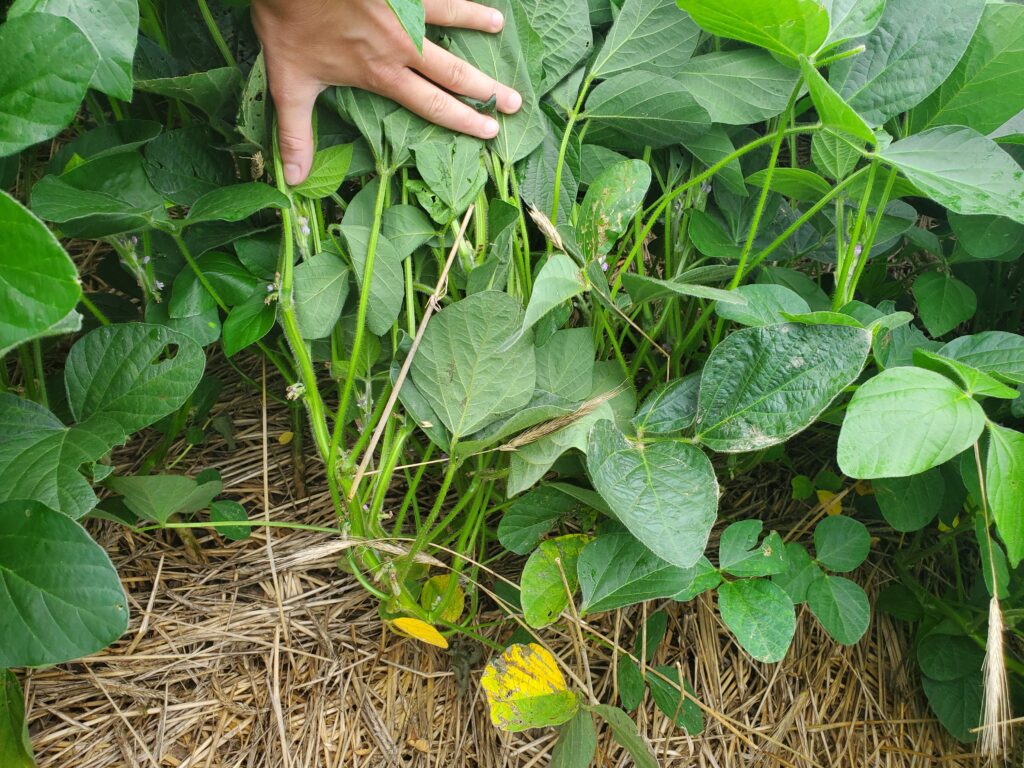
The success of organic no-till soybeans is an encouraging case study; by mixing technology and agronomic knowledge, farmers and researchers came to find a way to grow soybeans organically without any tillage. For corn and cotton — the other two most widely grown row crops — the results are more muddled. While researchers who focus on organic systems have been working on these systems for at least a decade, there has only been limited success.
Obsessing about no-till might not be the best route toward an environmentally, socially and economically healthy farming system. This is not an endorsement to till more, but rather a call to build a profitable system with all the tools we have so we can continue to work toward tilling less.
Tools like longer crop rotations and cover crops increase plant diversity — nature’s best method of controlling disease and pests and of improving soil health.
Léa Vereecke and Nathanael Gonzales Siemens are regional managers of Rodale Institute’s organic consultants in the Midwest and Pacific, respectively. Their focus is to bring relevant research, funding and technical support to farmers in their regions so that organic agriculture can continue to be a viable option for growers across the country. Learn more at rodaleinstitute.org/consulting.