Acres U.S.A.® Magazine
  • Articles
    • News
    • Ecological farming
      • Climate
      • Environmental Issues
      • Farm management & planning
      • Human health
    • Livestock
    • Farm
    • Crop
      • Crop management practices
        • Ag technology
        • Cover crops
        • Crop nutrition
          • Crop protection
          • Diseases
        • Crops
        • Fruits
    • Soil
    • Opinion
  • Resources
    • Magazine
    • Online Learning
    • Newsletters
    • Free Articles
    • Blog
  • Magazine Issues
    • 2026
      • June 2026
      • May 2026
      • April 2026
      • March 2026
      • February 2026
      • January 2026
    • 2025
      • December 2025
      • November 2025
      • October 2025
      • September 2025
      • August 2025
      • July 2025
      • June 2025
      • May 2025
      • April 2025
      • March 2025
      • February 2025
      • January 2025
    • 2024
      • December 2024
      • November 2024
      • October 2024
      • September 2024
      • August 2024
      • July 2024
      • June 2024
      • May 2024
      • April 2024
      • March 2024
      • February 2024
      • January 2024
    • 2023
      • December 2023
      • November 2023
      • October 2023
      • August 2023
      • July 2023
      • June 2023
      • May 2023
      • April 2023
      • March 2023
      • February 2023
      • January 2023
    • 2022
      • December 2022
      • November 2022
      • October 2022
      • September 2022
      • August 2022
      • July 2022
      • June 2022
      • May 2022
      • April 2022
      • March 2022
      • February 2022
  • About Us
    • Our History
    • Our Staff
    • Contact Us
    • Community
      • Soil Health Primer Resources
  • Events
    • Eco-Ag Conference
    • Farm Weird Event
  • Subscribe
  • Login
  • Register
No Result
View All Result
  • Articles
    • News
    • Ecological farming
      • Climate
      • Environmental Issues
      • Farm management & planning
      • Human health
    • Livestock
    • Farm
    • Crop
      • Crop management practices
        • Ag technology
        • Cover crops
        • Crop nutrition
          • Crop protection
          • Diseases
        • Crops
        • Fruits
    • Soil
    • Opinion
  • Resources
    • Magazine
    • Online Learning
    • Newsletters
    • Free Articles
    • Blog
  • Magazine Issues
    • 2026
      • June 2026
      • May 2026
      • April 2026
      • March 2026
      • February 2026
      • January 2026
    • 2025
      • December 2025
      • November 2025
      • October 2025
      • September 2025
      • August 2025
      • July 2025
      • June 2025
      • May 2025
      • April 2025
      • March 2025
      • February 2025
      • January 2025
    • 2024
      • December 2024
      • November 2024
      • October 2024
      • September 2024
      • August 2024
      • July 2024
      • June 2024
      • May 2024
      • April 2024
      • March 2024
      • February 2024
      • January 2024
    • 2023
      • December 2023
      • November 2023
      • October 2023
      • August 2023
      • July 2023
      • June 2023
      • May 2023
      • April 2023
      • March 2023
      • February 2023
      • January 2023
    • 2022
      • December 2022
      • November 2022
      • October 2022
      • September 2022
      • August 2022
      • July 2022
      • June 2022
      • May 2022
      • April 2022
      • March 2022
      • February 2022
  • About Us
    • Our History
    • Our Staff
    • Contact Us
    • Community
      • Soil Health Primer Resources
  • Events
    • Eco-Ag Conference
    • Farm Weird Event
  • Subscribe
No Result
View All Result
Acres U.S.A.® Magazine
No Result
View All Result
Home Magazine issues July 2023

Foliar Focus

Jim Pingrey by Jim Pingrey
May 25, 2024
0
Foliar Focus
4
SHARES
25
VIEWS
Share on FacebookShare on Twitter

Where do foliar sprays fit in a regenerative system?

Jim Pingrey

Soil health is essential for a resilient plant, but we can also ramp up plant resilience and aid in building soil health by applying timely foliar sprays. For example, we can load up a perennial tree with reproductive inputs in a delayed dormant treatment prior to bloom and induce resistance to bloom-time diseases. We could also utilize an in-season foliar spray to increase photosynthetic efficiency and increase the sugars within the plant, about a third of which will be root exudates that feed soil biology. I have personally seen soil organic matter increases that far outweigh the pounds of compost or carbon we have applied, and I attribute much of these gains to my adoption of aggressive foliar applications. 
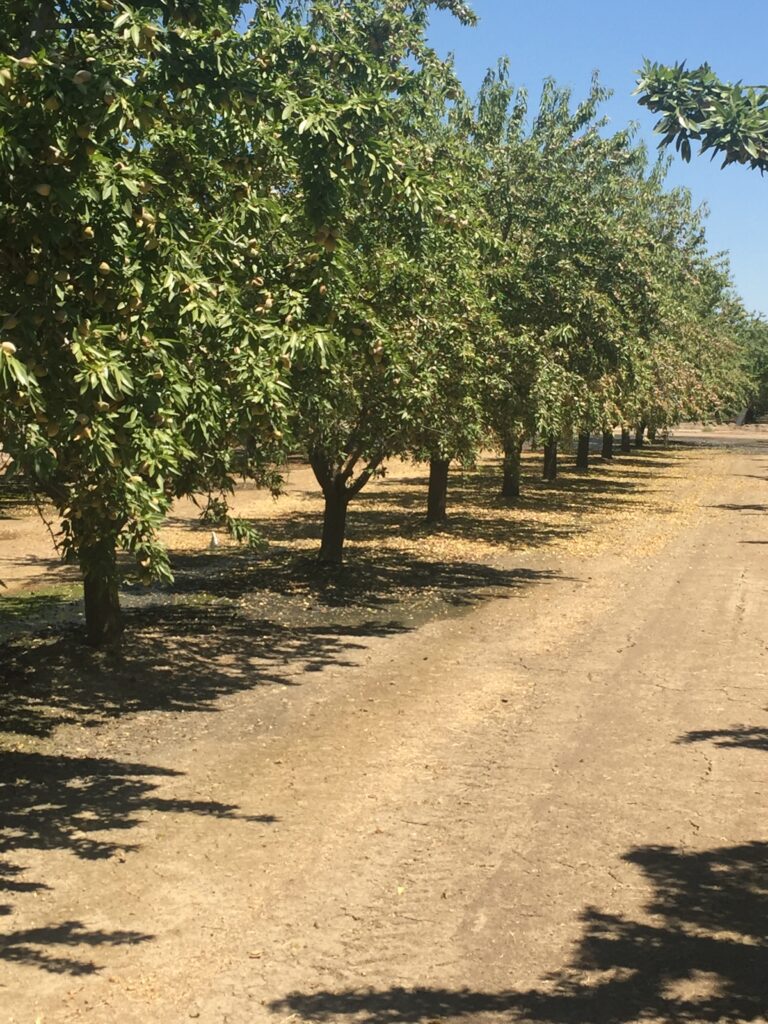
Under the conventional agricultural system, we would add some nutrition only when it was getting a “free ride” with either a fungicide or an insecticide application. Now, we are doing many applications without a fungicide or insecticide, because by enhancing plant performance, we’re able to achieve similar results with nutrition. I wish I would have listened to my early mentor, doctor Tom Yamashita, when he was preaching the value of foliar sprays to me over 20 years ago. I resisted his advice, only adding them with the so-called free rides. It wasn’t until about six years ago that I started utilizing foliar sprays more extensively. Soon after implementing this practice, plant health improved, along with more consistent yields due to increased carbon production.

When building a foliar application, my first rule is to make sure you stack the proper nutrients to create what you want. Do you want reproductive growth? If so, I use a stack of calcium, boron, phosphorus, zinc, manganese and cobalt. Or do you want a vegetative response? If so, I like using stacks with more of an emphasis on nitrogen, while also including humic, potassium, calcium, iron, zinc and silica. The nitrogen source varies depending on whether the crop is  organic or conventional. We can use plant-derived amino acids or even good old urea (low biuret) if it is sufficiently buffered with carbon. Other stacks I use help prevent disease and abiotic stress. These all include silica, selenium, iodine, manganese, zinc, copper and boron, and of course calcium and kelp. 

Another thing to consider when creating these nutrient stacks is the pH of the products. A perfect example is boron. I will use boric acid on my low-pH mixes, but then I use sodium borate on my high-pH mixes. I also feel foliar sprays are helpful where we have excesses in our soil that create some antagonistic issues with uptake. There are many examples of high calcium creating iron chlorosis and low magnesium. High magnesium antagonizes nitrogen, calcium and potassium uptake. High potassium creates low magnesium, high sulfur with phosphorus uptake, and vice versa. If phosphorus is high, sulfur uptake will be lacking. 

That’s why balancing ratios in your soil is so critical — so you’re not chasing low numbers but using stacks that create optimum performance. Salts (sodium and chloride) create challenges when they are in excess. You may have your soil in good order, but if your water source is marginal, then salt can become an issue. Carbon and silica are the most powerful when combating sodium and chloride. I will give examples of my success using these products when I discuss leaf tissue (sap) analysis in my next column.

Here are some does and don’ts when it comes to foliar sprays:

  1. Make sure, when adding another product besides the nutrition, that it mixes without precipitation at the desired pH. I generally will do a jar test and see how it responds 48 hours later. I will also perform a small trial to ensure there is no phytotoxicity.
  2. Do not spray drought-stressed plants, due to minimal stomata opening.
  3. Spray early morning, even if dew is present, if you have ample time for the spray to dry without any possibility of rain or overhead irrigation. The longer the drying time, the more absorption you will get.
  4. It is perfectly OK to spray perennial crops before the foliage pushes out. It is necessary for perennials that push bloom first before vegetative growth. The openings in the wood are larger than the openings on the leaf. I will use calcium and boron, along with phosphate, at this point. Calcium and boron are critical for pollen tube growth. This year, California had some unusually cold temps during the bloom — thus the reason for the smallest almond crop forecast in quite some time. Averages were estimated at 1750 lbs. per acre, when it should be 2350 lbs. per acre. Most experts think it was the lack of bee hours, but I believe suboptimal pollen tube growth also attributed to the poor crop. Why do I think this? We have some self-pollinating varieties that still have a poor nut set. The growers who implemented this delayed dormant application are not seeing their yield forecast as low. We are seeing ranges in the 2000- to 2900-lb. range.
  5. I feel phosphites were overused again this year. During our cold, wet spring, many consultants in our area advised using phosphite to help battle phytophthora. The problem with that is the plant will not utilize phosphate as well, since phosphite triggers the plant as if it has enough phosphate — though the two molecules have different functionality in the plant. During bloom, and for at least three weeks after pollination, phosphate (along with calcium) is critical for cell division. Why would we want to trick the plant into thinking it has enough phosphate at this time? Tissue analysis of whole leaves or sap cannot decipher the difference between phosphate and phosphite. There may be a place to utilize phosphite, but I don’t think it is appropriate when you need peak reproductive response.
  6. If you can, adjust your spray timing, starting at five days leading up to a full moon. This is when maximum sap movement occurs in the aboveground portion of the plant. Fertigation is also best to start five days prior to a new moon — this is when most of the energy moves in the roots. 
  7. Use humic or fulvic acids to optimize the uptake of nutrients. Humic acid is a great partner with nitrogen applications such as urea. Fulvic is great on the lower-pH mixes, I’ve seen a much better response when adding these products versus when they are left out of the tank, along with the great buffering capabilities they have.
  8. Do not be afraid to use products that enhance immune response, such as kelp, silica, triacontanol, chitinase and some bacillus strains of bacteria.
  9. Use natural chelators such as fulvic, amino acids, lignosulfonates, etc. Do not use EDTA chelators. They do not break down easily in the plant or soil (they steal the plant’s energy to do so). They also will grab other trace elements after the original element it was carrying is released until it is broken down by the plant.

Jim Pingrey is an agronomic consultant in California’s Sacramento Valley. 

← Previous Eco-update Next Local Food Going Mainstream  →
Tags: July 2023
Jim Pingrey

Jim Pingrey

Jim Pingrey is an agronomic consultant in California’s Sacramento Valley.

Next Post
August 2023 • Issue #626

August 2023 • Issue #626

  • Trending
  • Comments
  • Latest
The Most Important Livestock in Our Fields

The Most Important Livestock in Our Fields

July 1, 2024
Glyphosate Does What It’s Designed to Do — Kill

Glyphosate Does What It’s Designed to Do — Kill

February 19, 2025
USDA organic seal over American farm land

Losing Organic Farms

January 27, 2026
The Take-Half, Leave-Half Fallacy

The Take-Half, Leave-Half Fallacy

July 1, 2025
We Don’t Need Another Bridge — We Need an Off-Ramp

We Don’t Need Another Bridge — We Need an Off-Ramp

3
Under One Roof

Under One Roof

3
A Rose By Any Other Name

A Rose By Any Other Name

2
Terra Preta’s Biological Advantage

Terra Preta’s Biological Advantage

2
When a Steer Produces Milk, Farmers Should Pay Attention

When a Steer Produces Milk, Farmers Should Pay Attention

August 10, 2026
Groundbreaking Education

Groundbreaking Education

August 6, 2026
ECO-MEETINGS

ECO-MEETINGS

August 3, 2026
Shifting Gears

Shifting Gears

August 3, 2026

Recent News

When a Steer Produces Milk, Farmers Should Pay Attention

When a Steer Produces Milk, Farmers Should Pay Attention

August 10, 2026
Groundbreaking Education

Groundbreaking Education

August 6, 2026
ECO-MEETINGS

ECO-MEETINGS

August 3, 2026
Shifting Gears

Shifting Gears

August 3, 2026

About ACRES USA

Acres U.S.A.® Magazine

Acres U.S.A.® is North America’s oldest publisher on production-scale organic and regenerative farming. For more than 50 years, our mission has been to help farmers, ranchers and market gardeners grow food profitably and sustainably, with nature in mind.

Visit Our Advertisers

Magazine Issues

  • News
  • 2025
    • June 2025
    • May 2025
    • April 2025
    • March 2025
    • February 2025
    • January 2025
  • 2024 Articles
    • December 2024
    • November 2024
    • October 2024
    • September 2024
    • August 2024
    • July 2024
    • June 2024
    • May 2024
    • April 2024
    • March 2024
    • February 2024
    • January 2024
  • December 2023
    • December 2023
    • November 2023
    • October 2023
    • August 2023
    • July 2023
    • June 2023
    • May 2023
    • April 2023
    • March 2023
    • February 2023
    • January 2023
  • December 2022
    • November 2022
    • October 2022
    • September 2022
    • August 2022
    • July 2022
    • June 2022
    • May 2022
    • April 2022
    • March 2022

Contact Acres U.S.A

  • Contact Us
  • About Us
  • Advertise With Acres U.S.A.
  • My Subscription

Learn

  • Resources
  • Events
  • Magazine
  • Newsletters
  • Free Articles
  • Webinars
  • Online Courses
  • Bookstore

Our All Socials

Follow With Us...

  • My account
  • News
  • Ecological farming
  • Refund and Returns Policy
  • Privacy & Policy

© 2024 Acers USA Magazine

Welcome Back!

Login to your account below

Forgotten Password? Sign Up

Create New Account!

Fill the forms below to register

All fields are required. Log In

Retrieve your password

Please enter your username or email address to reset your password.

Log In
No Result
View All Result
  • HOME
  • ARTICLES
    • News
    • Farm
    • Ecological farming
    • Livestock
    • Crop
      • Crop management practices
      • Cover crops
      • Crop nutrition
      • Crop protection
      • Crops
      • Ag technology
    • Soil
    • Opinion
  • RESOURCES
    • Magazine
    • Online Learning
    • Newsletters
    • Blog
    • Free Articles
  • MAGAZINE ISSUES
    • 2026
      • June 2026
      • May 2026
      • April 2026
      • March 2026
      • February 2026
      • January 2026
    • 2025
      • December 2025
      • November 2025
      • October 2025
      • September 2025
      • August 2025
      • July 2025
      • June 2025
      • May 2025
      • April 2025
      • March 2025
      • February 2025
      • January 2025
    • 2024
      • December 2024
      • November 2024
      • October 2024
      • September 2024
      • August 2024
      • July 2024
      • June 2024
      • May 2024
      • April 2024
      • March 2024
      • February 2024
      • January 2024
    • 2023
      • December 2023
      • November 2023
      • October 2023
      • August 2023
      • July 2023
      • June 2023
      • May 2023
      • April 2023
      • March 2023
      • February 2023
      • January 2023
  • ABOUT US
    • Our History
    • Our Staff
    • Contact Us
    • Community
      • Soil Health Primer Resources
  • EVENTS
    • Eco-Ag Conference
    • Farm Weird
  • SUBSCRIBE
  • Login
  • Sign Up
  • Cart

© 2024 Acers USA Magazine

Lost Password?

Welcome Back!

Log in to your account below.

Lost Password?